
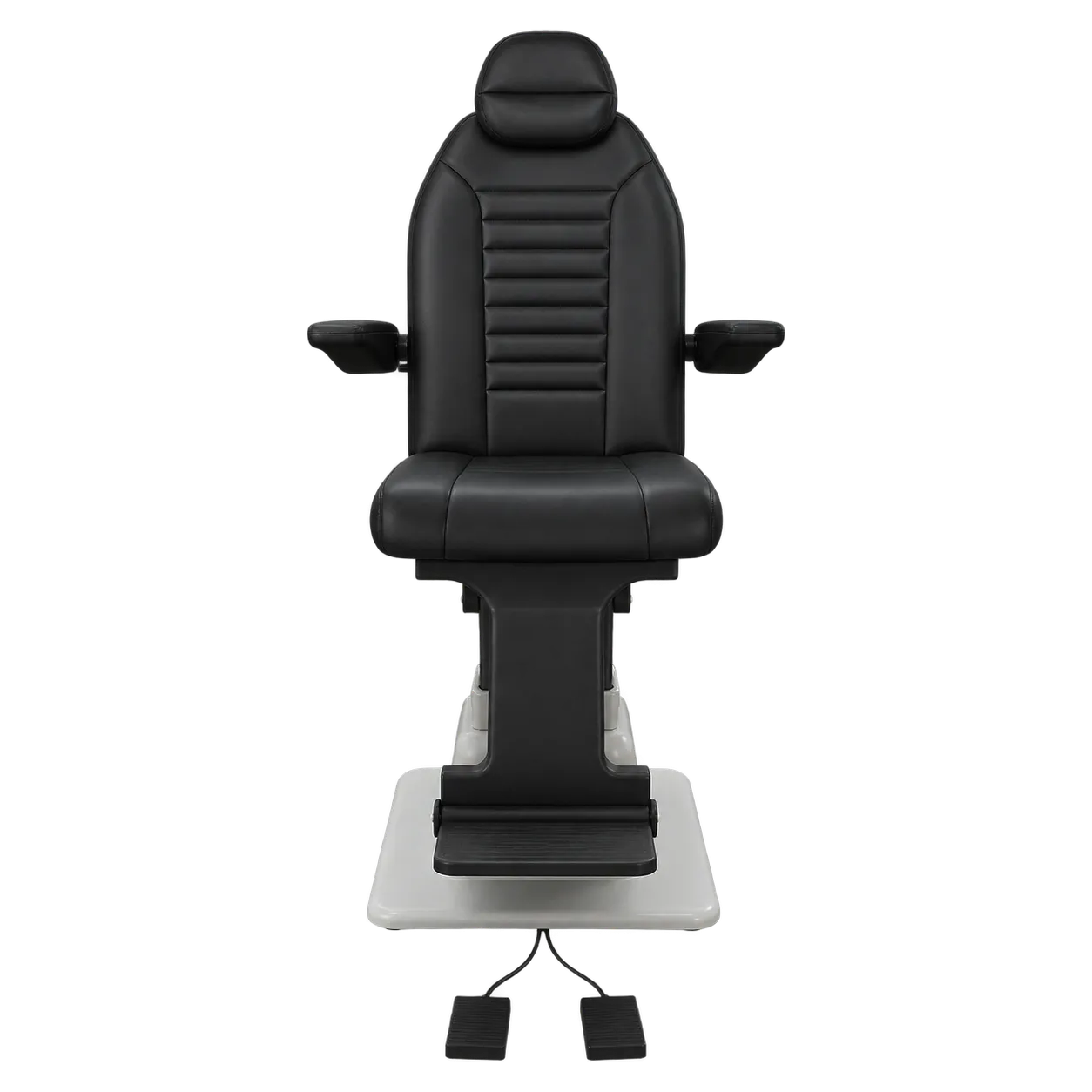
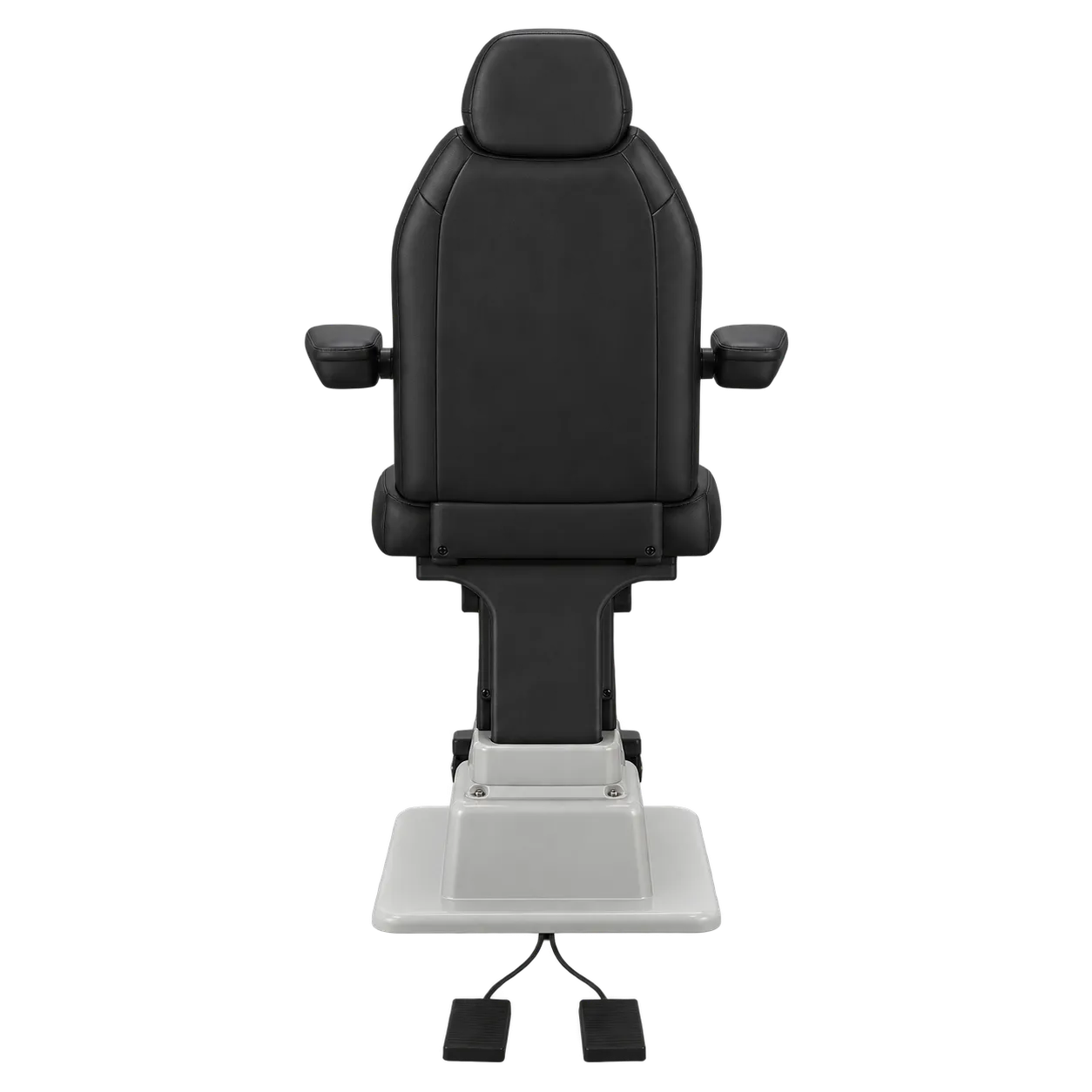
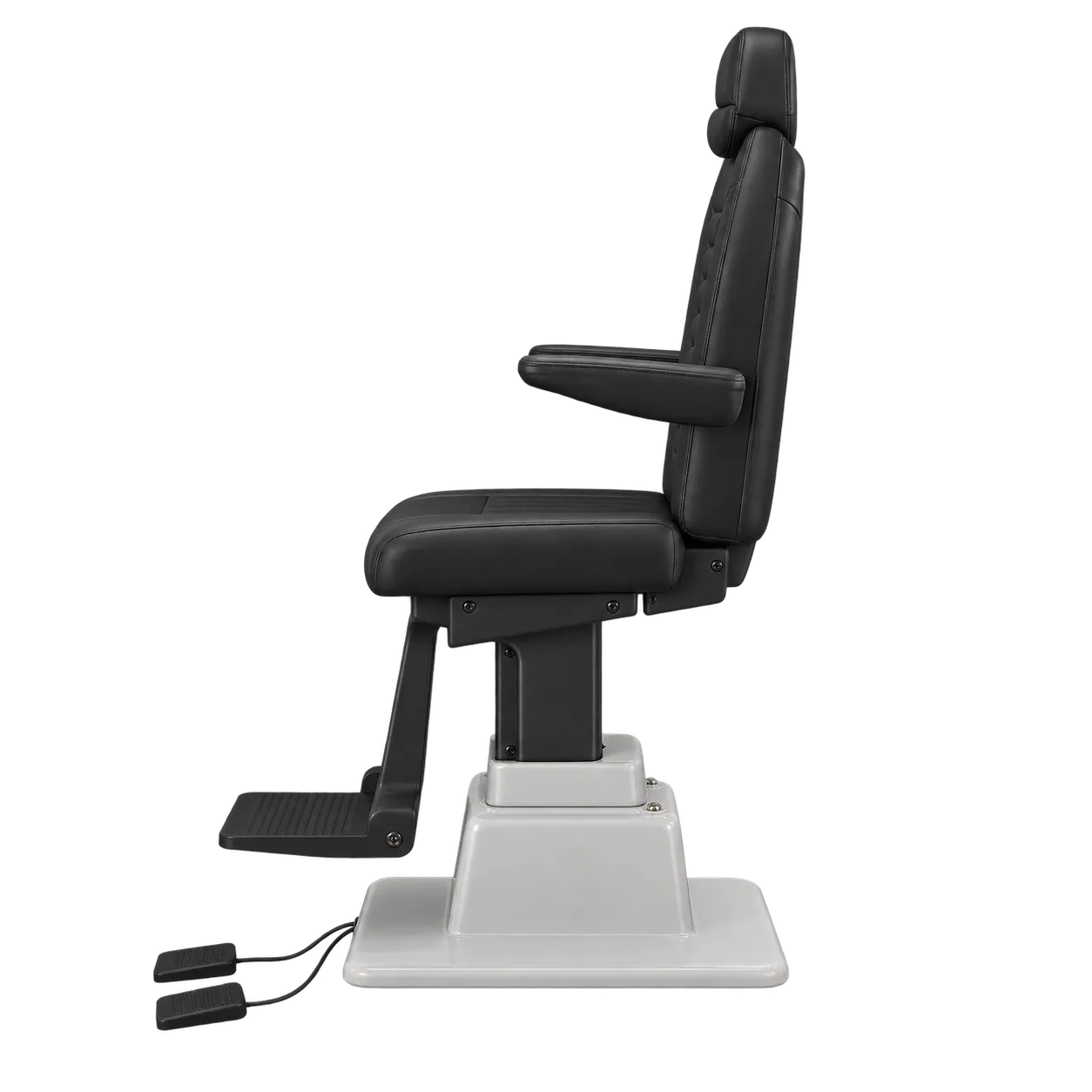
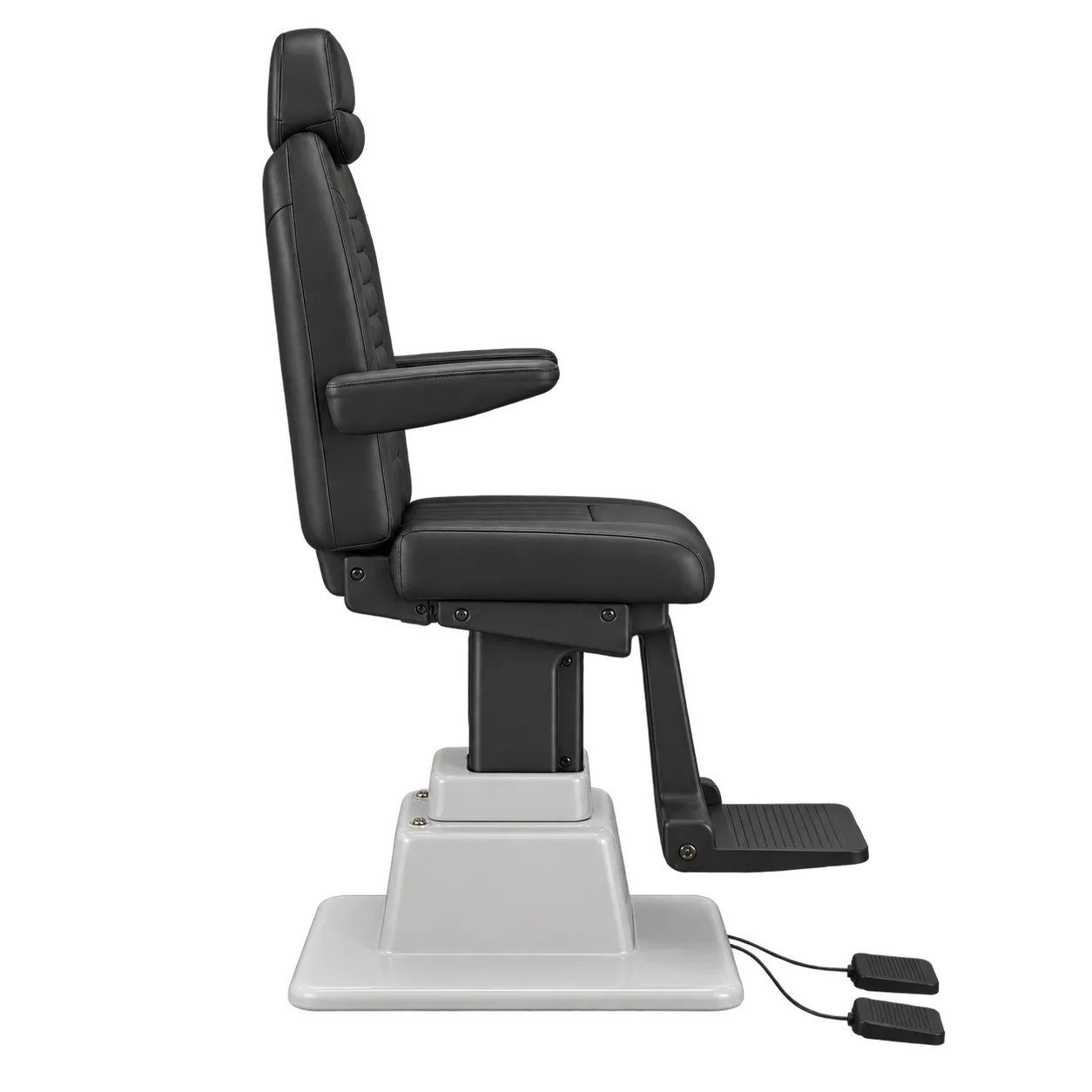
Practices serving patients of higher body weight are the clearest fit. UK adult obesity prevalence means most community practices see patients whose weight approaches or exceeds a standard chair's rating, and a 250 kg chair removes the awkward conversation that follows. Under the Equality Act 2010, service providers must make reasonable adjustments so disabled people are not put at a substantial disadvantage, and appropriate seating is one of the most practical adjustments available.
Hospital eye service outpatient clinics benefit from a chair that suits a broad patient population in a room used by many clinicians through the day.
Diabetic eye screening and medical retina clinics see a patient group in which higher body weight is common, so seating capacity is a recurring practical issue rather than an occasional one.
Slit lamp examination benefits from foot operation, since the clinician can adjust the patient's height without letting go of the instrument or the joystick.
Patients with reduced mobility gain from powered elevation, which supports transfers at the lower end of the range and brings them to instrument height without effort.
Longer appointments suit the padded headrest and armrests, which help patients hold a steady position through imaging or extended examination.
Upper-floor rooms need a floor loading check before installation, given the combined weight of chair and patient.
Reclining procedures are outside what the data describes, so practices needing a tilting or reclining chair should confirm before ordering.