
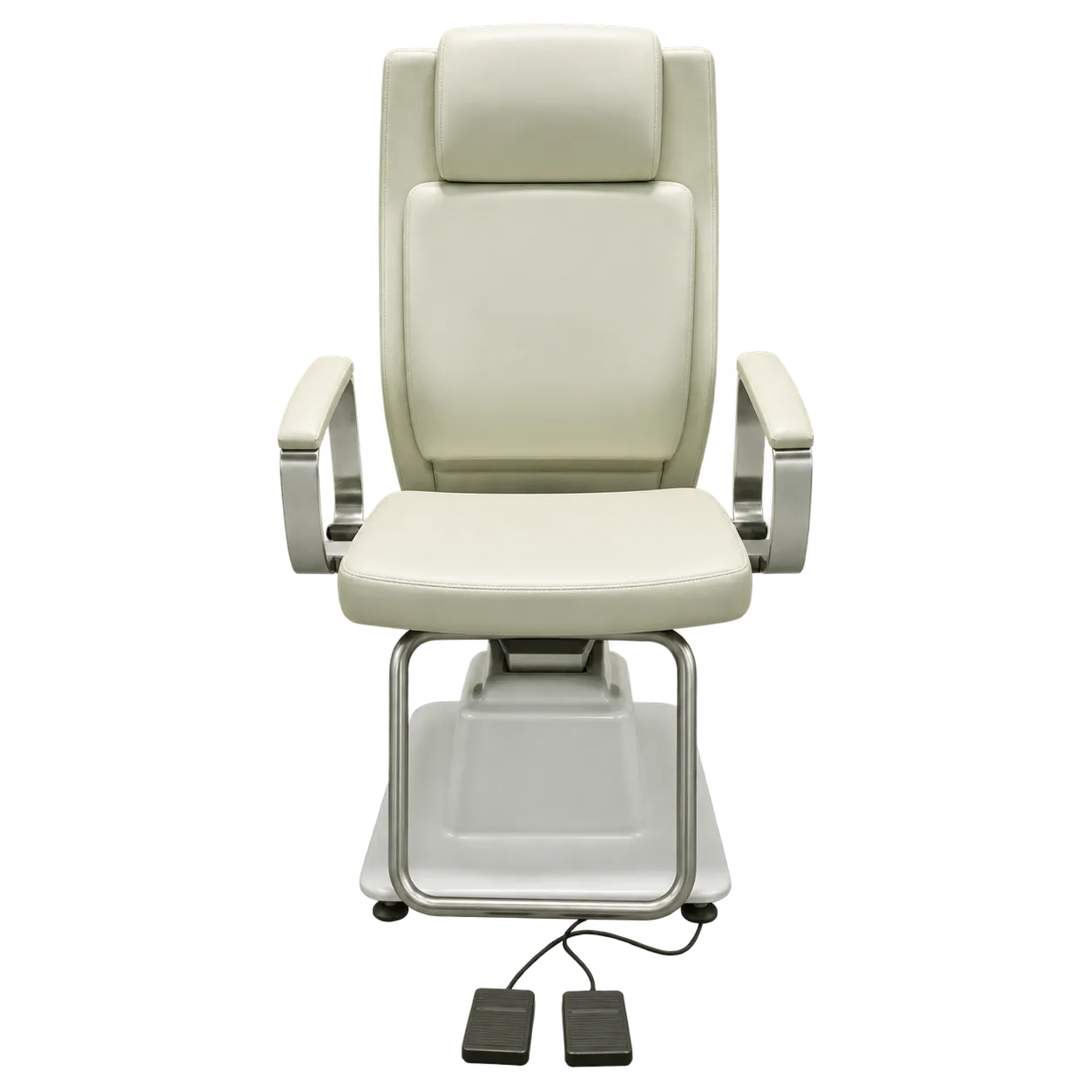
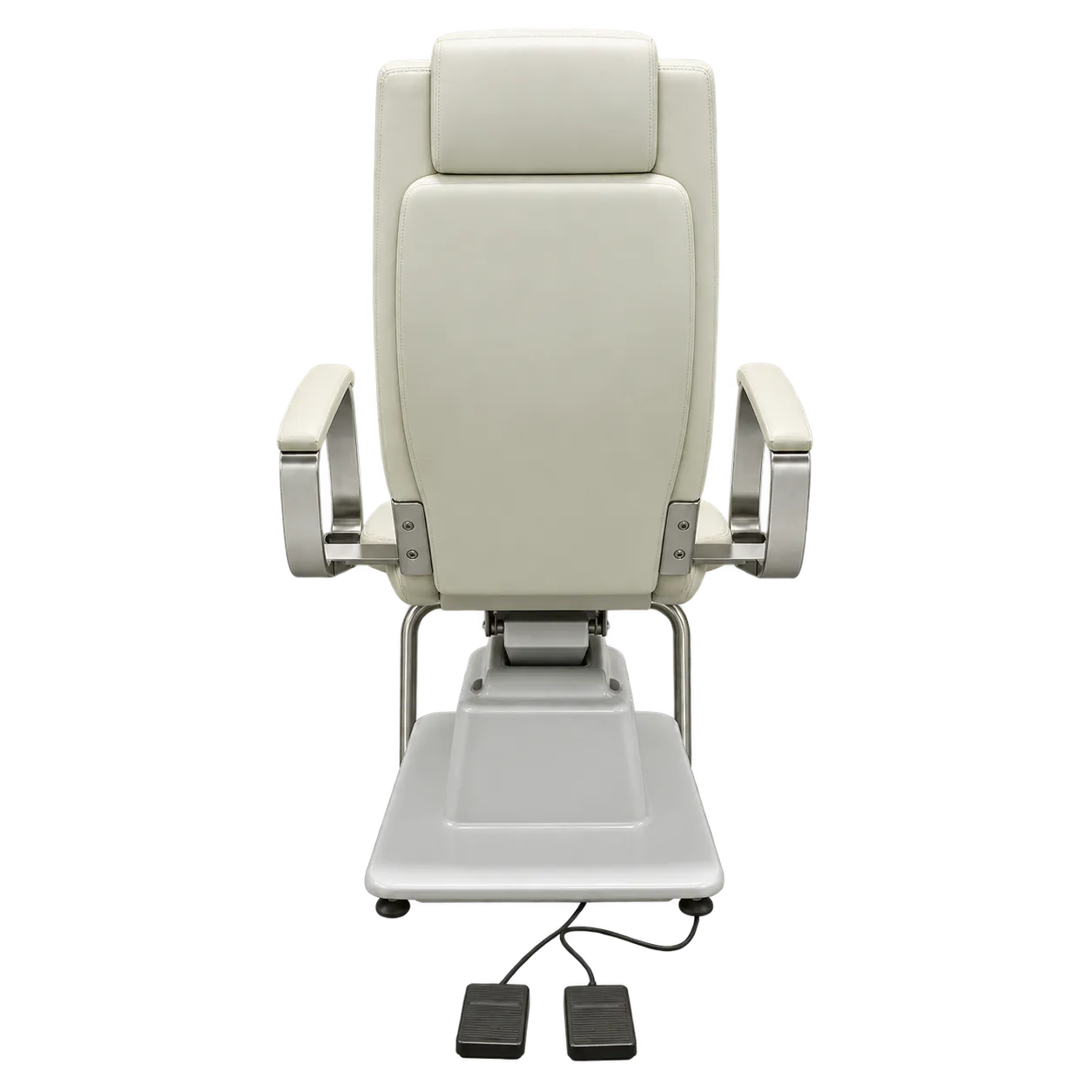
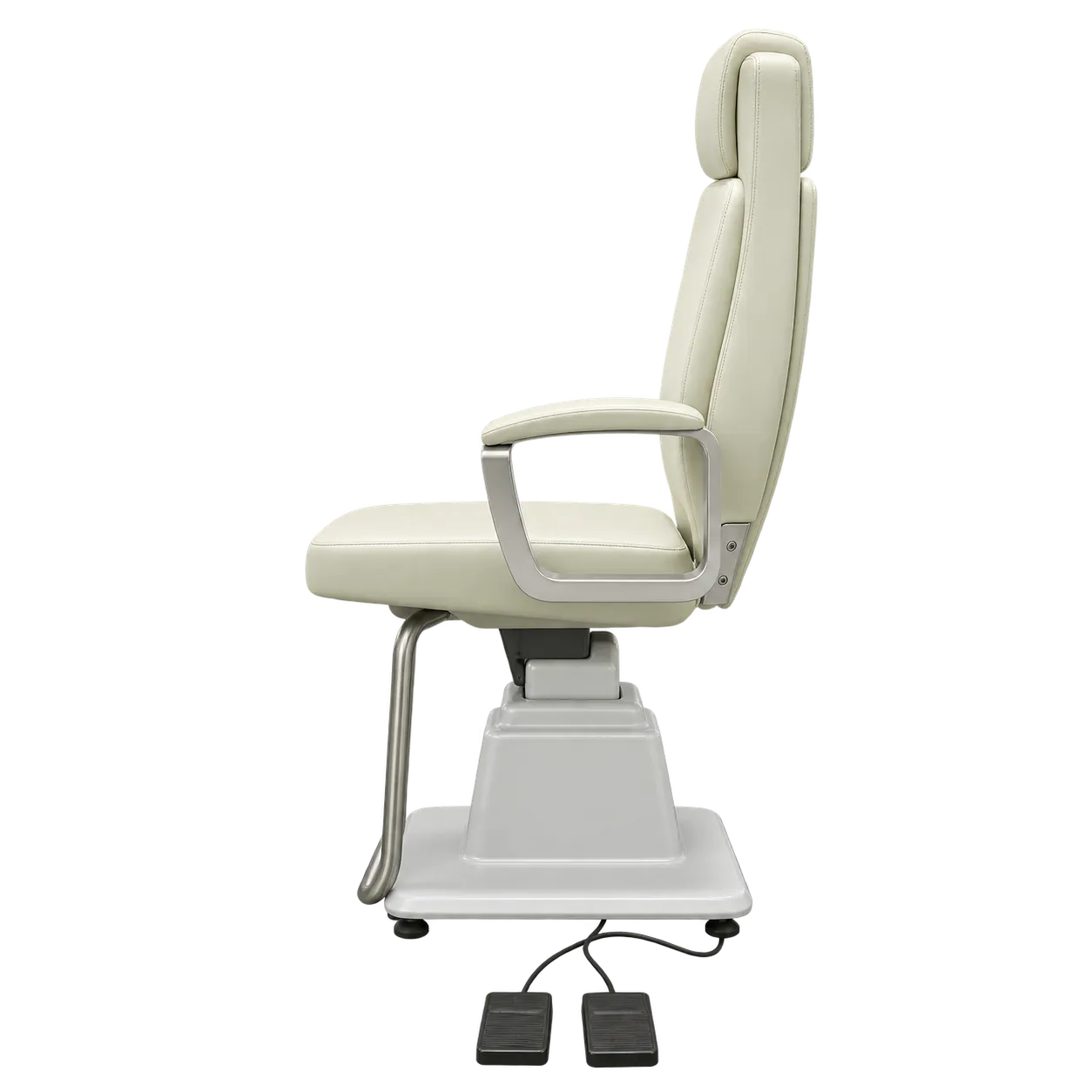
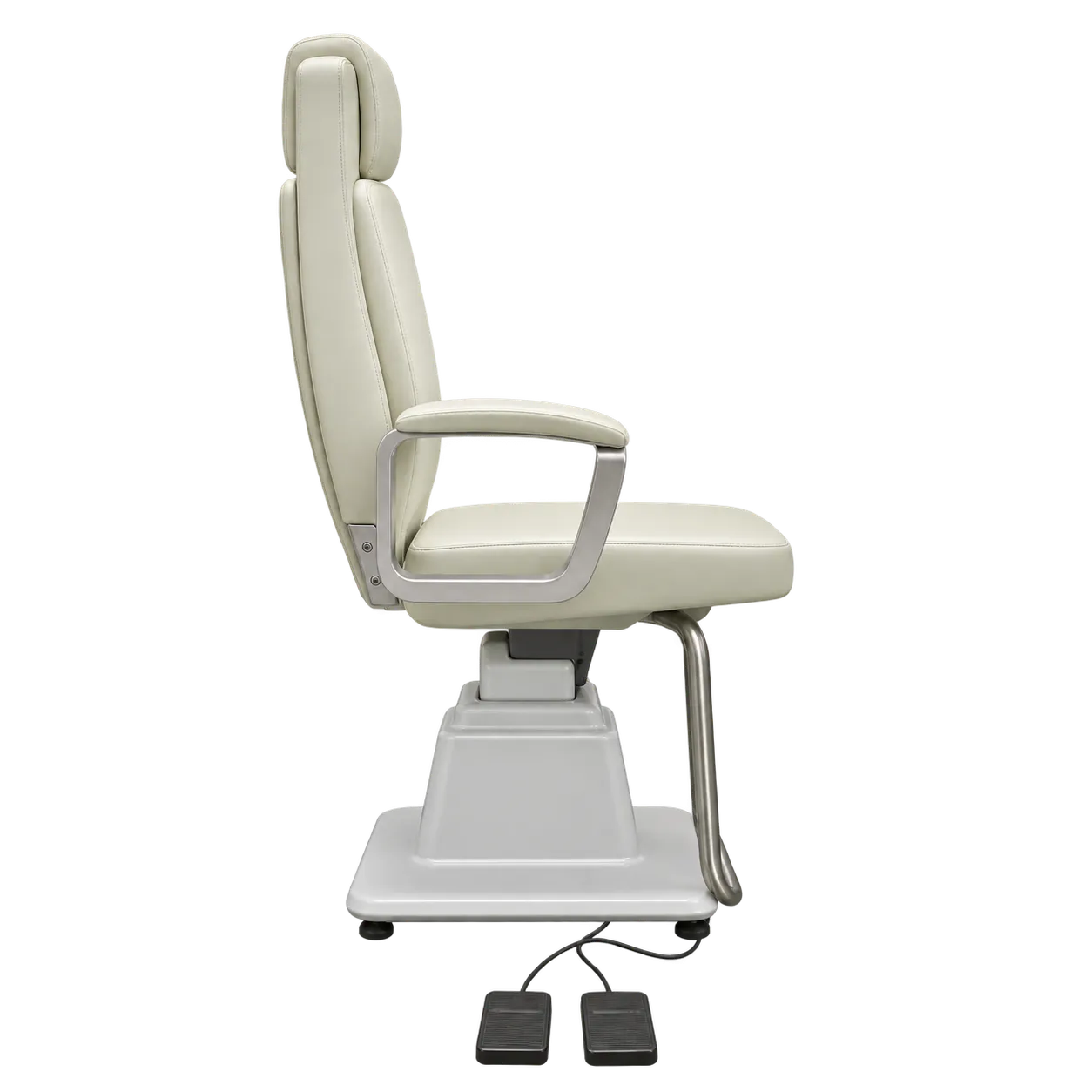
Shorter patients benefit most directly. At the upper end of a 650–820 mm elevation, anyone below average height loses contact with the floor, and a fixed plate restores it. Since stillness matters at the slit lamp and during imaging, that is a clinical gain rather than a comfort one.
Patients with reduced mobility gain from the combination of a step and open-loop armrests. A tubular arm can be gripped from below while climbing in, which suits patients who pull rather than push themselves up.
Longer appointments suit the footrest. Extended imaging, contact lens fitting and repeated measurements all keep patients seated well beyond a routine examination.
Hospital eye service outpatient clinics see a wide range of patient heights and mobility through a single room, and a chair that supports feet at every setting suits that mix.
Anxious and elderly patients often feel less secure when their feet leave the floor. Somewhere solid underfoot helps, as does an armrest that can be held.
Consulting rooms with a lighter interior scheme suit the cream upholstery, subject to confirming the material and approved cleaning agents.
Larger patients need the armrest spacing confirmed first, since the 250 kg rating says nothing about the width between the arms.
Procedures needing recline are outside what the data describes, so confirm before ordering.