
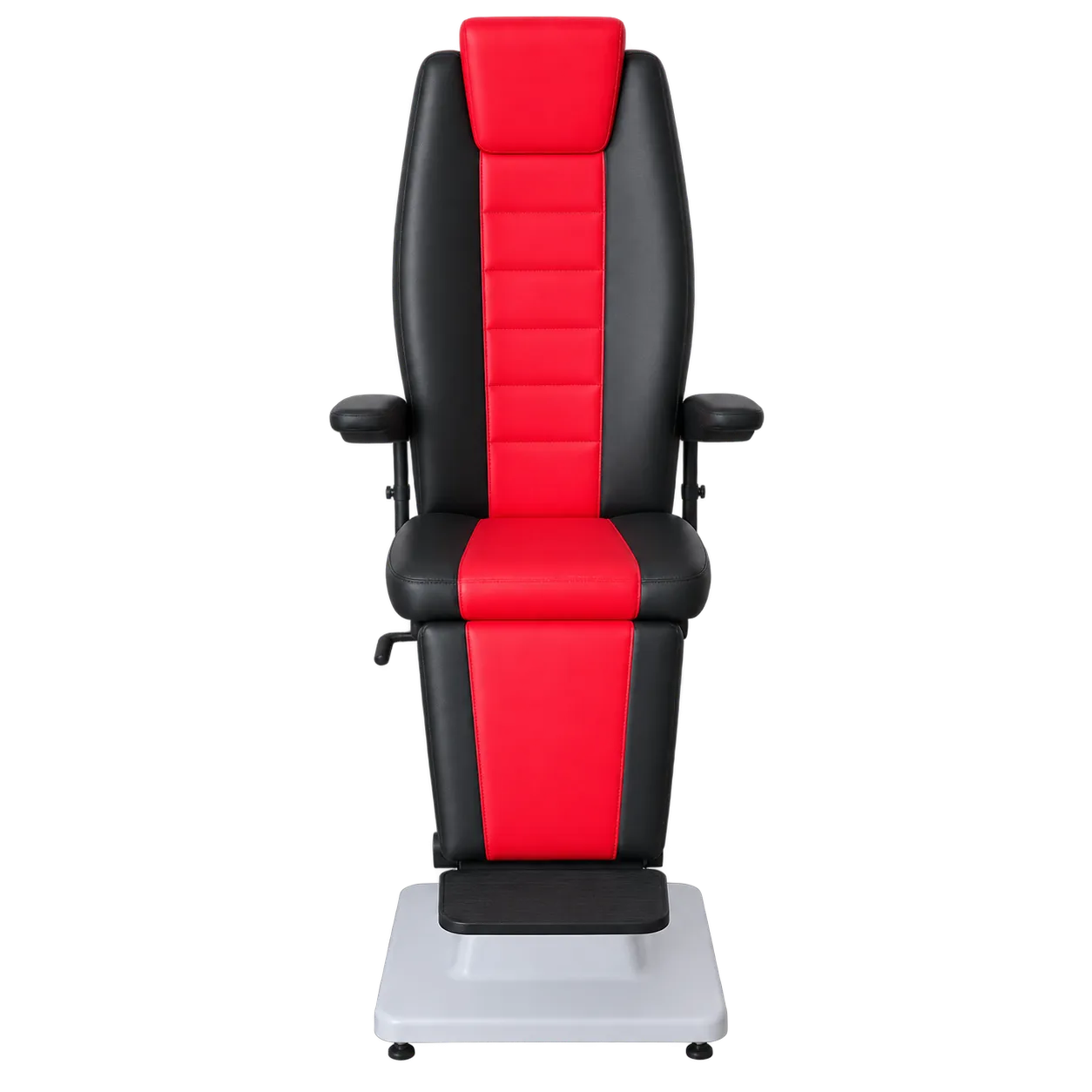
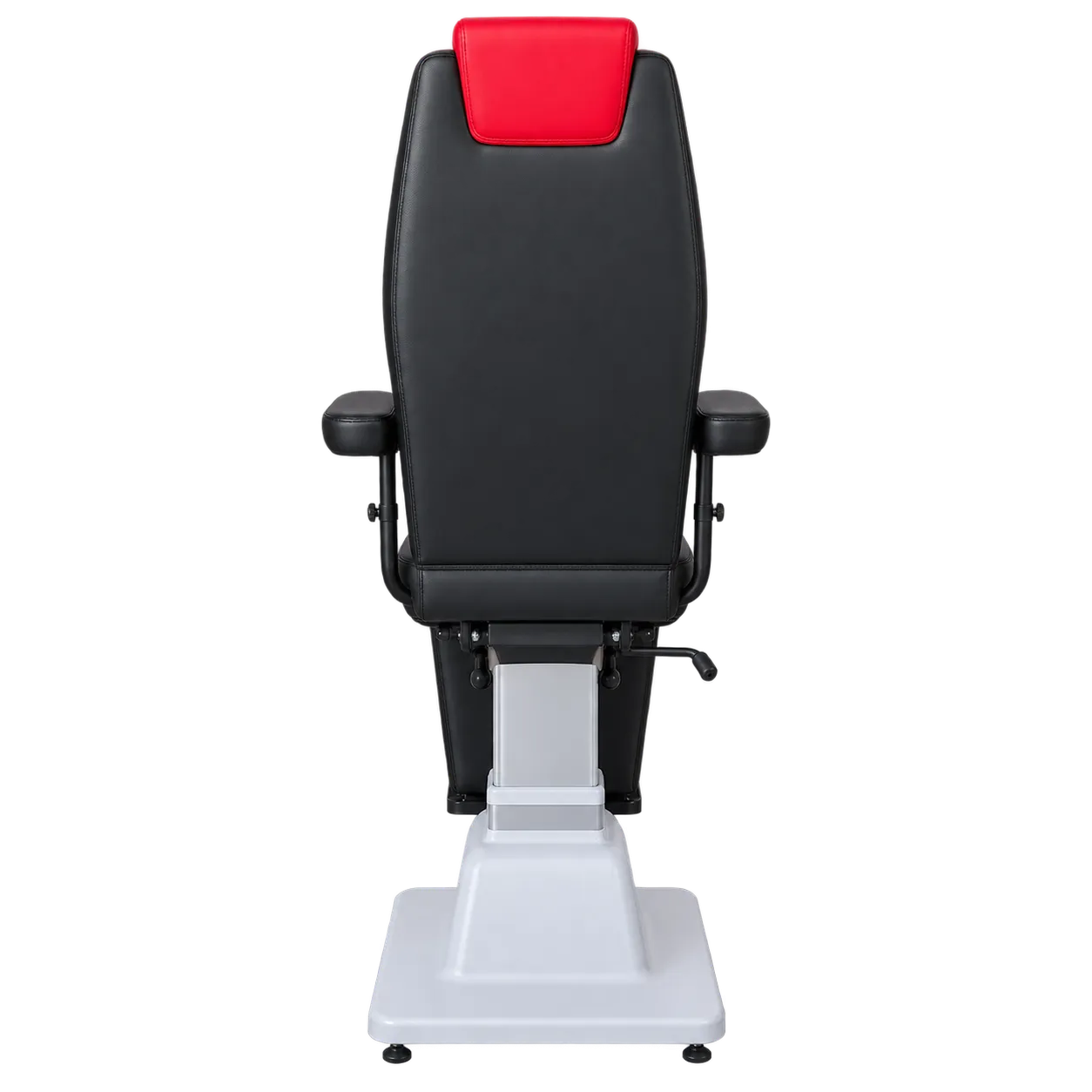
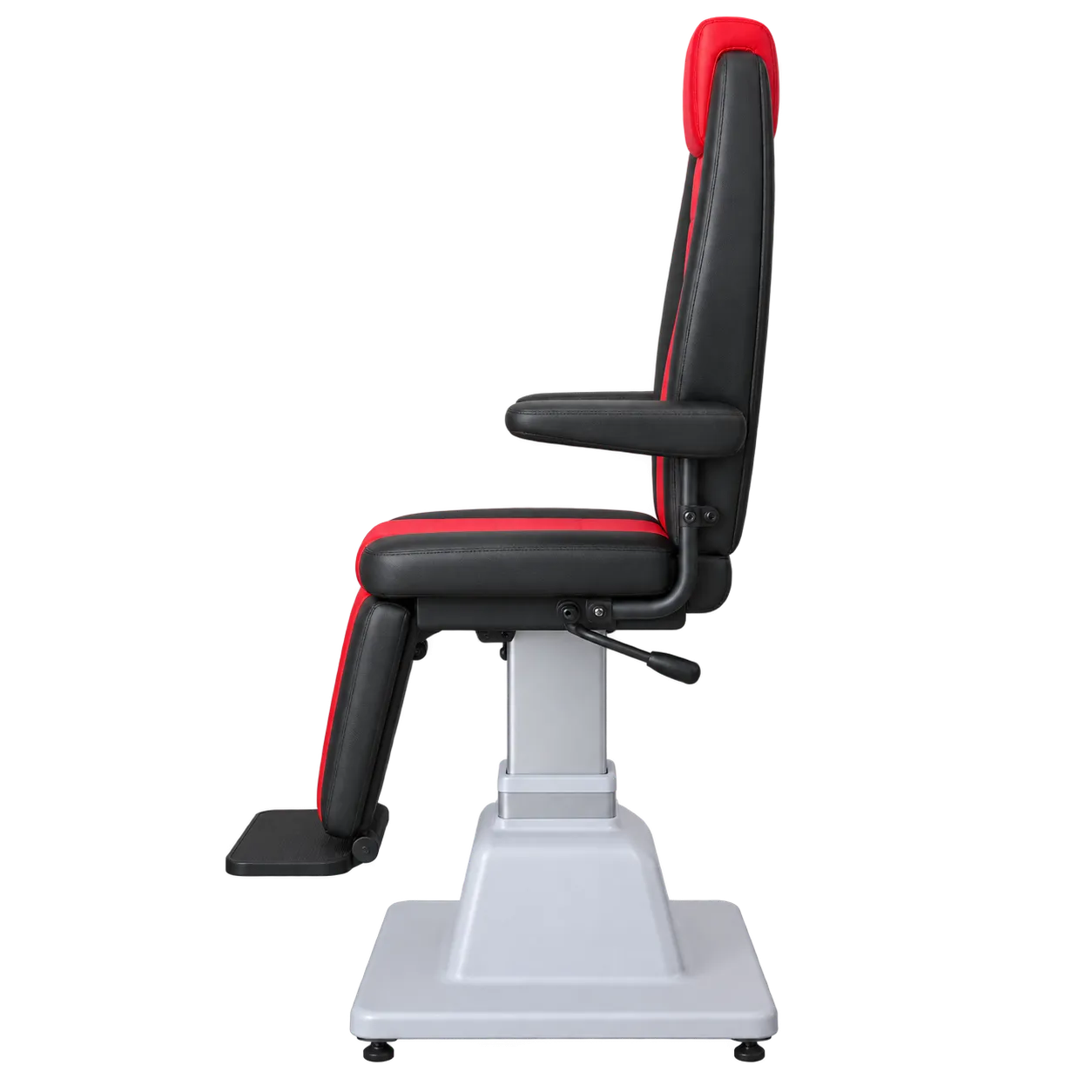
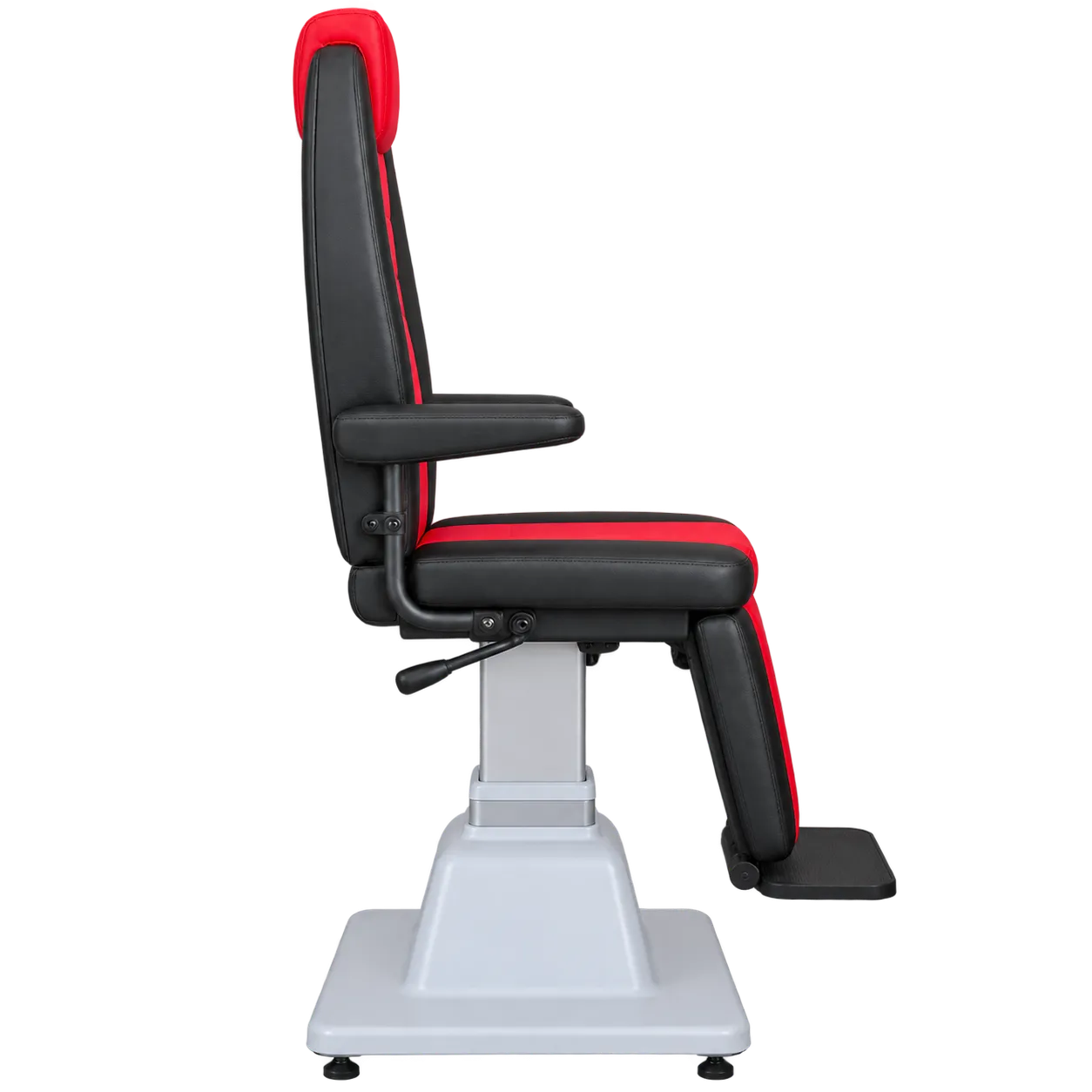
Taller patients benefit most. A backrest that continues past shoulder height without a joint supports the neck and head of patients whom a standard chair leaves unsupported, and it needs no adjustment between appointments.
Longer examinations suit continuous support. Imaging, extended slit lamp work and repeated measurements keep patients seated well past a routine appointment, and a patient whose head is properly supported holds position far better.
Busy clinics gain from having nothing to reset. A fixed one-piece back removes the small task of repositioning a head cushion between patients, which adds up across a full list.
Hospital eye service outpatient rooms see a wide range of patient heights through one chair, and a back sized for the tallest works for everyone below.
Practices refreshing their interior may choose the two-tone finish deliberately, since it reads as more contemporary than the clinical pale upholstery most ophthalmic furniture uses.
High-use rooms benefit practically from the darker covering, which hides scuffs and marks that appear quickly on cream.
Patients who need the head support adjusted individually are less well served, since a fixed back cannot be raised or lowered, and practices with that requirement should confirm what the side lever does first.
Rooms with low ceilings or pendant lighting should check headroom above the chair at full elevation.