
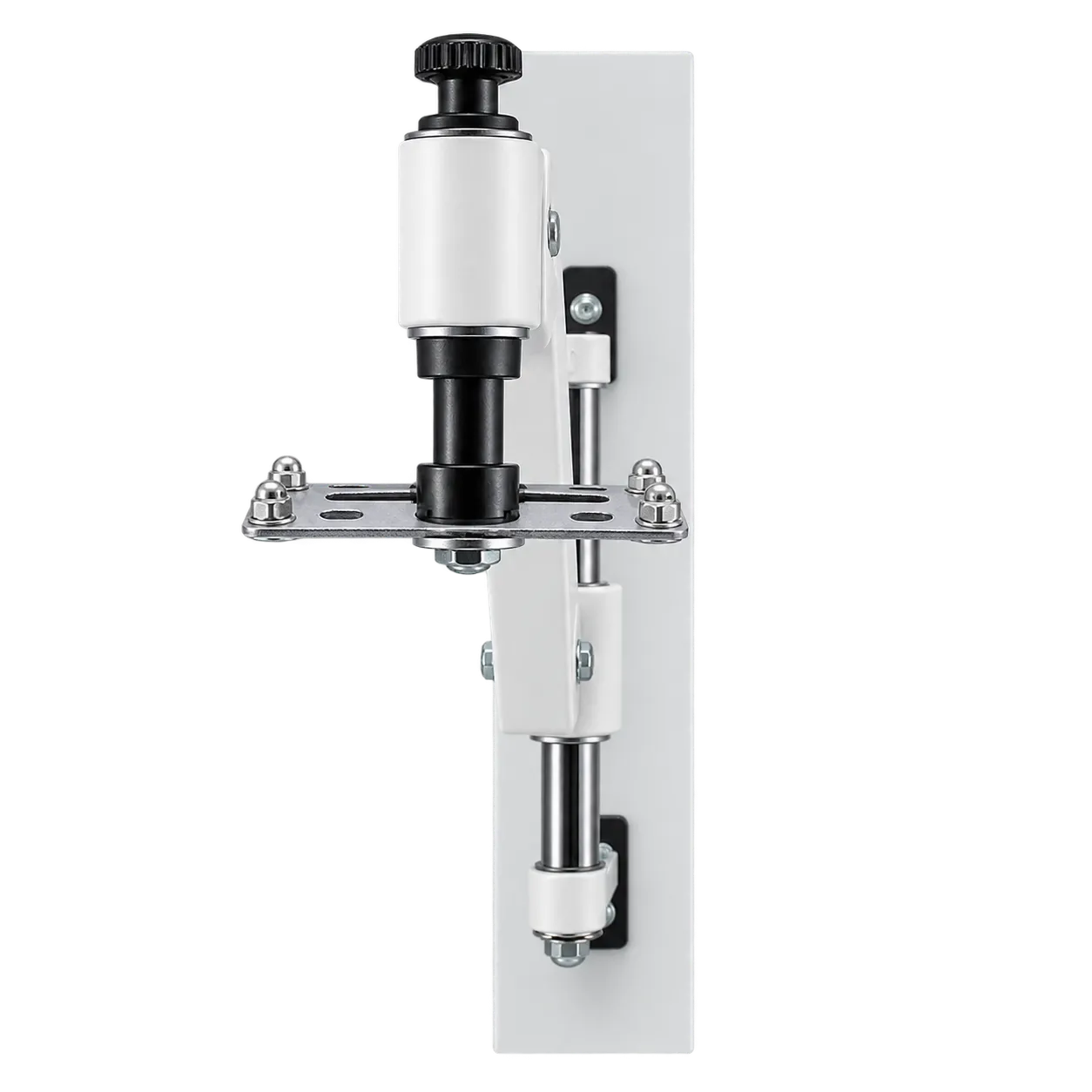
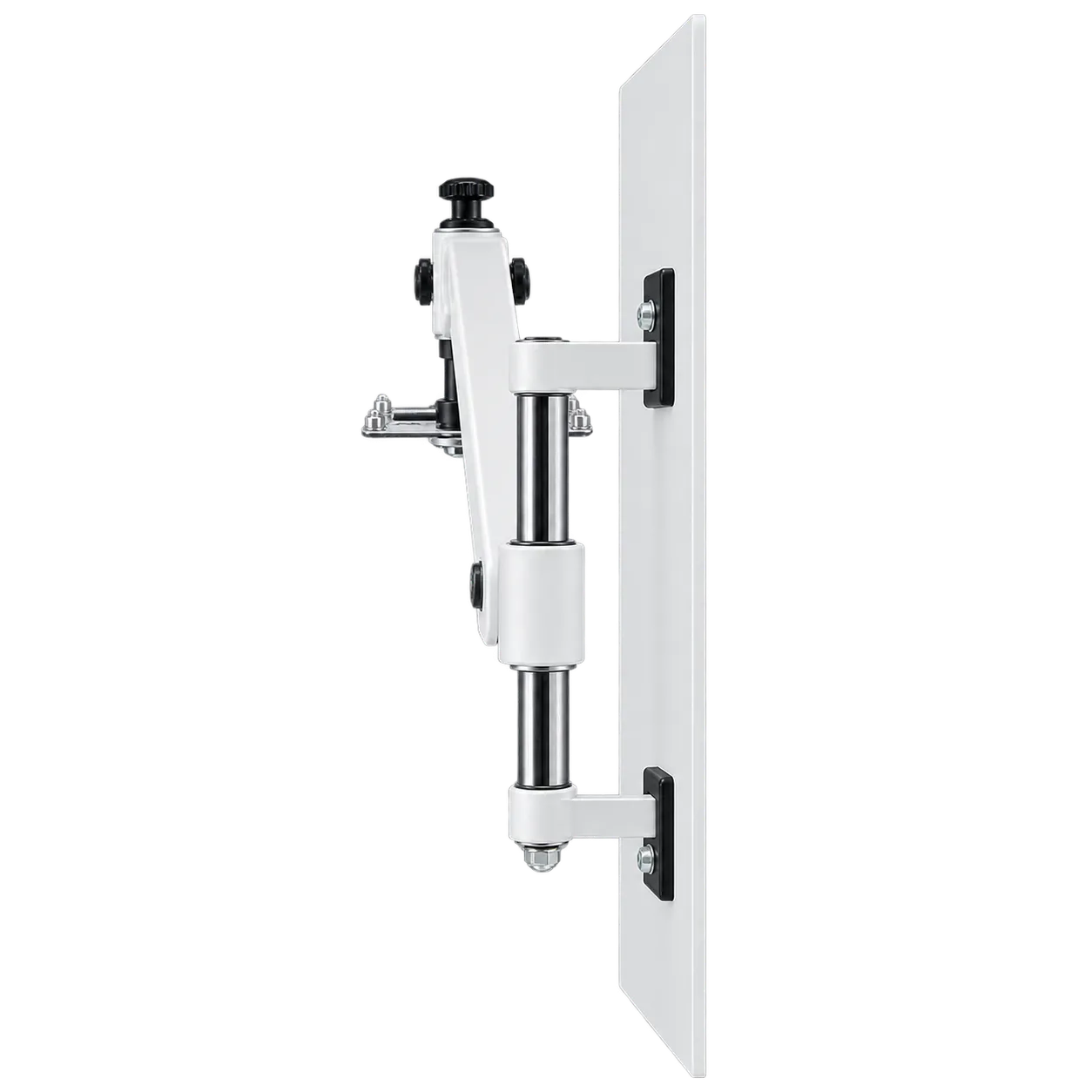
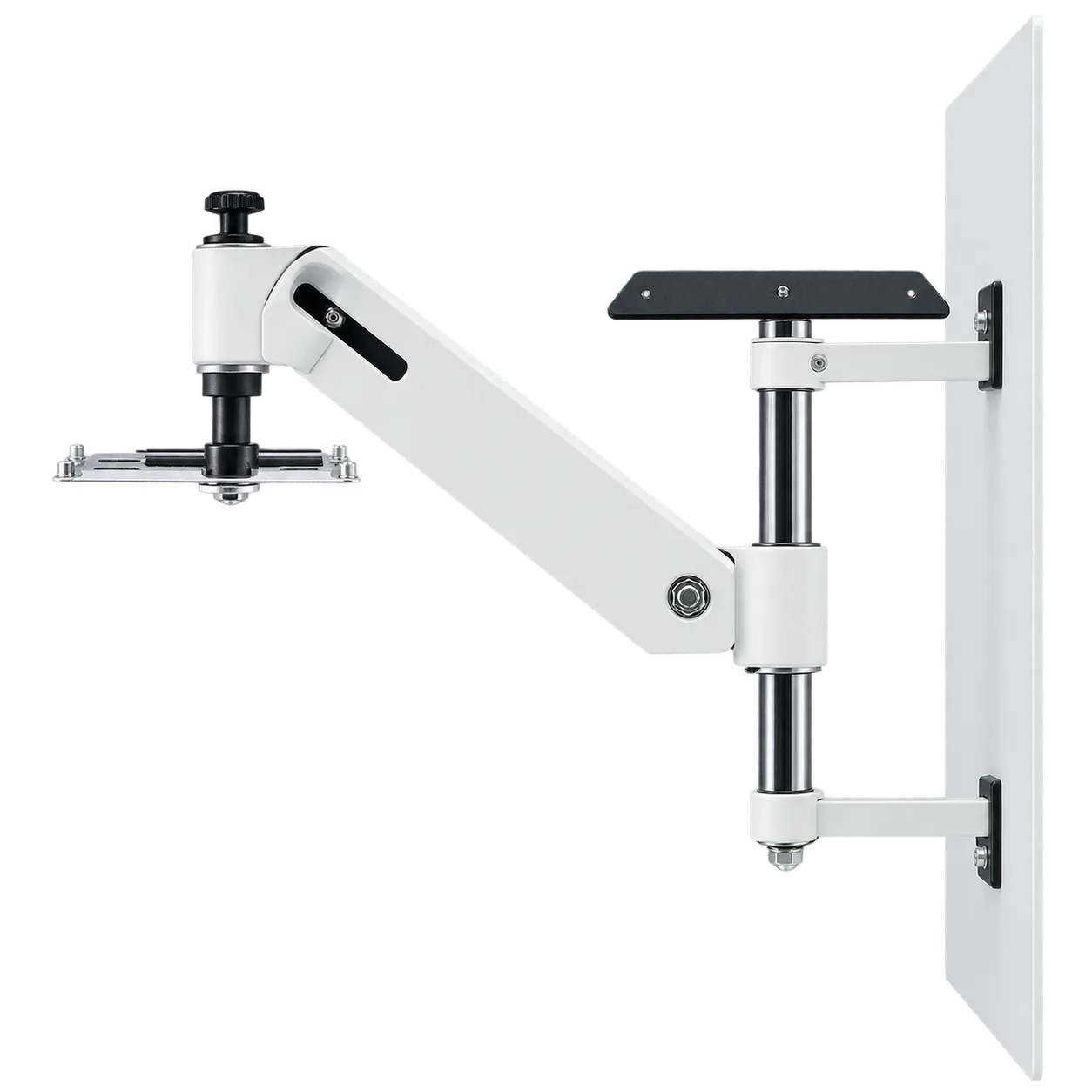
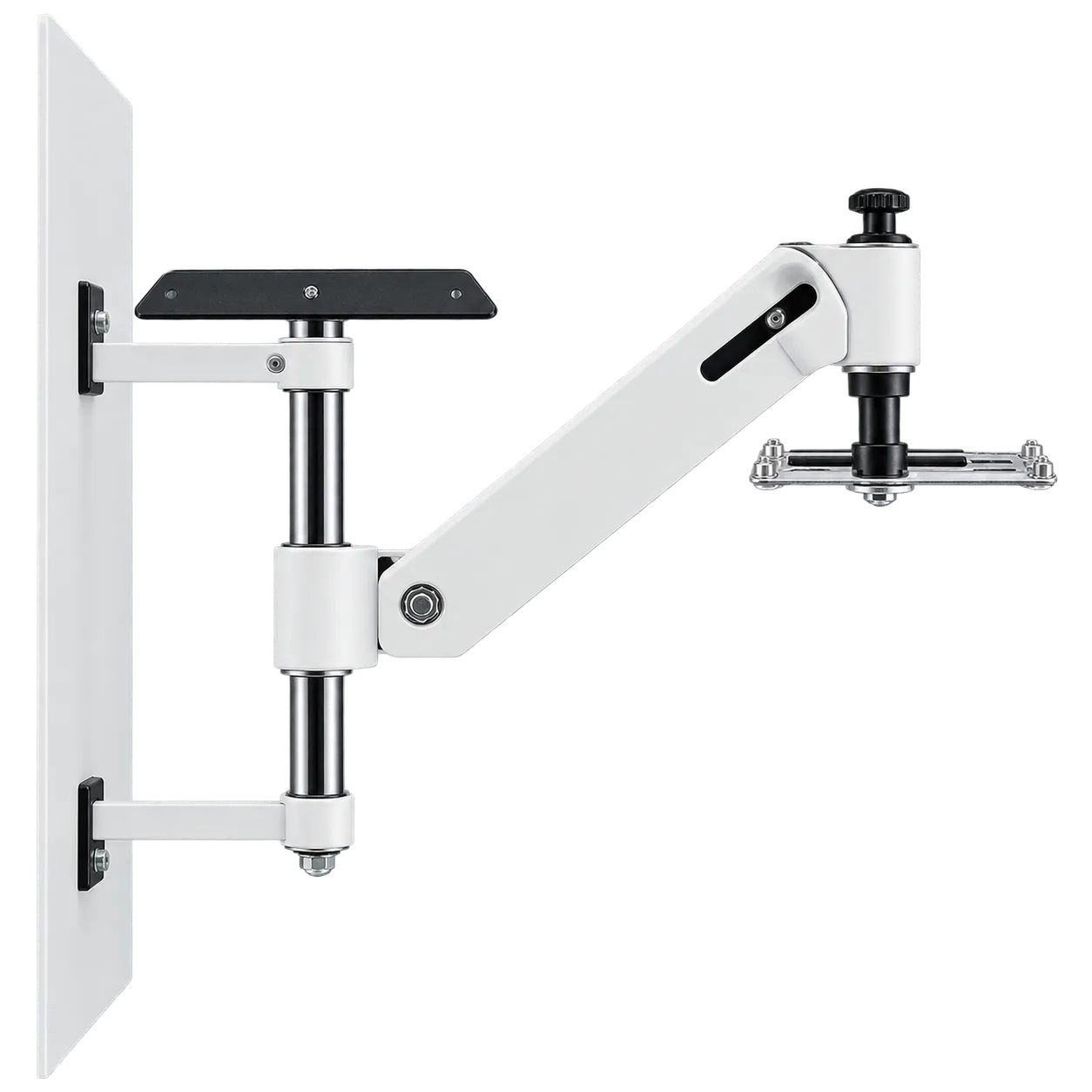
Space-constrained high-street practice is the setting this product exists for. UK consulting rooms are frequently smaller than the equipment catalogues assume — converted retail units, upper floors of terraced buildings, and premises where the testing room was carved out of whatever was left after the frame display. In those rooms a floor-standing refraction unit consumes area that simply is not available, and a wall-mounted arm is often the only way to build a working lane at all.
Practices adding a second testing room face the same calculation. The first room usually gets the proper combined chair-and-stand unit; the second is fitted into whatever space remains, frequently for a locum, an overflow list or a pre-registration trainee. A wall arm carrying both phoropter and projector turns a marginal room into a functional one at a fraction of the cost and footprint of a full refraction unit.
Domiciliary providers and community services with a fixed base use the arrangement for their base testing room, where verification and follow-up work happens between visiting lists. Hospital eye service departments and community ophthalmology clinics use wall arms in rooms shared between purposes across a week, where a floor-standing unit would obstruct the room's other uses.
Access considerations deserve honest treatment. Swinging the arm through 180° clears the instrument support from the patient's approach path, which genuinely helps when positioning a wheelchair alongside the examination chair — a floor-standing unit cannot be moved at all. But the phoropter itself still requires the patient to sit upright and bring their face to the head, so patients who cannot do that need trial frame and loose lens refraction regardless of the mounting. Practices serving significant numbers of wheelchair users or patients with limited mobility should retain that capability alongside.