
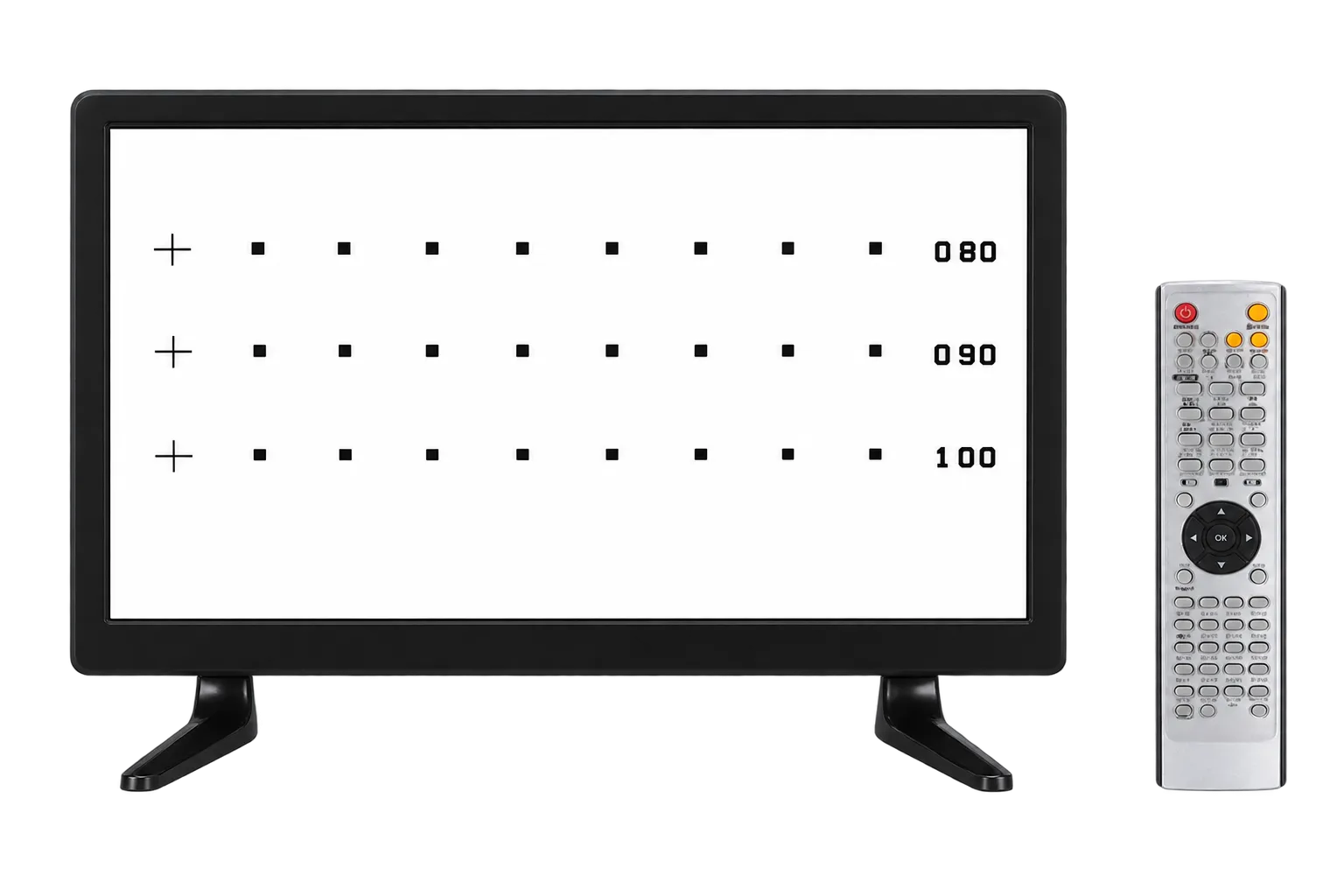
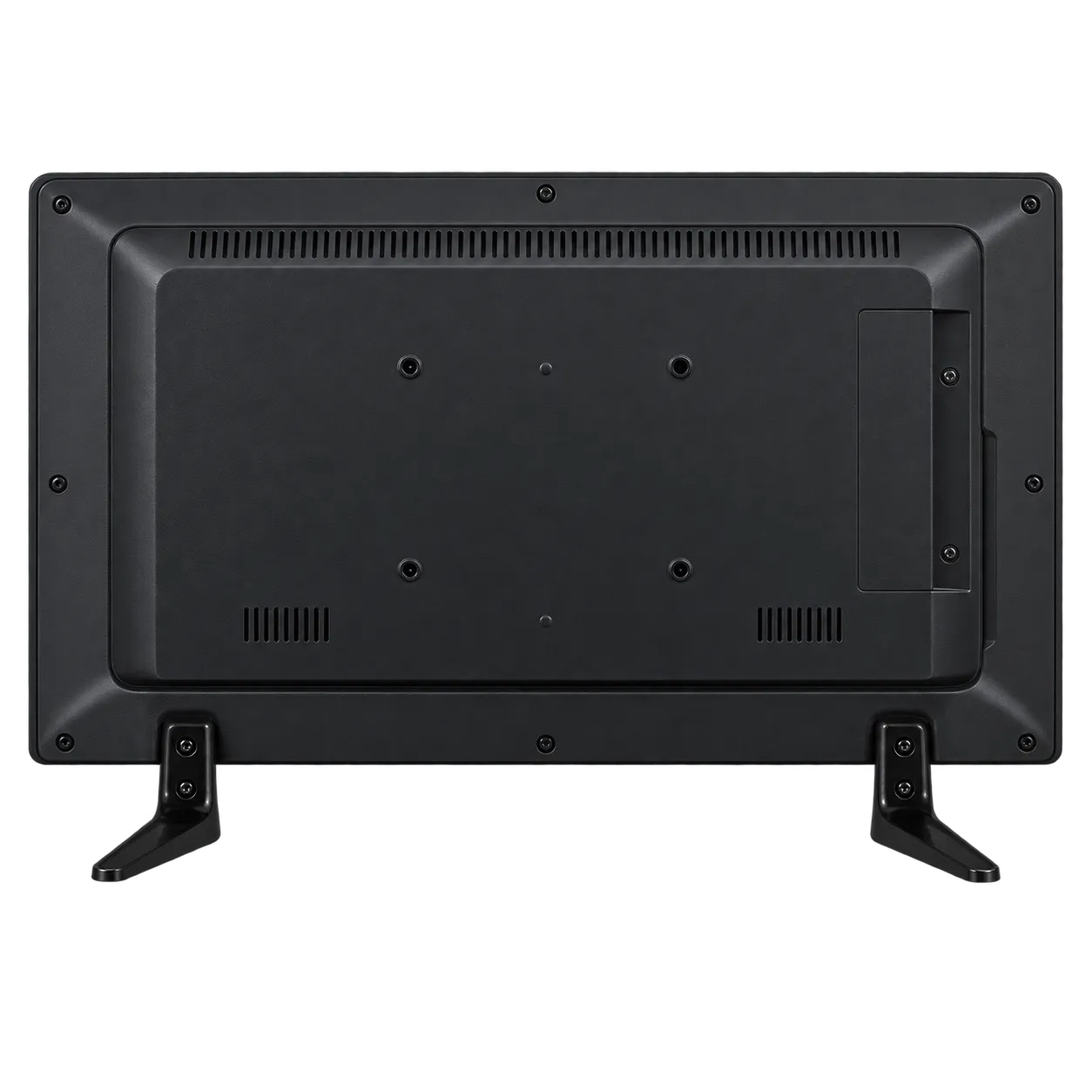


General community optometry is the natural home for this panel size. A 21.5-inch display gives enough area to hold several acuity rows on screen at conventional testing distance while remaining straightforward to wall-mount in a consulting room where space is already spoken for. For the great majority of routine sight testing, that balance is the practical answer rather than a compromise between too small and too large.
Continuous reading changes what the clinician observes. When several rows are visible together the patient works downward under their own momentum, and the point at which reading becomes guessing is visible in real time — hesitation, self-correction, a change of pace. Presenting one line at a time removes all of that and leaves only the reported letters. For assessing children, patients whose responses seem inconsistent, and anyone where effort and accuracy need distinguishing, watching the descent is genuinely informative.
Small and awkward rooms remain fully served, since the 1 metre lower limit runs across this family. A practice choosing this model over a smaller one is buying chart area, not giving up reach, so premises that cannot host a conventional lane still work.
Screening services in schools, care settings and community clinics use the same combination — short working distance, self-illuminated panel, light enough to move. At 5.3 kg gross the unit remains transportable between sites. Two matters should be settled before ordering rather than treated as detail: the chart acuity range is unpublished and determines whether any low vision work is possible, and brightness, power supply, chart schedule and mounting arrangement are all absent from the supplied literature. Medigear.uk will obtain each in writing at enquiry.