
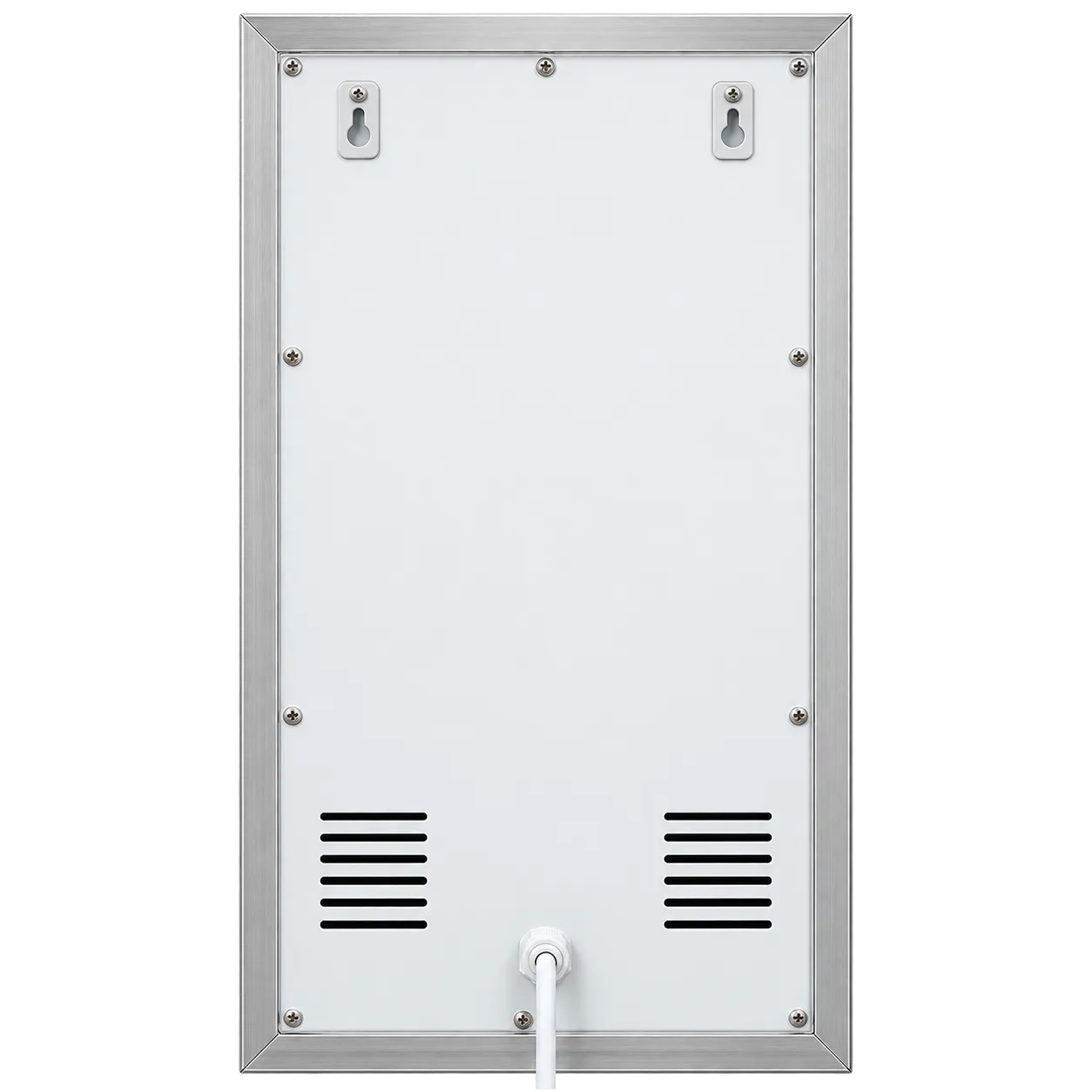
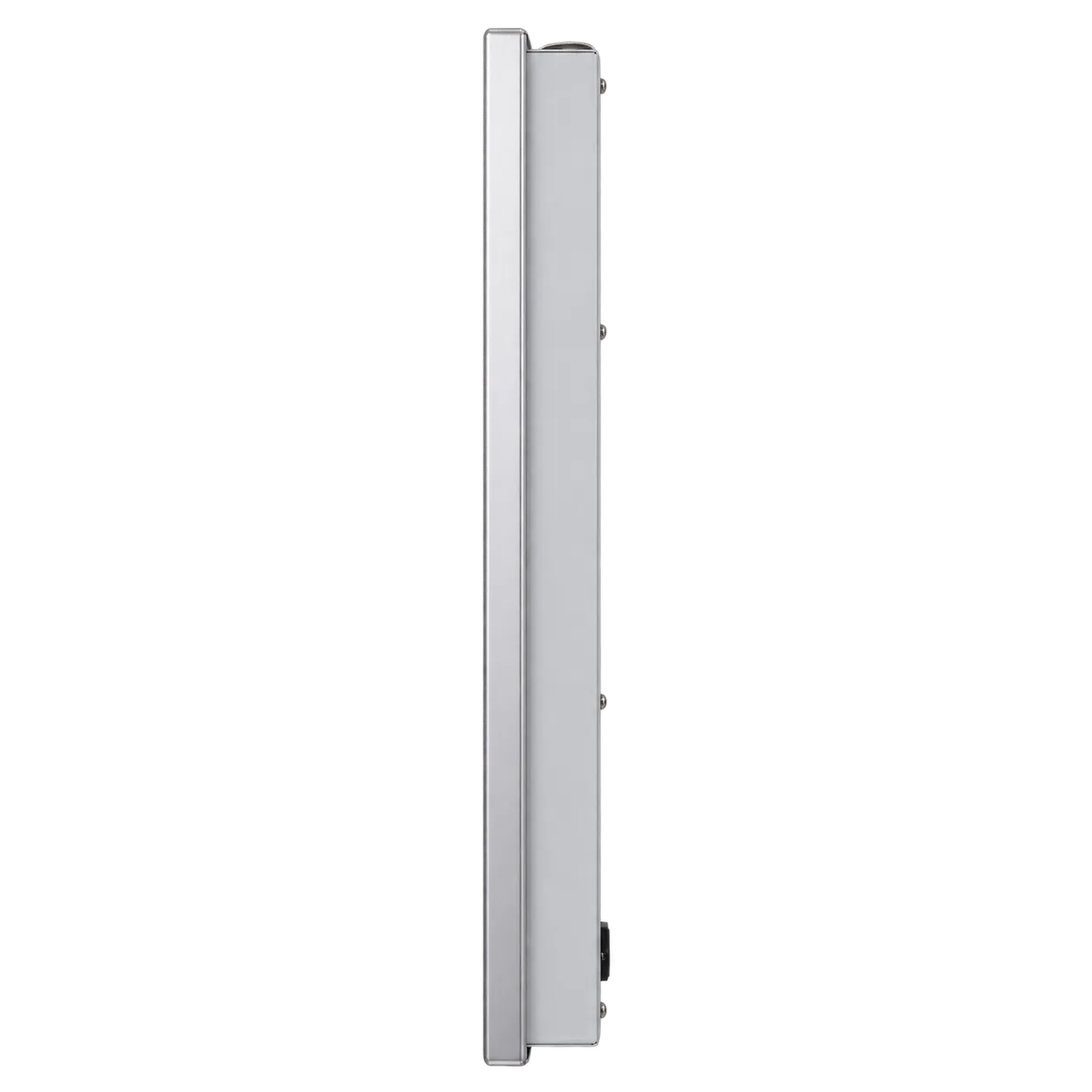
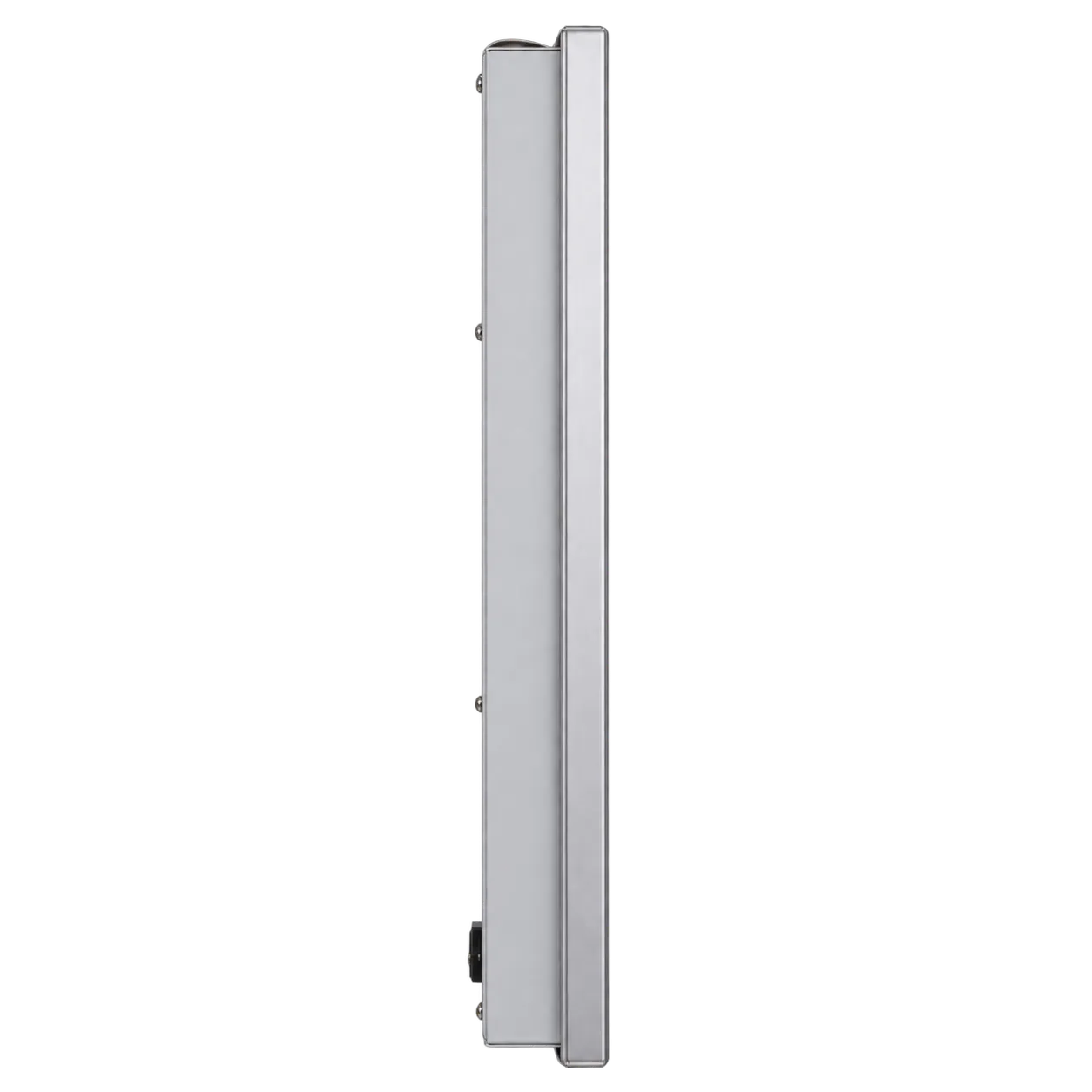
Rooms with constrained vertical wall space are the practical target, and they are commoner than equipment catalogues assume. Radiators under windows, dado and picture rails in older buildings, surface-mounted trunking, low ceilings and the sloping eaves of converted upper floors all reduce the clear run of wall available above whatever is already fixed there. A chart needing 1090 mm may not fit; one needing 950 mm often does. For practices in period premises, converted retail units and upper-floor rooms — which describes a great many UK optical and primary care settings — that 140 mm can decide whether a wall position works at all.
Mixed adult and paediatric screening is served by the picture variant. School medical rooms, GP practices and community clinics see both groups in the same room on the same day, and a face pairing adult acuity rows with a children's picture chart means one wall position rather than two. Preschool children cannot reliably name letters but recognise familiar objects considerably earlier, so picture optotypes give a real measurement rather than a failed attempt — and having both lit to the same standard makes the results directly comparable.
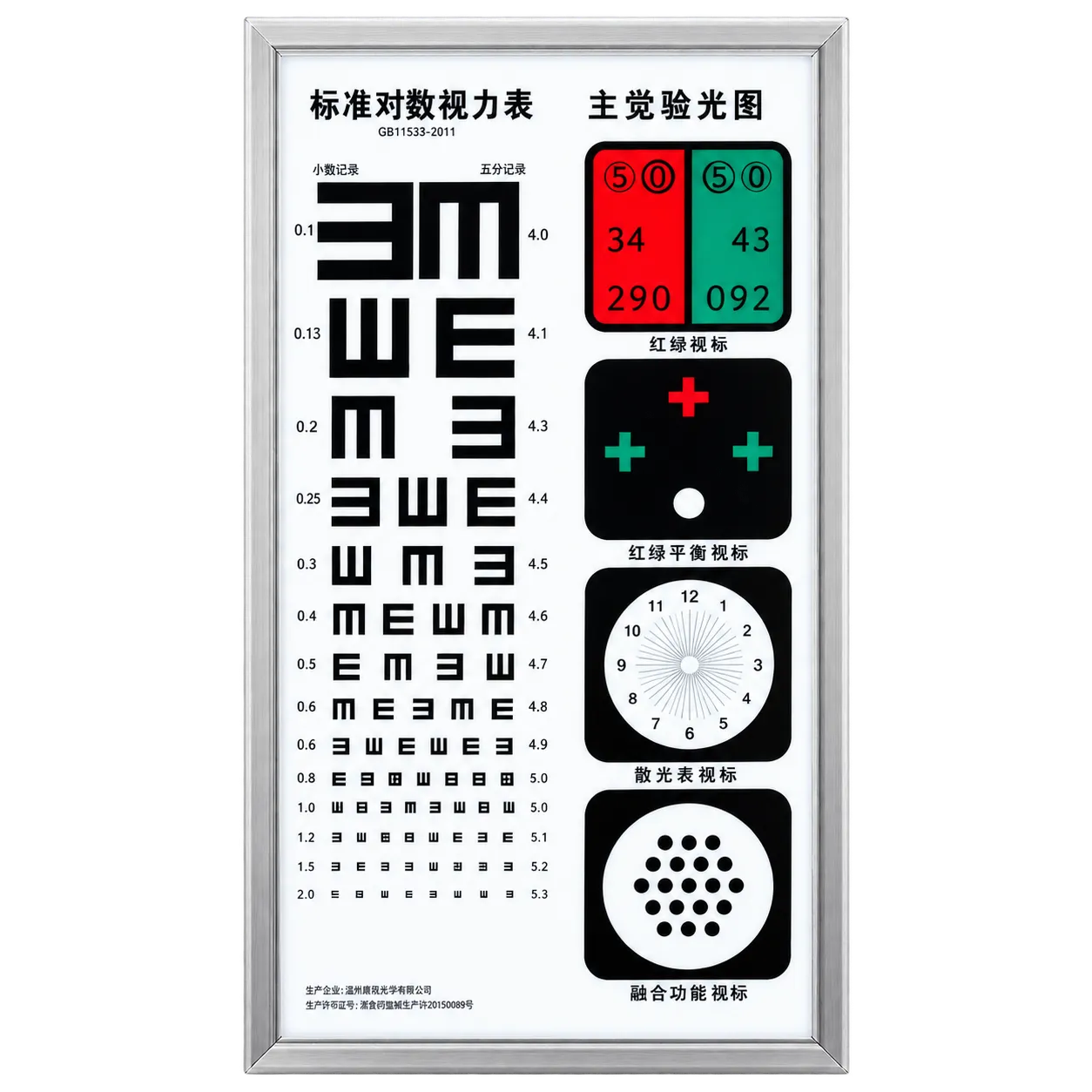
General screening positions use the multi-panel faces, which combine acuity with additional colour and duochrome targets on the same illuminated surface. Backlighting matters more for those panels than for the letters, since colour comparisons are sensitive to both the intensity and colour temperature of incident light.
Two things belong in the decision before anything else. The clear vertical wall space must be measured against the 950 mm requirement and the intended mounting height. And the face variant is permanent — the printed surface is the instrument's entire clinical scope, so the panel schedule for each variant should be requested in writing and the choice made deliberately.