
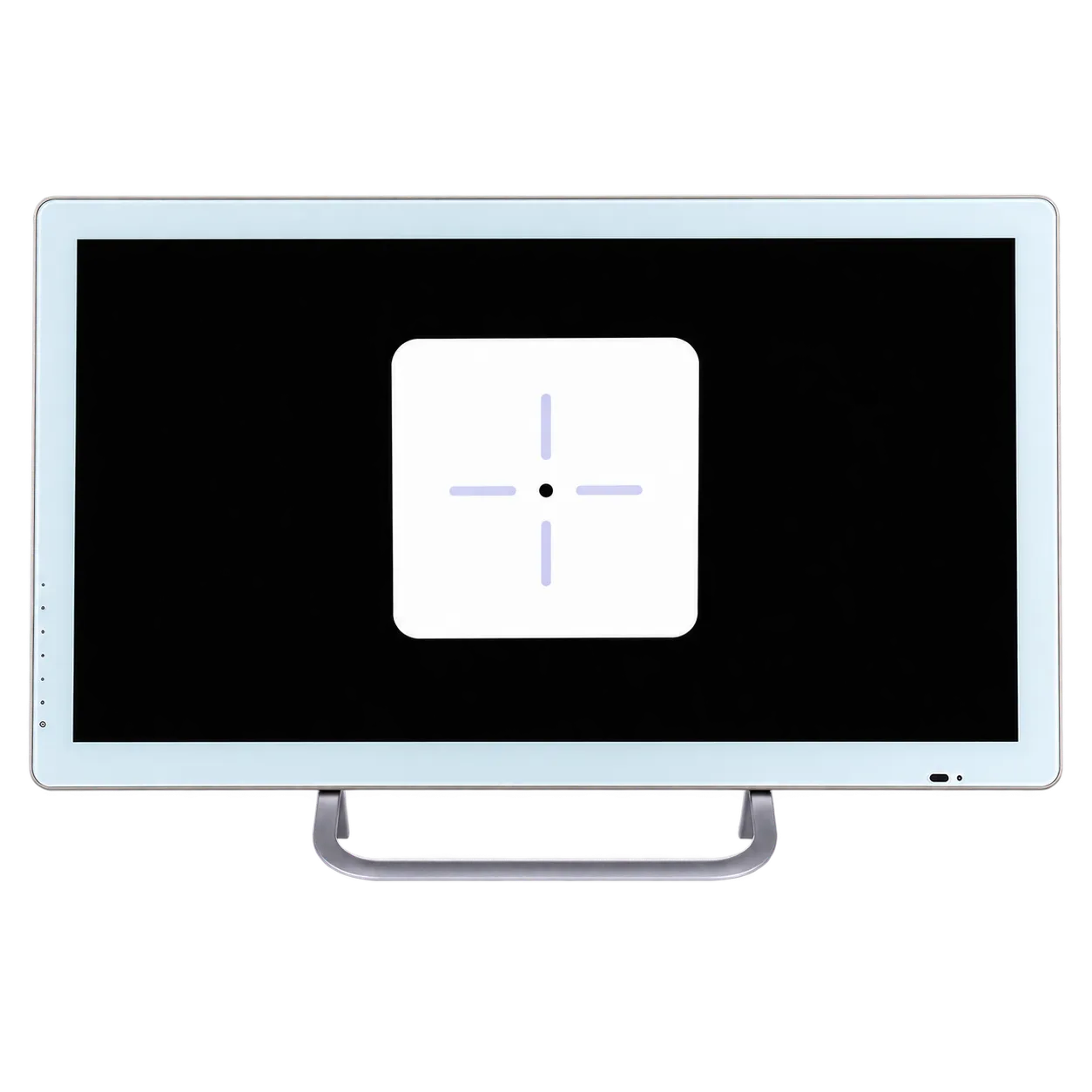
Low vision assessment is the clearest use for the largest panel in a family. Acuity charts are physically largest at the top, and those optotypes scale up further as working distance increases, so a display's area becomes the limiting factor precisely where low vision measurement takes place. A practice assessing acuities of 6/60 and below at 6 metres is working entirely in that region, and 23 inches renders it with more room than any other panel in this range.
Long consulting rooms follow the same logic. Practices able to work at the top of the 1 to 6 metre range directly, without a mirror, gain a simpler optical arrangement — but only if the display can render the largest targets at that distance. The widest panel in the family is the one best placed to do it.
Short and constrained rooms remain fully served, since the 1 metre lower limit runs across the whole family. The choice of this model over a smaller one is about area, not reach, so difficult premises lose nothing.
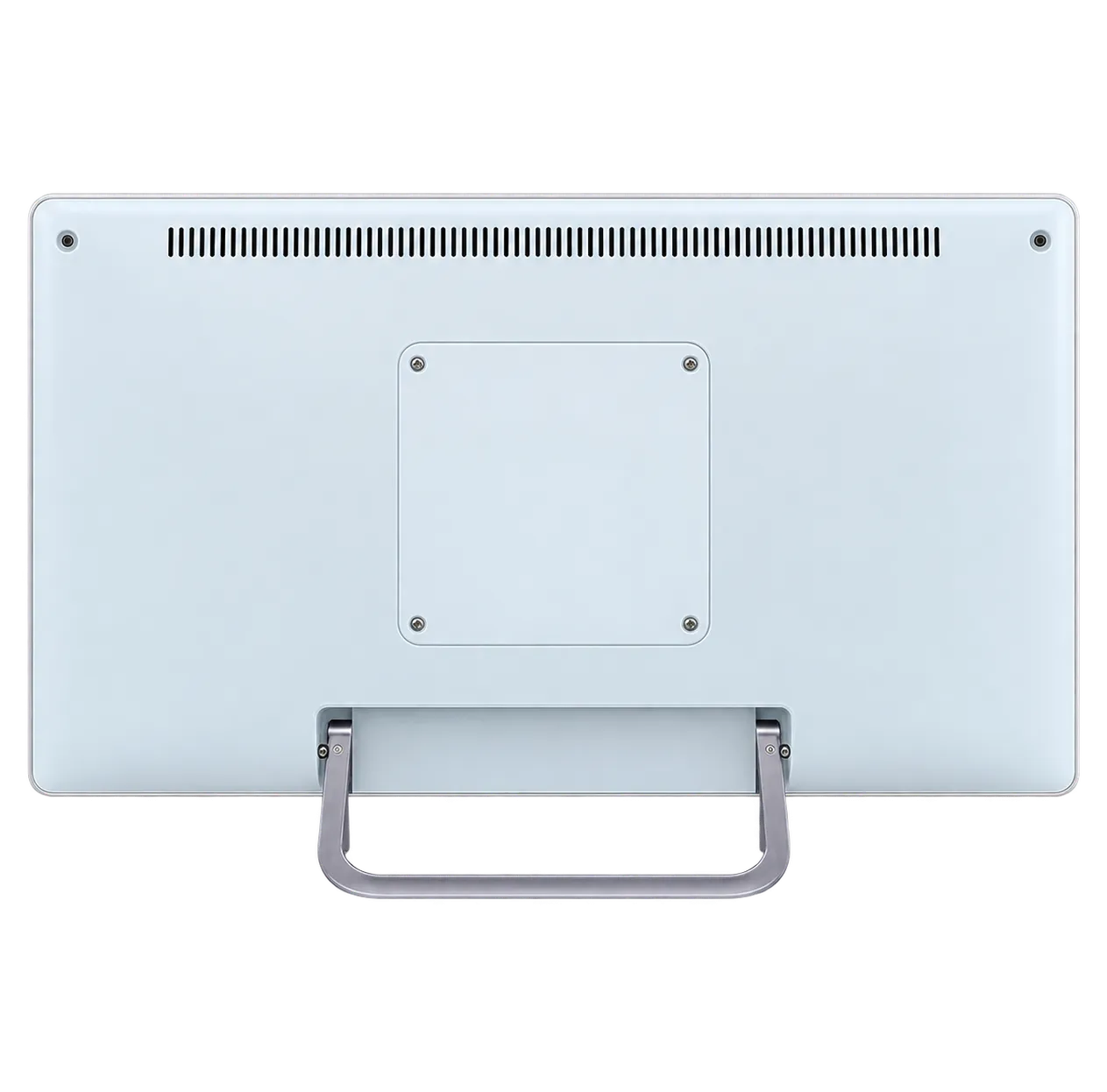
Routine community optometry uses the stated capabilities throughout: acuity, myopia, hyperopia, colour deficiency screening, astigmatism and duochrome from a handheld remote on a self-illuminated panel. Three matters should be settled before any order, and none of them is a detail. The acuity range is unpublished, and on a panel bought for its area that omission is particularly awkward. Brightness, power supply, chart schedule and mounting arrangement are likewise absent. And the "3D" designation is undefined — if stereoacuity testing is part of the reason for considering this model, it must be described in writing first.