
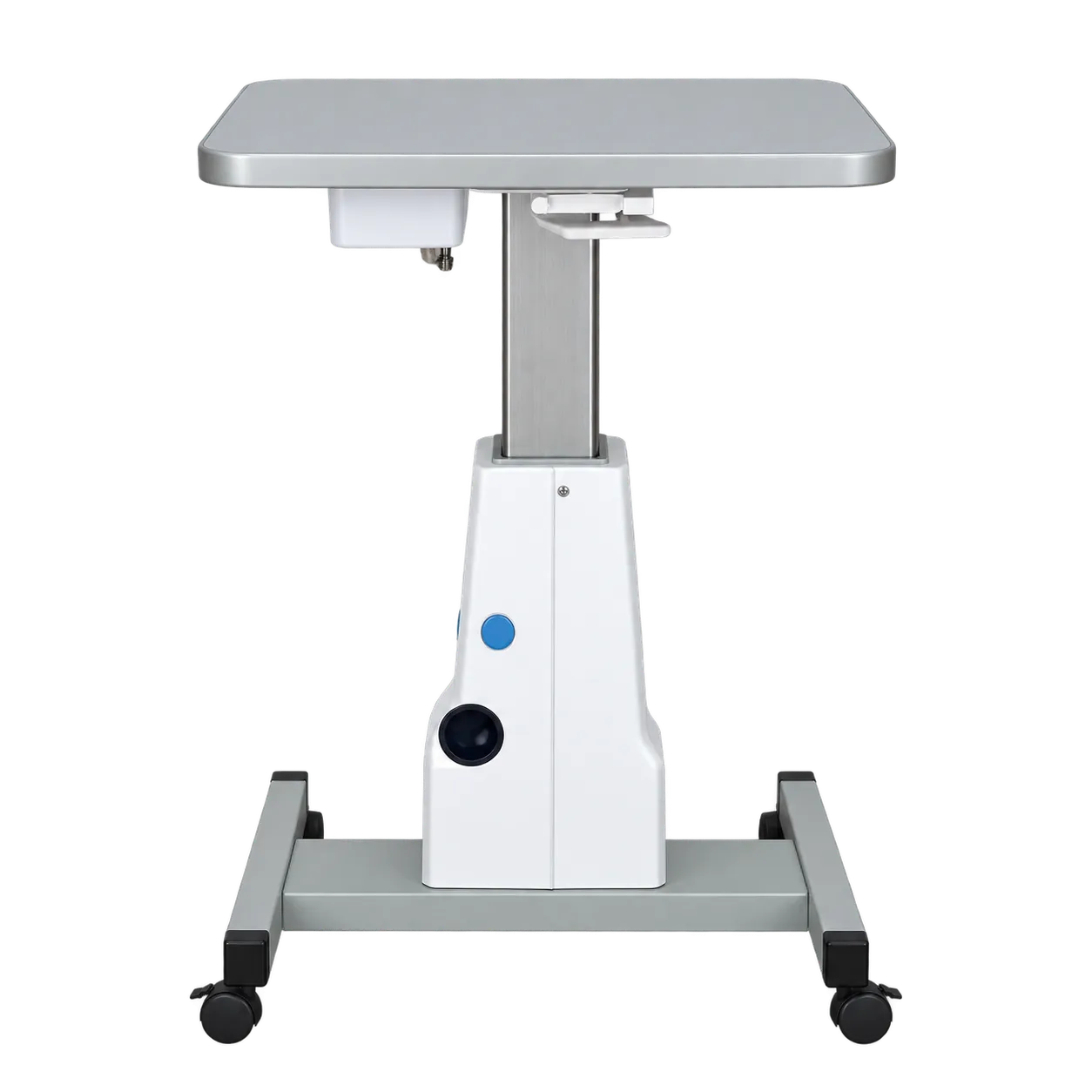
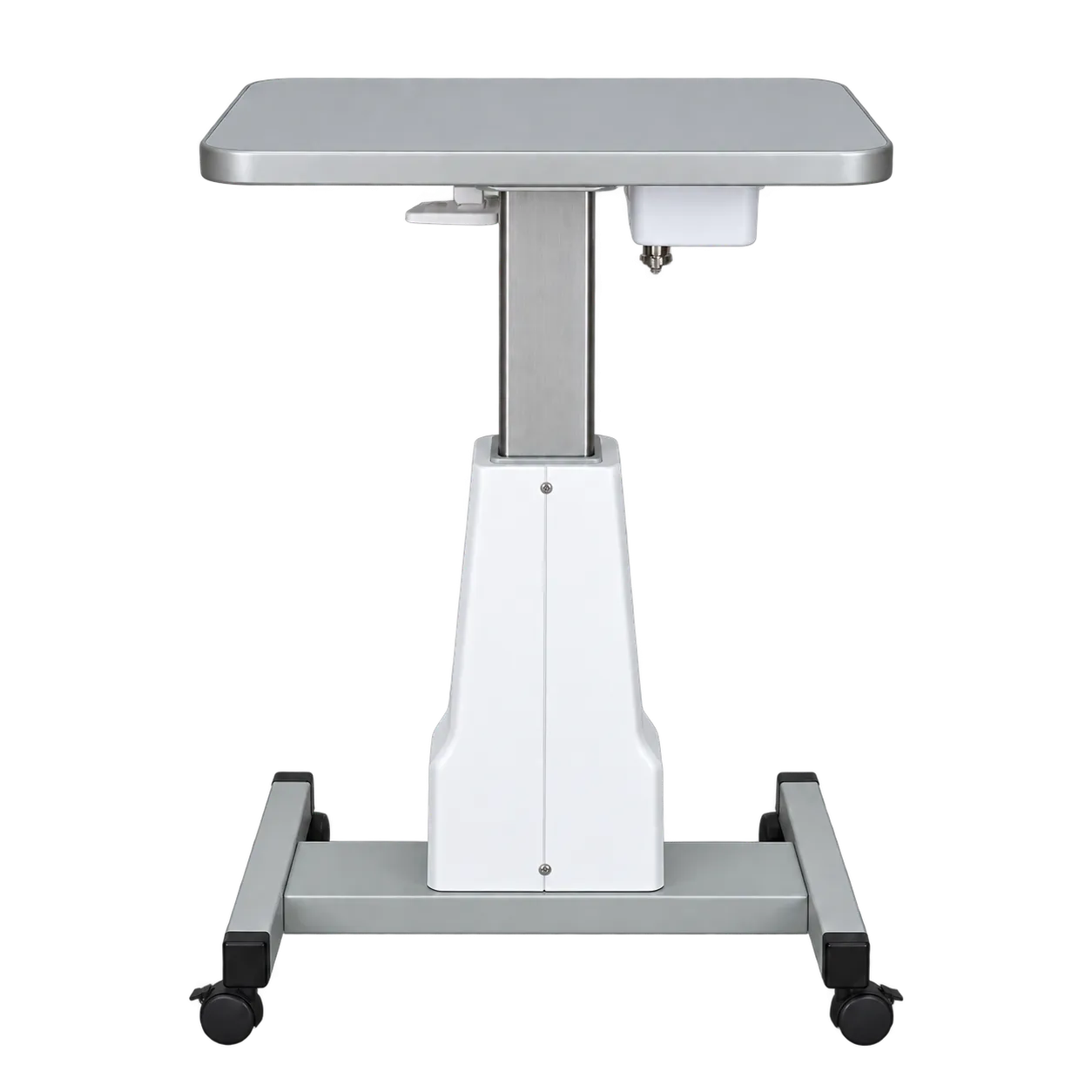
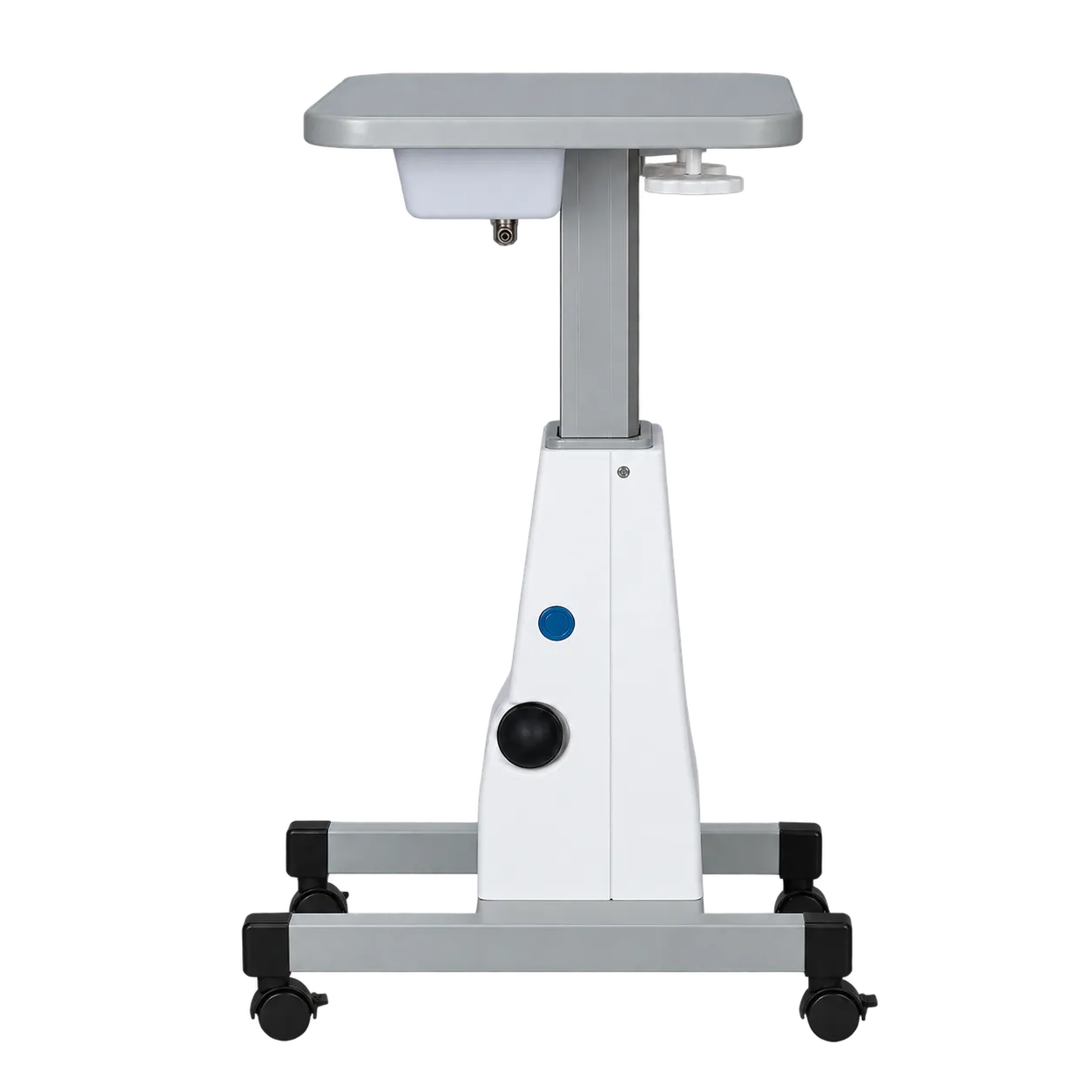
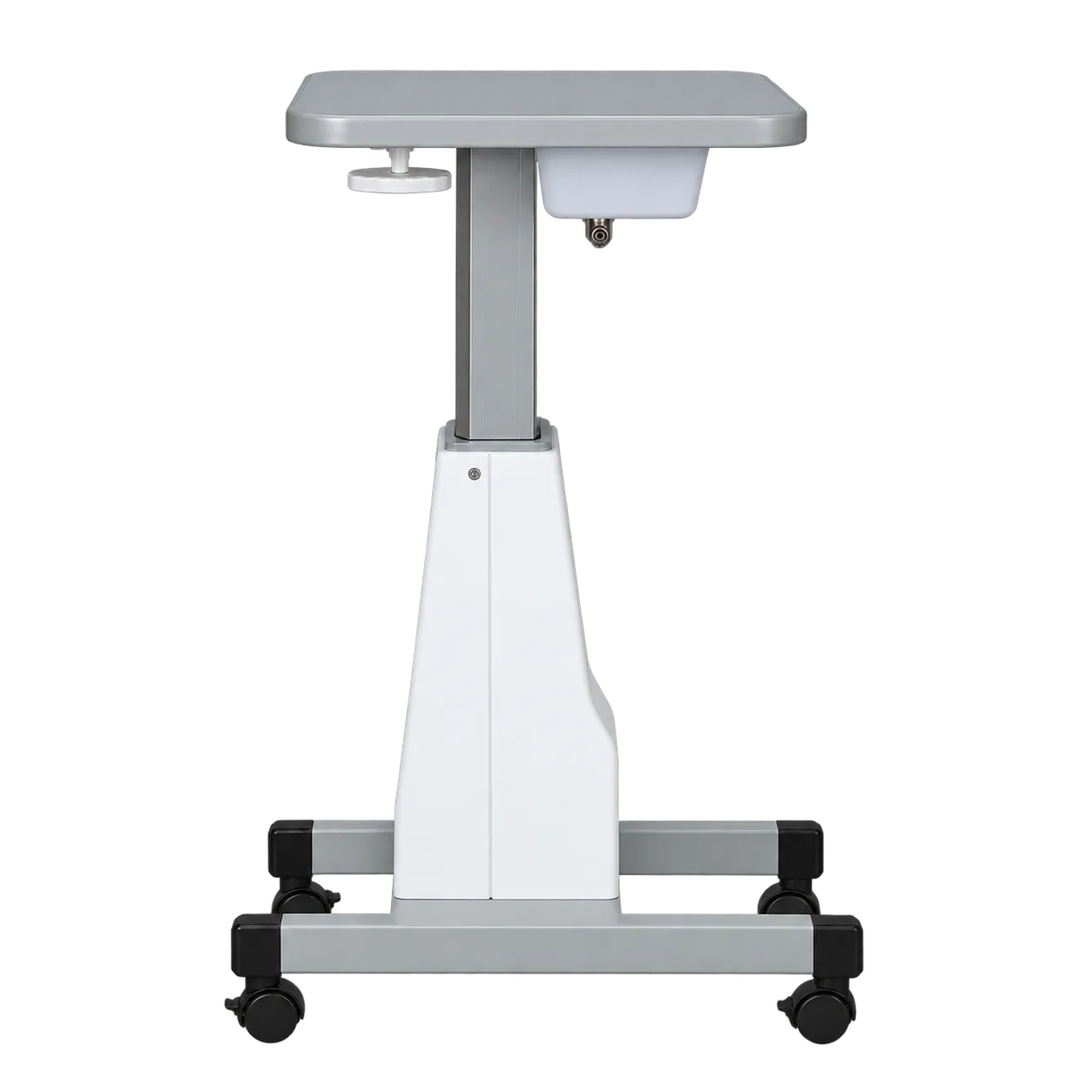
Pre-test rooms are the natural home. Autorefraction, keratometry and non-contact tonometry are often run by optical assistants working through a list at pace, and every patient arrives at a different sitting height. A powered lift sets the chinrest in seconds while the patient stays seated, rather than asking them to perch forward or slump down.
Community optometry consulting rooms benefit in the same way at the slit lamp. Anterior segment assessment and contact lens aftercare depend on the patient holding still at the headrest, which nobody straining upwards or hunching over manages for long. Matching the instrument to the patient is a comfort gain and a clinical one, supporting the standard of care the GOC expects in routine examination.
Hospital eye service outpatient clinics can use the LY-3A as a mobile station. At under 20 kg on castors it moves between rooms when a clinic is reconfigured, and can open a second examination position on a busy day.
Paediatric work gains from the lower end of the range. A child on a raised seat reaches a chinrest set near 630 mm more easily than one fixed at a standard desk height.
Dispensing and training settings use it too. A lensmeter on the standard top makes a compact verification point in a dispensary, and university optometry clinics can reset the height between students as well as patients.
Wheelchair users are partly served. The height range suits many of them, but the centre column and two-rail base limit knee and footplate clearance, so practices with a large wheelchair-using population typically keep a dedicated offset-column table or use hand-held instruments as well.