
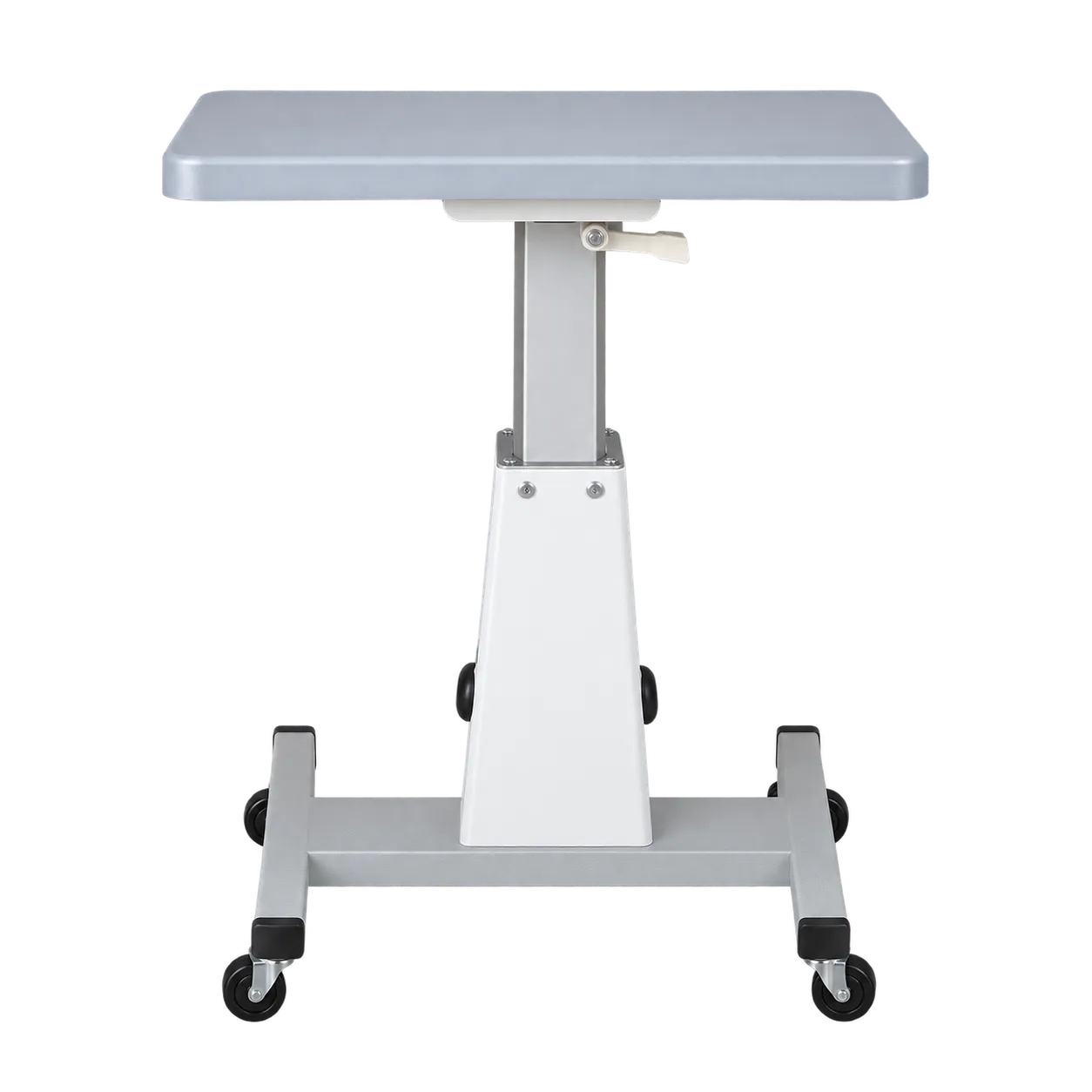
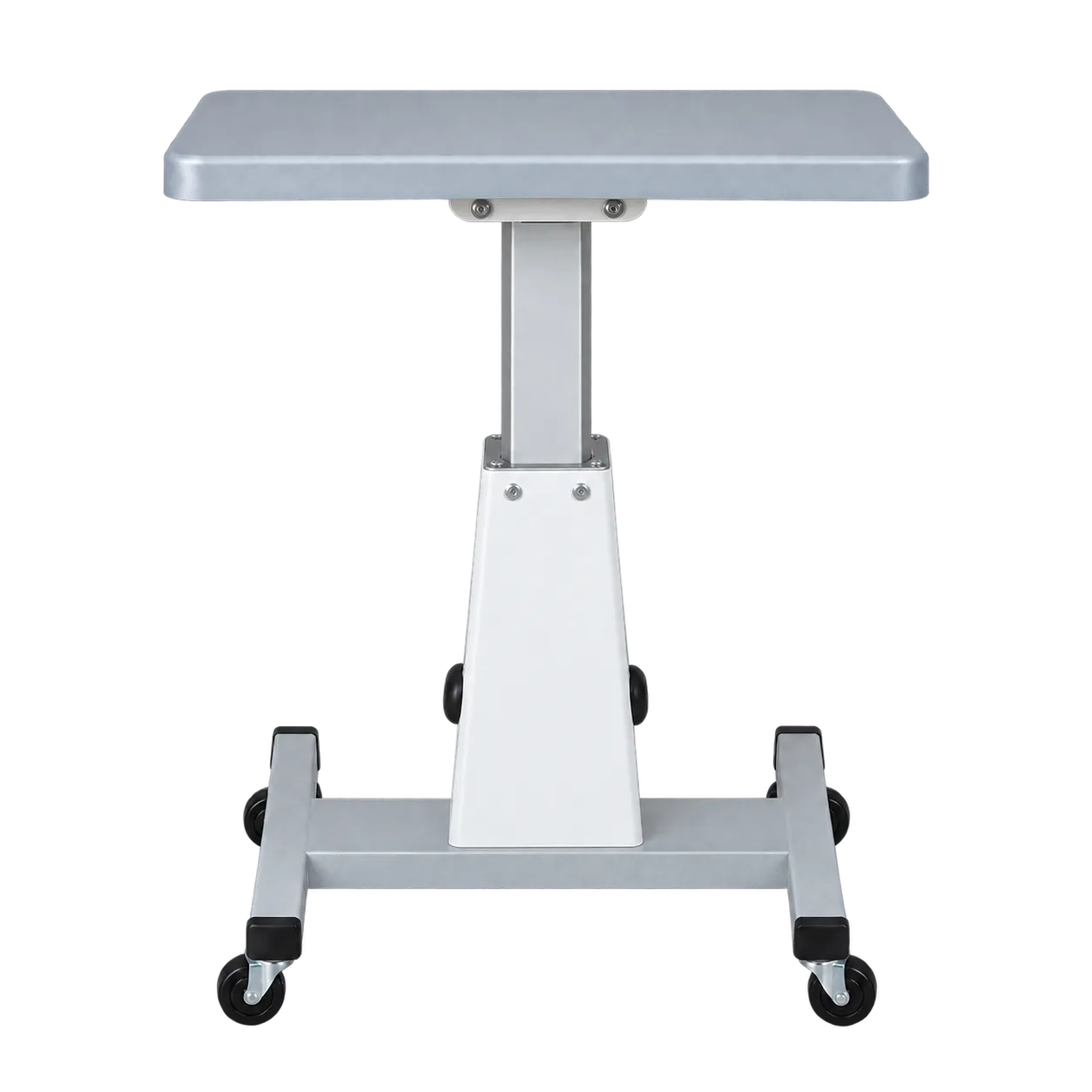
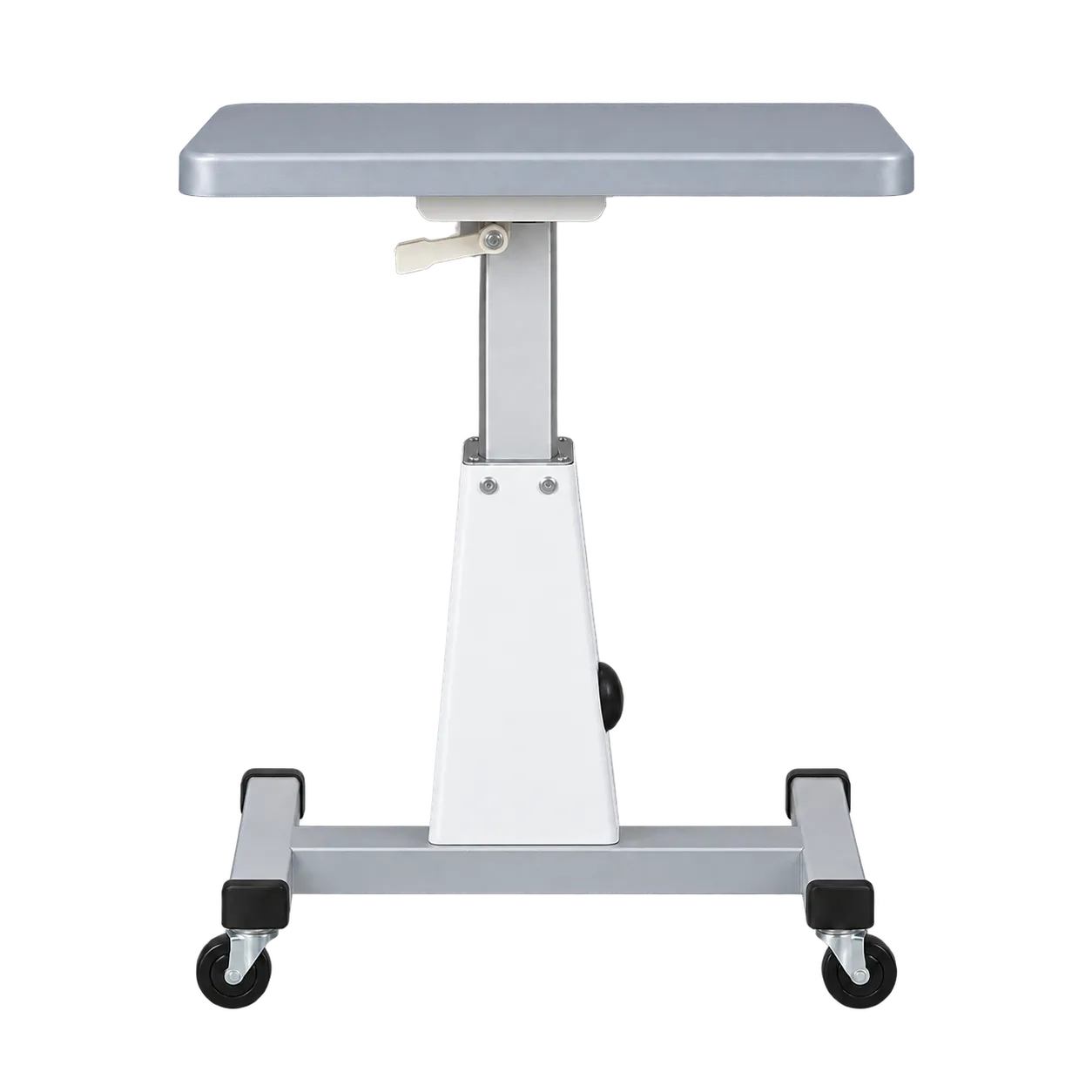
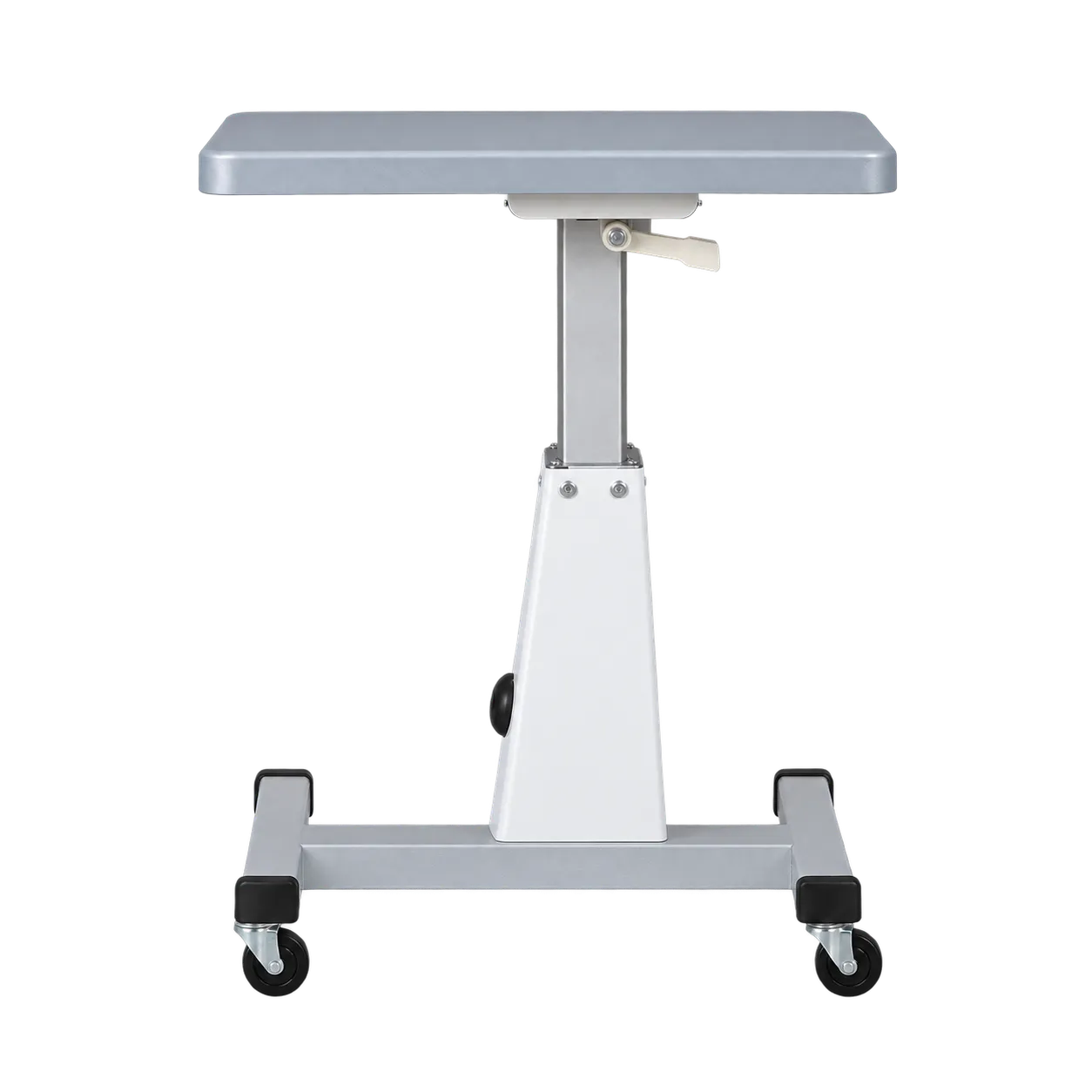
Pre-test rooms running a long-based autorefractor or combined refractometer-keratometer are the clearest fit. With the 580 mm dimension running front to back, the whole instrument base sits on the board rather than close to an edge. Powered lift sets the chinrest height while the patient stays seated, so an assistant can move through a list without asking anyone to perch or slump.
Community optometry consulting rooms with carpet suit the metal castors well. Hard wheels roll freely on carpet and resist the wear of repeated repositioning, which makes the table easy to move between the refraction position and the side of the room.
Slit lamp positions benefit when the long dimension runs across. Contact lens aftercare and anterior segment assessment go more smoothly when there is space beside the instrument for fluorescein strips, a lens case, or somewhere for the patient to rest a hand. That supports the steady examination the GOC expects in routine practice.
Dispensaries can use it for a lensmeter with a lens tray alongside, where the extra length keeps frames and paperwork off the instrument itself.
Hospital eye service outpatient clinics and university optometry clinics can treat it as a mobile station, although clinical vinyl floors are more common there. In those settings, confirm the castor tread before ordering, or plan on floor protectors for a table that stays largely in place.
Paediatric clinics benefit from the lower end of the range, since a child on a raised seat reaches a chinrest set near 630 mm comfortably.
Wheelchair users are partly served: the height range suits many, but the column and two-rail base limit knee and footplate clearance, so practices with many wheelchair users usually keep a dedicated offset-column table as well.