
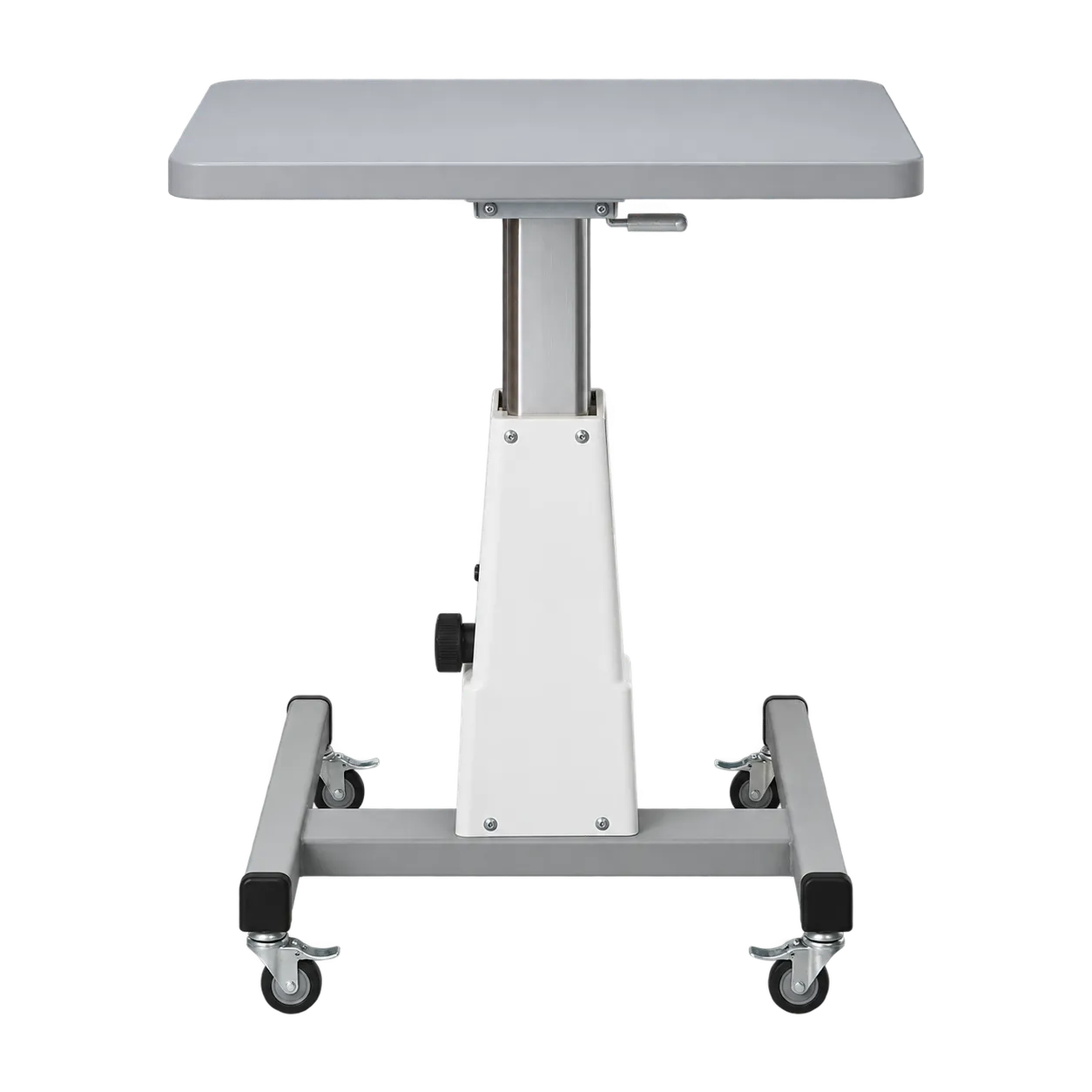
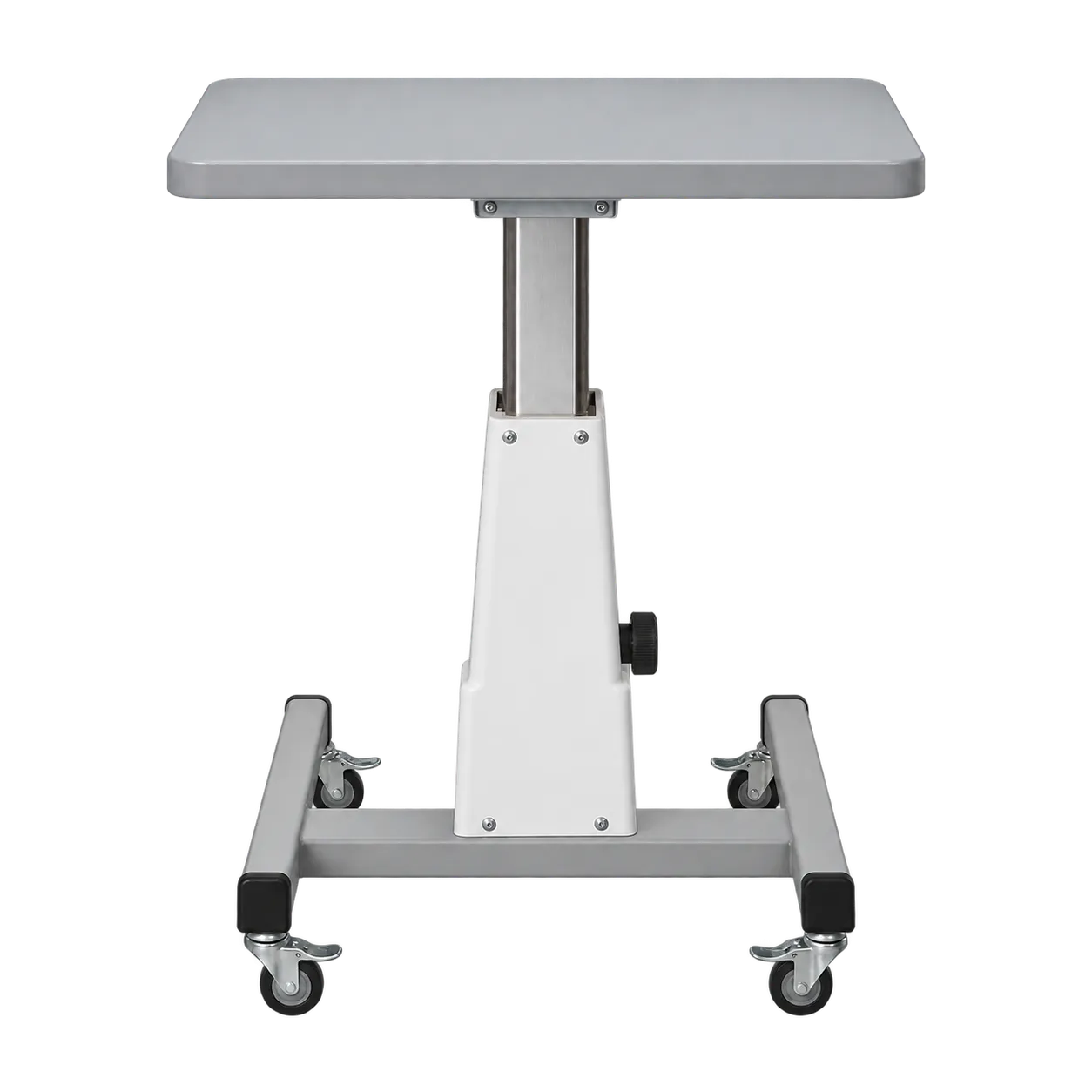
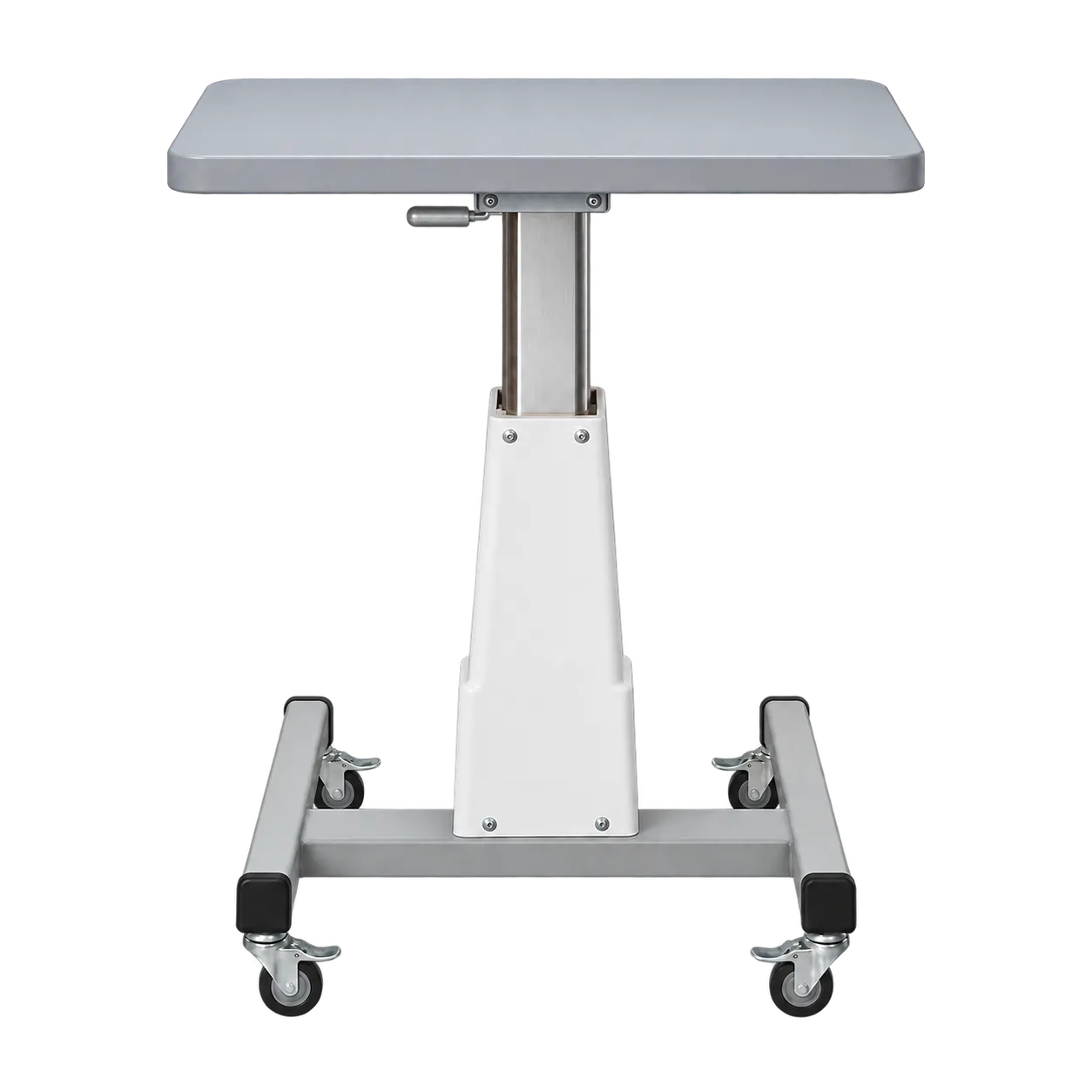
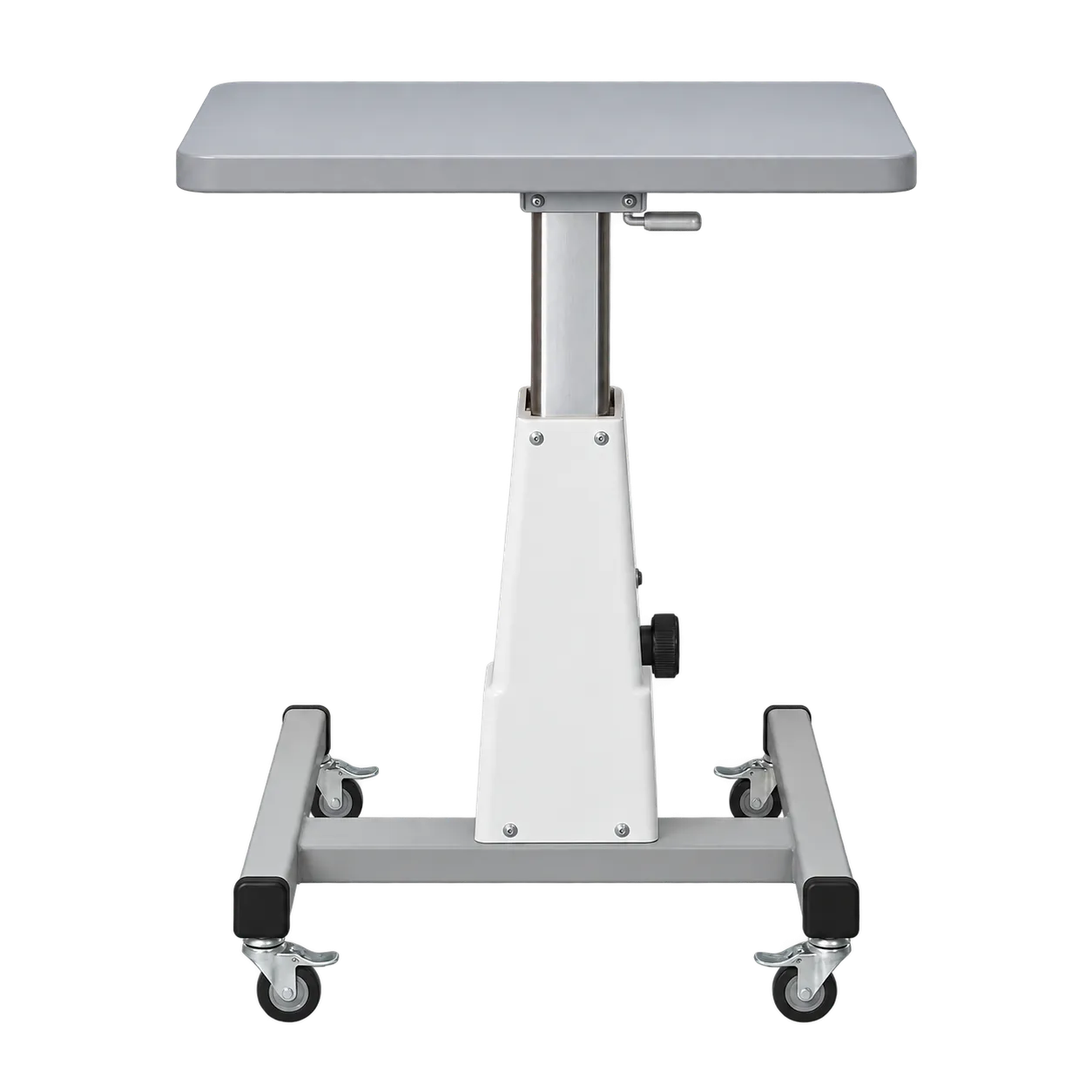
Slit lamp positions are the natural home. Anterior segment assessment, contact lens aftercare and fundus examination with a condensing lens all happen at high magnification, where any movement between the instrument and the eye shows in the image. A stiffer table beneath the slit lamp means fewer refocuses and less interruption to the clinician's concentration.
Applanation tonometry benefits particularly. Goldmann tonometry on a slit lamp relies on a steady, delicate contact with the cornea, and a table that moves when the patient grips the edge or the clinician braces an arm can disturb the reading. For glaucoma monitoring and referral refinement, where pressure measurements feed clinical decisions, a steady surface is part of good technique. NICE glaucoma guidance names slit lamp-mounted Goldmann-type applanation tonometry for measuring pressure, which puts the table beneath it firmly in the pathway.
Hospital eye service outpatient clinics suit the rubber castors. Clinical vinyl is the usual floor, and quiet, floor-friendly wheels matter where rooms sit side by side and equipment moves between them.
Imaging slit lamps gain from the 480 × 550 mm top, which leaves room beside the instrument for a camera module's control unit or a small screen, within the confirmed loading.
Community optometry practices offering enhanced services, such as minor eye conditions, glaucoma referral refinement or post-operative cataract checks, can use it as their main slit lamp table, where steadiness supports the level of examination the GOC expects.
Paediatric clinics benefit from the lower end of the range, since a child on a raised seat reaches a chinrest set near 630 mm comfortably.
Wheelchair users are partly served: the height range suits many, but the column and two-rail base limit knee and footplate clearance, so practices with many wheelchair users usually keep a dedicated offset-column table as well.