
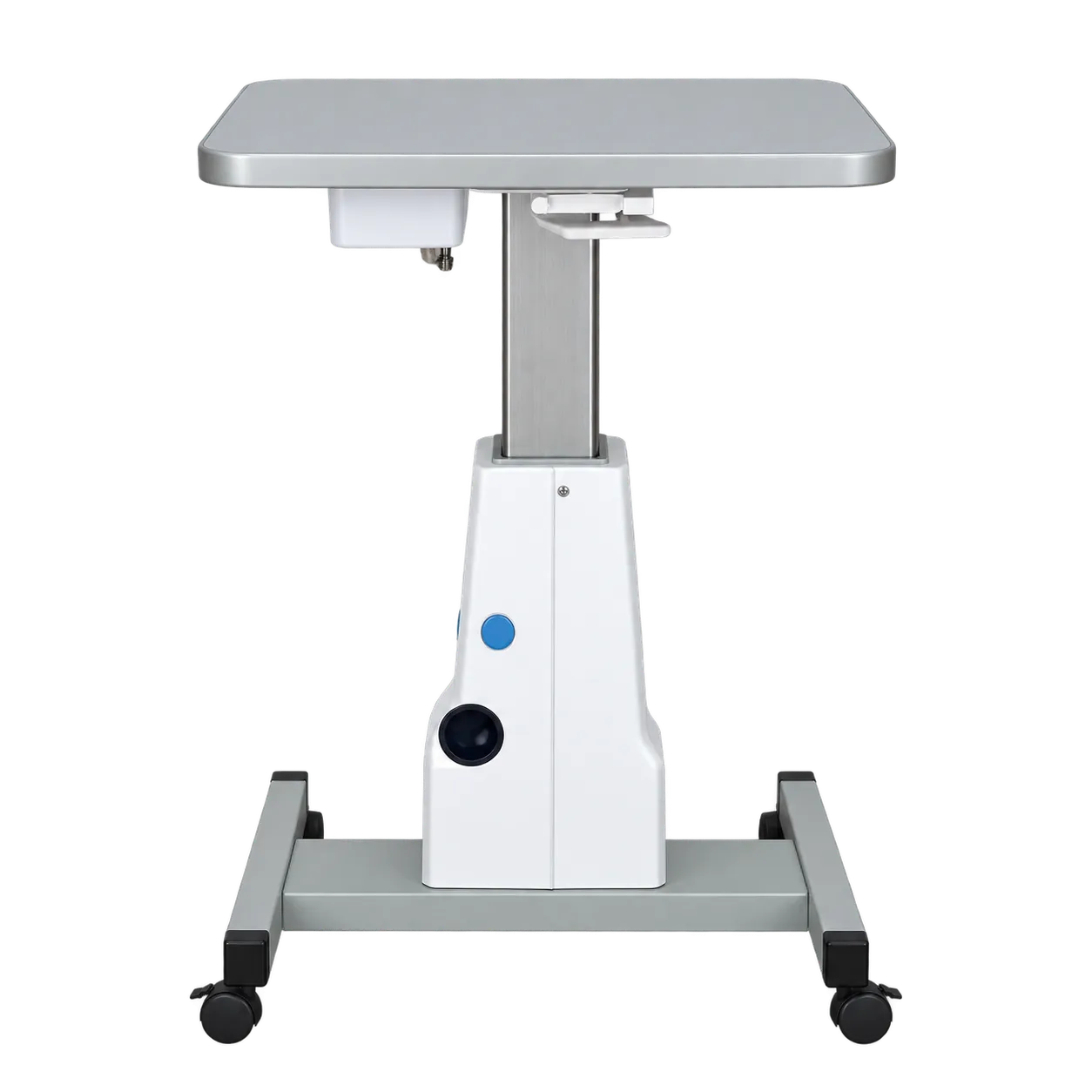
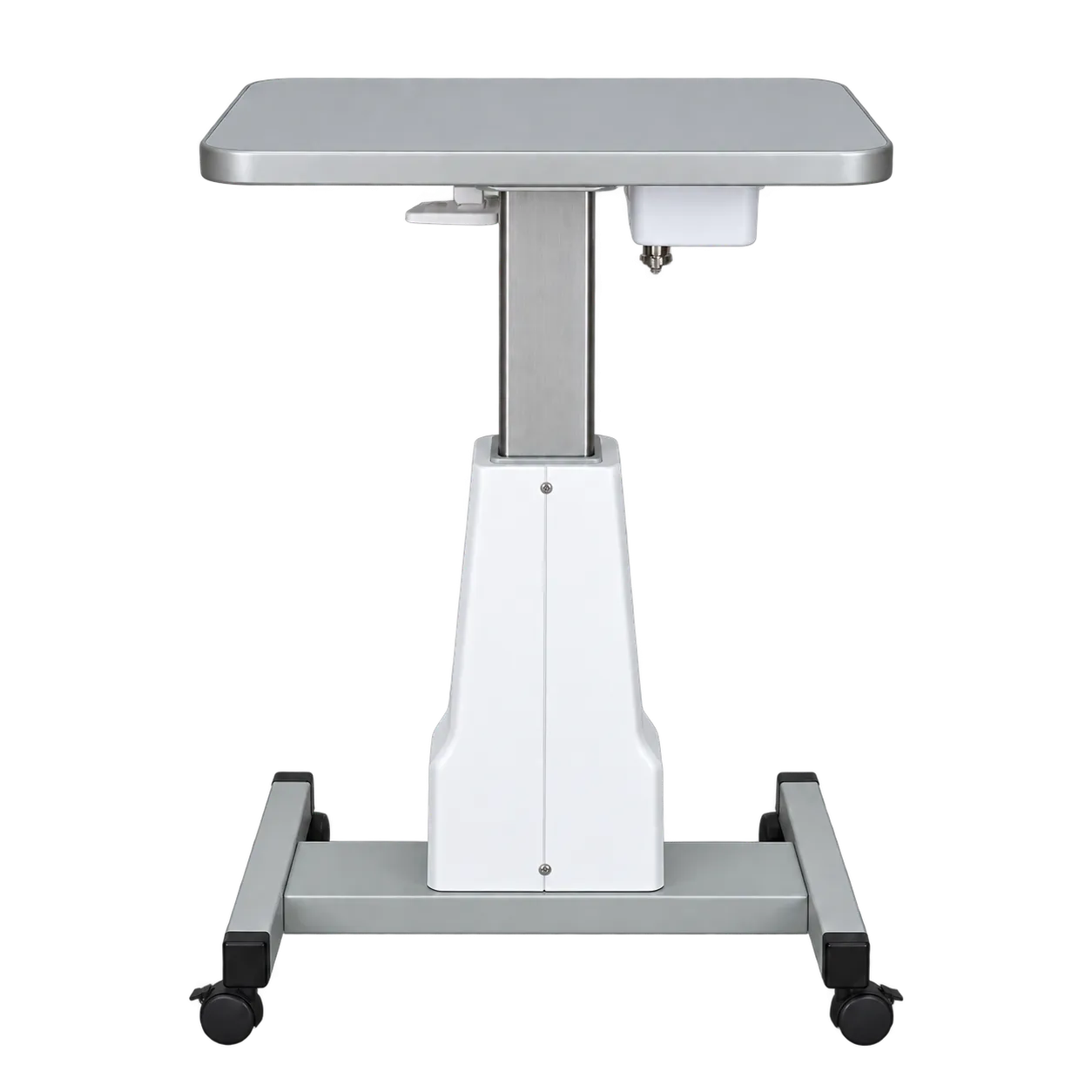
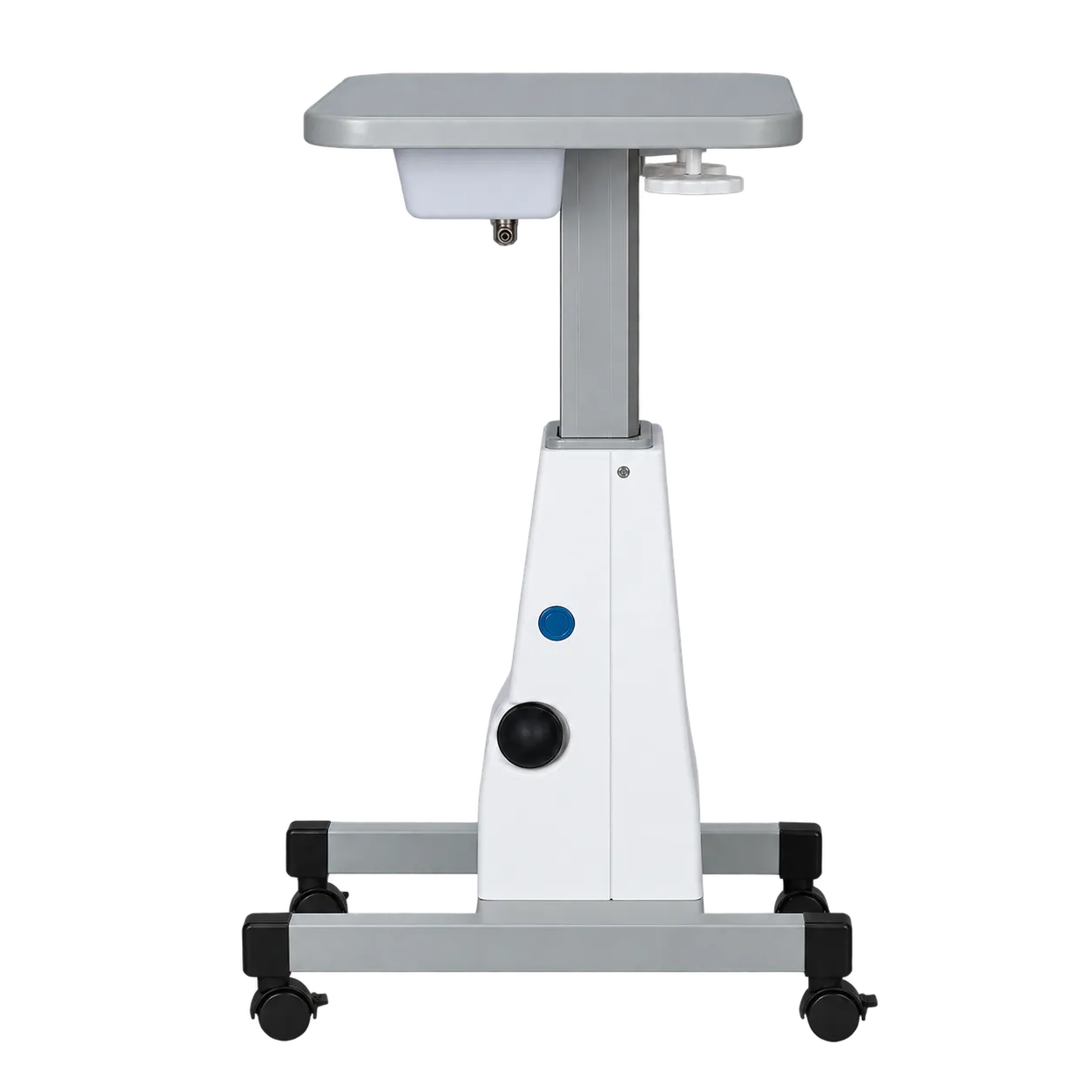
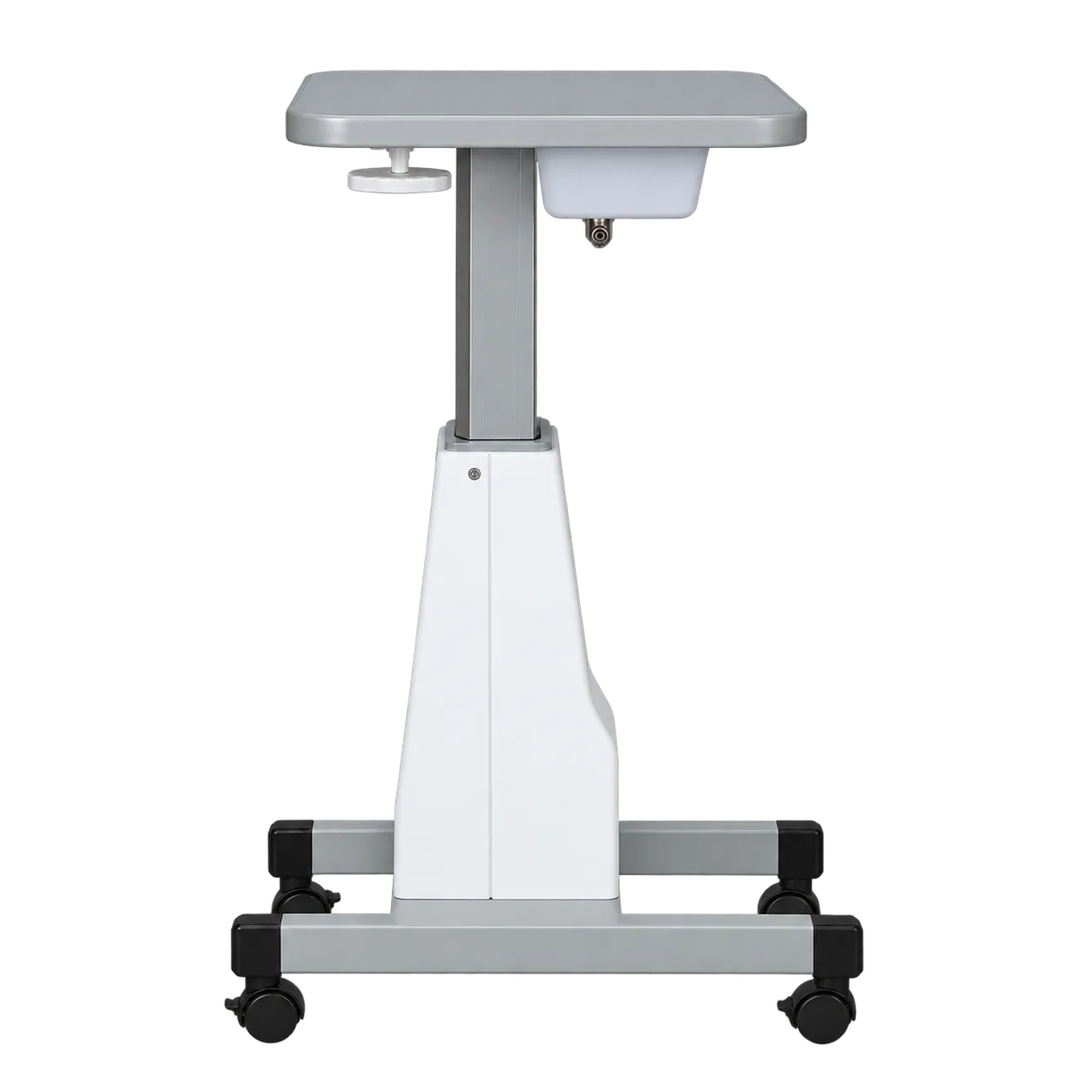
Pre-test rooms with a wider-based autorefractor or keratometer are the clearest fit. A device whose base plate sits close to the edge of a narrow board feels less secure to both the assistant and the patient leaning into it, and a square top removes that doubt. With powered lift setting the chinrest height while the patient stays seated, a list moves steadily without anyone perching or slumping.
Community optometry consulting rooms with an awkward layout benefit from the square board. Where the patient approaches from the side of the room, or a left-handed and right-handed clinician share the space, a top with no long side can face whichever way works. The two-rail base still needs orienting for knee room, and a quick trial in the room settles it.
Slit lamp positions gain from the margin either side of the instrument. Contact lens aftercare and anterior segment assessment are steadier when the patient has somewhere to rest their hands rather than gripping the edge, which supports the standard of examination the GOC expects.
Hospital eye service outpatient clinics can treat the LY-3E as a mobile station. At around 19 kg gross on castors, it moves between rooms when clinics are reconfigured and can open an extra position on a busy day.
Paediatric clinics benefit from the lower end of the range, since a child on a raised seat reaches a chinrest set near 630 mm comfortably. Dispensaries and university optometry clinics can use it for a lensmeter or teaching station, where the square board leaves room for notes beside the device.
Wheelchair users are partly served: the height range suits many, but the centre column and two-rail base limit knee and footplate clearance, so practices with many wheelchair users usually keep a dedicated offset-column table as well.