
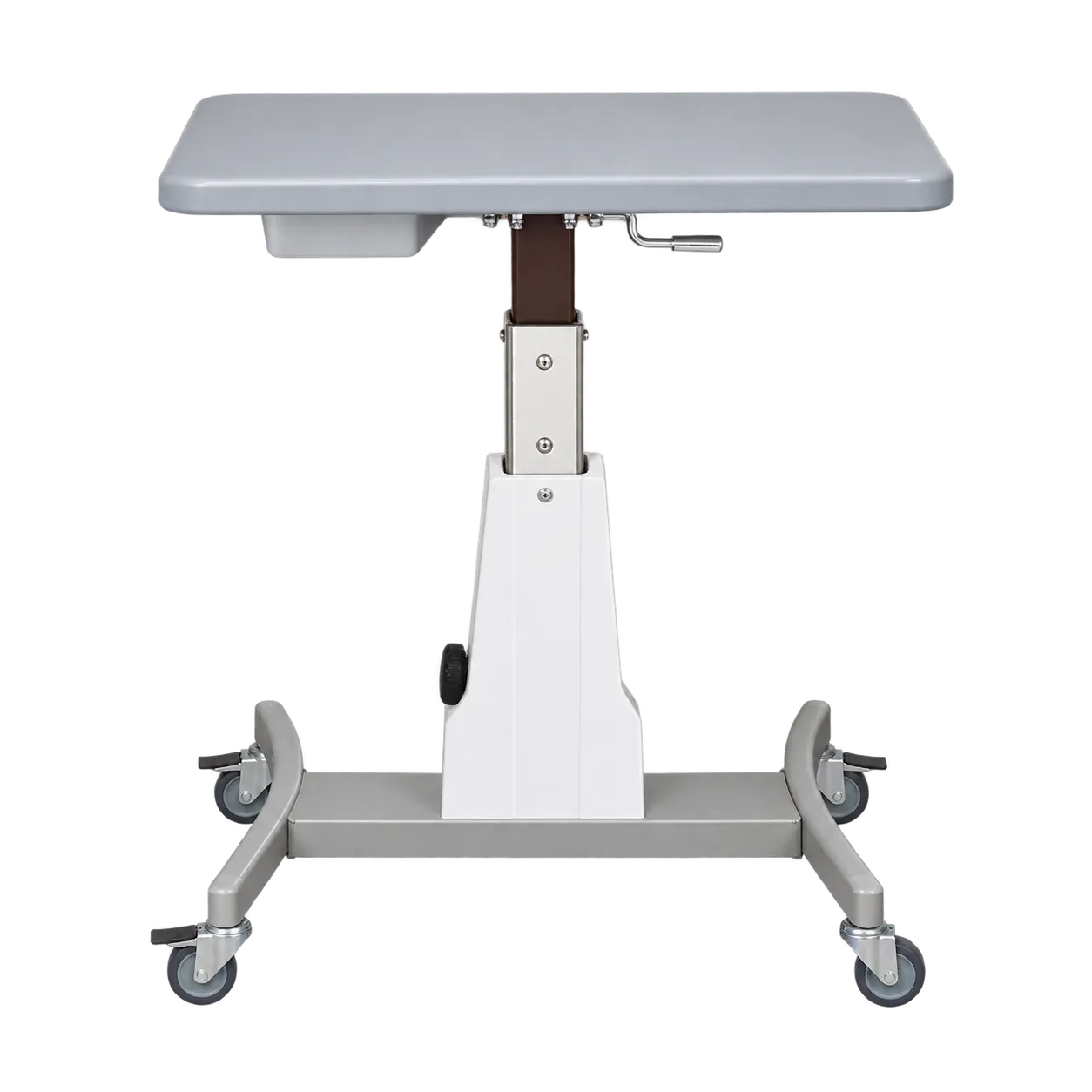

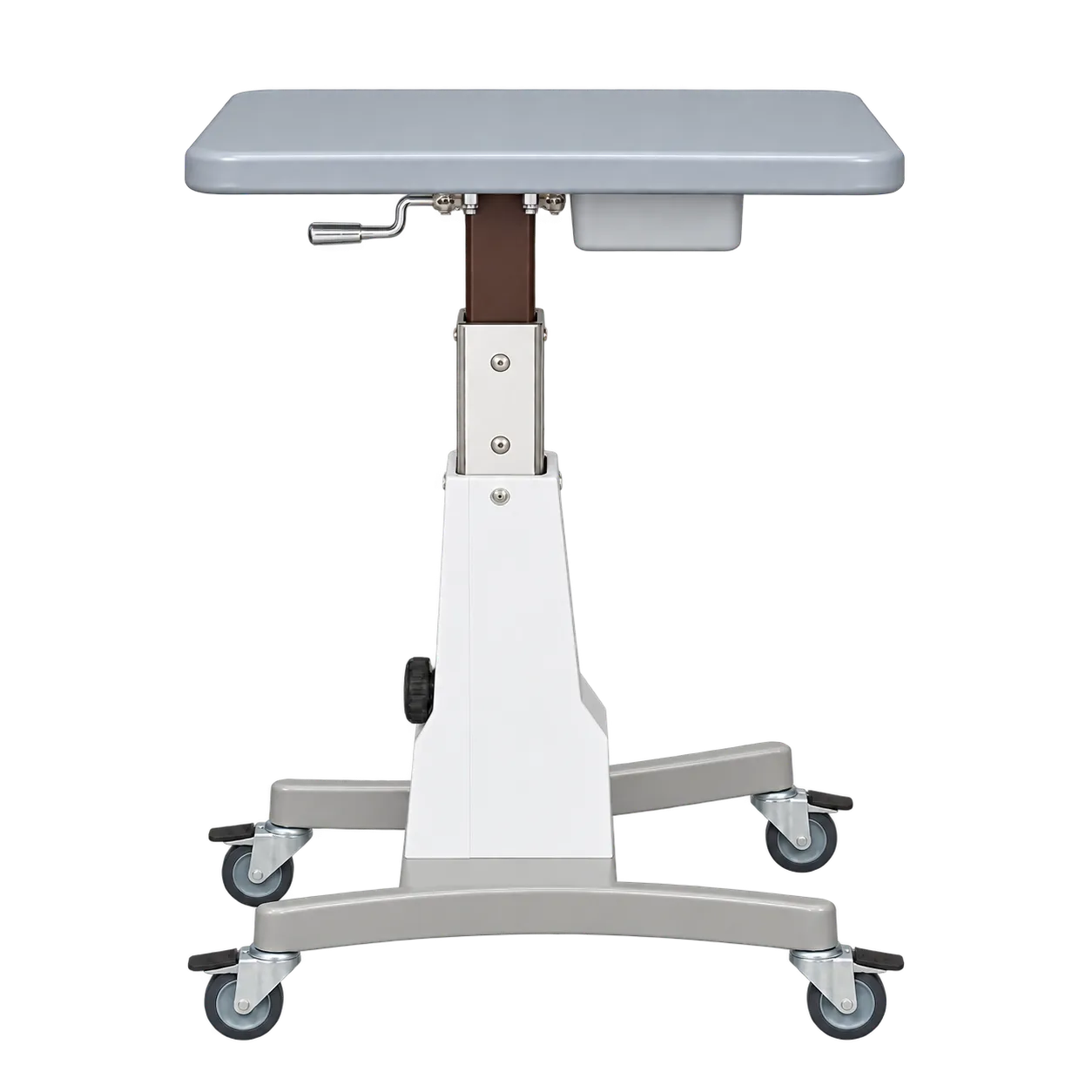
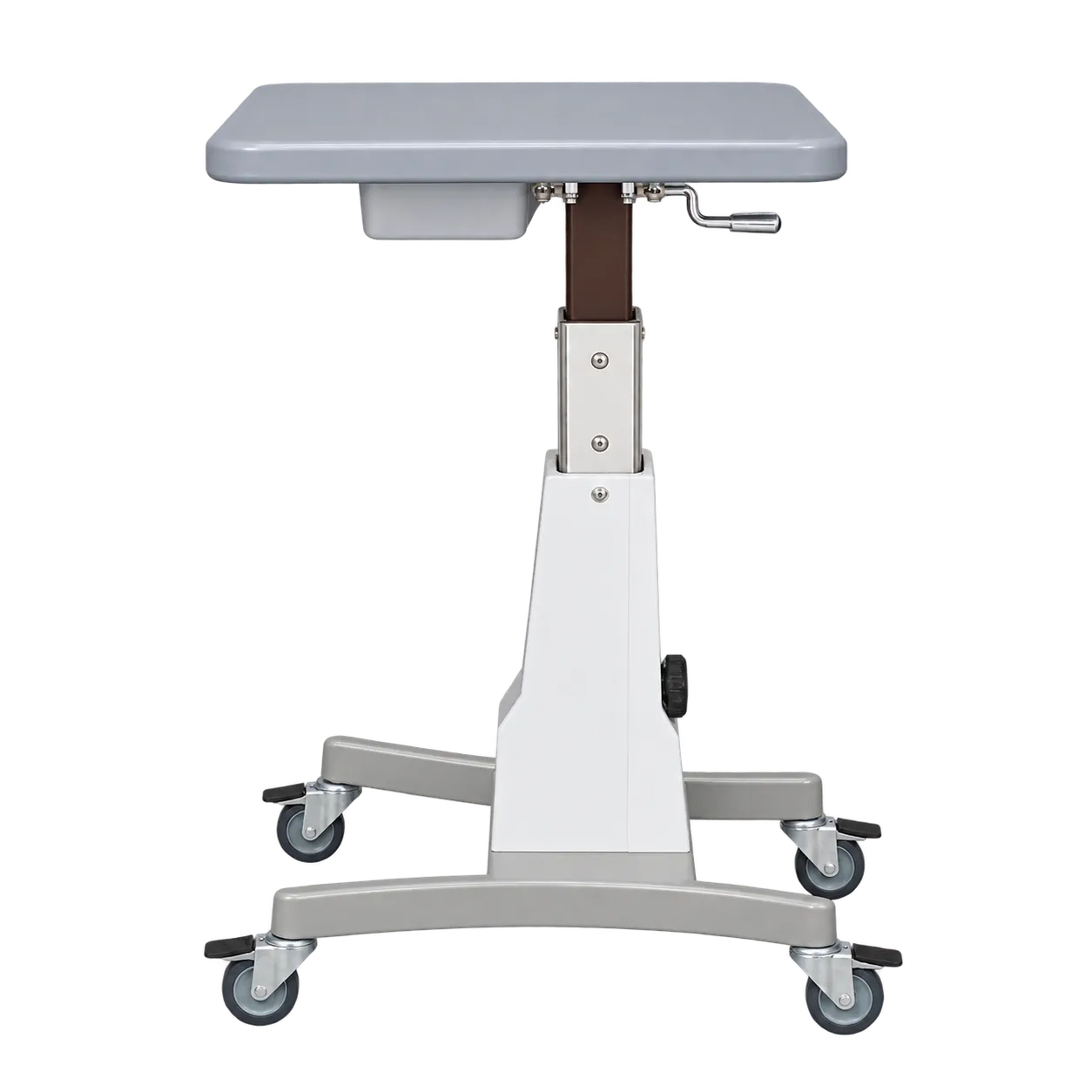
Customer-facing rooms are the natural home. Many independent and multiple practices place pre-test instruments or a lensmeter where patients can see them, in a reception area, an open-plan pre-test bay or a dispensary visible from the shop floor. A table with a curved aluminium base and no rust to show fits a retail fit-out in a way that a plain steel frame does not.
Dispensaries suit the long top. A lensmeter running across the 580 mm board leaves room for a lens tray, frames awaiting verification and a pen, and powered height lets one dispenser work standing while another prefers to sit.
Pre-test rooms with a deeper autorefractor can run the long dimension front to back, so the whole instrument base is supported. Powered lift sets the chinrest height while the patient stays seated.
Consulting rooms can use it at the slit lamp, where the 100 × 100 mm column gives a solid starting point and the long board leaves room for fluorescein strips or a lens case. Because aluminium pipe is generally lighter than steel of the same size, a quick lean test with your own instrument is worthwhile before committing, in line with the standard of examination the GOC expects.
Practices with rigorous cleaning routines benefit from a base that cannot rust, provided the disinfectant is compatible. For settings that rely on chlorine-based products, confirm the base finish first.
Paediatric clinics benefit from the lower end of the range, since a child on a raised seat reaches a chinrest set near 630 mm comfortably.
Wheelchair users are partly served: the height range suits many, but the column and arc-shaped legs have no published clearance figure, so practices with many wheelchair users usually keep a dedicated offset-column table as well.