
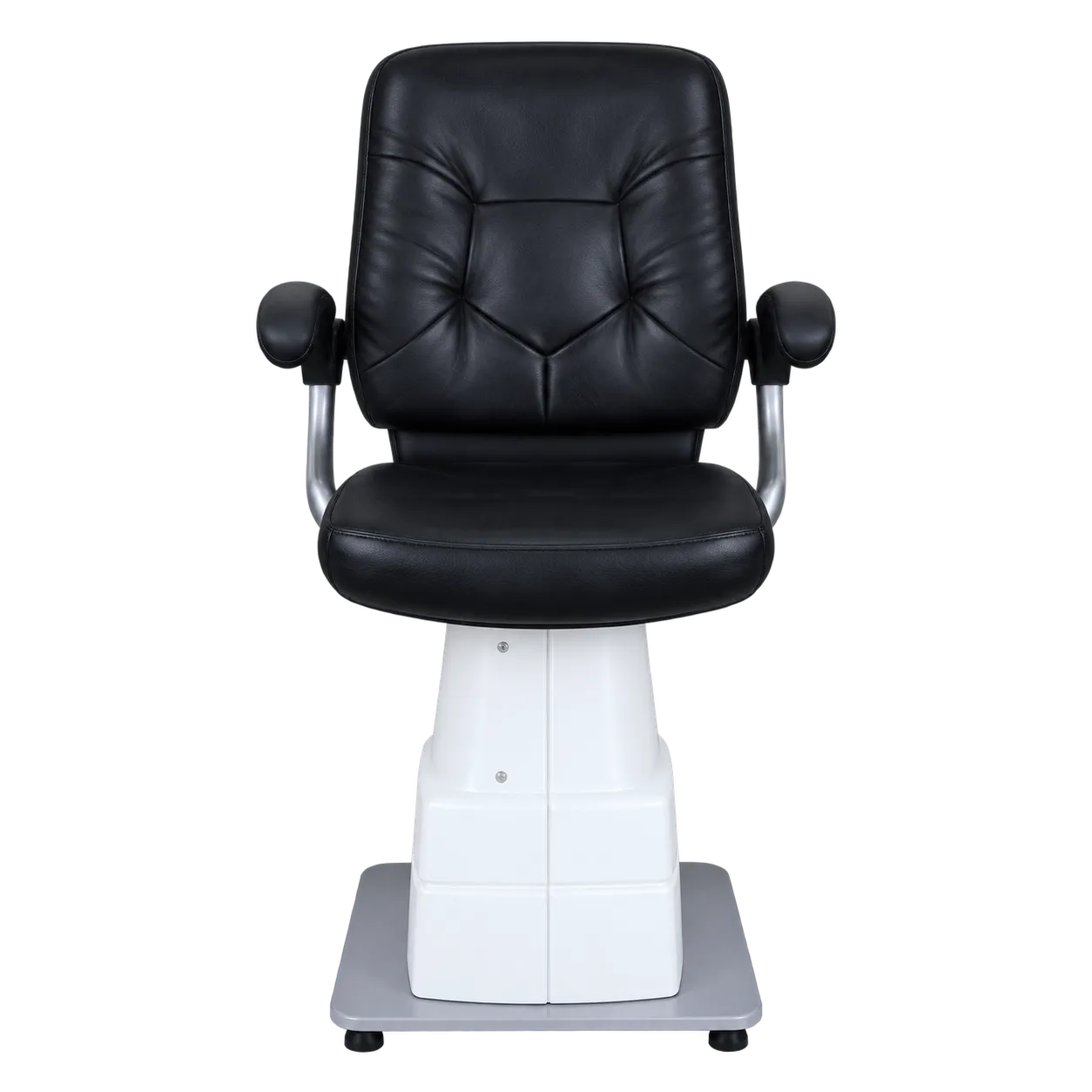
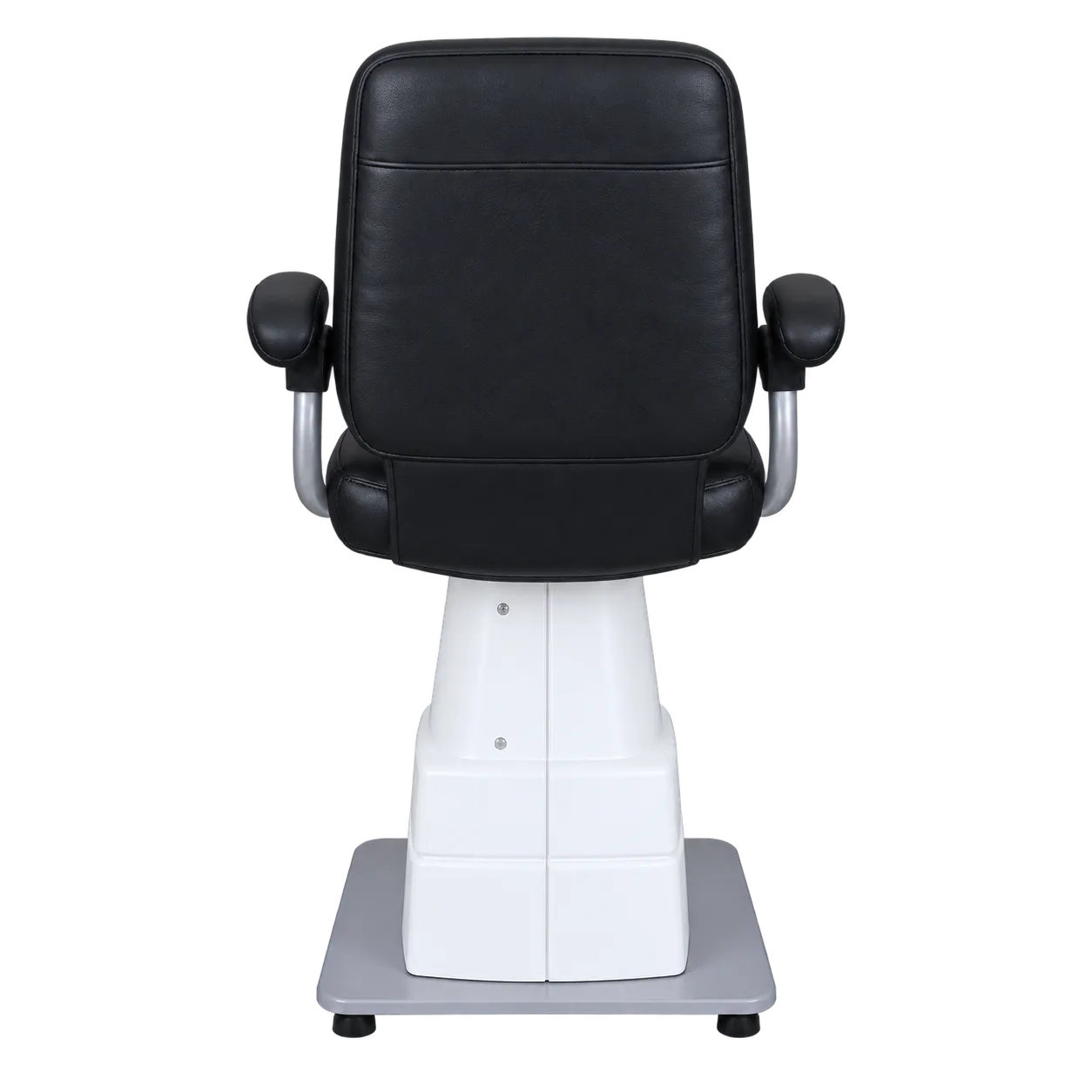
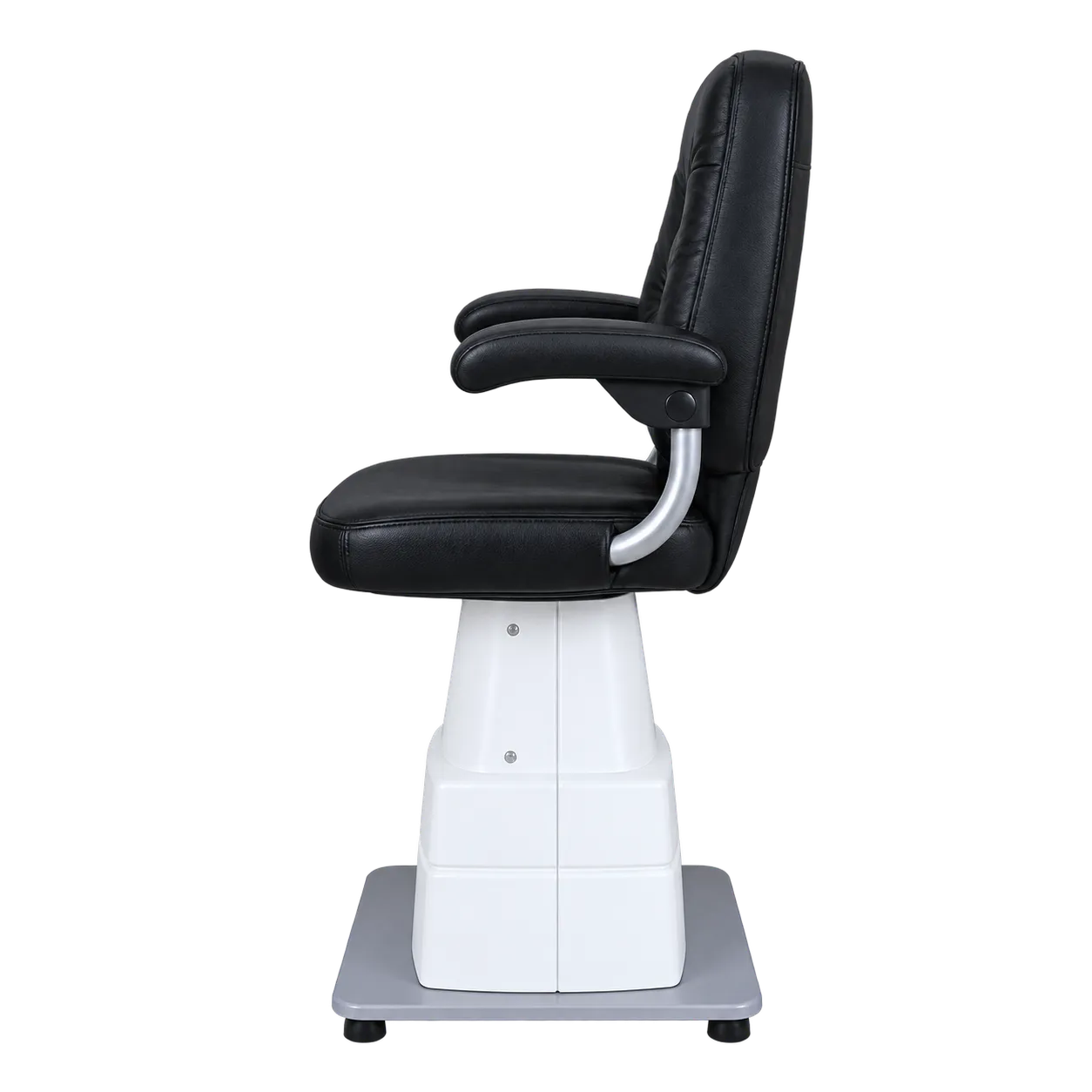
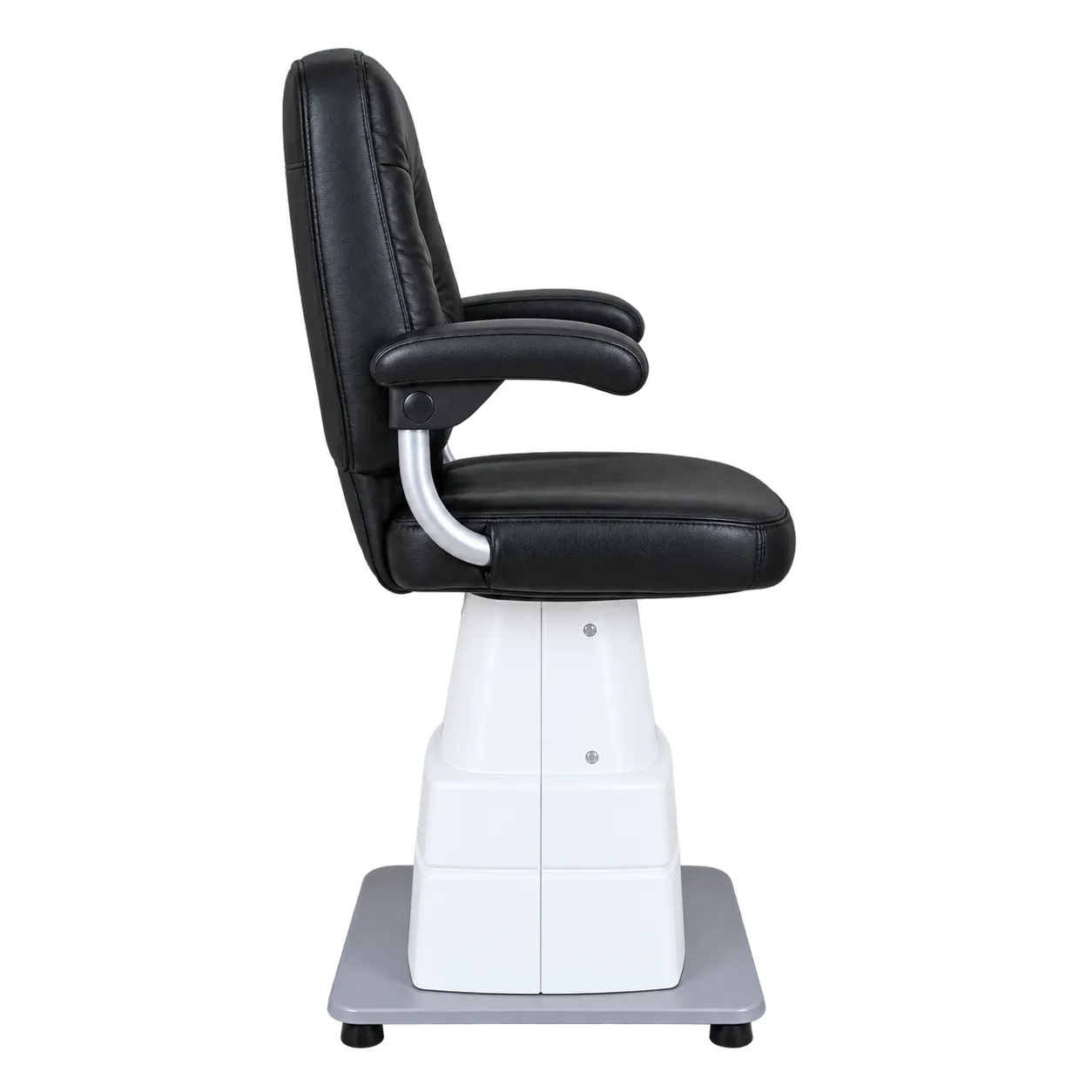
Small consulting rooms are the natural home. Many UK practices work from converted retail units where a full examination chair simply will not fit alongside a table, a desk and a clear route to the door. A compact chair on a square baseplate makes an examination position possible in a room that would otherwise not support one.
Second and third examination points suit a chair at this scale and weight, particularly where the main room already has a full-size unit and the additional position sees lighter use.
Practices fitting out on a tight budget can furnish a room now and upgrade later, provided the unpublished figures we obtain confirm the chair suits the patients and instruments involved.
Established practice interiors suit the buttoned upholstery, which reads as more traditional than the moulded panels on contemporary chairs.
Domiciliary and outreach bases benefit from a 28 kg packed weight and a carton that passes through a standard doorway, though the lift mechanism should be settled first if the chair will be moved regularly.
Patients needing high-capacity seating are not served until a maximum loading is confirmed, and practices with that requirement should ask before ordering.
Routine wheelchair transfers need the height range and armrest spacing settled first, since wraparound arms can obstruct a lateral transfer.