
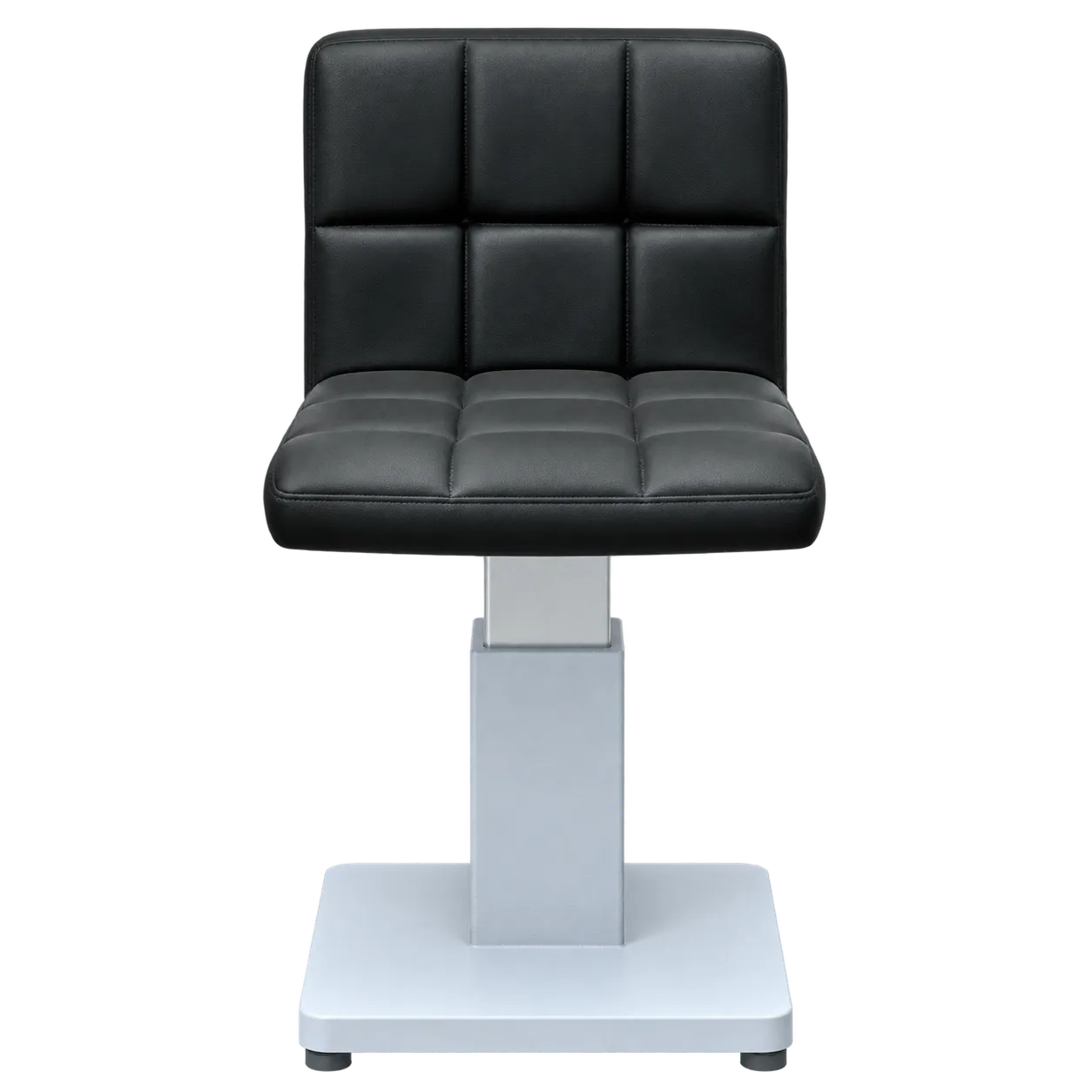
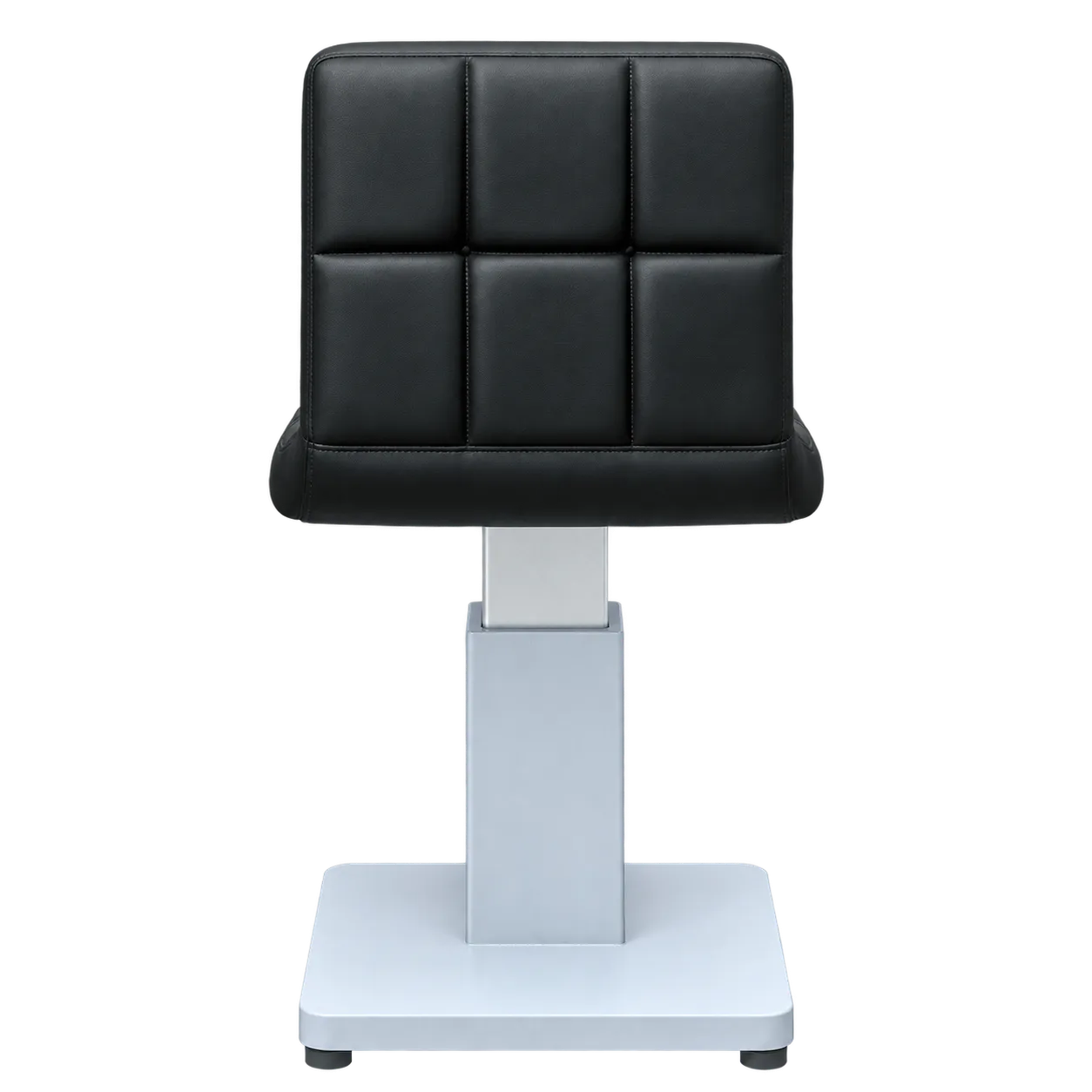
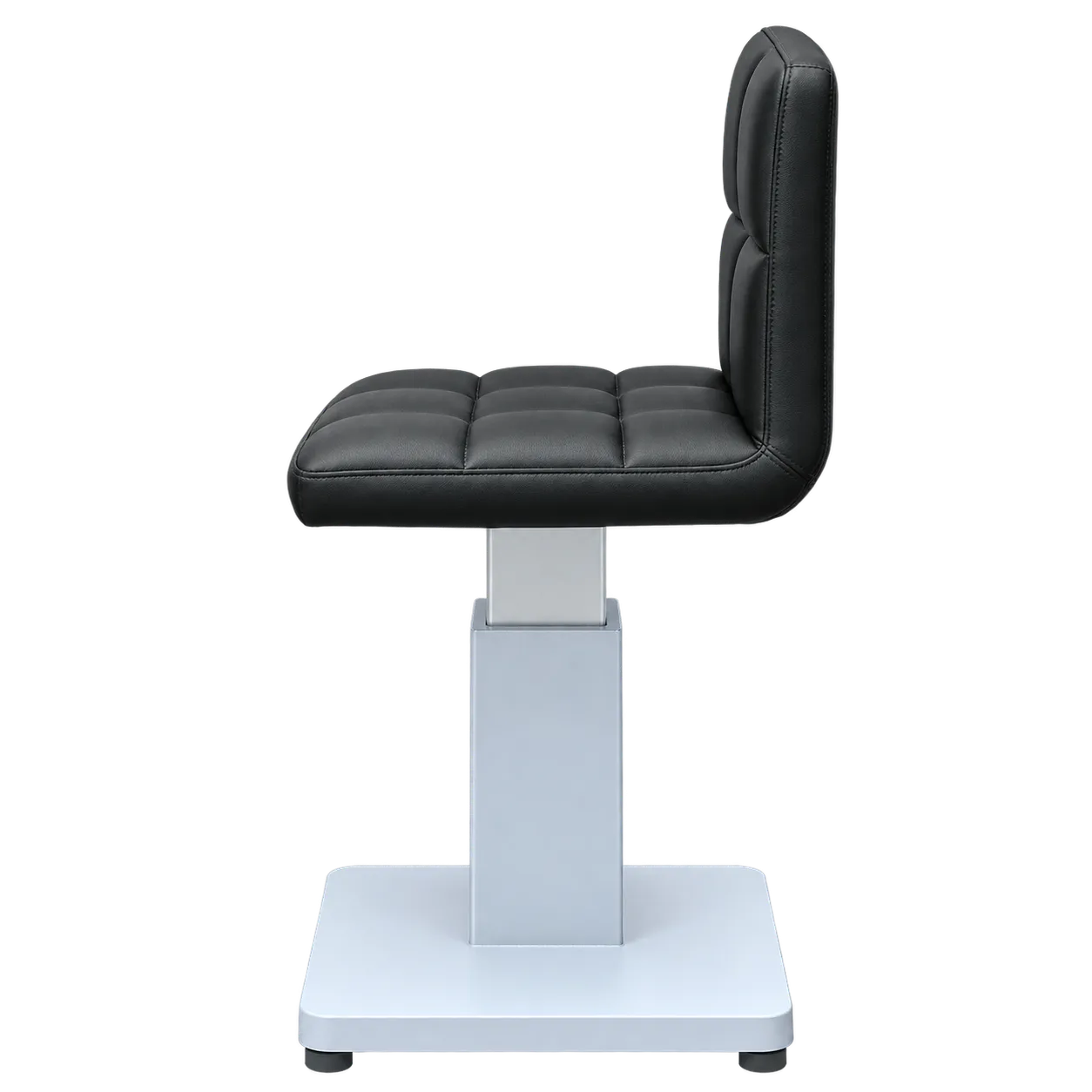
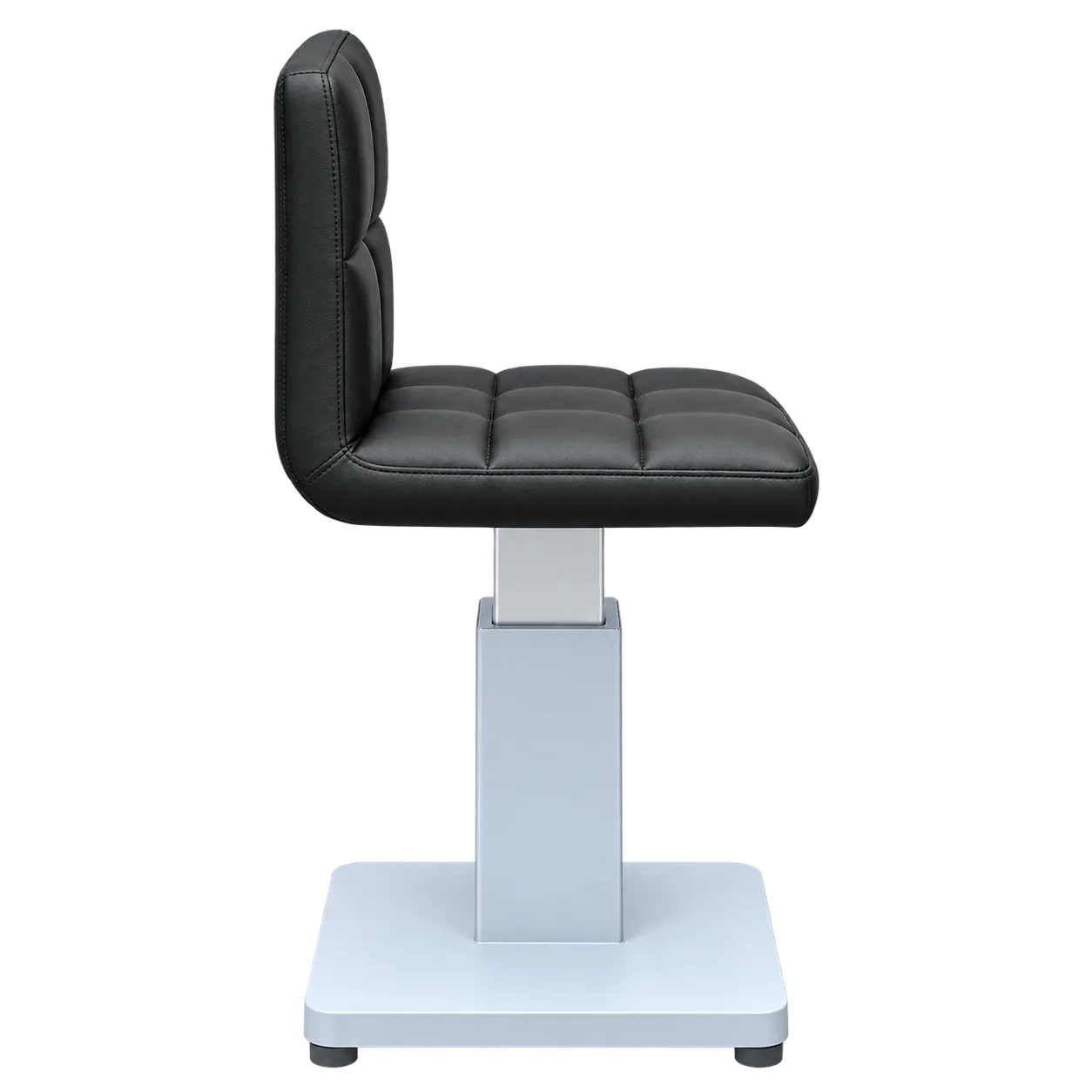
Wheelchair transfers are the clearest fit. A lateral transfer needs the seat approached from the side, and fixed armrests block exactly that route. An armless chair removes the obstacle, subject to confirming that the lowest seat height allows a level transfer.
Patients with restricted hip or knee movement gain from the same openness, since nothing has to be lifted over to sit down.
Small consulting rooms suit the footprint. At 19 kg in a half-metre carton, the chair is the most compact in this range, and side access means less clearance is wasted in front.
Close instrument work benefits from the absence of arms, which lets the chair be drawn right up to a table without anything catching the edge.
Practices offering enhanced services in shared or temporary rooms can move a 19 kg chair without help, provided the mains arrangement suits the venue.
Frail and unsteady patients are better served by a chair with armrests, since they rely on the support when rising and while seated.
Anxious patients often prefer something to hold, and an armless seat gives them nothing.
Bariatric provision is not established here, since no maximum loading is published, and an armless design offers no lateral containment.