
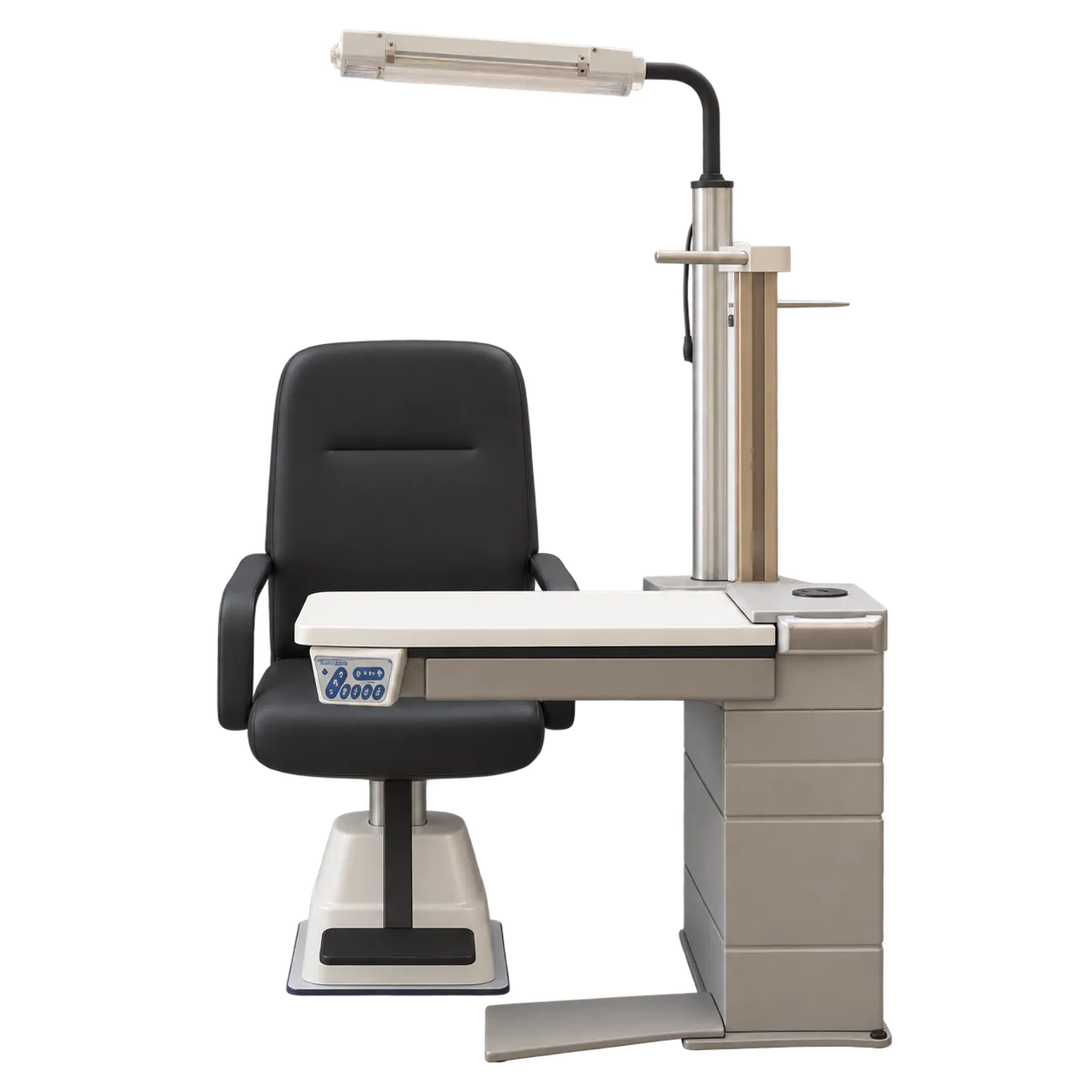
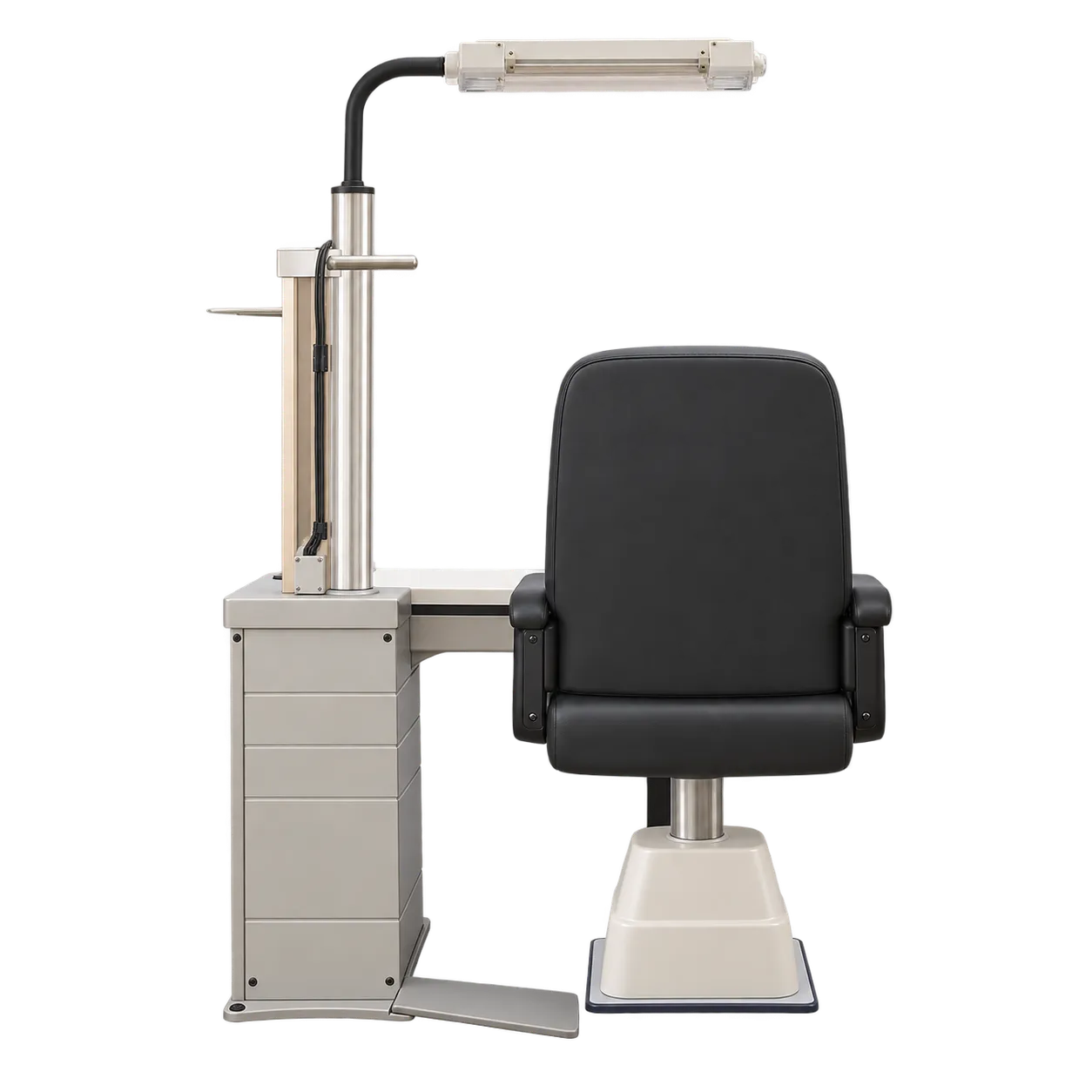
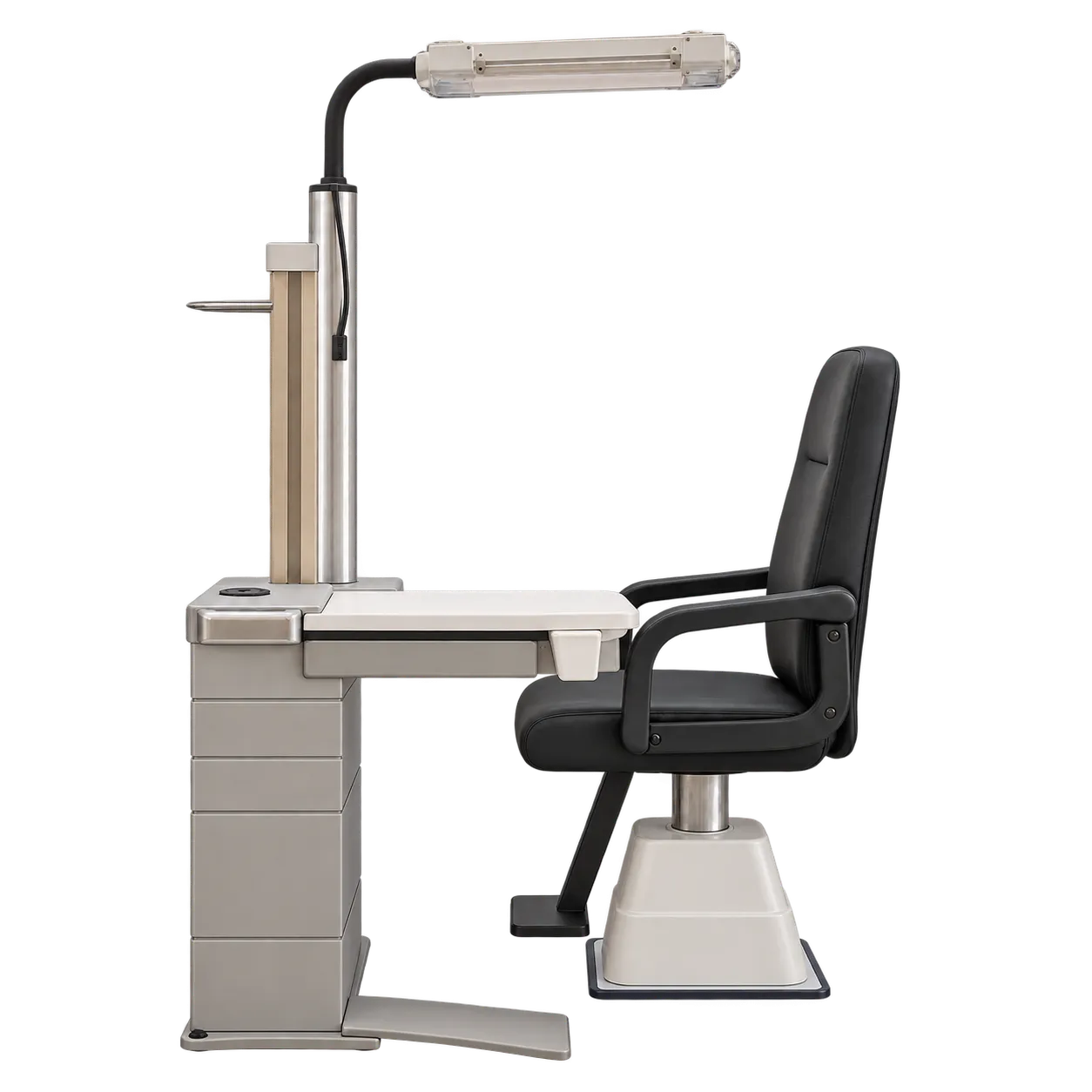
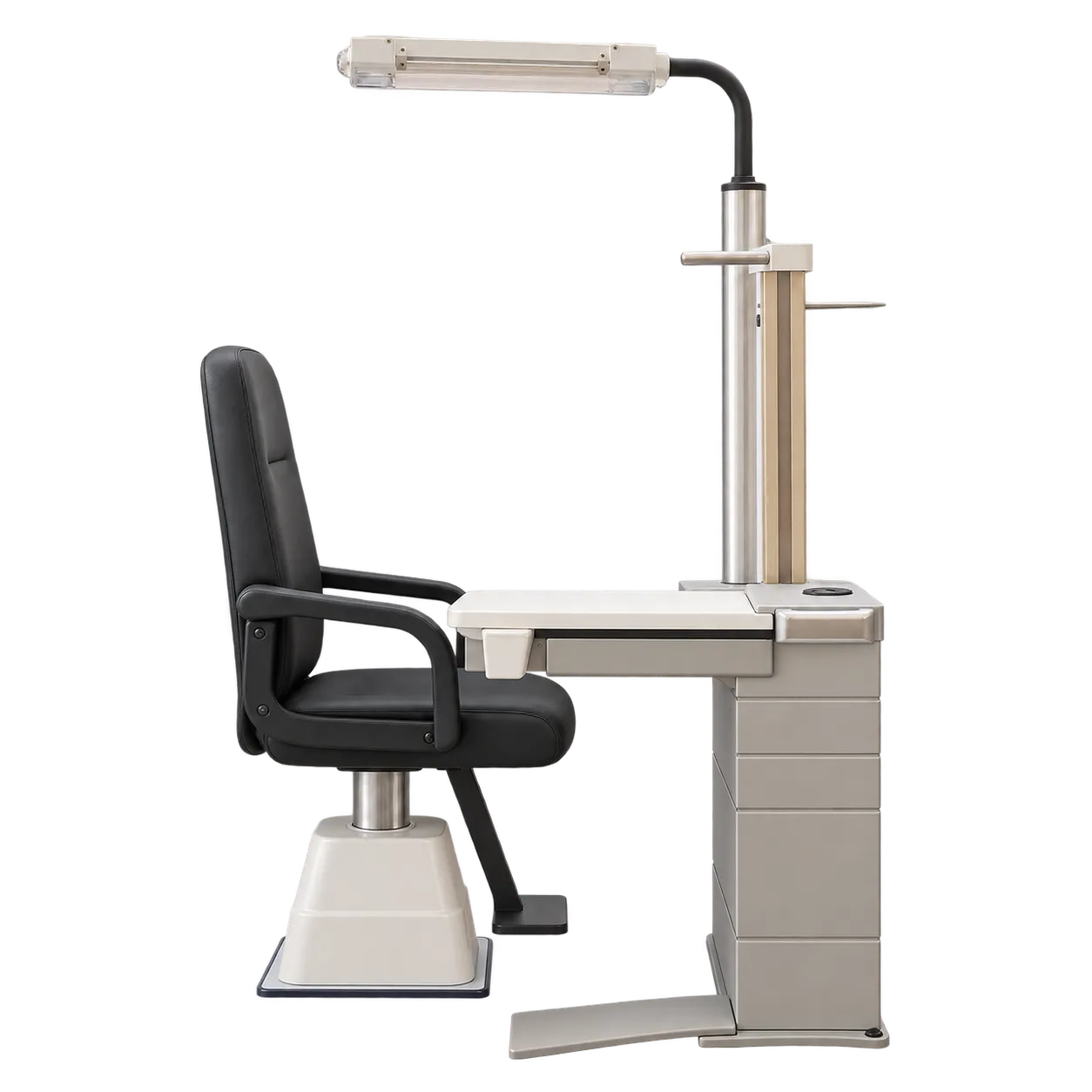
Rooms planned around the patient rather than the equipment benefit most. Units that fix the working side at manufacture, or restrict the arm to an arc, make the room plan follow the arm — instrument positions, chair orientation and clinician approach all derive from where it can reach. A rack indexing through a full circle removes that determination, so the patient position is settled first and the arm brought to it. That is the right order and few units in this category allow it.
Multi-instrument positions gain for the same reason. Where several devices share one working position, the ability to point the arm at any of them without repositioning the chair or the column is worth more than any single instrument mount.
Wheelchair users are served by the 390 mm seat, the lowest published anywhere in this range and comfortably beneath standard wheelchair height, so transfer is unambiguously a lateral move rather than a lift.
Secondary instruments suit the 500 mm slide, the longest stroke published here, bringing a device fully forward for use and fully clear afterwards.
Three things belong in the decision. The rack's mechanism is not described — the datasheet gives 360° without saying how, and the swept volume is unpublished, so clearance around the column should be established before ordering. The electrical line indicates DC drive components alongside the mains supply, which is a different arrangement from the rest of this family and warrants asking what is DC driven and whether any controller is serviceable. And at 210 kg this is the heaviest unit in the family, on the deepest footprint, so delivery access and floor loading need confirming.