

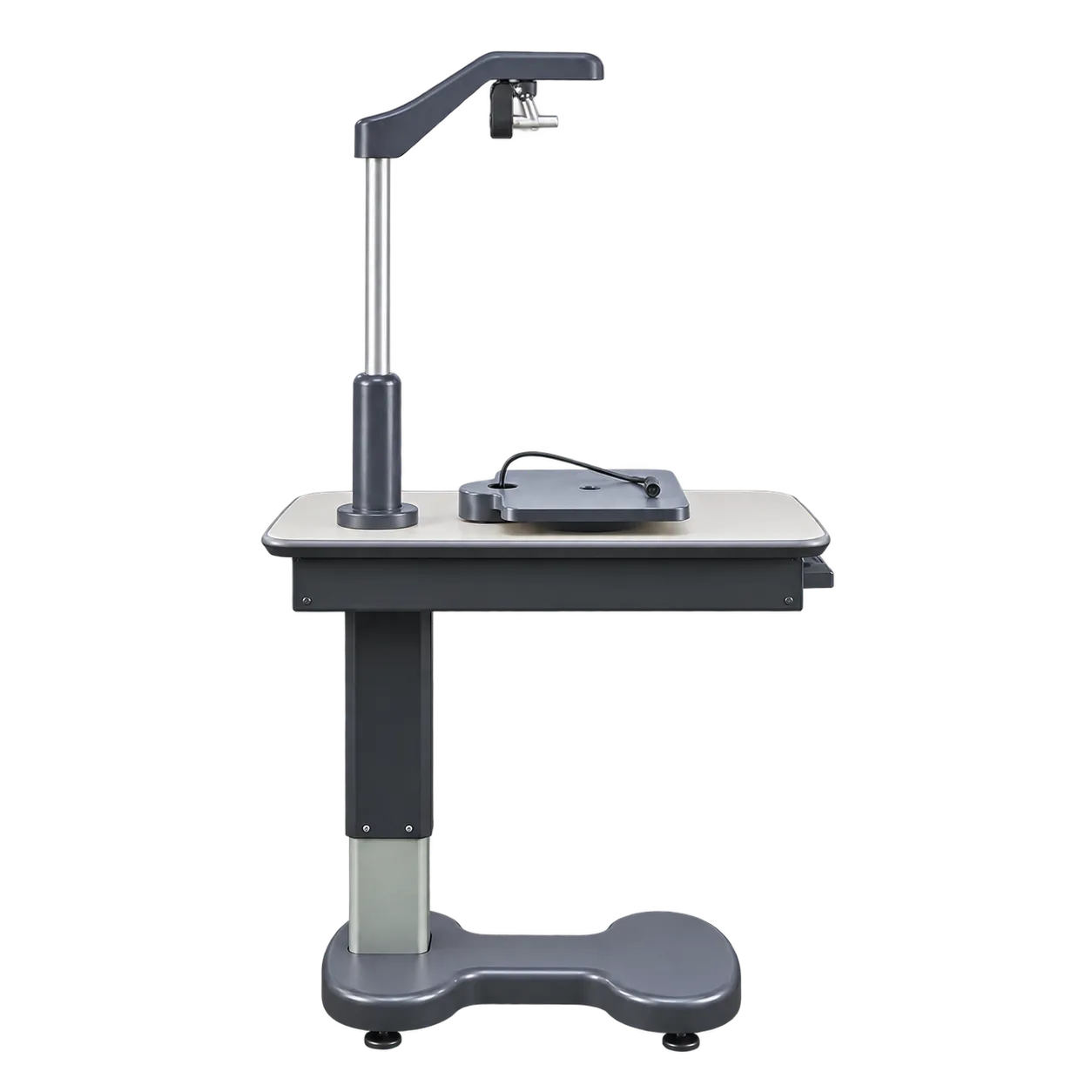
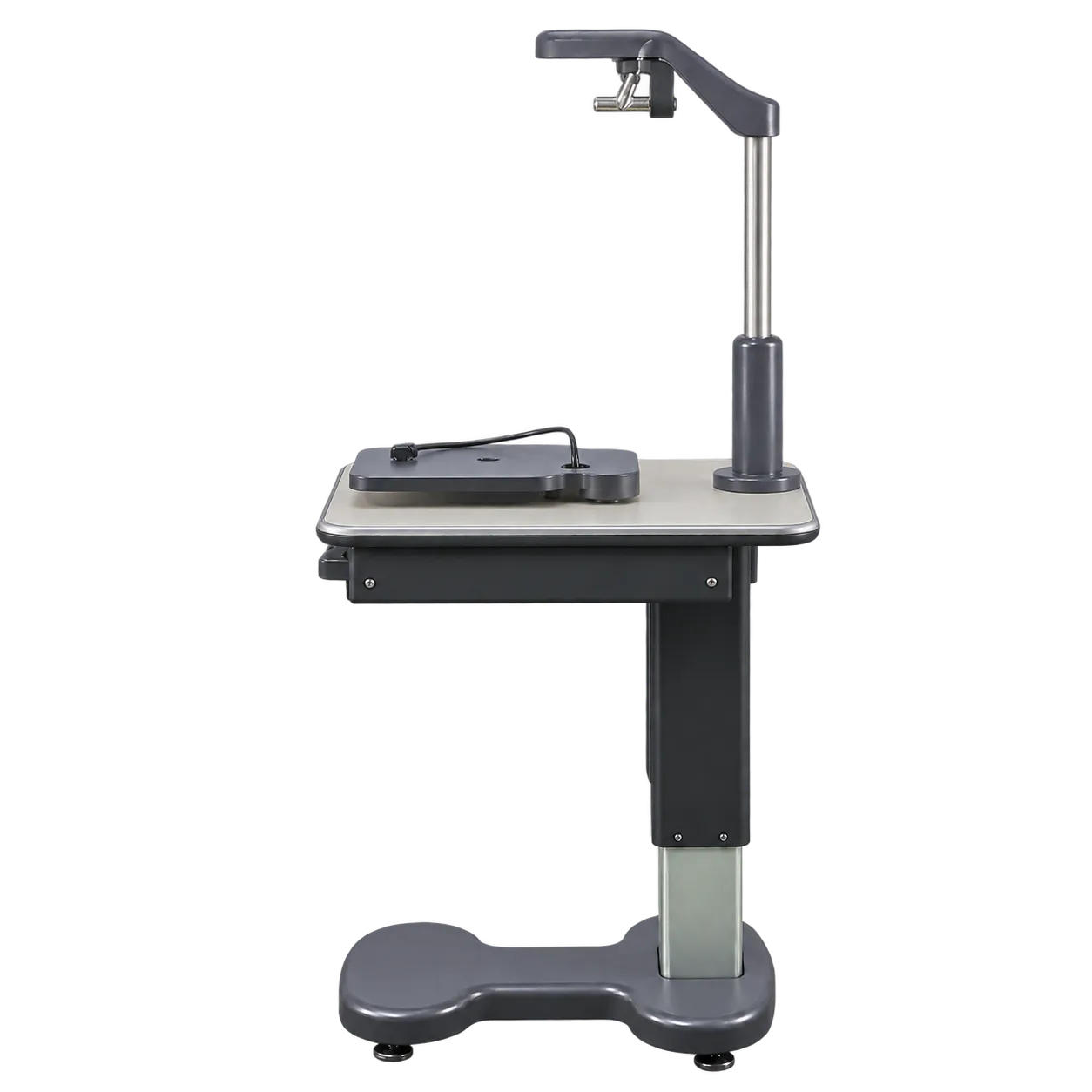
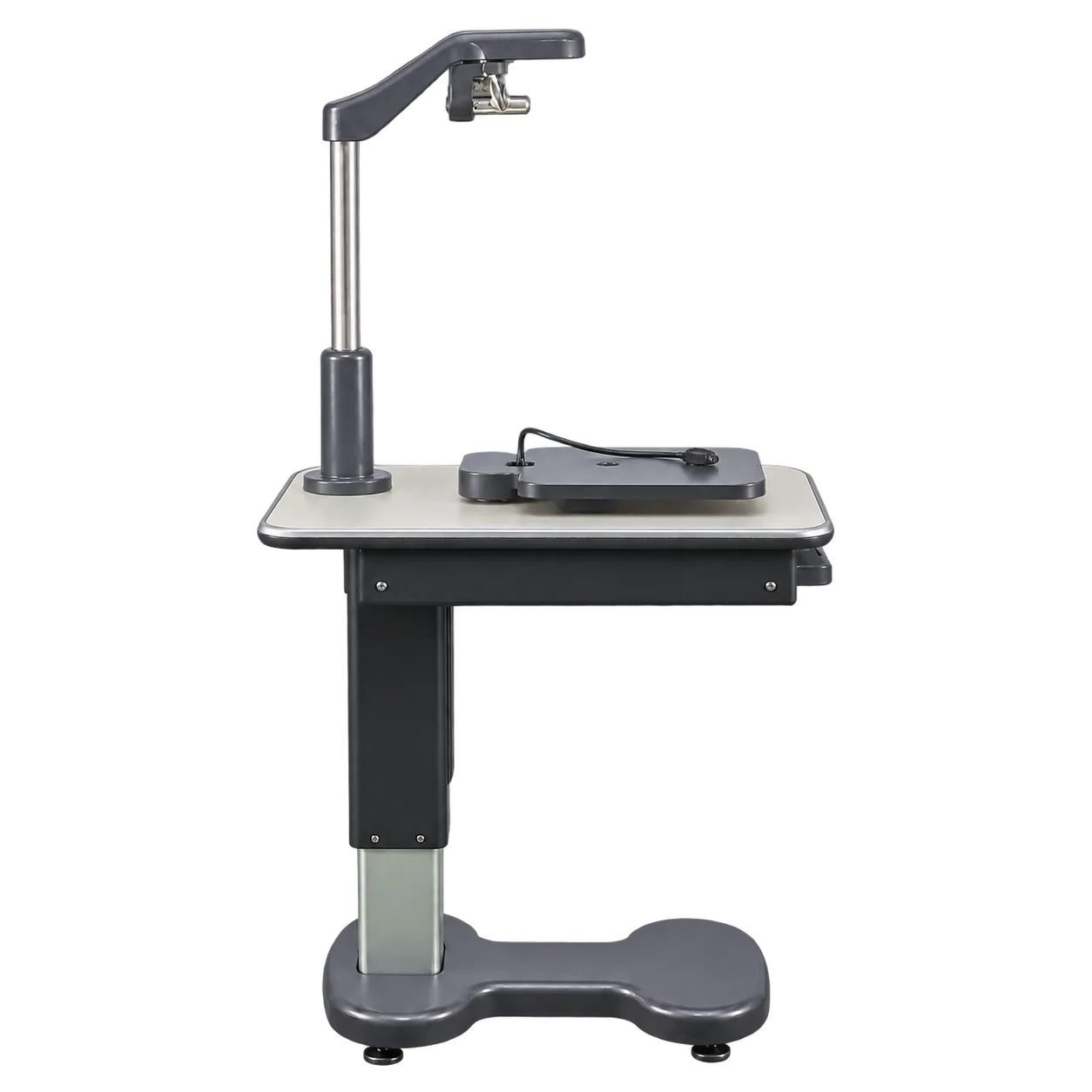
Rooms where the table has to get properly out of the way are the primary case. A 90° turn moves a surface aside; a 180° turn carries it through a full arc and puts it behind its own axis. That difference decides whether the approach to a chair is genuinely clear or merely improved — and it matters most for wheelchair positioning, for patients using a frame, and for any room where the patient moves between the unit and a second instrument during the appointment.
Deep instruments are served by the 620 mm worktop, which is 120 mm more than the deepest of the others in this range. Depth is the dimension a slit lamp base needs, and one overhanging a shallow top is neither stable nor supported. This top has the most margin of any unit here.
Difficult premises benefit from the 90 kg mass. The next lightest unit in this range is 130 kg and the heaviest 240 kg, so this one goes up a staircase, round a landing and through a doorway in a way the others cannot — relevant to upper-floor practices, period buildings and anywhere with restricted delivery access. It also repositions without a specialist lift.
Three things belong in the decision, and the first is unusual. The specification lists a chair lifting height while the illustration shows the table alone on its pedestal, so whether a chair is supplied must be confirmed rather than assumed either way. Second, the drawer at 520 × 340 mm is the smallest in plan here, so a trial lens case should be measured against it. And third, no stability figure is published for a pedestal unit at this weight — if a heavily loaded rotating top or sustained high-magnification work is central to your use, one of the heavier units in this range deserves consideration.