
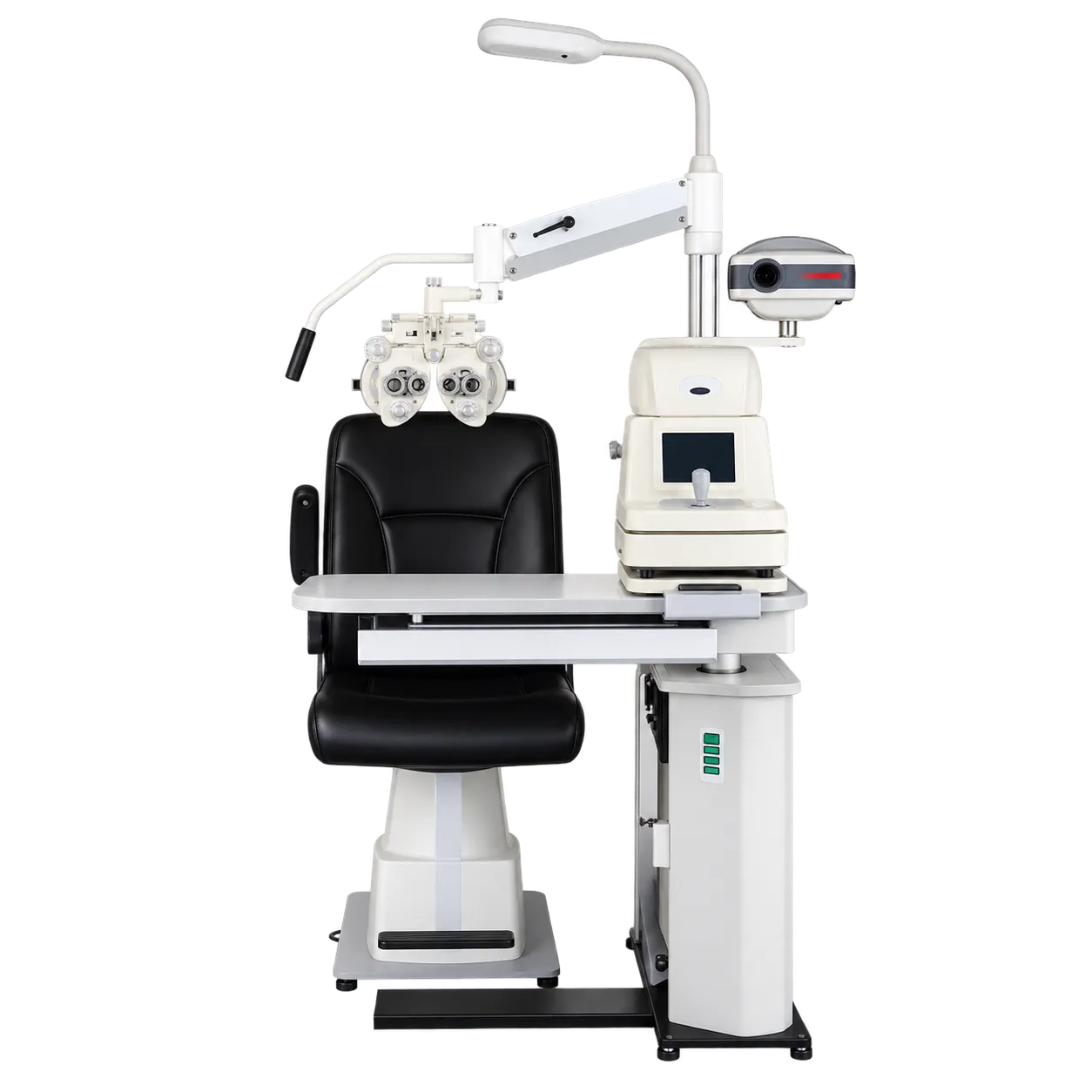
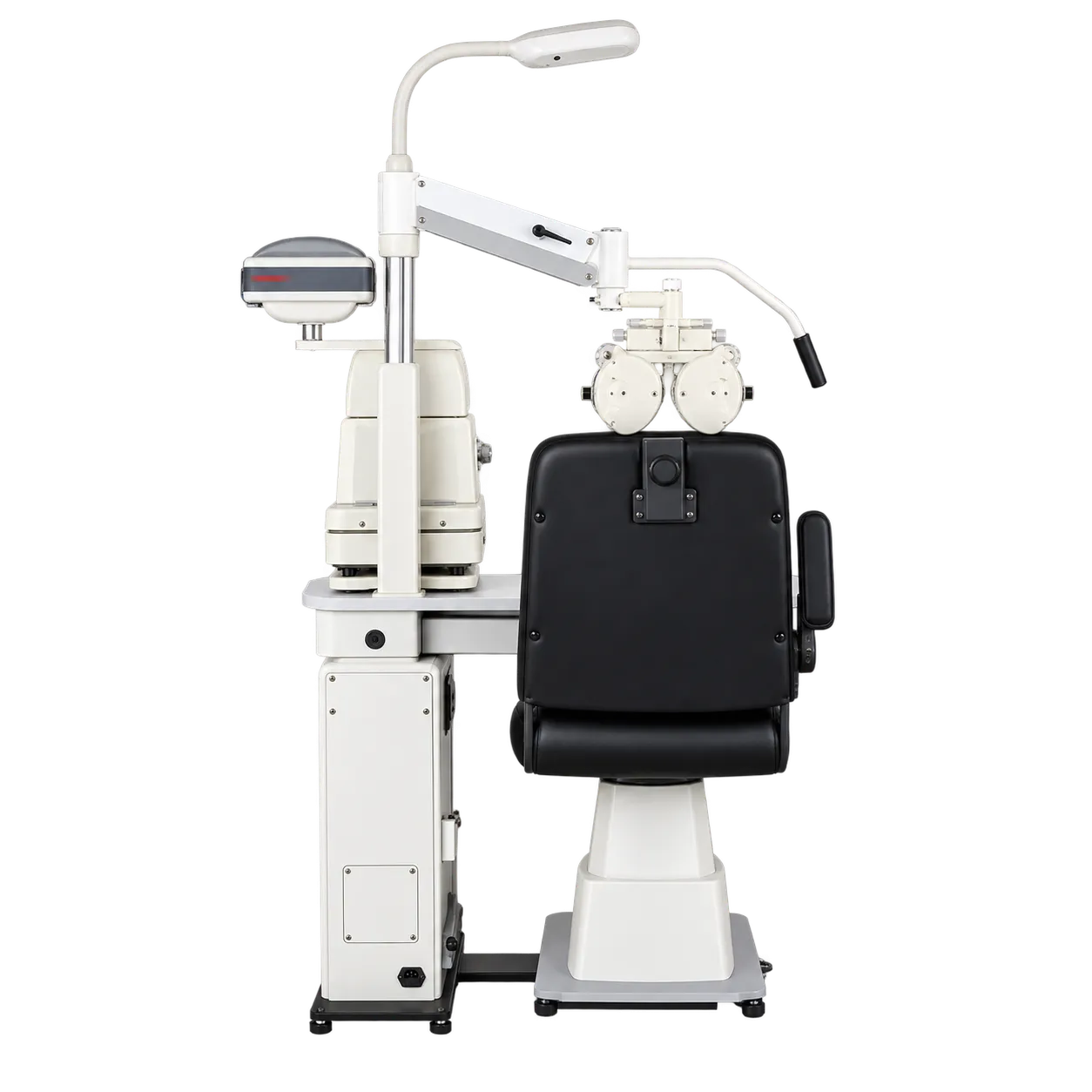
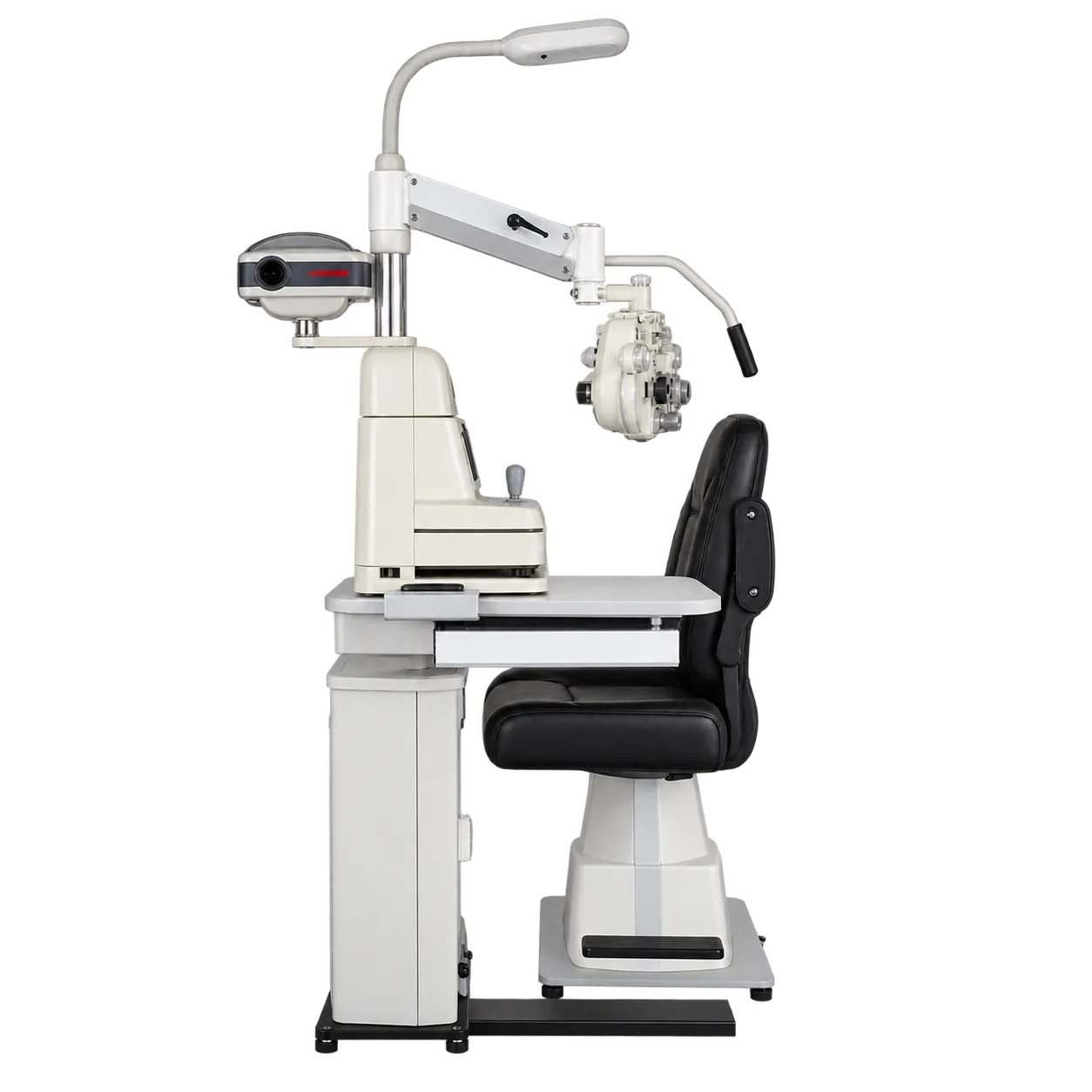
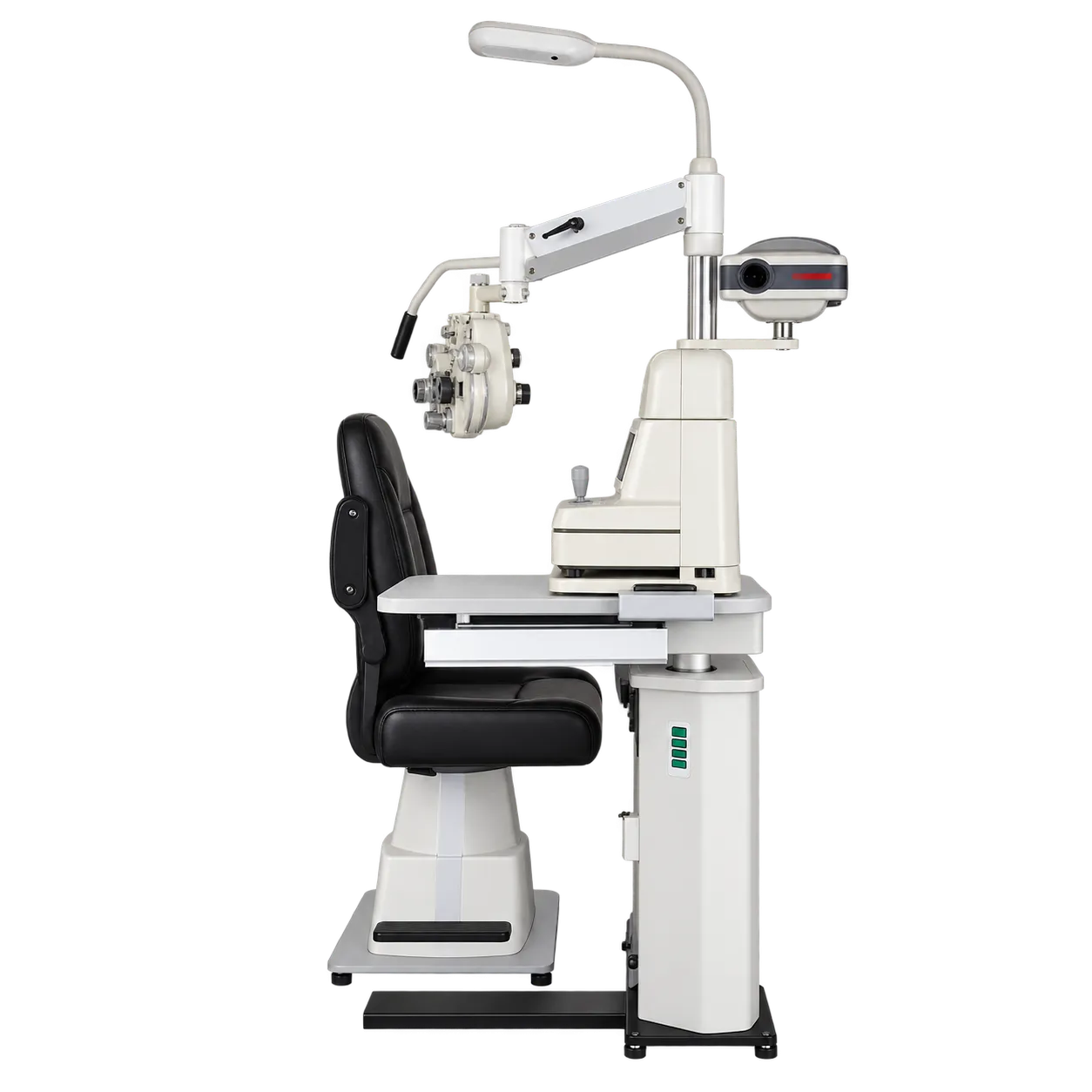
Practices seeing a wide age range benefit most, and the reason is a design philosophy rather than a feature. Seated eye height differs considerably between a small child and a tall adult, and a practice booking those consecutively has to close that gap somehow. This unit closes it with 450 mm of arm travel rather than by winding the chair, which means the patient who has just settled — with a coat, a bag, a stick — stays settled while the equipment comes to them.
Paediatric and mixed-caseload rooms suit that approach particularly. Children are harder to reposition than adults and less patient about it, and any adjustment made to the seat has to be undone for the next appointment. Moving the arm is invisible to the patient and instant.
Rooms where patients are slow to settle gain the same benefit. Older patients, those with mobility restrictions and anyone accompanied take time to get comfortable, and a working pattern that avoids disturbing them once seated is worth having.
The 90° tabletop rotation supports getting them there in the first place, clearing the approach rather than leaving a gap between furniture to negotiate.
Two points belong in the decision. First, this is a coherent position rather than a compromise, but it is a position: with only 160 mm of chair lift, a practice whose working pattern relies on adjusting the patient rather than the equipment will find a large-chair-range unit the better fit. Choose deliberately. Second, chair loading is unpublished — several units in this range state a figure and one states 150 kg — so request the rated capacity in writing, since it determines who can be accommodated and nothing about the unit's own mass implies it.