
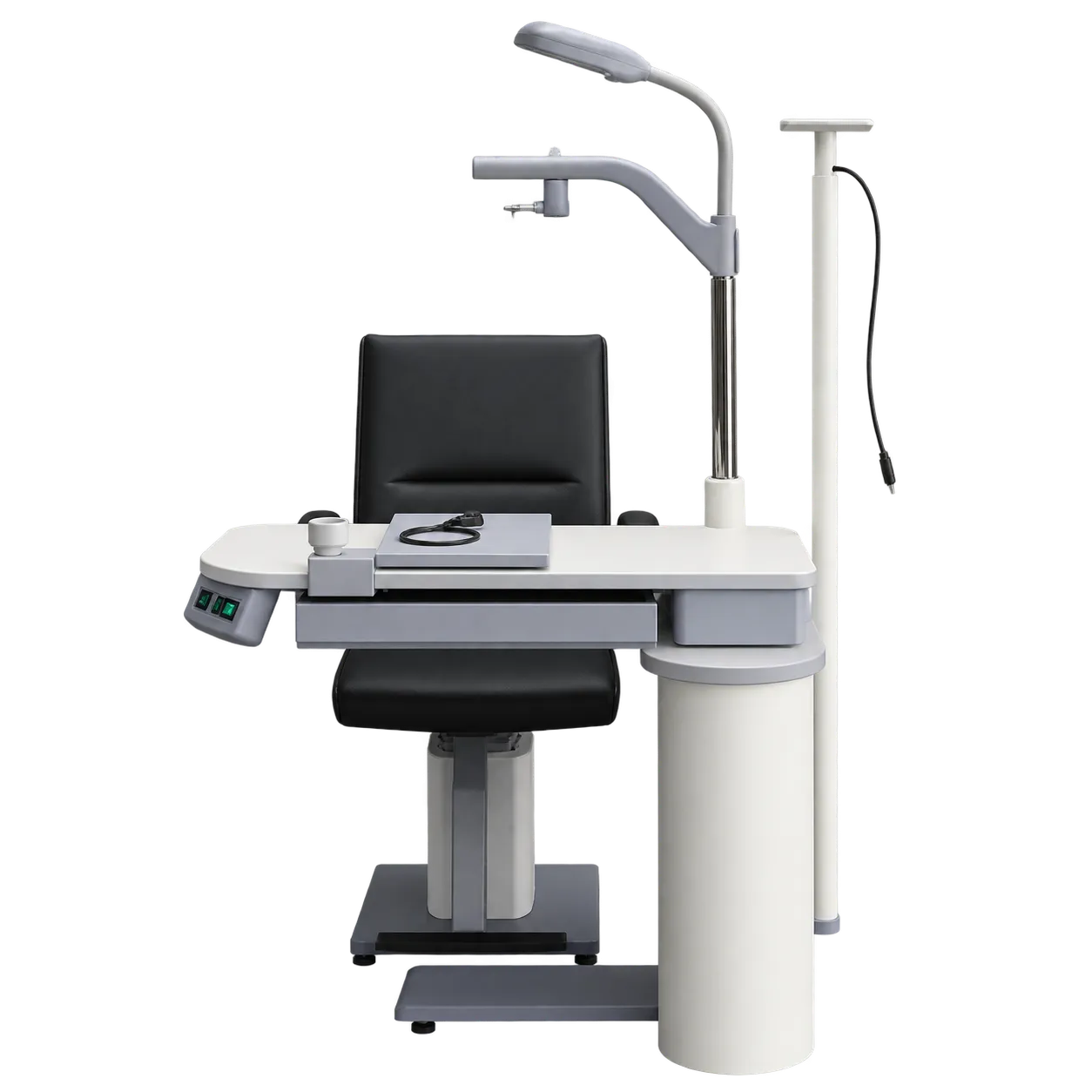
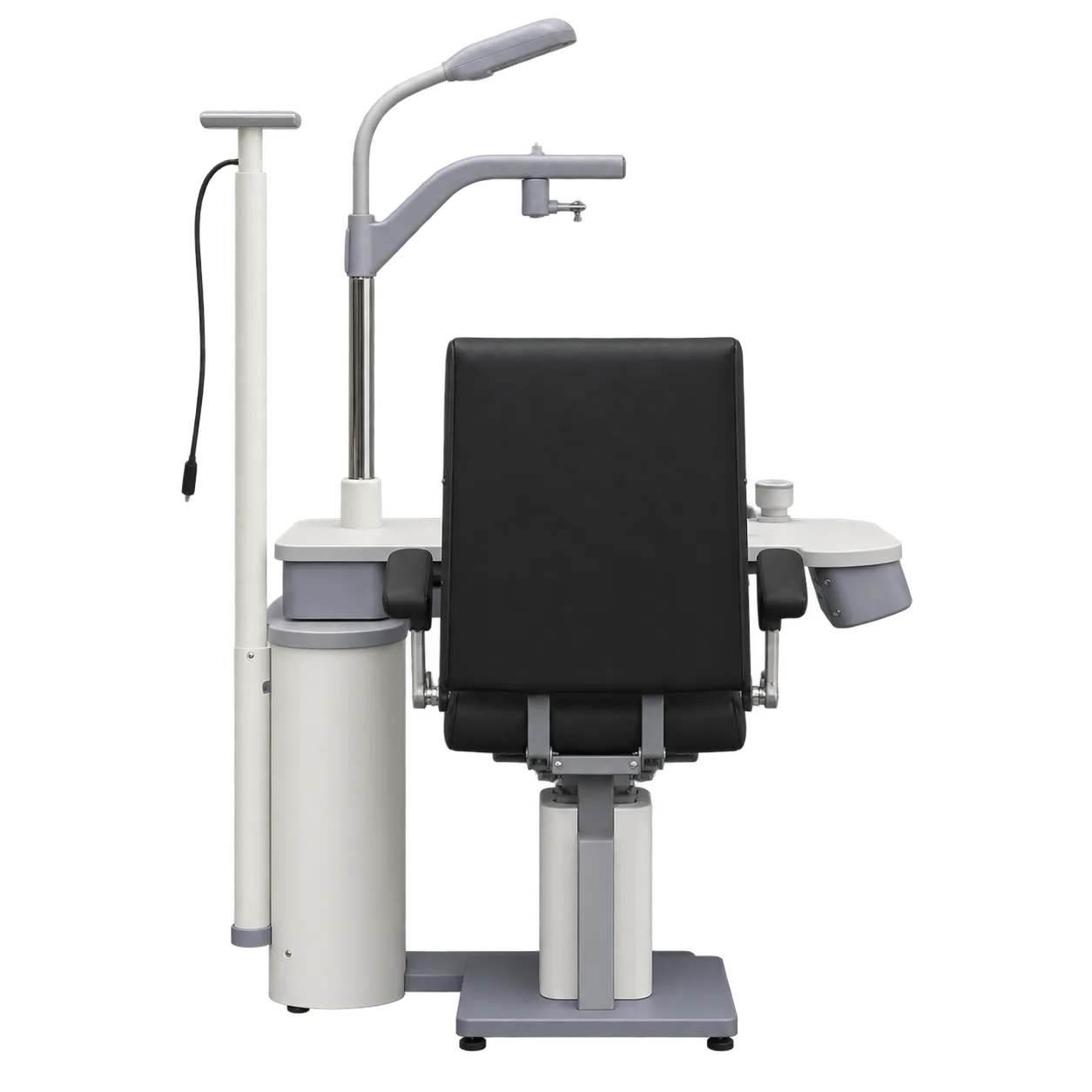
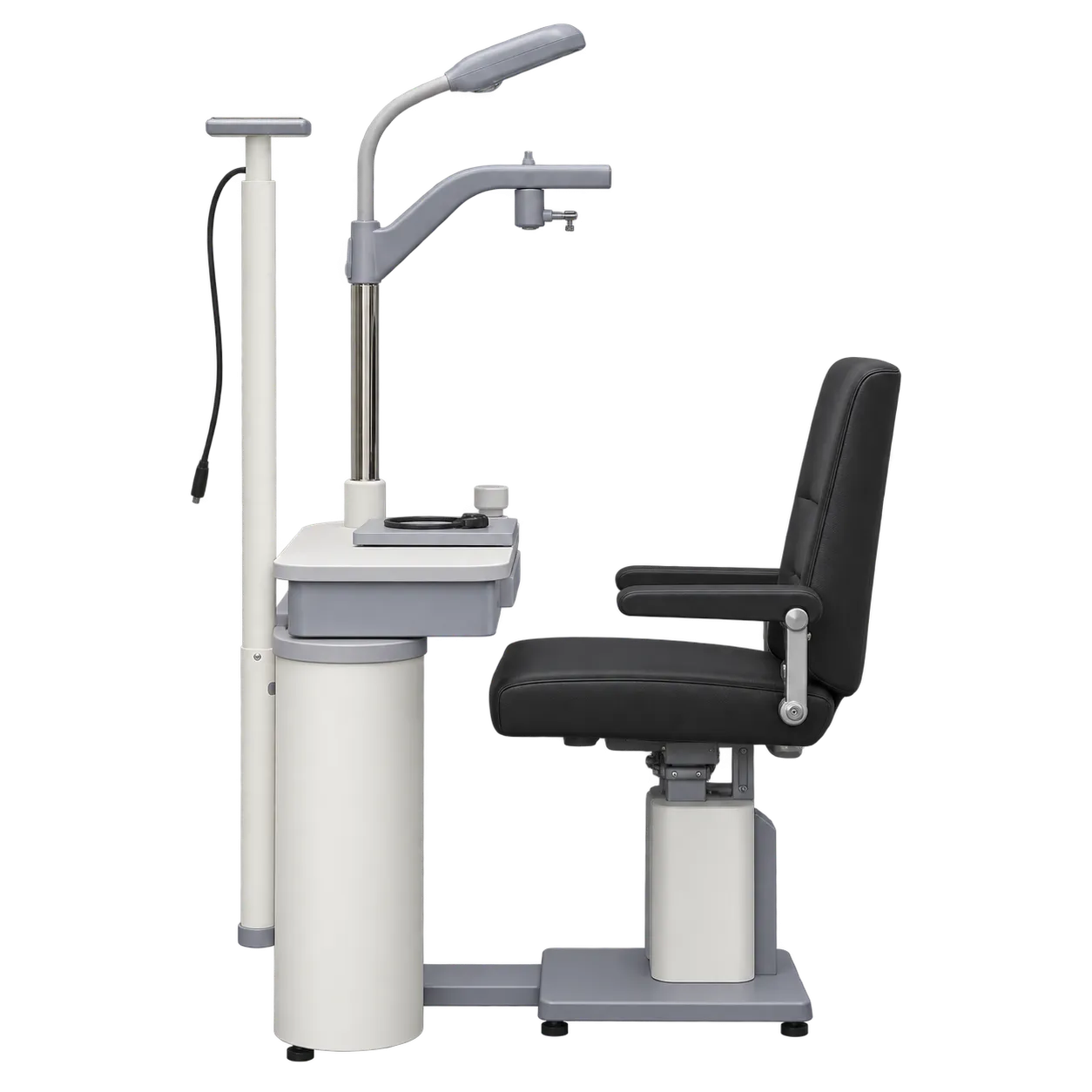
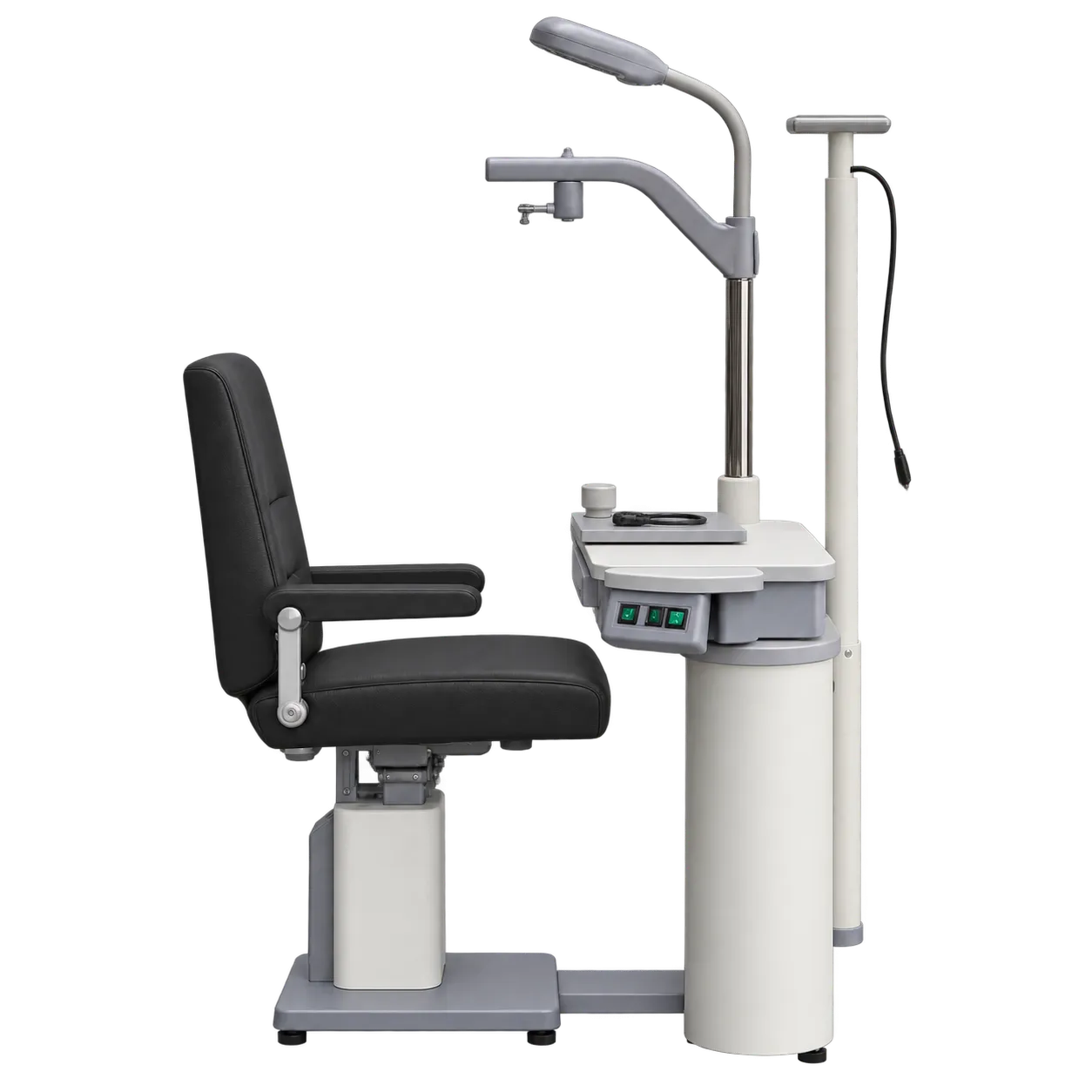
Settings running between-patient decontamination as routine benefit most, which now describes most of them. UK optical and primary care practice tightened cleaning protocols substantially and much of that discipline has persisted — chin rests, headrests, armrests and any touched surface are wiped between appointments. The equipment those protocols run against was largely designed before they existed, and an enclosed casing is one of the few features that acknowledges them.
The mechanism is simple: cleaning works where the cloth reaches. An exposed column with visible linkages, brackets and fasteners has a considerable number of recesses a cloth does not enter, collecting dust, skin debris and aerosol residue in places neither easy to see nor quick to reach. Smooth continuous panelling has fewer. That does not sterilise anything or replace a protocol; it means the protocol reaches its target.
High-volume lists gain the time back. A single wipe across a smooth casing is a different task from picking around an assembled mechanism, and across thirty or forty appointments the difference is measured in minutes — and more importantly in whether the task gets done properly rather than hurried.
Shared and multi-clinician rooms benefit similarly, since a cleaning routine that is quick and obvious is one that survives being handed between people.
Two things belong in the decision. First, and stated plainly: every published figure on this datasheet is identical to the sibling model in this range, so the difference is in the casing rather than in any specification. Judge it on that basis. Second, approved cleaning agents are not published — painted and coated surfaces vary in what they tolerate and alcohol-based products can damage some finishes over time, so confirm them before establishing a routine.