
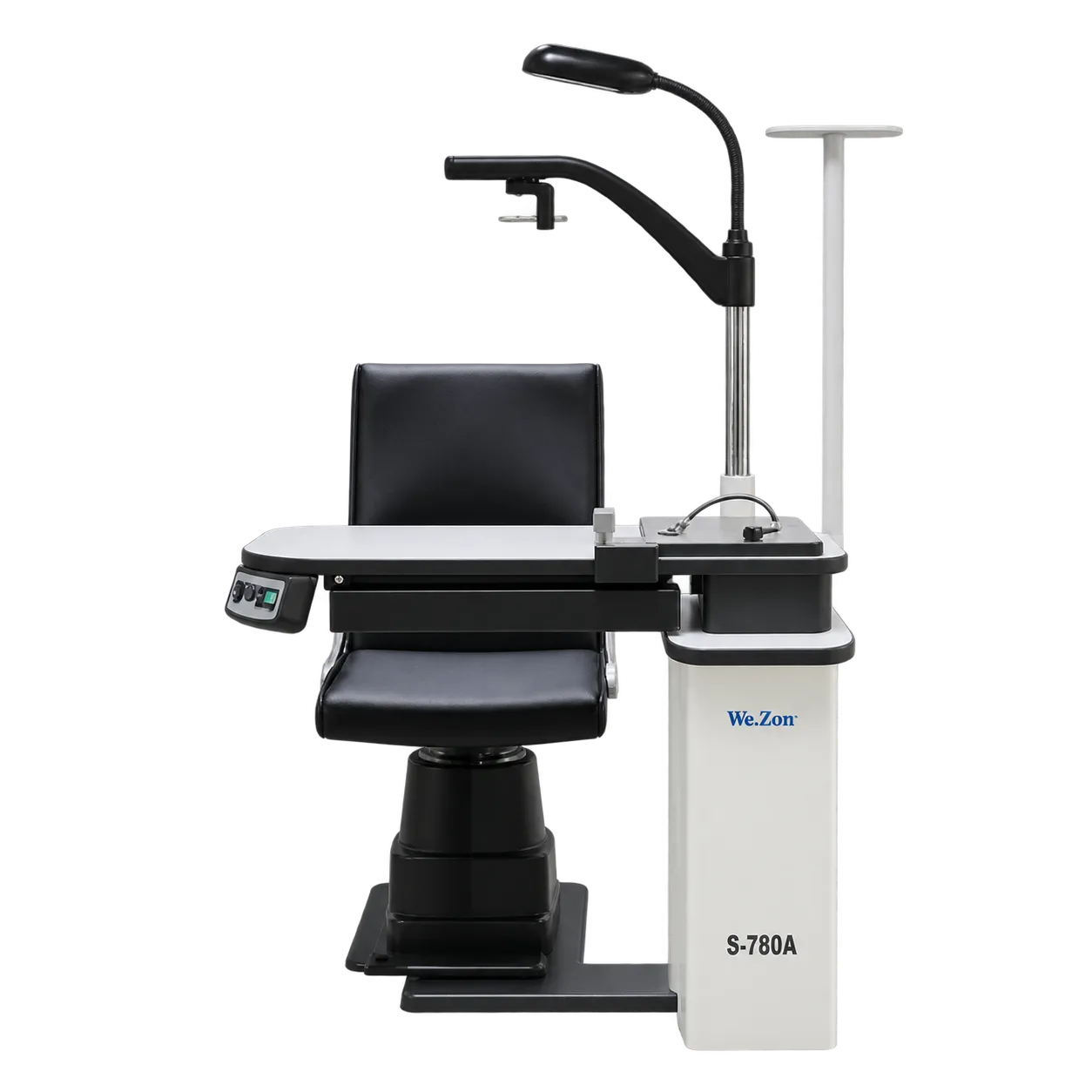
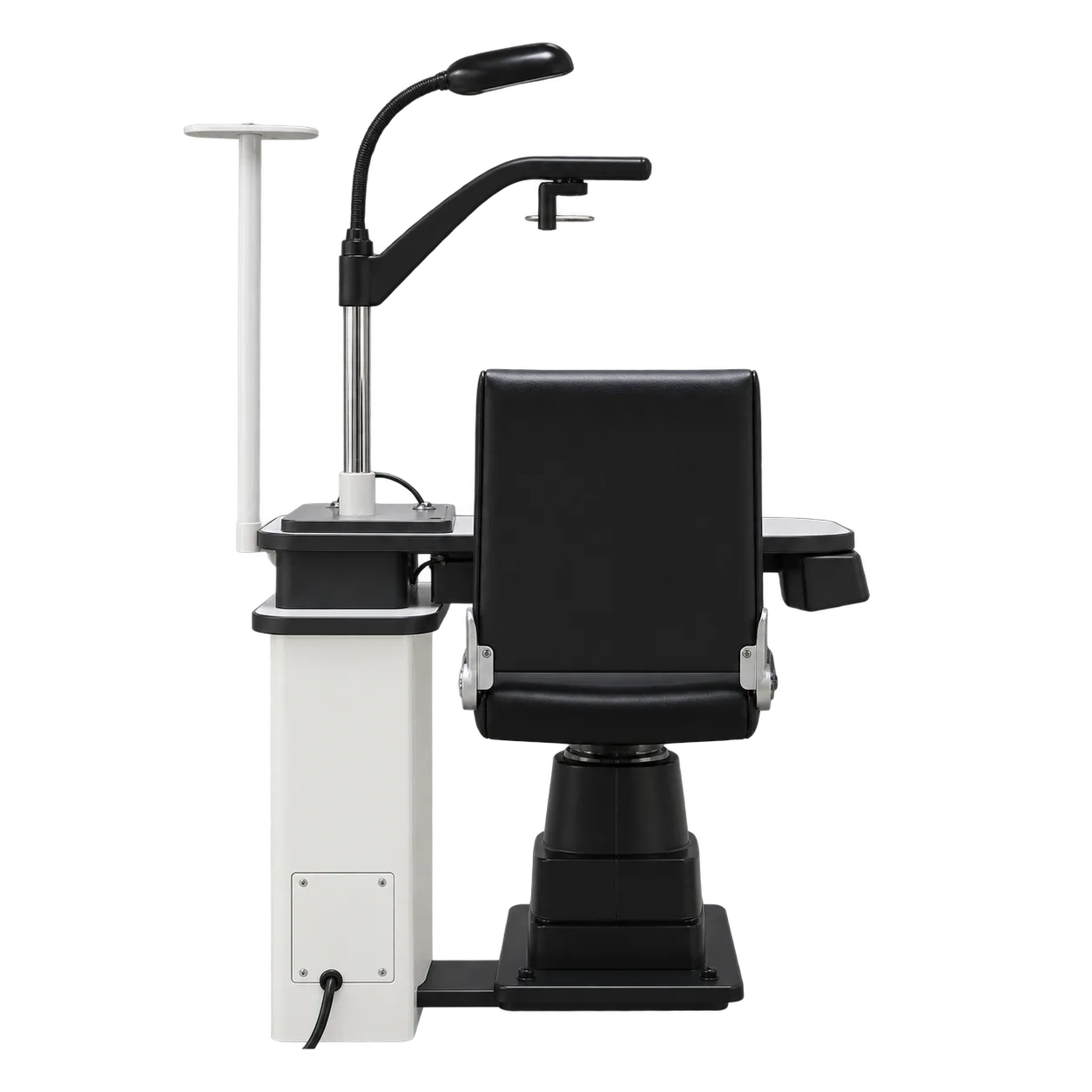
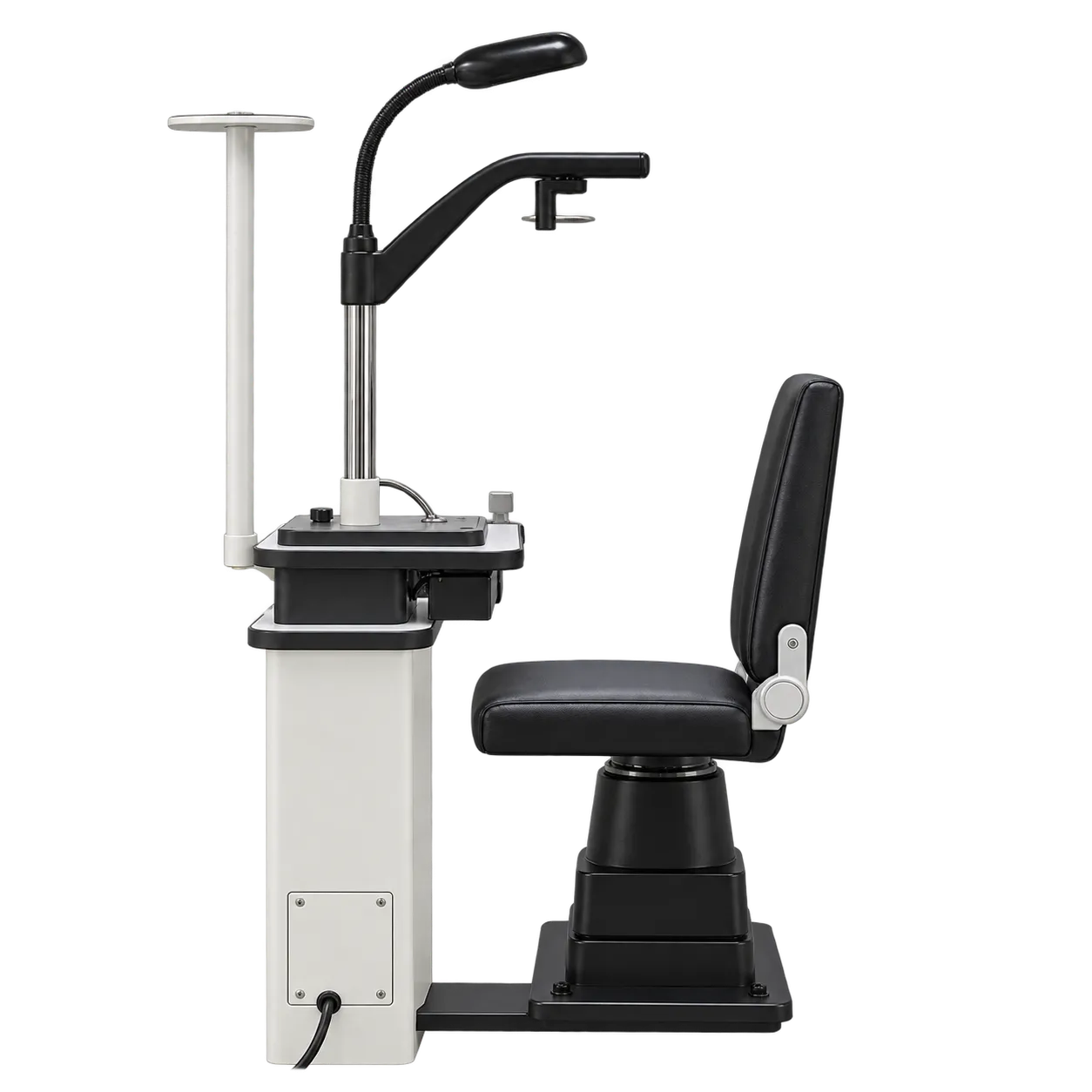
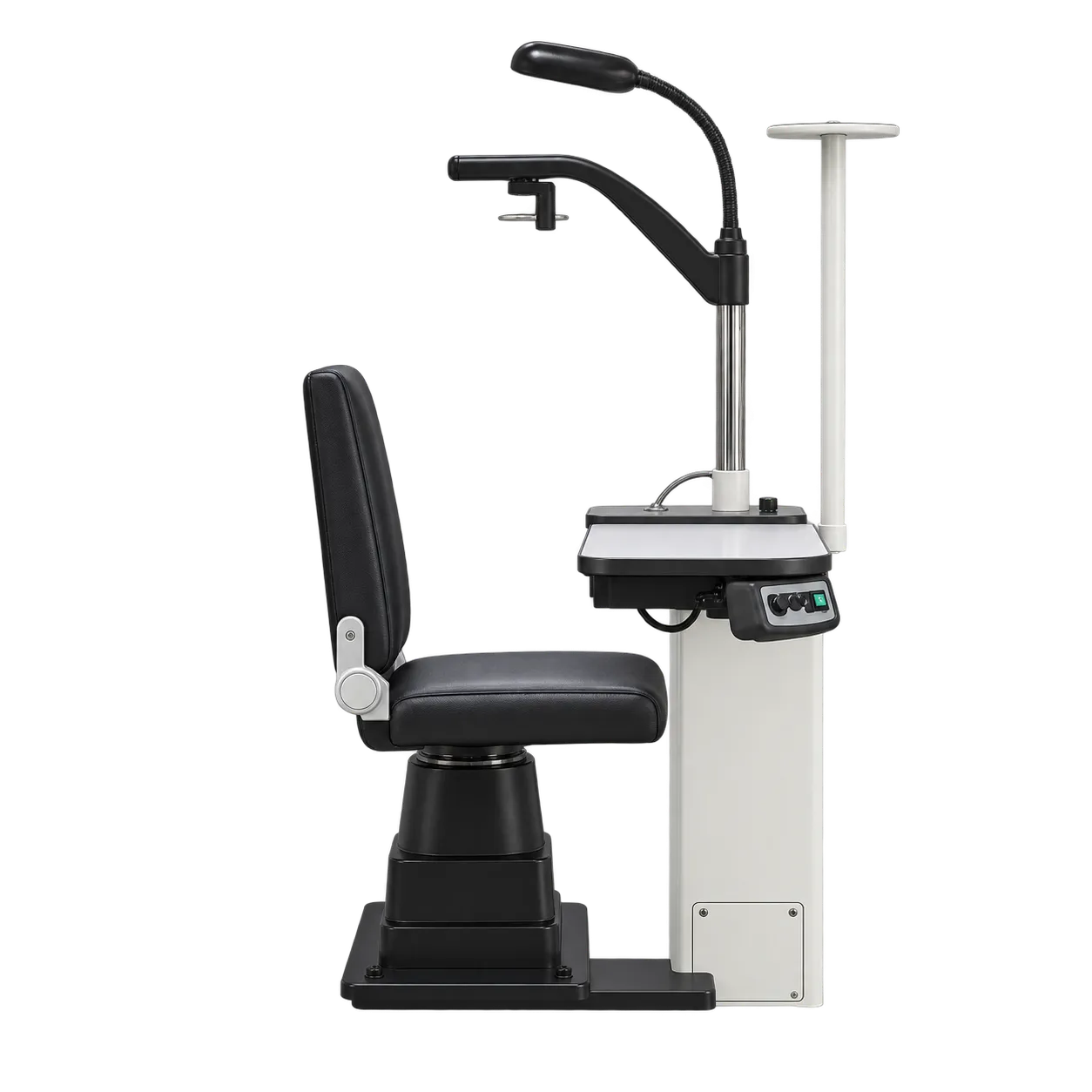
Practices mounting deep instruments benefit first, and slit lamps are the usual case. A slit lamp base is a substantial footprint, and an instrument overhanging the back edge of a shallow worktop is neither properly supported nor stable. That is the kind of problem discovered after installation rather than before, when the instrument arrives and the table turns out to be 80 mm short. Five hundred millimetres of depth on the same floor area removes the risk.
Trial frame practices gain from the drawer. Sixty millimetres of internal depth is the deepest recess in this range, and case heights vary enough that shallower drawers reject a fair number of them by a margin small enough to be genuinely irritating. A lens set kept in the unit rather than on a shelf across the room saves a movement on every refraction that uses it.
Rooms running a secondary instrument suit the sliding surface, which moves left and right alongside the main board and gives a device somewhere to sit without occupying the primary working area permanently.
Entry to the chair is served by the 90° tabletop rotation, clearing the approach rather than leaving a gap between furniture for a patient with a stick or frame to negotiate.
Two things belong in the decision. First, this is the mirror image of the extended-arm model in this range: 300 mm of arm travel against 450 mm, in exchange for 80 mm more table depth and 10 mm more drawer depth on an identical footprint. Neither is better; they suit different rooms, and the choice should follow what actually sits on the table. Second, chair loading is unpublished, so the rated capacity must be requested in writing before any accessibility question can be answered.