
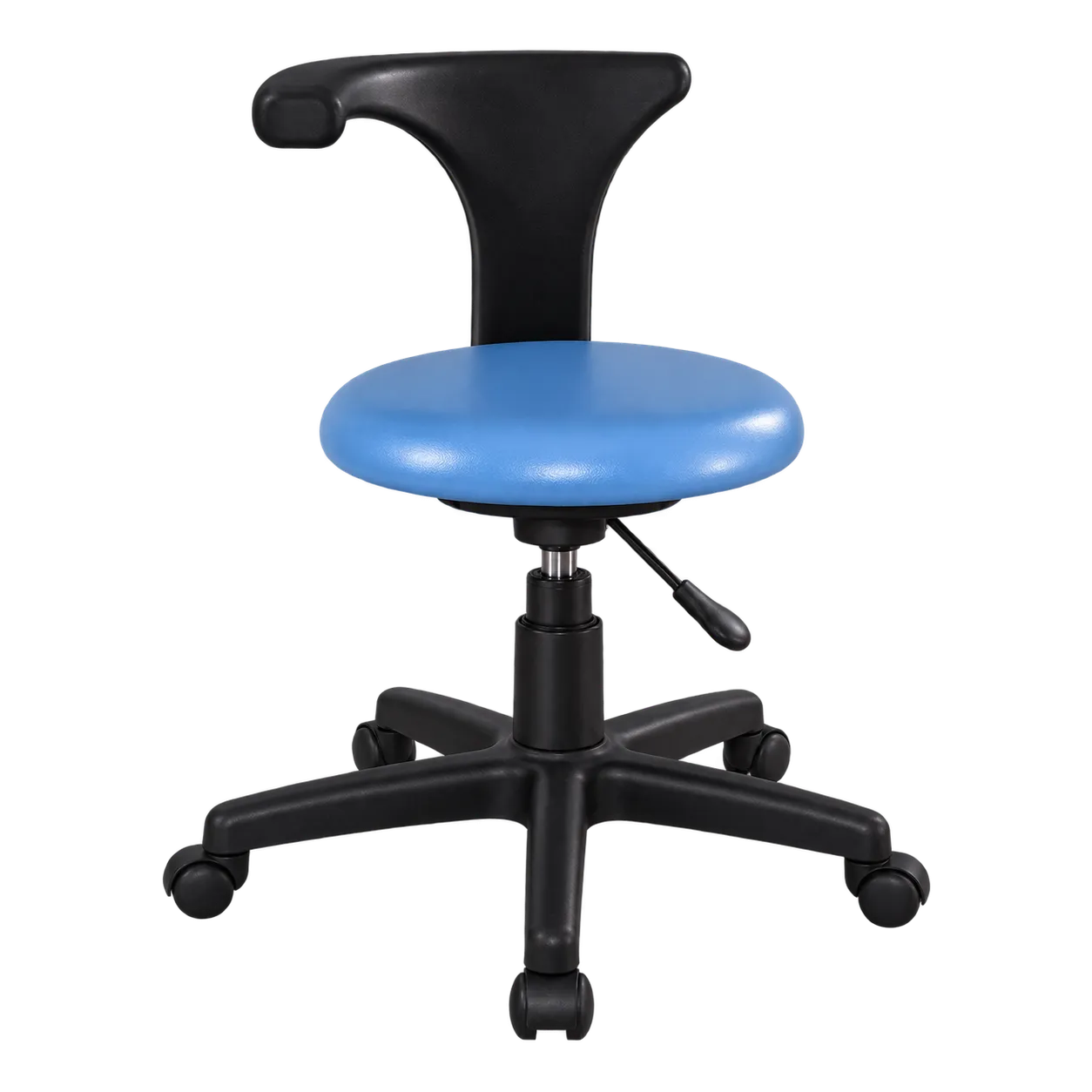
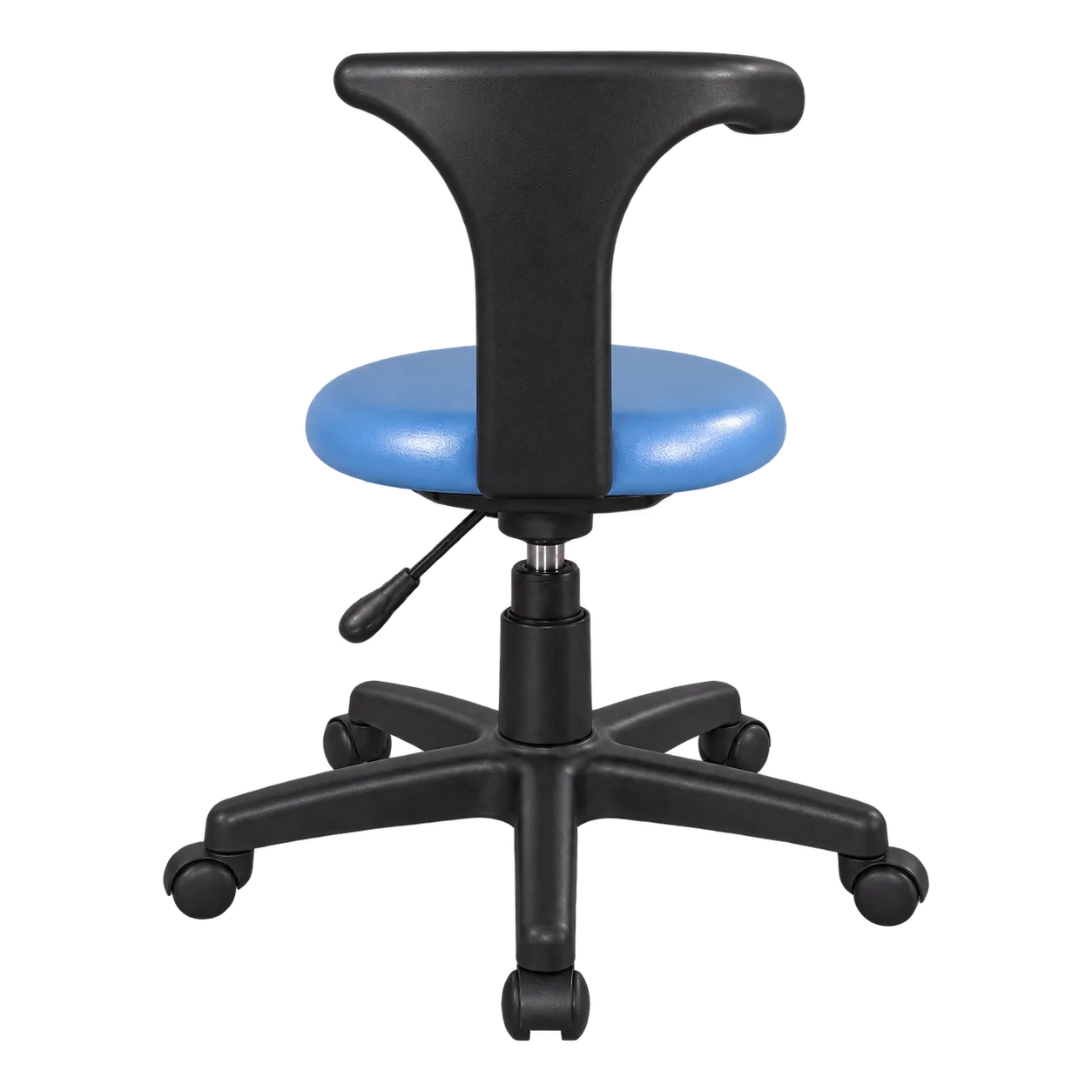
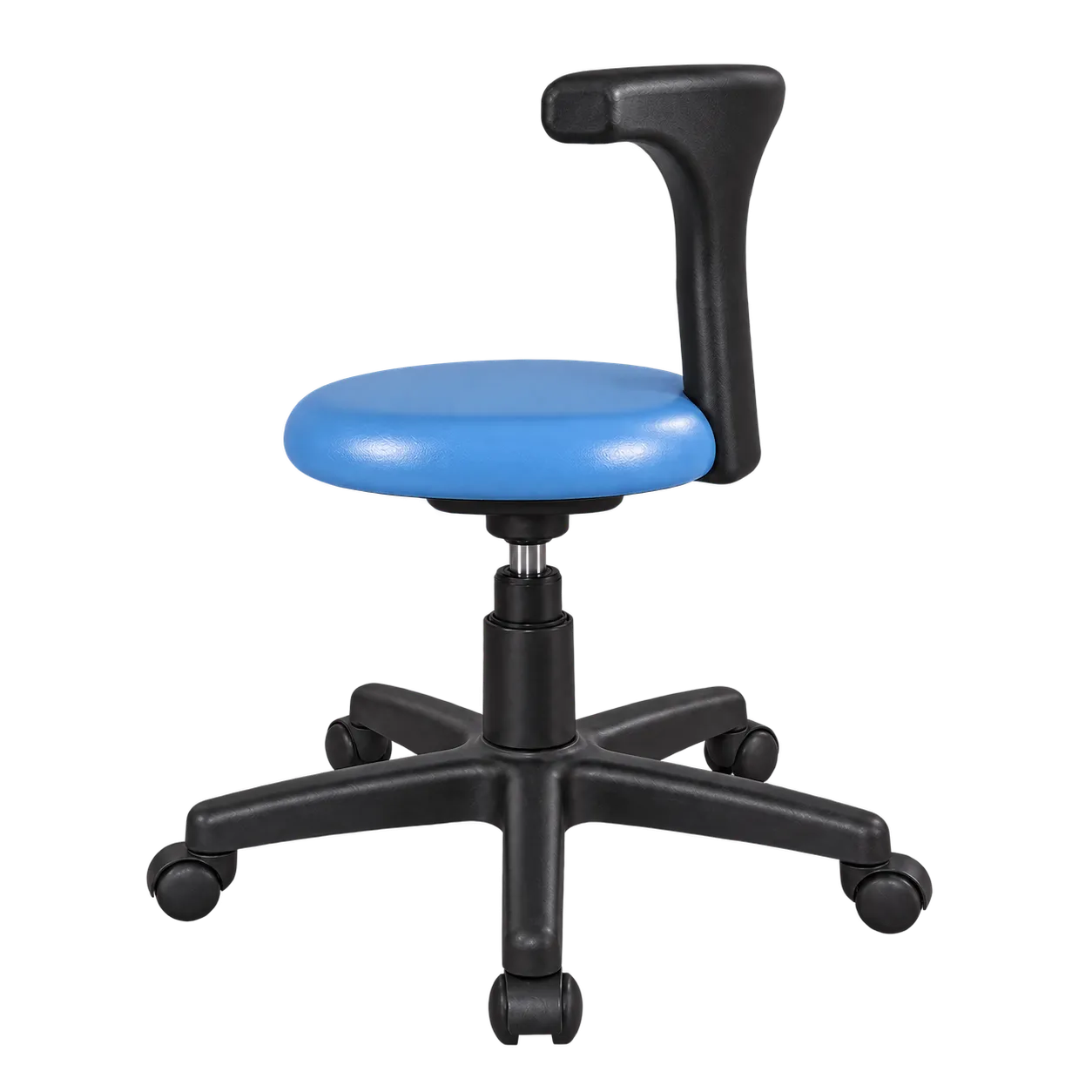
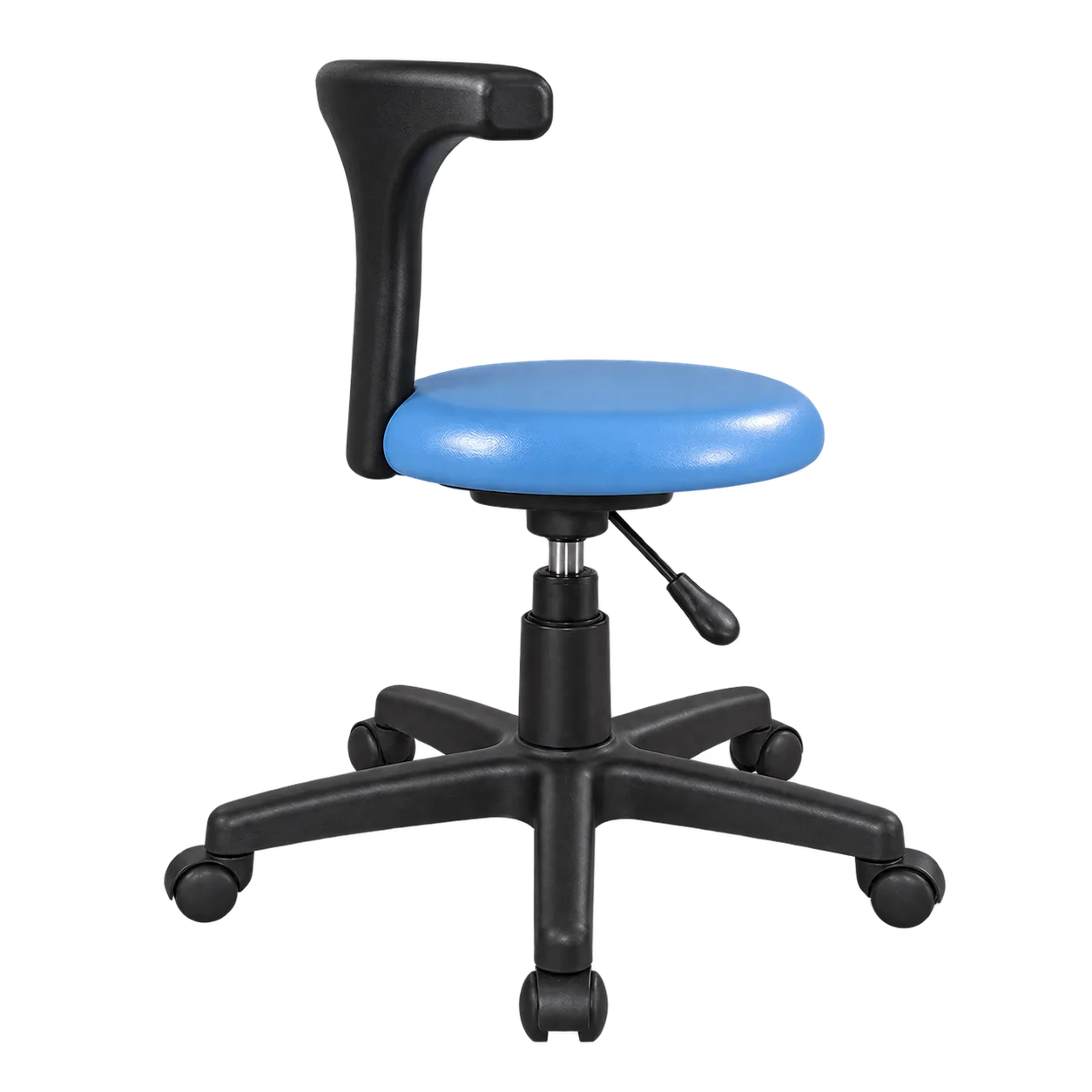
Slit lamp examination is the clearest use. The clinician sits forward with both hands on the instrument, and a lumbar support at the base of the spine holds that posture without restricting shoulder or arm movement. Height has to match the eyepiece, which is why the seat range is the first figure we obtain.
Pre-test and screening sessions suit a rolling stool. An assistant moving between an autorefractor, a tonometer and a keyboard can push between positions without standing, which shortens a list noticeably.
Dispensing and adjustment work benefits from the swivel and the gas-lift, as staff move between a patient in front of them and a workbench behind.
Contact lens teaching and fitting keeps a practitioner close to the patient for extended periods, where a stool that adjusts quickly suits both parties.
Shared consulting rooms benefit from fast height adjustment, since a stool set for one clinician rarely suits the next, and a gas-lift lever takes a second rather than a spanner.
Staff wellbeing is the underlying point. Musculoskeletal complaints are among the most common causes of work-related ill health in the UK, and eye care involves sustained forward-leaning postures. Seating chosen for the clinician rather than inherited from the previous fit-out is a practical response.
Long desk sessions are less well served, since a lumbar-only support gives no upper-back contact, and practices with substantial administrative work usually keep an office chair as well.