
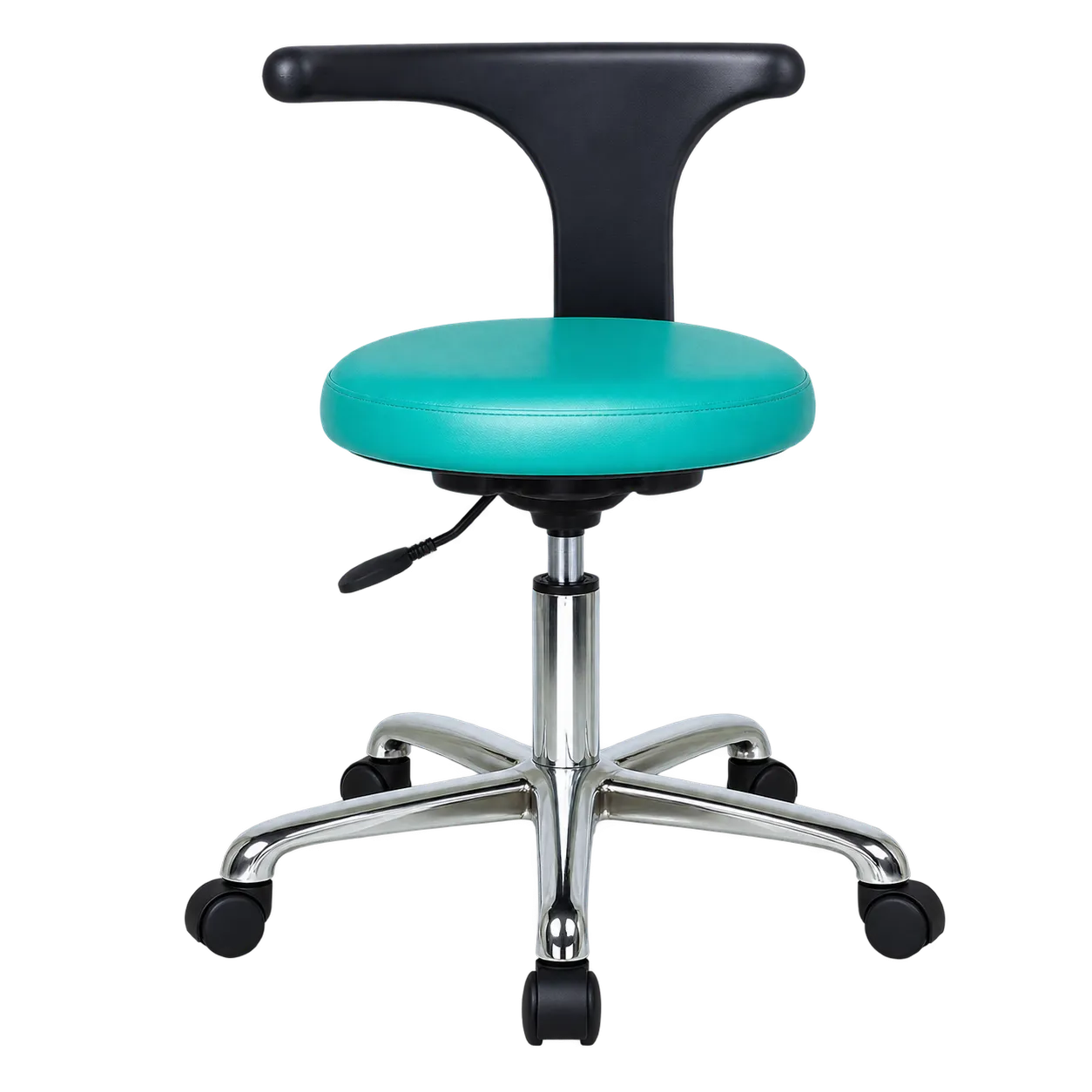
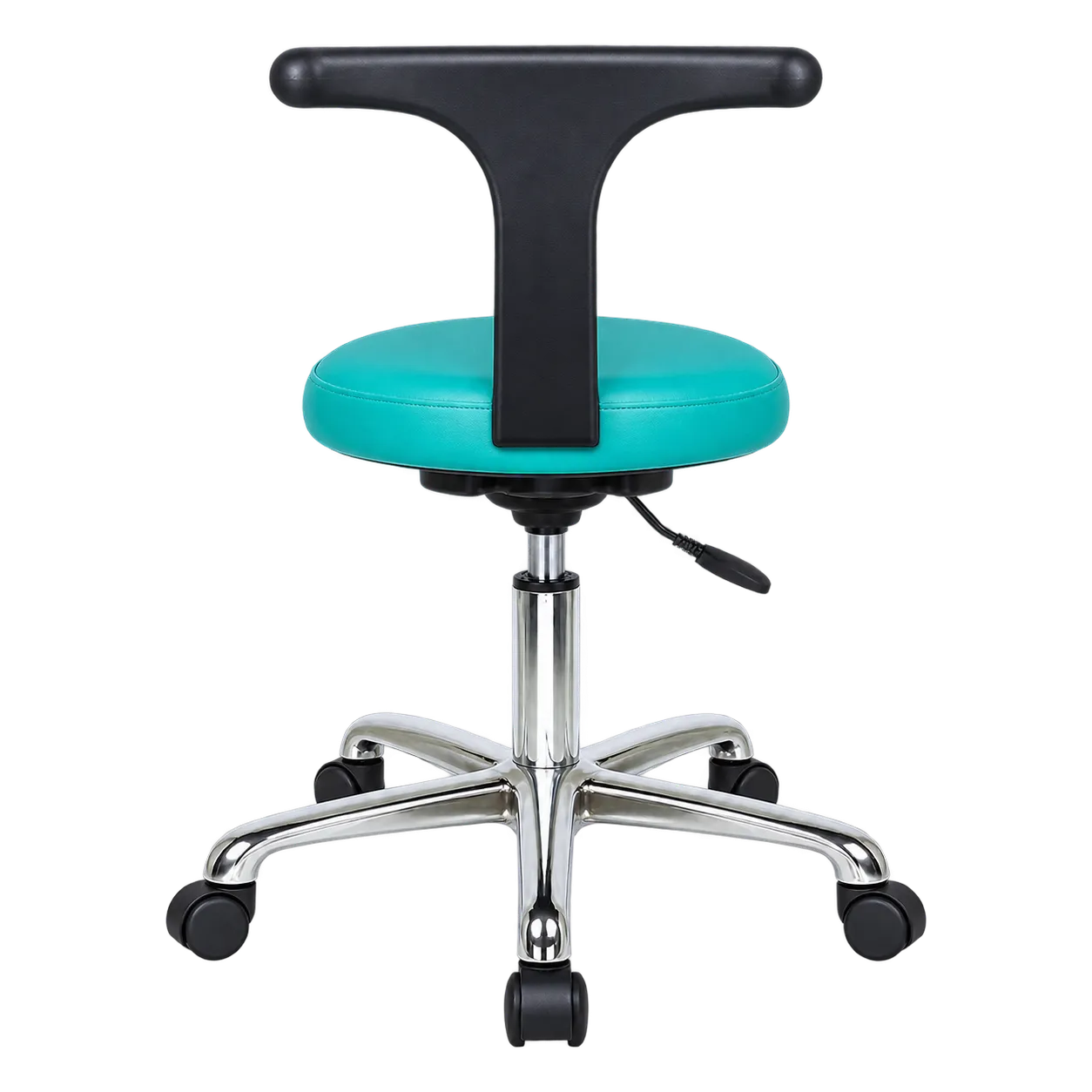
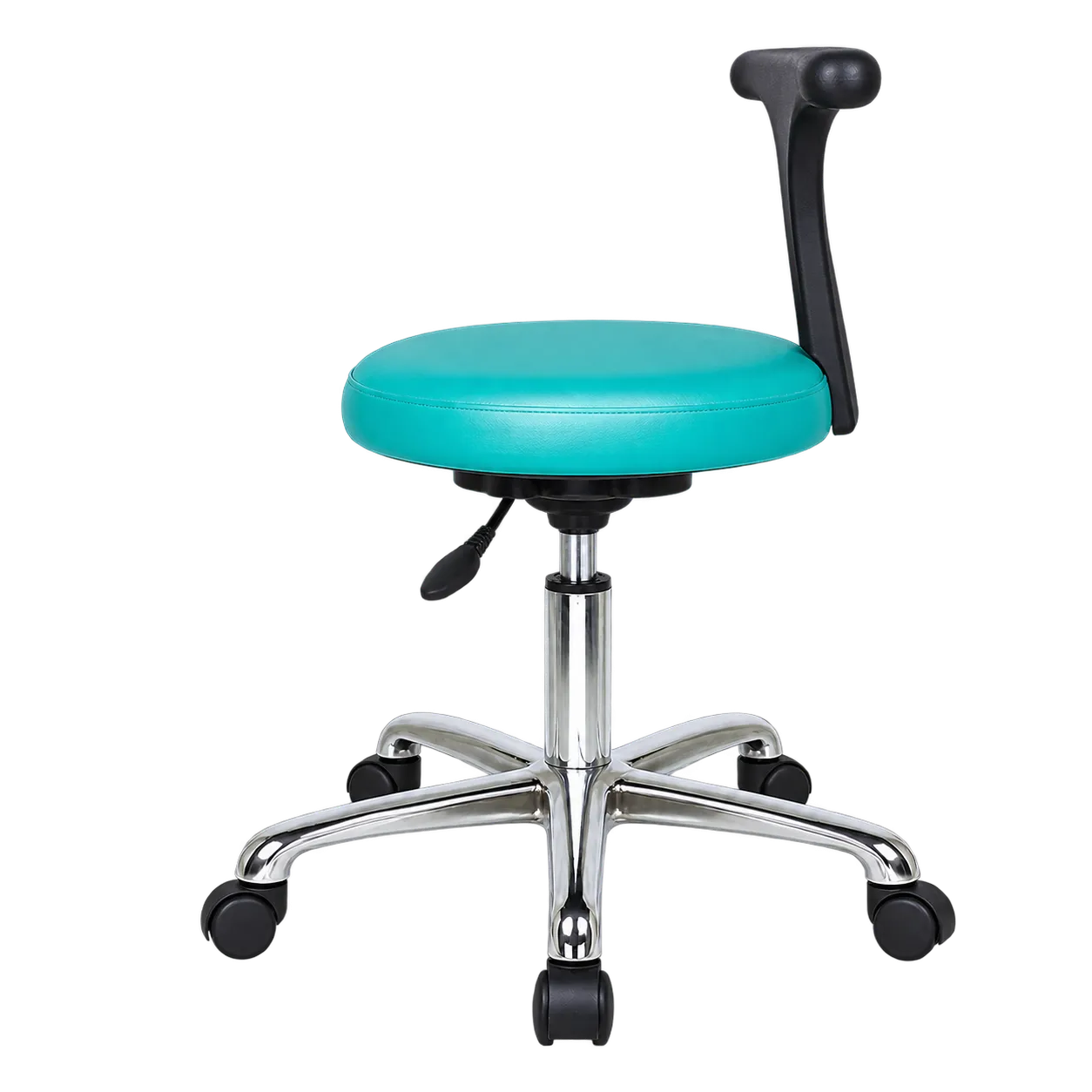
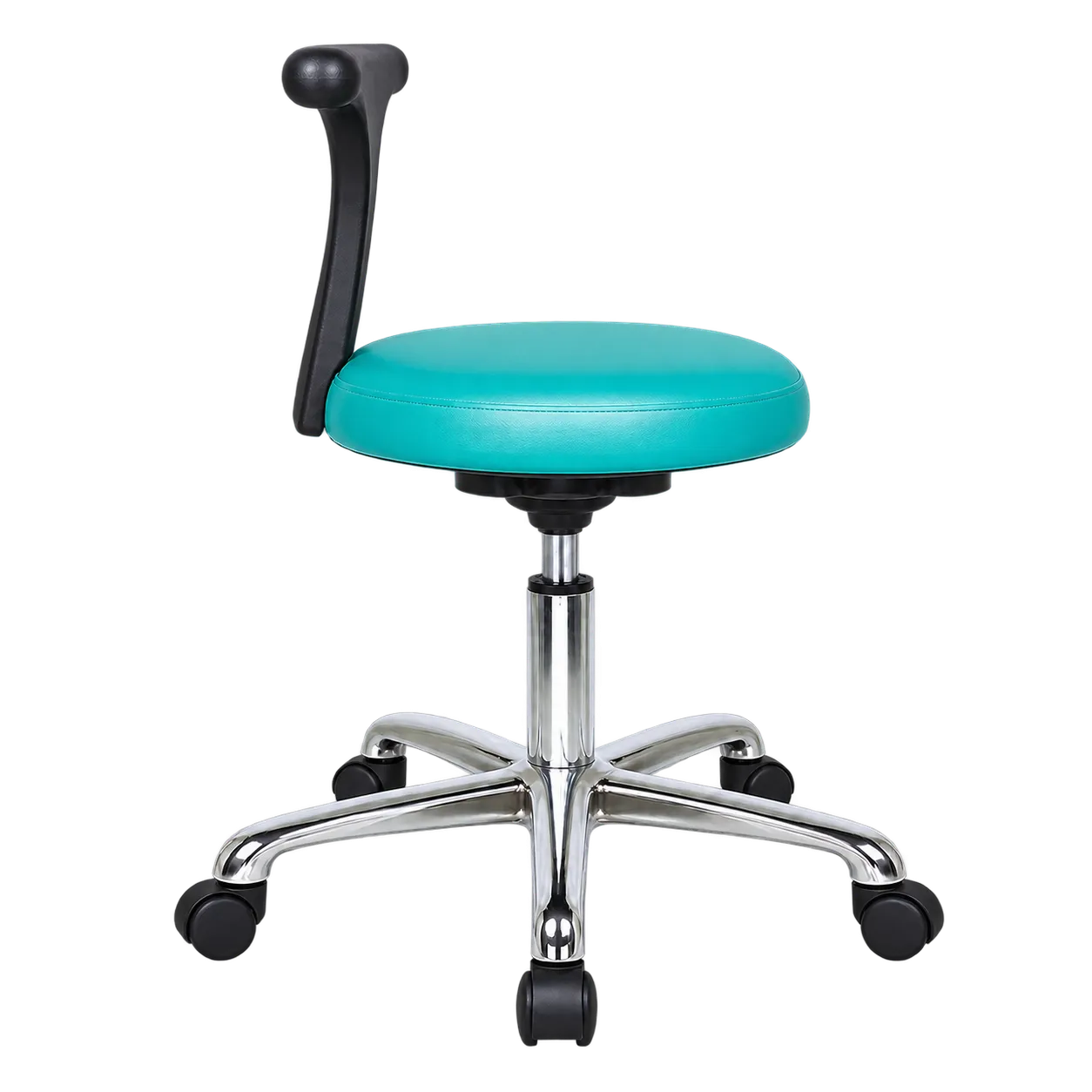
Rooms where the clinician turns constantly suit this shape best. An eye examination alternates between the instrument, the record and the patient, and each turn takes the sitter away from a narrow backrest. A back curving round the waist keeps contact through part of that movement.
Slit lamp and pre-test positions involve leaning forward and then back repeatedly, and a wrap-around back gives a surface to return to without having to find it.
Contact lens fitting keeps a practitioner close to the patient for long periods with frequent reaching to one side for lenses, solutions and tissues, which is exactly the movement a narrow pad fails to follow.
Dispensing and adjustment work suits the shape for the same reason, with staff turning between a patient, a bench and a drawer.
Patient-facing rooms suit the teal upholstery and polished base, which read as softer than black moulded plastic.
Clinicians who sit and stand frequently may find a wrap-around back restrictive on entry and exit, and are often better served by a narrow pad.
Conventional desk sessions gain less, since a clinician facing forward at a screen for long periods needs upper-back support that no lumbar-height back provides.
Shared rooms should establish whether the back adjusts before ordering several, since a fixed wrap-around back suits one build better than another.