
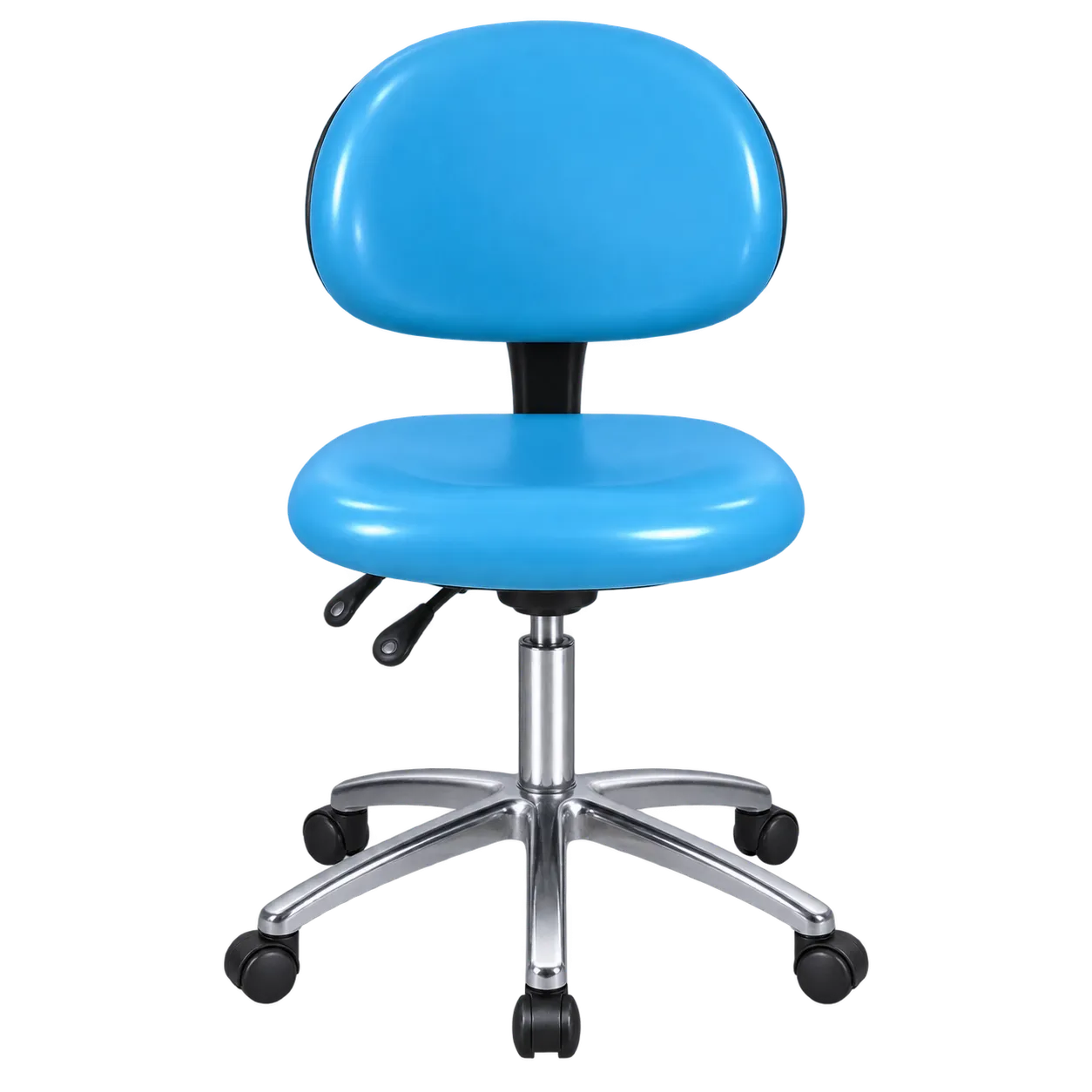
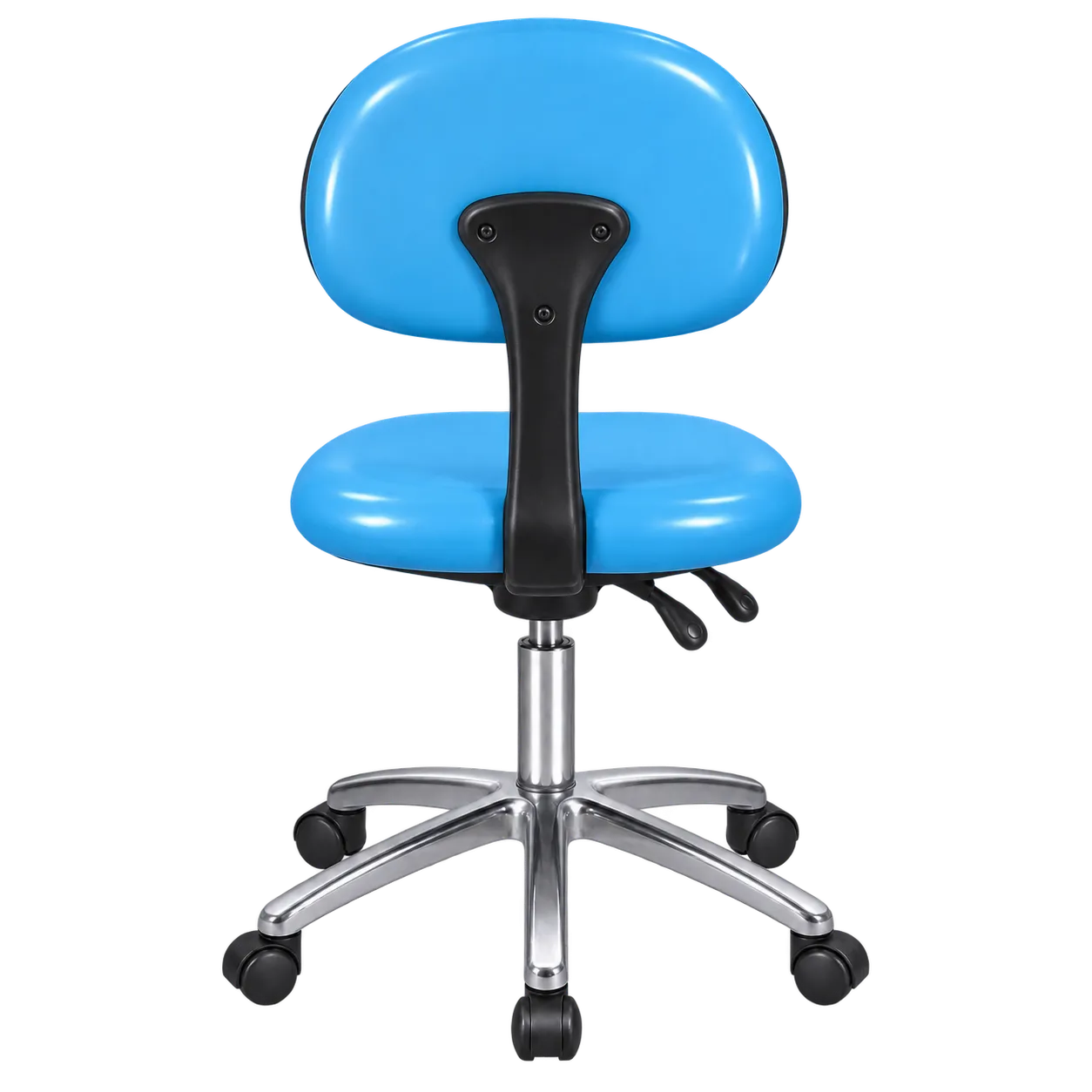
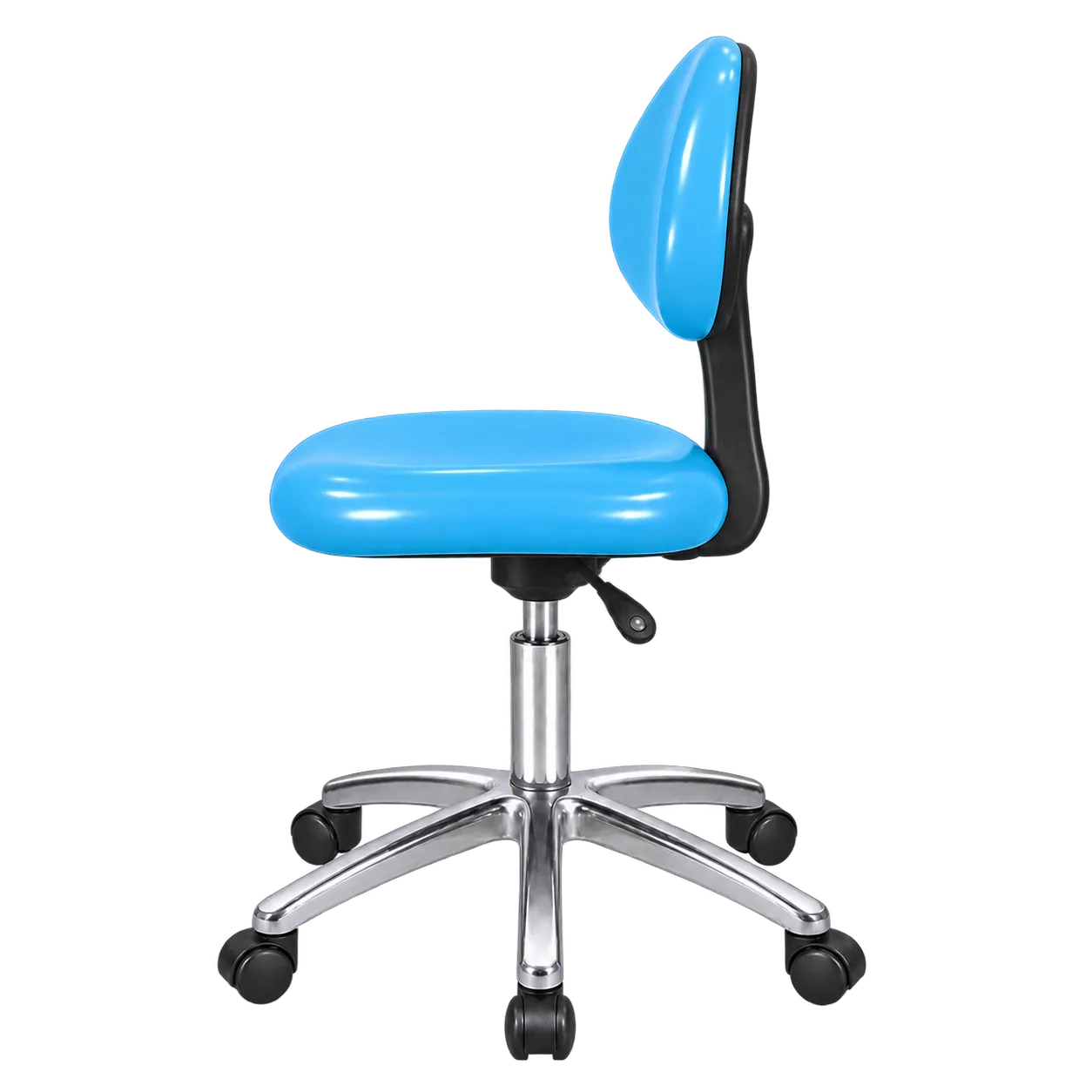
Record-keeping is the clearest use. UK optometrists and ophthalmologists write up findings, letters and referrals throughout a clinic, and the GOC expects clear, contemporaneous records. That work happens sitting back at a screen, where a lumbar pad offers nothing and a full backrest does.
Dictation and referral writing between patients suits a chair that supports the upper back during short, repeated periods of screen work.
Practice administration, ordering and correspondence keep staff at a desk for extended stretches, and a chair with a shaped seat and a full back suits that far better than a stool borrowed from a consulting room.
Reception and dispensing desks can use the same chair where staff work at a screen for much of the day.
Consulting rooms where the clinician writes at a desk between examinations benefit from a seat that serves both, though a practice doing substantial slit lamp work usually keeps a separate stool for the instrument.
Display screen workstation assessments are simpler to satisfy with a chair that adjusts, which is why the backrest and tilt adjustments are the first things we establish.
Forward-leaning instrument work is less well served than by a stool, since a full backrest can obstruct the posture a clinician adopts at a slit lamp.
Shared rooms should confirm the adjustment range before ordering several, since a chair that suits one build may not suit the next.