
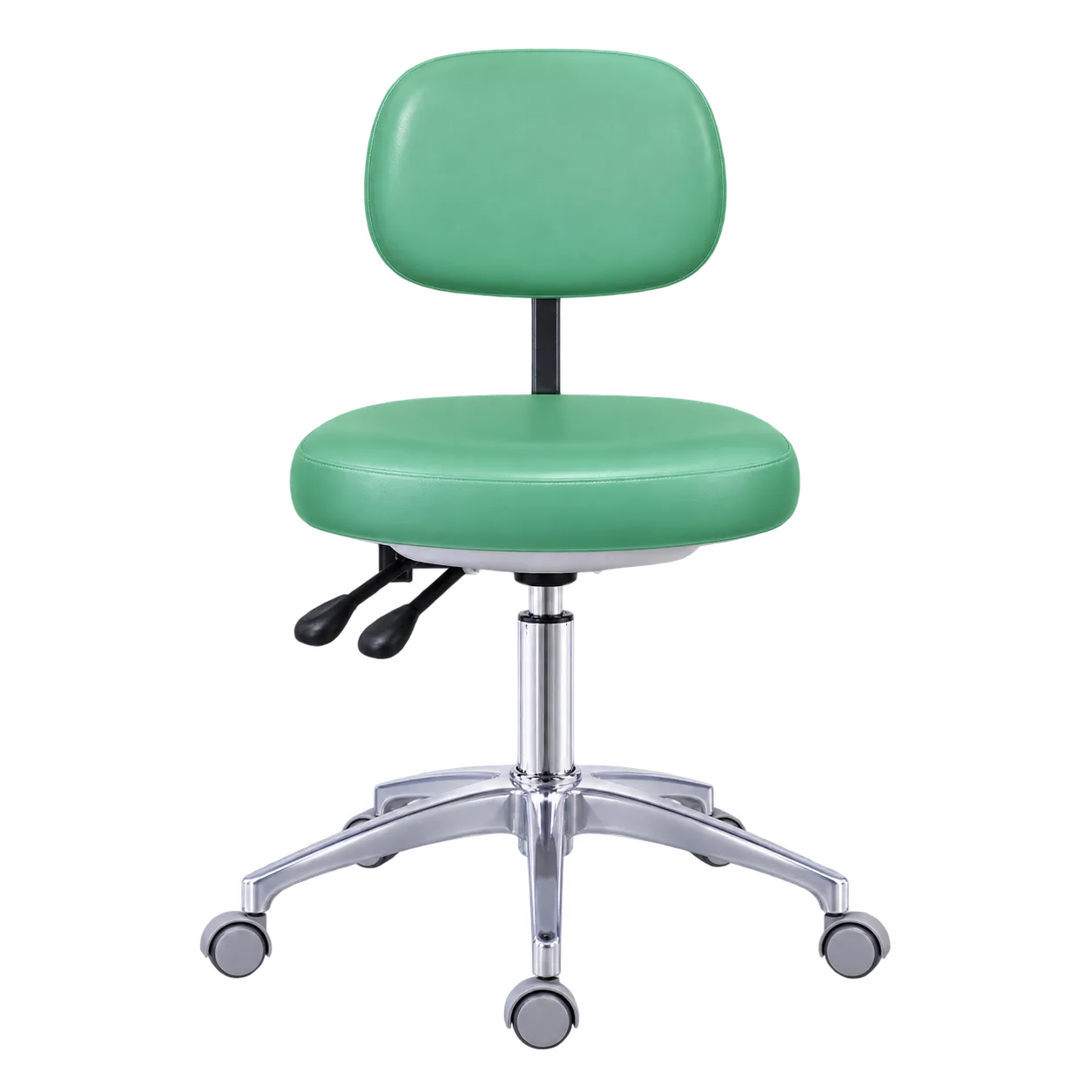
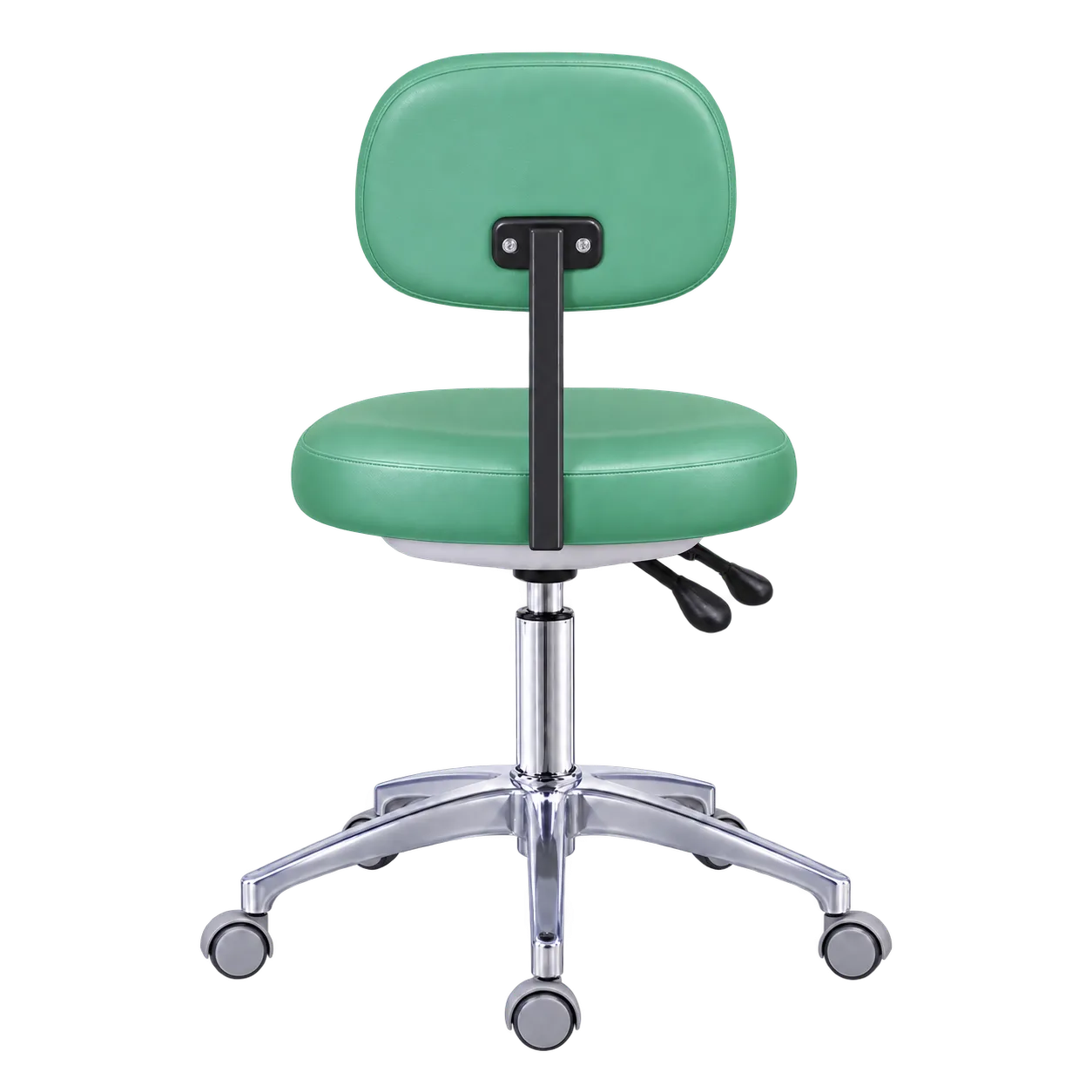
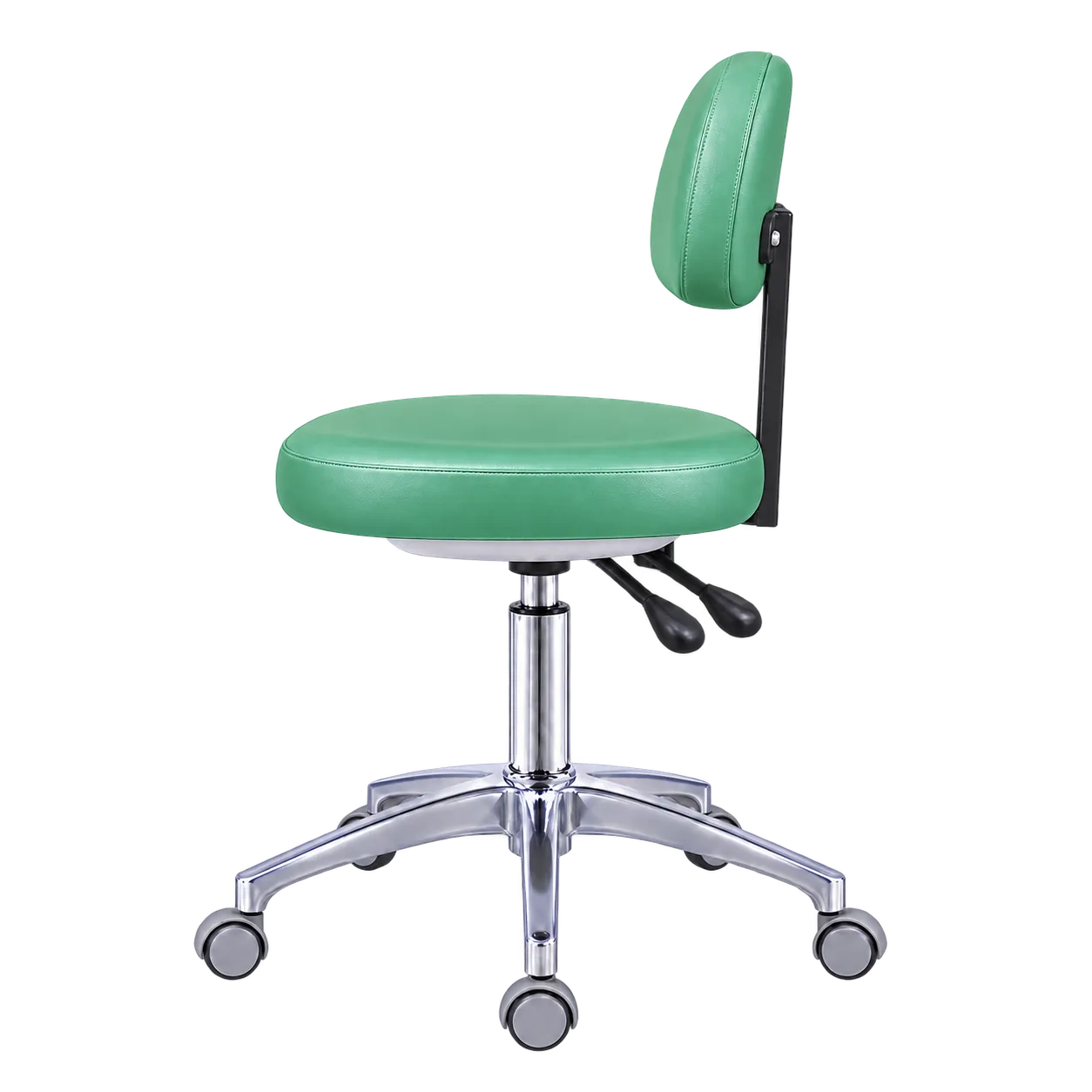
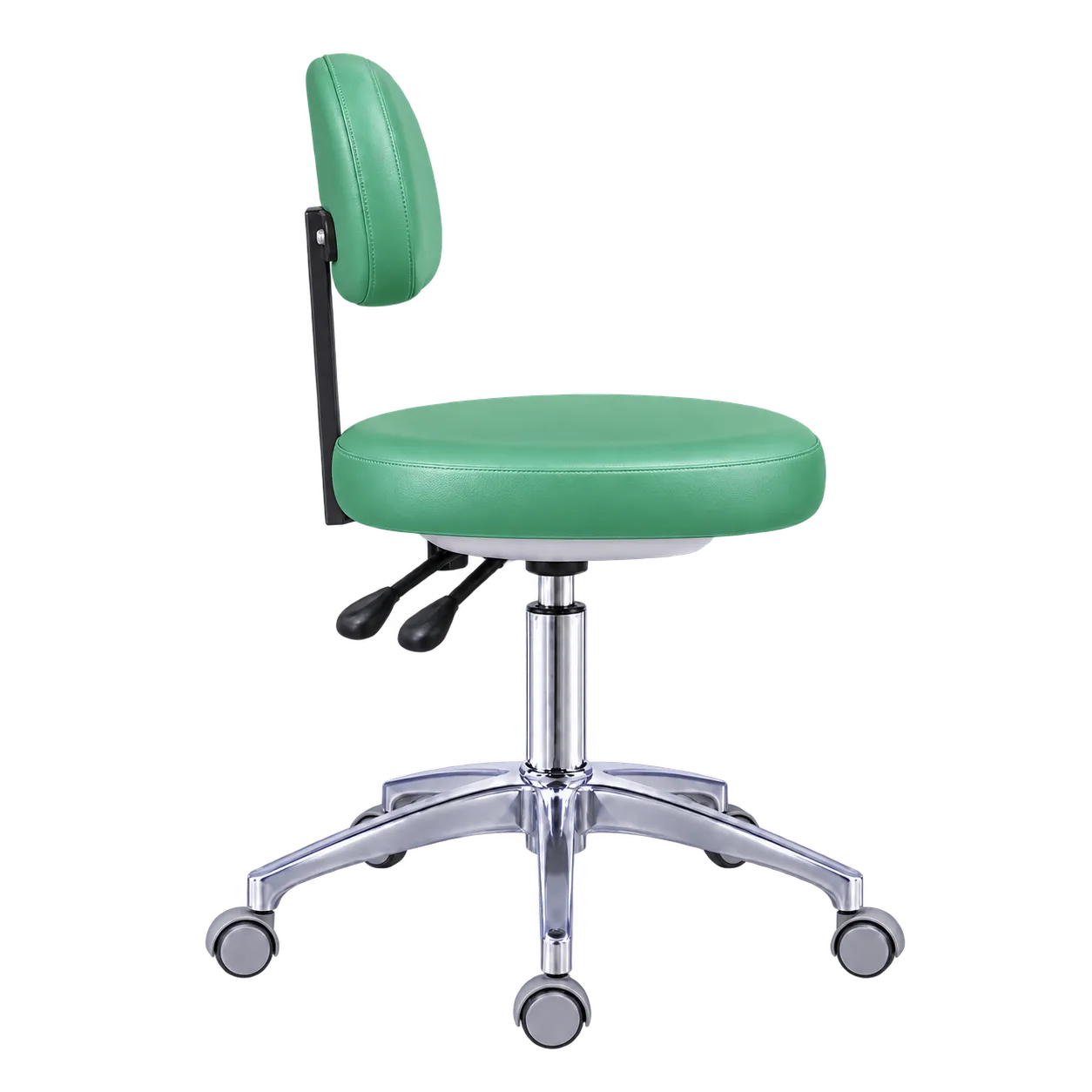
Shared consulting rooms are the strongest case. Where two or three clinicians use the same room across a week, a stool with independent seat and back adjustment can be reset to each of them in seconds, rather than settling on a compromise that suits whoever adjusted it last.
Mixed postures suit the mid-height backrest. A clinician who leans into a slit lamp, then sits back to enter findings, gets support in both positions without the restriction of a full office back.
Pre-test and screening positions benefit, since assistants of different heights often work the same station across a day and a quick reset keeps each of them comfortable.
Contact lens fitting keeps a practitioner seated for long periods with frequent changes of posture, which is where two independent settings earn their place.
Locum and rotating staff gain most from adjustability, as a stool set for a permanent colleague rarely suits someone arriving for a single session.
Workstation assessments are easier to satisfy where seating adjusts in more than one plane, which is part of what an assessment looks for.
Raised benches are not served, since no foot-ring is fitted and the feet would be left unsupported at the top of the range.
Sustained screen work is better served by a full backrest, and practices doing substantial administrative work usually keep a task chair as well.