

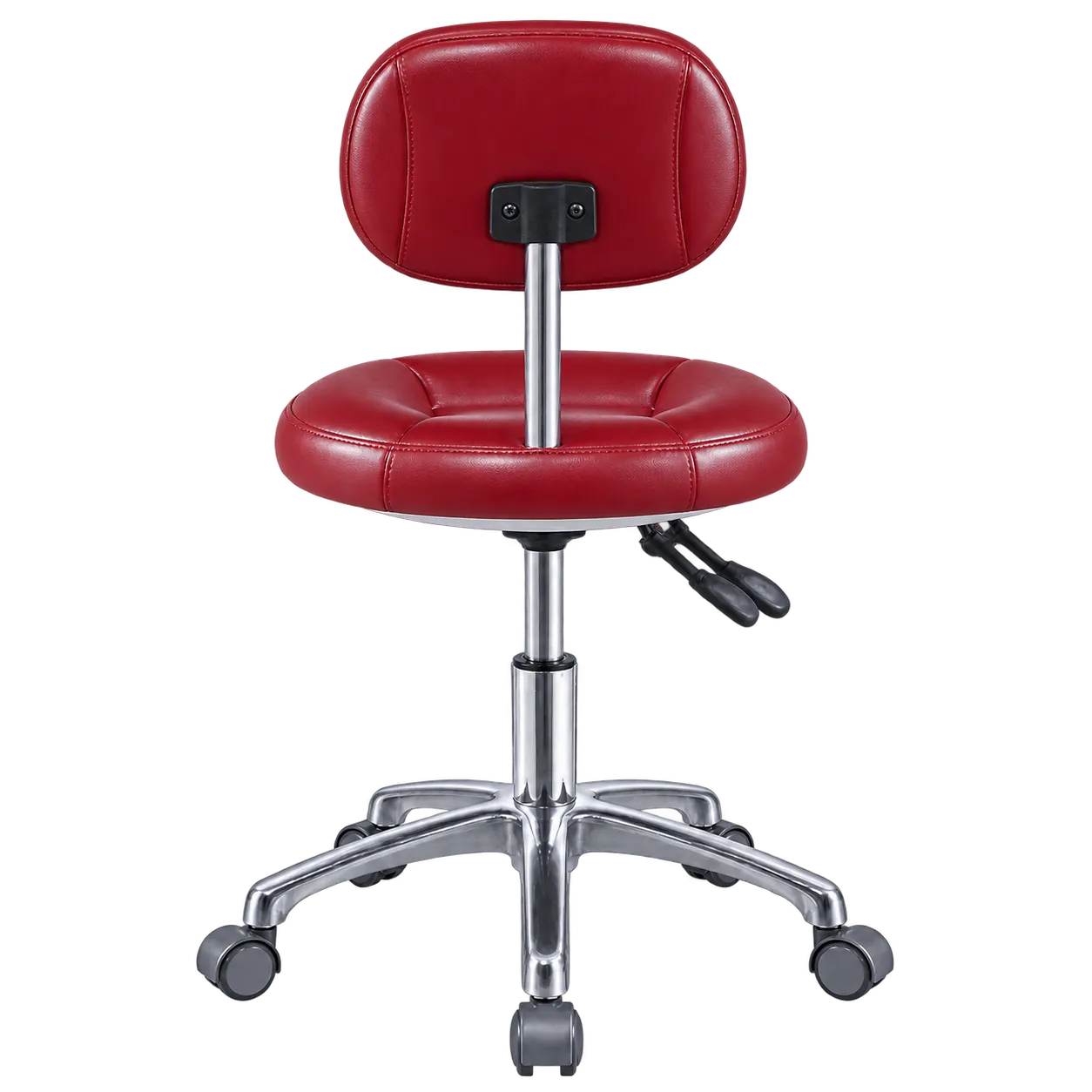
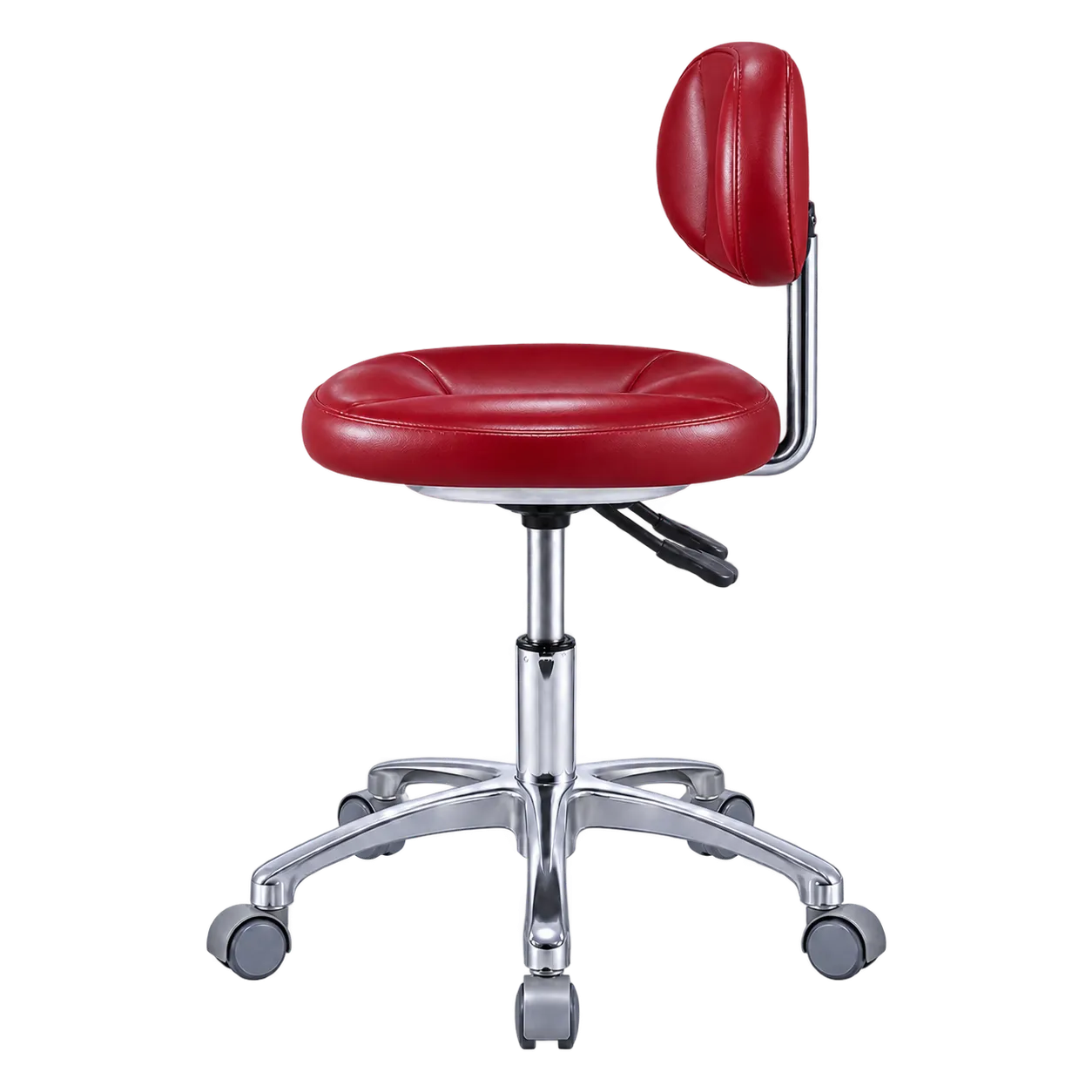
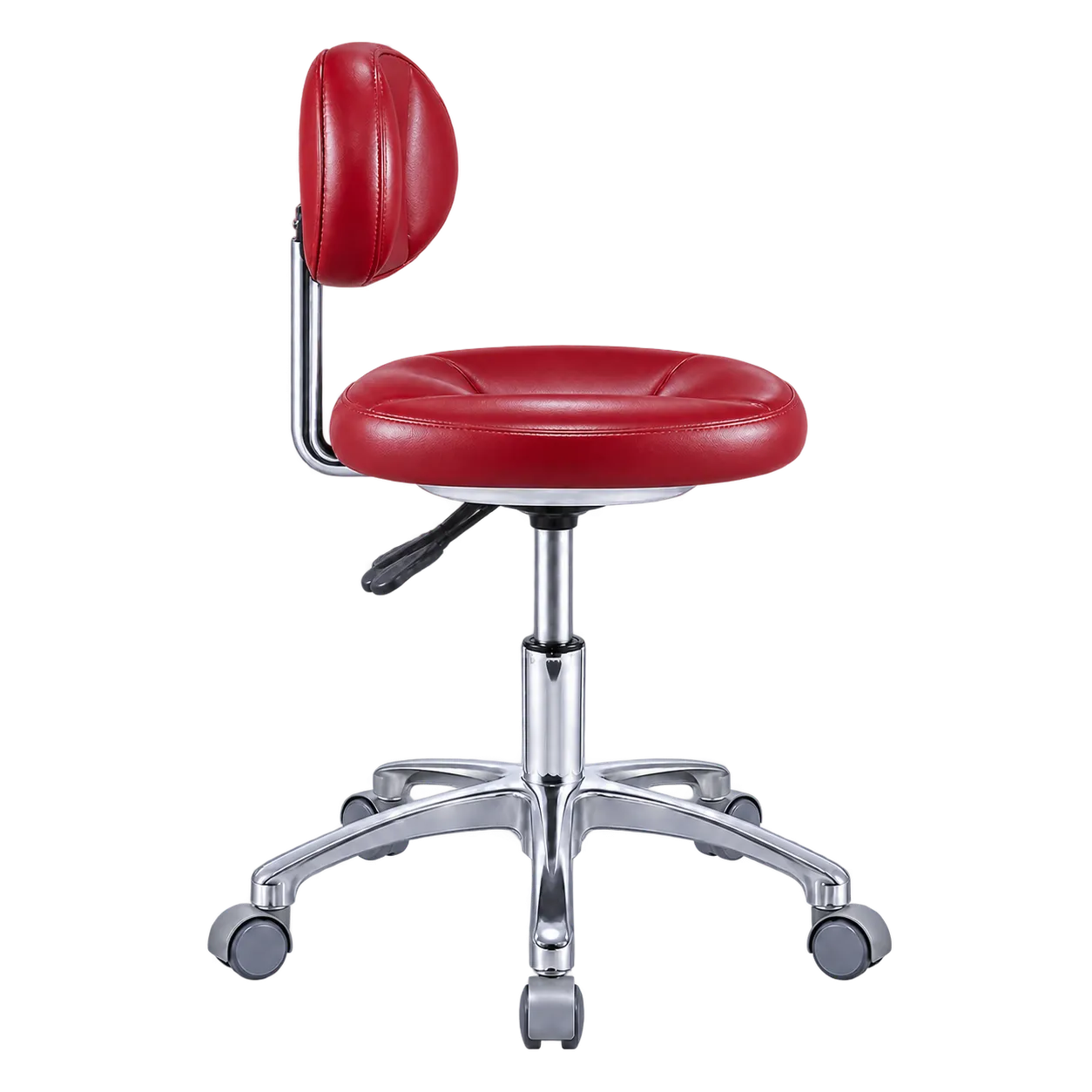
Slit lamp positions suit this backrest best. The clinician spends most of the examination leaning into the instrument, where a large back is simply in the way, and the small pad is there for the moments between patients when they sit upright.
Pre-test and screening work follows the same pattern, with assistants leaning forward to align an instrument and sitting back briefly to record a result.
Contact lens fitting and teaching keep a practitioner forward and close to the patient, with the pad giving something to return to rather than something to work around.
Rooms where clinicians approach the stool from different sides gain from the round seat, since there is no shaped cushion to line up before sitting down.
Busy clinics benefit practically from the burgundy finish, which hides marks better than pale upholstery on a stool in daily use.
Clinicians who sit and stand frequently find a small pad less restrictive than a wrap-around or full back, with nothing to clear on the way out.
Sustained screen and desk work is better served by a full backrest, and practices doing substantial administrative work usually keep a task chair alongside.
Raised benches are not served, since no foot-ring is fitted and the feet would be unsupported at the top of the range.