
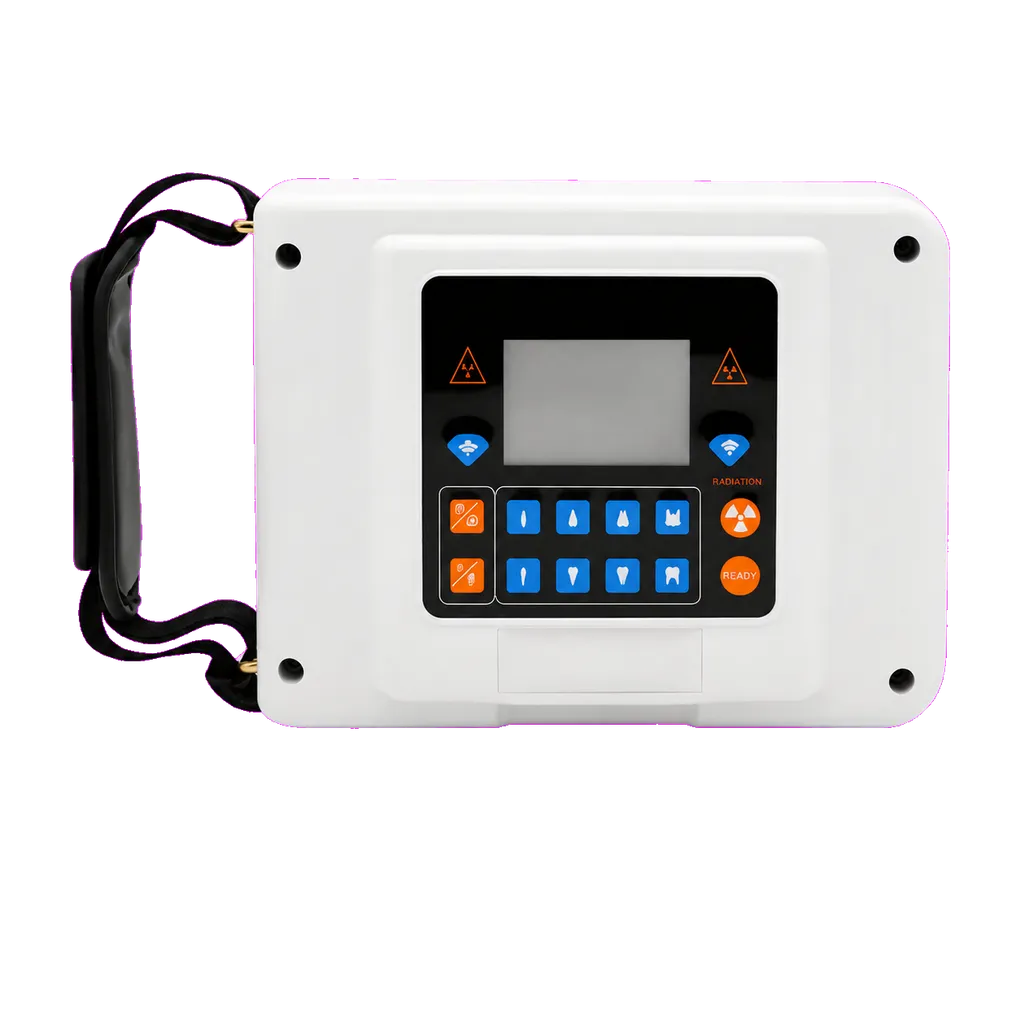
Intraoral radiography carries the diagnostic load in UK general dentistry, and the SJD-C13 is configured for that daily volume. It supports bitewing caries detection, periapical assessment of apical pathology, endodontic working-length and obturation verification, periodontal bone-level review, and root morphology assessment ahead of extraction. Fixed 60 kV and 1.5 mA operation with a wide exposure time range maps onto region-by-region protocols agreed with a Medical Physics Expert and recorded in local diagnostic reference levels.
The ten-millisecond timing floor makes the unit particularly relevant to practices that have already invested in fast direct sensors. Paediatric dentistry benefits most directly — shorter exposures reduce the window in which a child can move, which cuts retakes and the repeat dose that comes with them. The same applies to adults living with tremor, dystonia or movement disorders, and to patients with a strong gag reflex who can only tolerate an intraoral receptor briefly.
Community dental services and special care dentistry teams working under NHS commissioning need equipment that reaches the patient. People living with advanced dementia, profound learning disability or palliative care needs are frequently unable to transfer to a fixed dental chair, and assessment at the bedside or in a care home lounge is the practical route to diagnosis. Battery operation supports that pattern of work, provided off-site radiation protection arrangements have been agreed with the practice's Radiation Protection Adviser in advance.
Orthodontic practices use periapicals for root resorption monitoring through active treatment. Dental education, outreach programmes, prison dental services and expedition dentistry all rely on battery-driven equipment.
Guidance from the College of General Dentistry and UKHSA Dental X-ray Protection Services remains the reference point UK practices work to, alongside HSE enforcement of IRR17.