
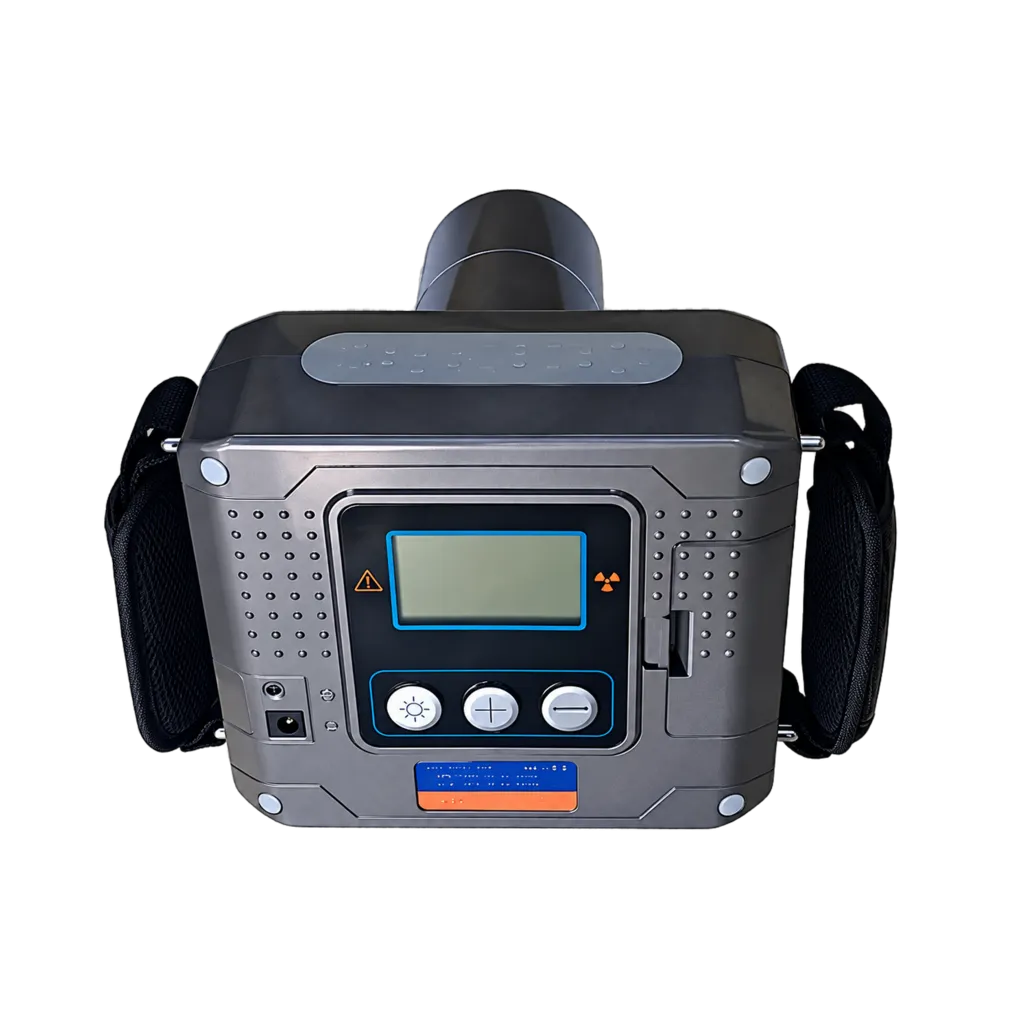
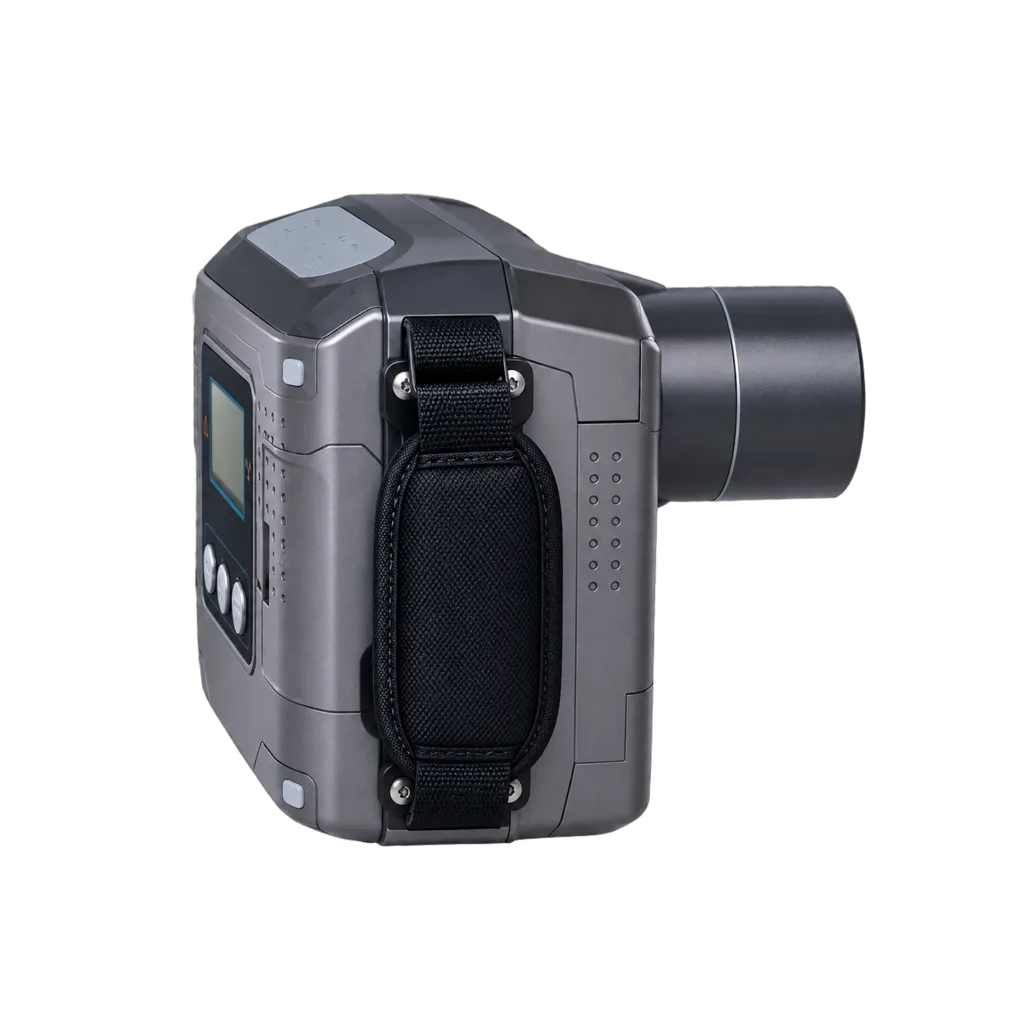
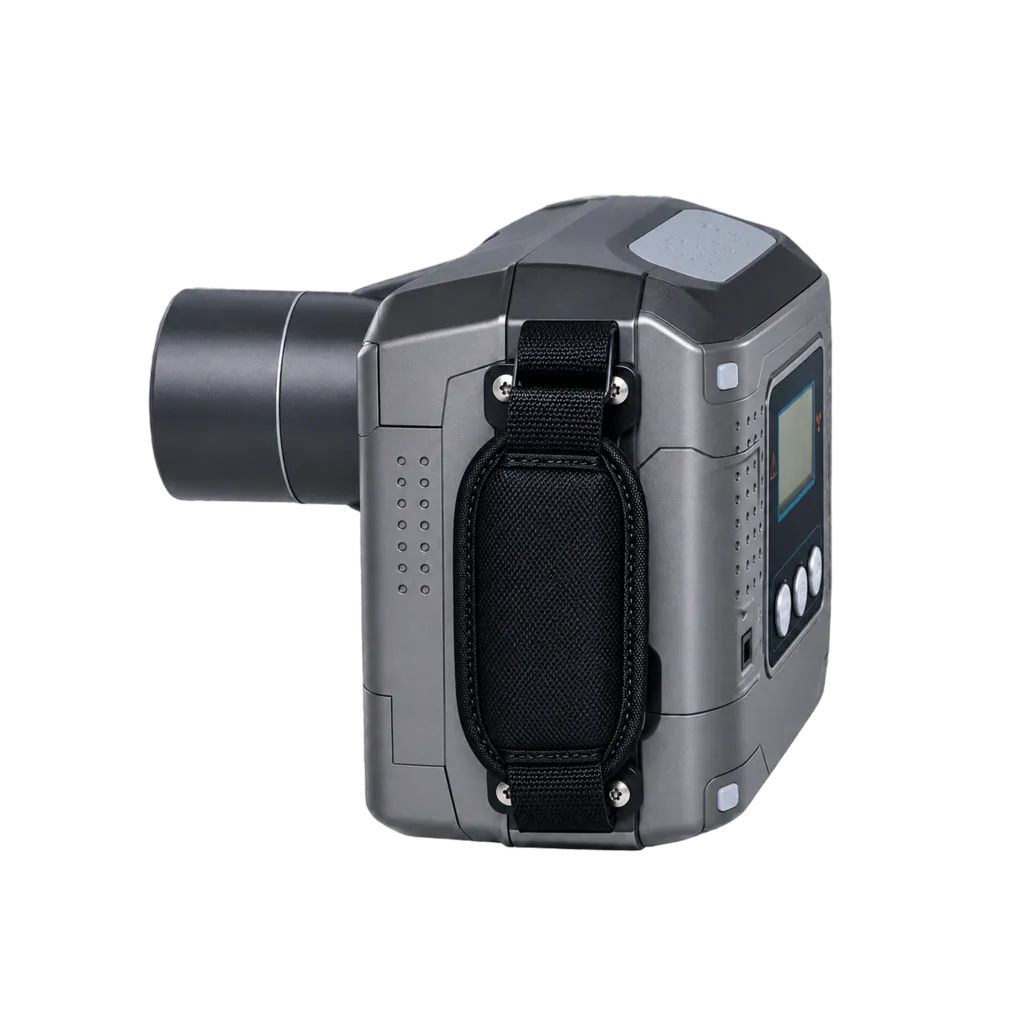

Intraoral radiography carries the diagnostic load in UK general dentistry, and the SJD-R01 is configured for that daily volume. It supports bitewing caries detection, periapical assessment of pathology, endodontic working-length and obturation verification, alveolar bone-level review, and root morphology assessment ahead of extraction.
Operator protection shapes how a carried generator is deployed, and it belongs in the purchasing conversation rather than the commissioning one. The person taking the radiograph holds the unit and stands close to the beam, so their cumulative dose across a working week depends on radiograph volume, technique, position and shielding. UK guidance on hand-held dental X-ray equipment addresses backscatter protection and operator position directly, and many Radiation Protection Advisers make a backscatter shield a condition of permitting hand-held use.
High-volume settings feel this most. An NHS practice running full lists, a community service covering several sites, or a teaching clinic where one unit passes between operators all accumulate exposures quickly, and that is exactly the pattern that turns operator dose into a monitored quantity. Personal dosimetry, where the RPA's assessment calls for it, follows from that workload rather than from the equipment itself.
Pregnancy adds a specific requirement. Once an employer is notified, IRR17 applies a dose limit relating to the foetus and the employer must review working conditions to ensure it is met — which may change who takes radiographs, what shielding is used, or where the operator stands.
Community dental services and special care teams need equipment one clinician can carry, and at 1.8 kg with twin handles, the unit travels well, with off-site radiation protection arrangements agreed with the RPA before the first visit.
Guidance from the College of General Dentistry and UKHSA Dental X-ray Protection Services remains the reference point UK practices work to, alongside HSE enforcement of IRR17.