
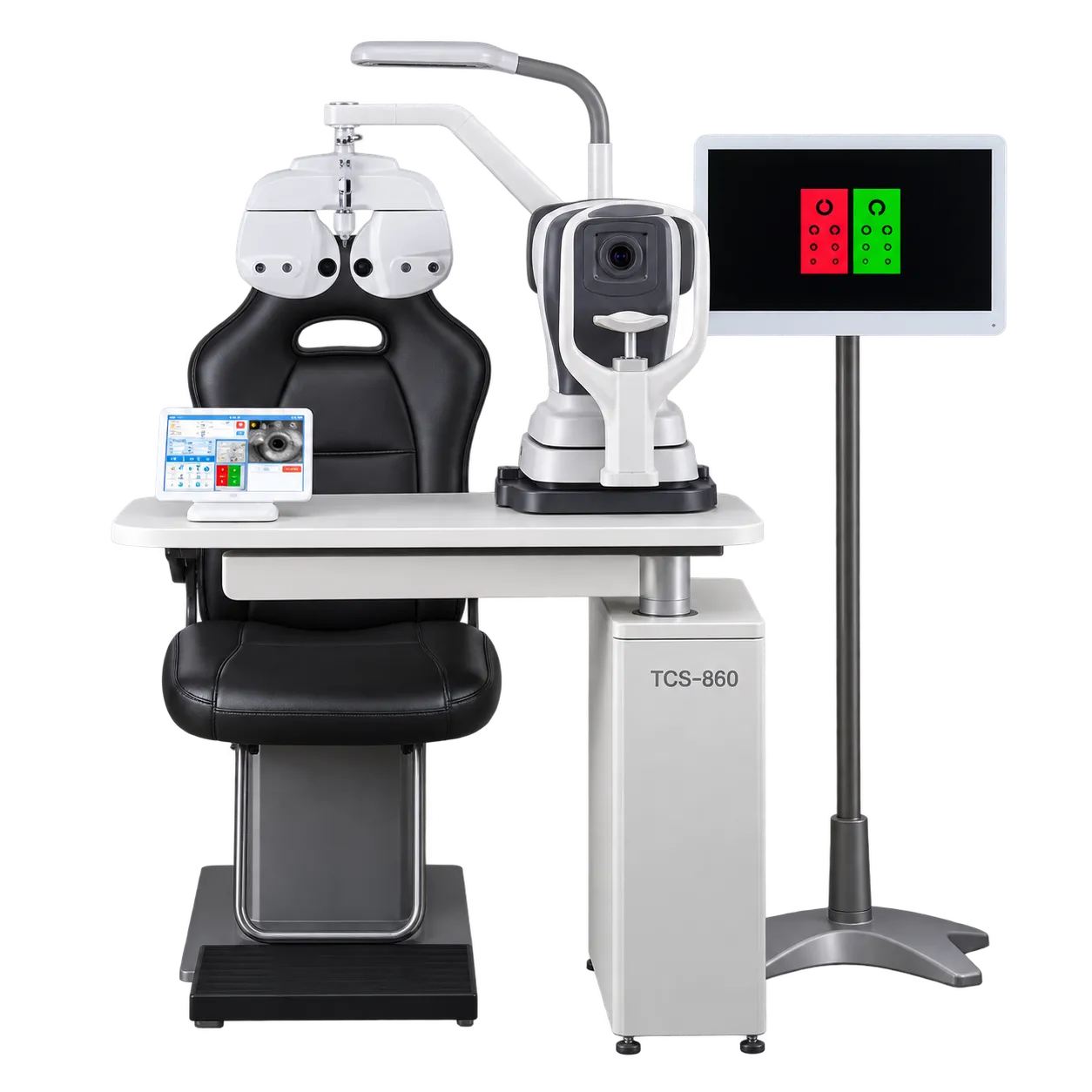
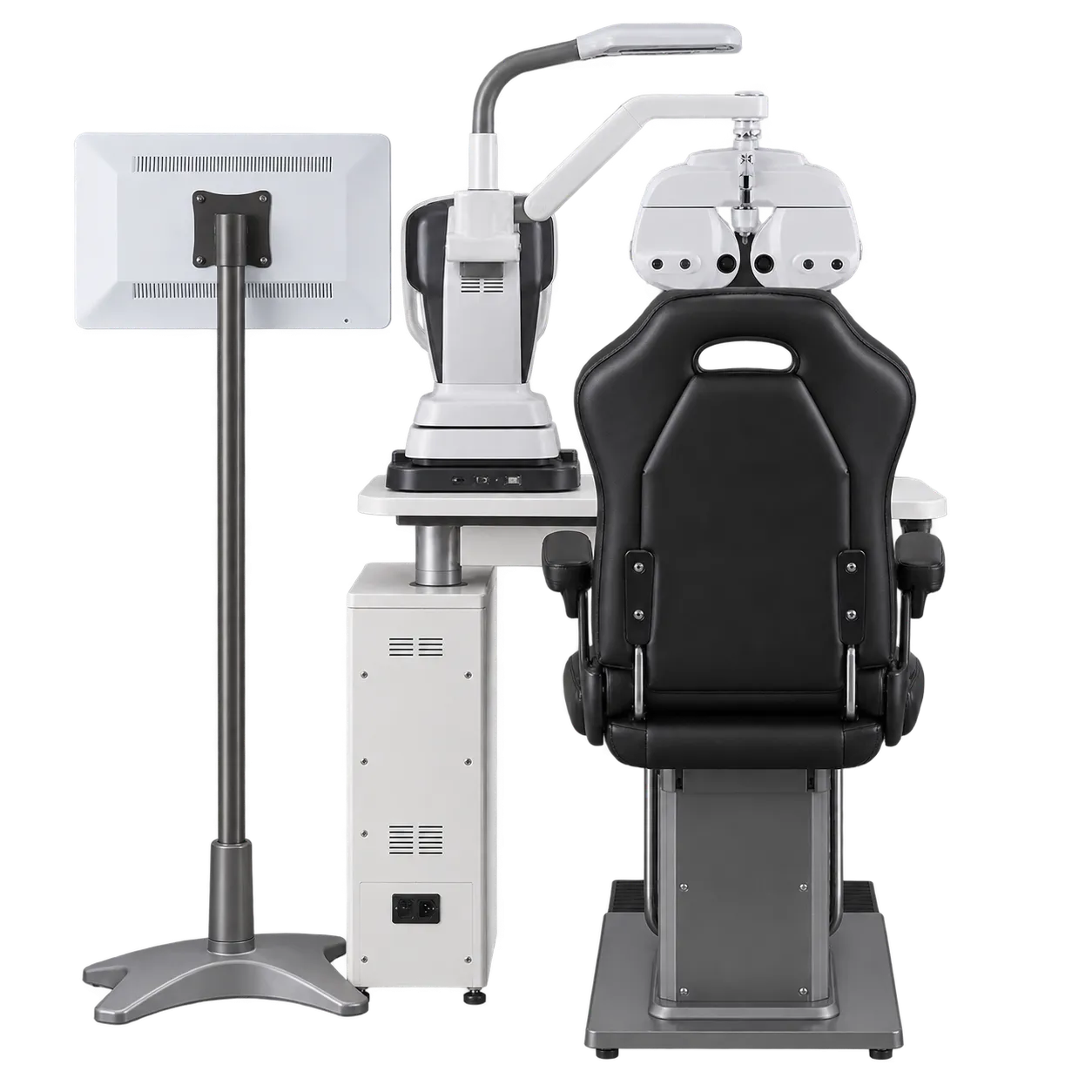
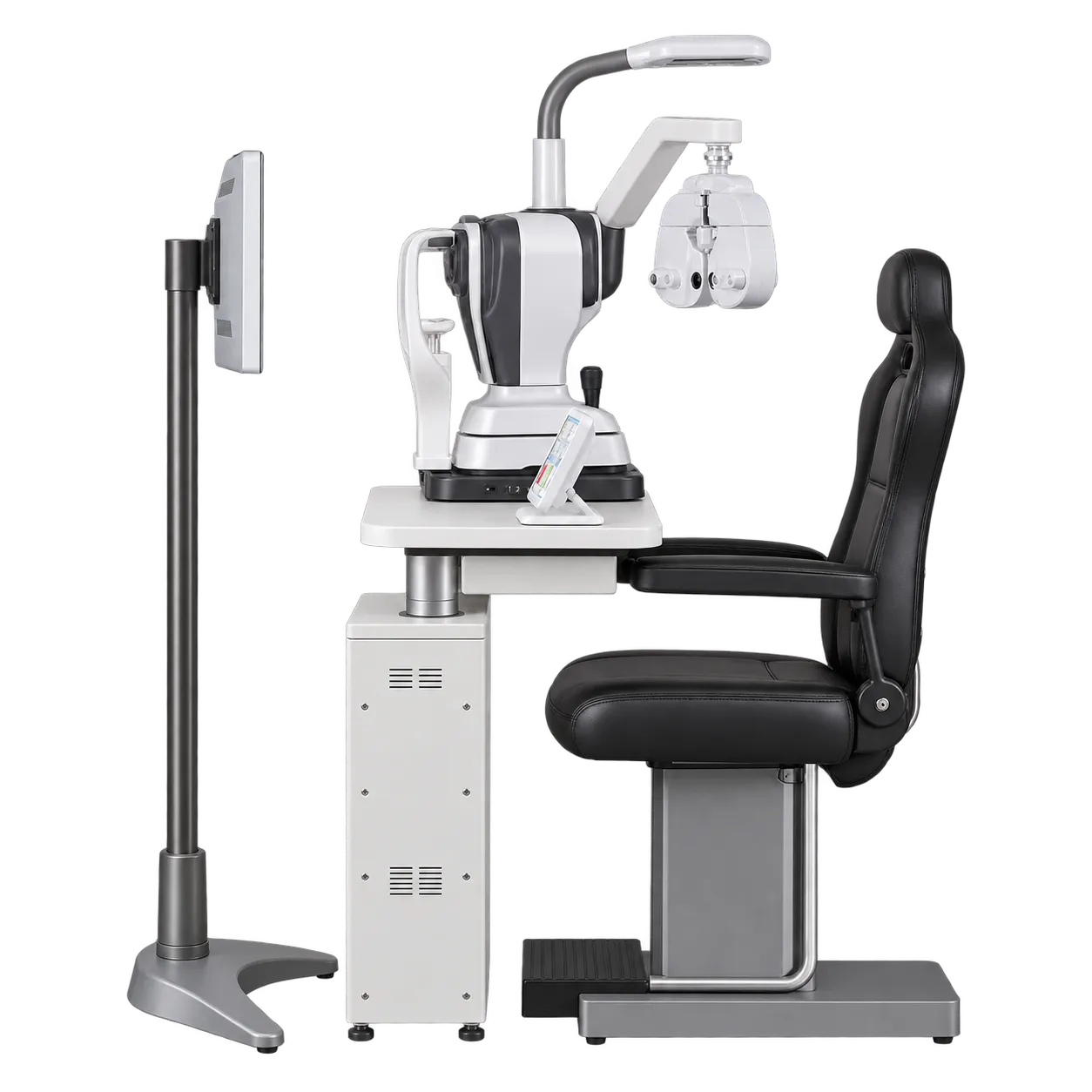
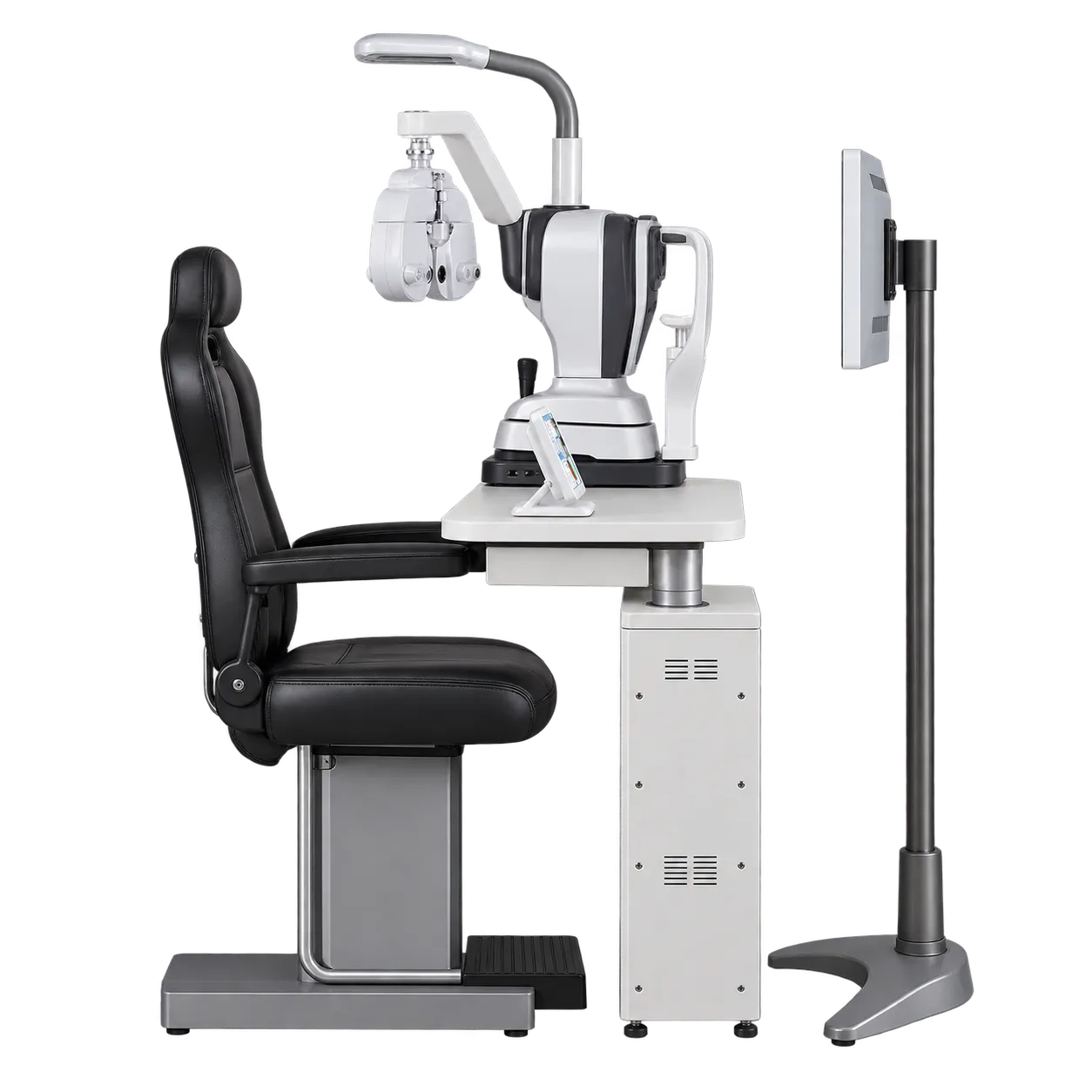
Practices planning beyond their next purchase are the natural buyers. A chair and stand assembly is a ten to fifteen year commitment; a computerised vision tester is a shorter-lived technology on a faster replacement cycle. Buying a unit whose arm mounts only one type means that when the head is replaced with a different sort, the unit beneath it has to change too. An arm accepting either type decouples those cycles, so the expensive, long-lived part outlives several generations of the cheaper, shorter-lived one.
Growing practices benefit most directly. A practice can specify the unit now with a manual head, and add a computerised tester when patient volume or budget justifies it — without the earlier decision limiting the later one. For a practice genuinely unsure whether automated refraction suits its patient mix, being able to defer that judgement rather than commit to it at fit-out is worth a great deal.
High-volume lists gain from the powered arm. Raising, lowering and swinging a refractor head by hand for every patient is repeated effort, and a 90° rotation at full height clears the head properly out of the way rather than parking it awkwardly to one side.
Flexible working positions suit the dual control. A remote alongside the fixed panel lets the clinician adjust from wherever they are standing rather than from wherever the panel was mounted, which matters when both hands are already holding a lens or a light.
Two things need settling before ordering, and the first is specific. "Manual or computerised" describes a category rather than a compatibility list, so ask for the named makes and models the arm accepts and the mounting interface standard. Second, no technical data is published at all — dimensions, elevation ranges, chair loading and electrical supply are all absent, and a room cannot be planned without them.