
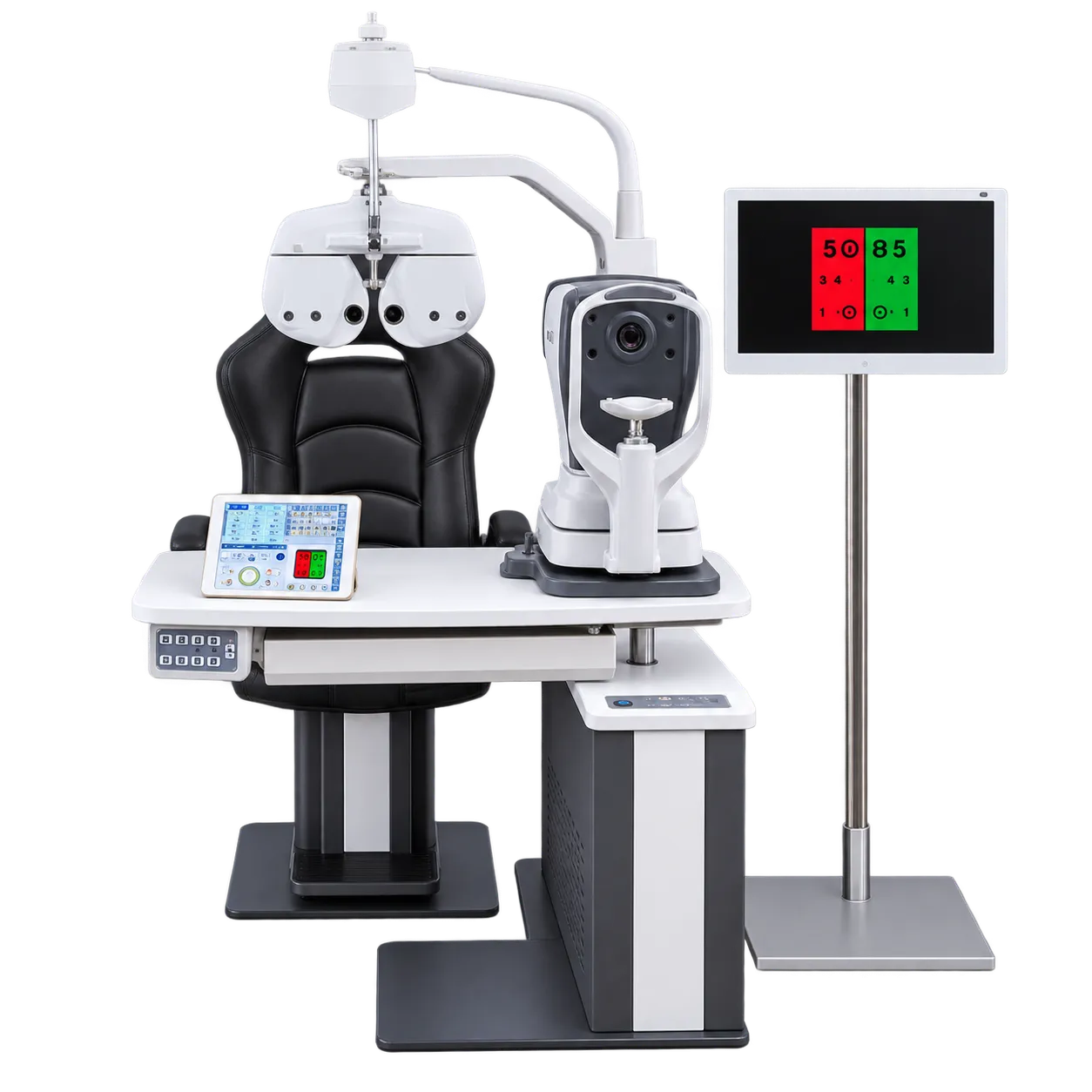
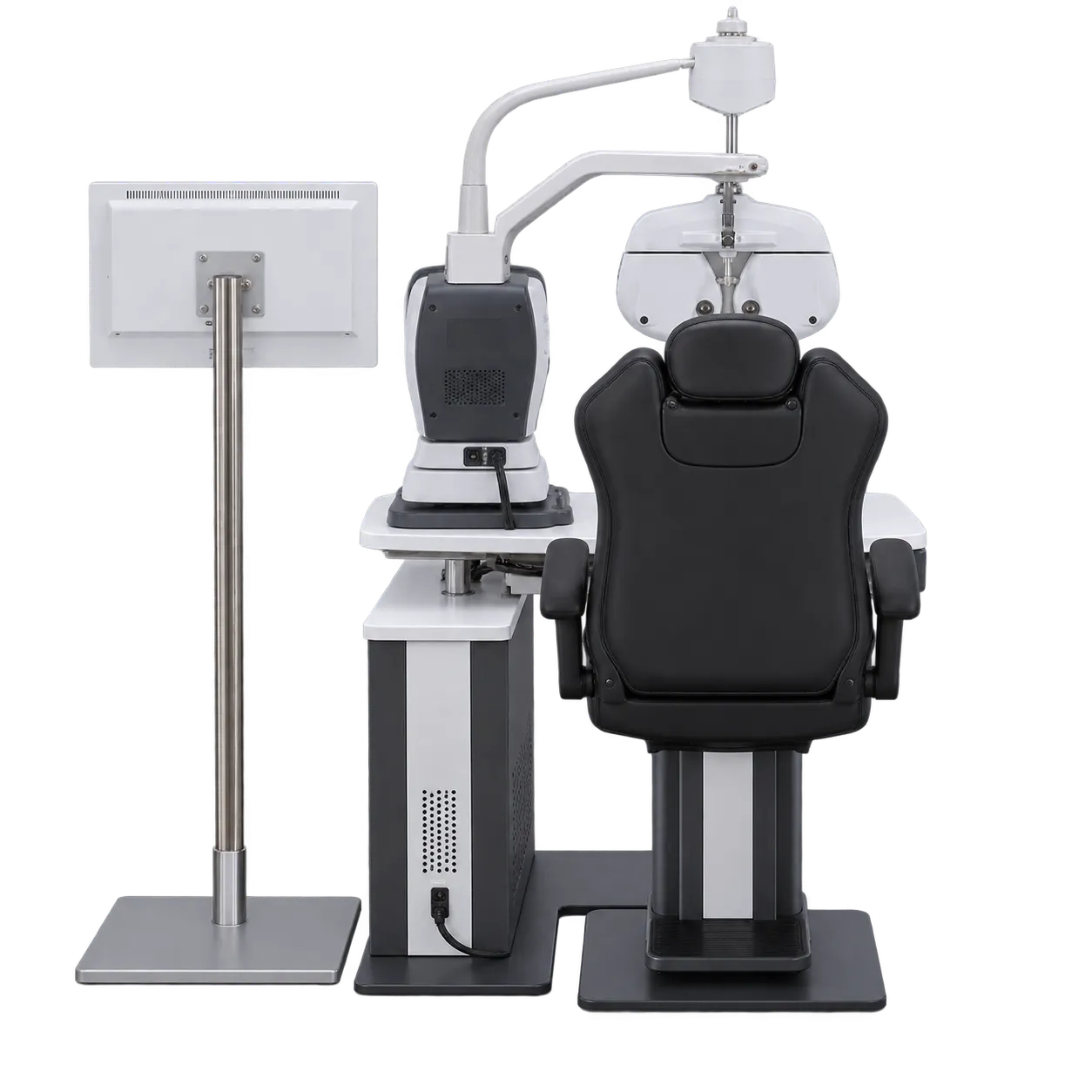
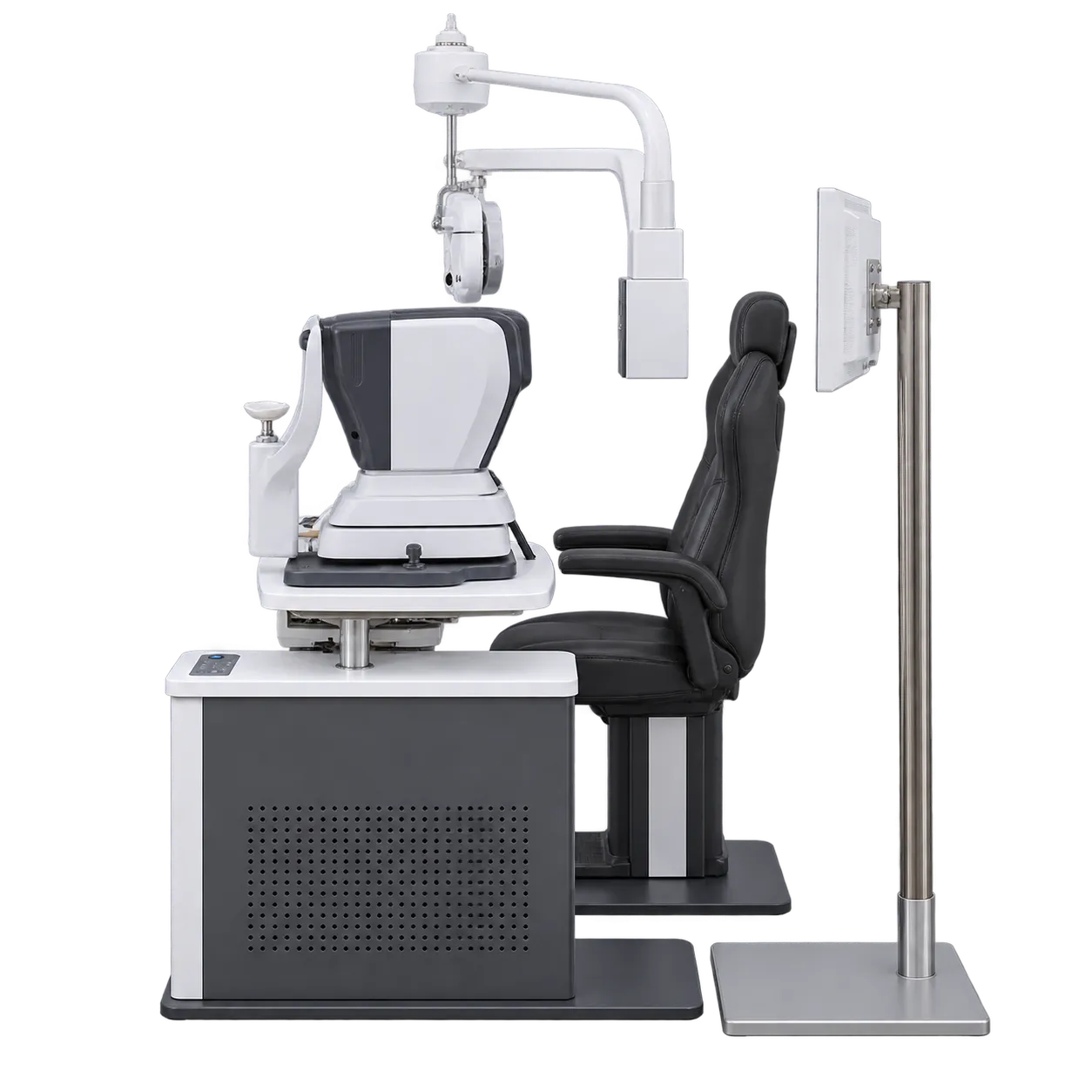
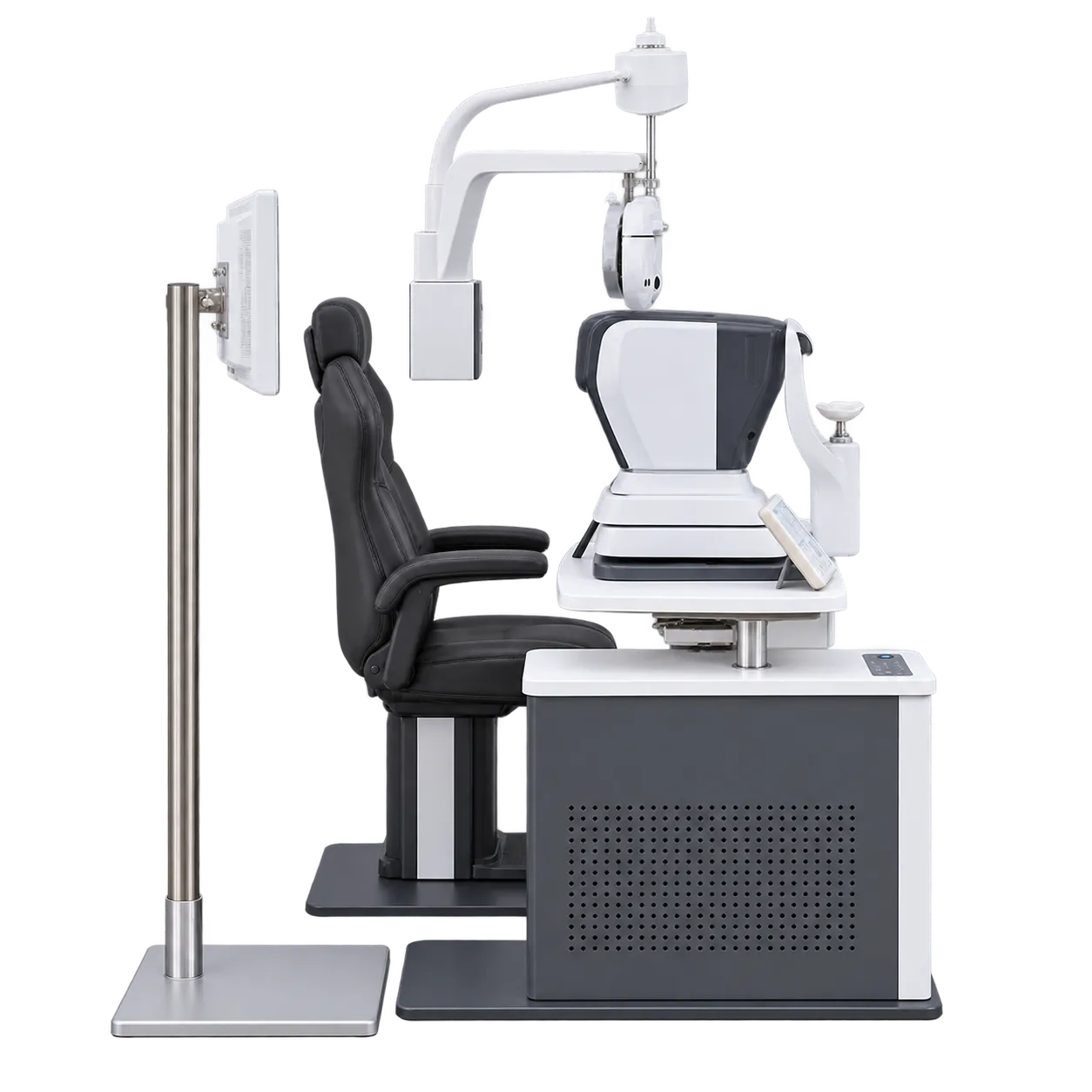
Wheelchair users are the population this unit serves better than anything else in the range, and the reason is a threshold rather than a gradient. Standard wheelchair seat height is roughly 480 to 500 mm. Above that, transfer requires the patient to be lifted upward; at or below it, transfer is a lateral slide many patients manage independently or with minimal assistance. A chair descending to 480 mm sits on the right side of that line, where chairs bottoming out at 540 or 600 mm do not.
The practical consequence concerns caseload rather than comfort. A practice that cannot offer a straightforward transfer either examines wheelchair users seated in their own chair — accepting the positioning compromises that brings for slit lamp and phoropter work — or does not examine them at all. Being able to state a specific minimum seat height turns an accessibility policy into something demonstrable.
Patients with other mobility restrictions benefit equally. Those using sticks or frames, those with hip or knee replacements, and older patients with reduced lower limb strength all find a lower starting seat easier, and the chair still rises to 630 mm for examination afterwards.
The 420 mm phoropter arm travel exists to serve that range. A seat working from 480 mm needs a refractor head that follows it down and rises for a taller patient; a short-throw arm would leave much of the chair's range unusable.
Two things should be settled before ordering. Chair loading is not published, which is a real gap on a unit whose principal argument is accessibility — a practice answering questions about who it can accommodate needs both the seat height and the rated capacity. And electrical supply is absent despite a motorised table and a powered chair.