
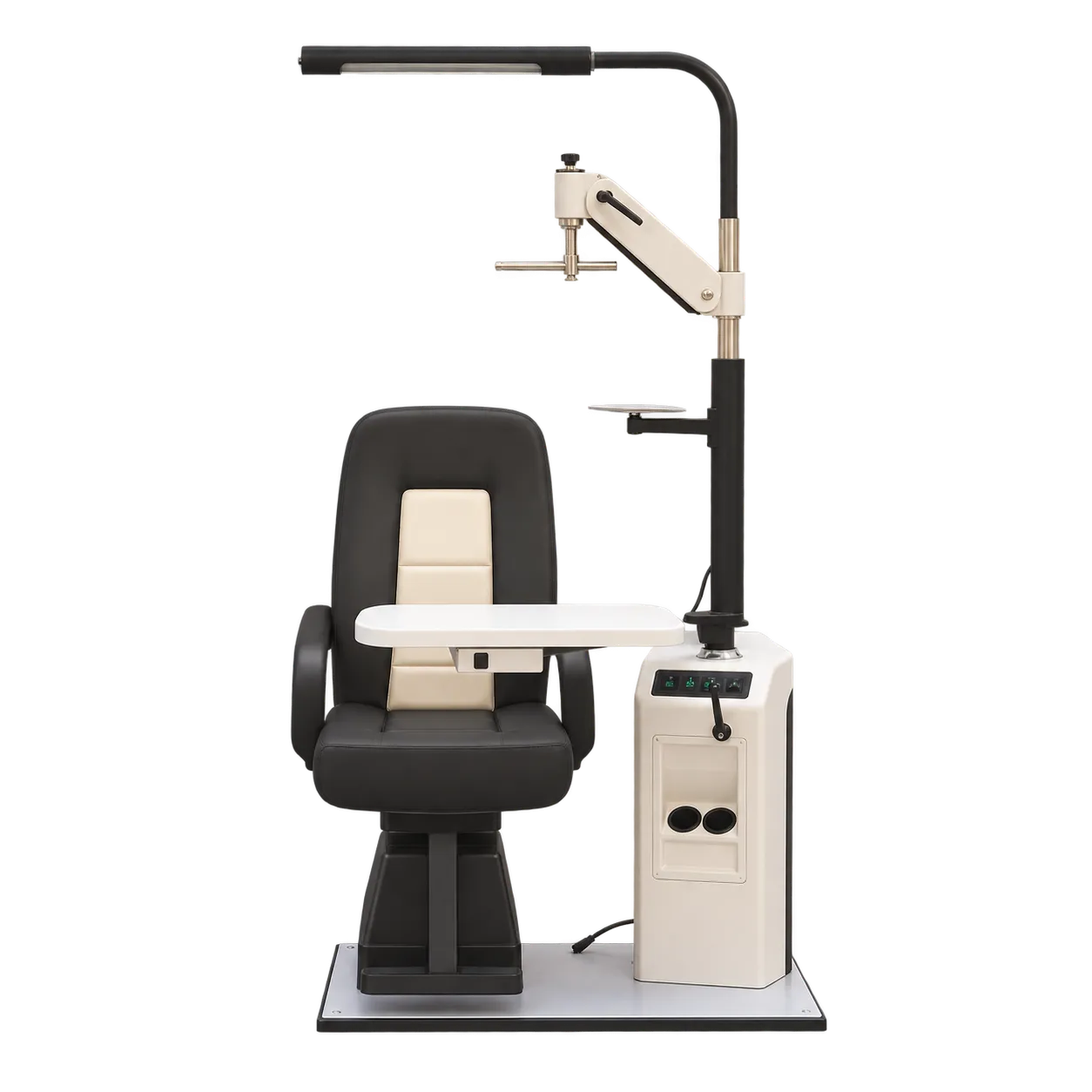
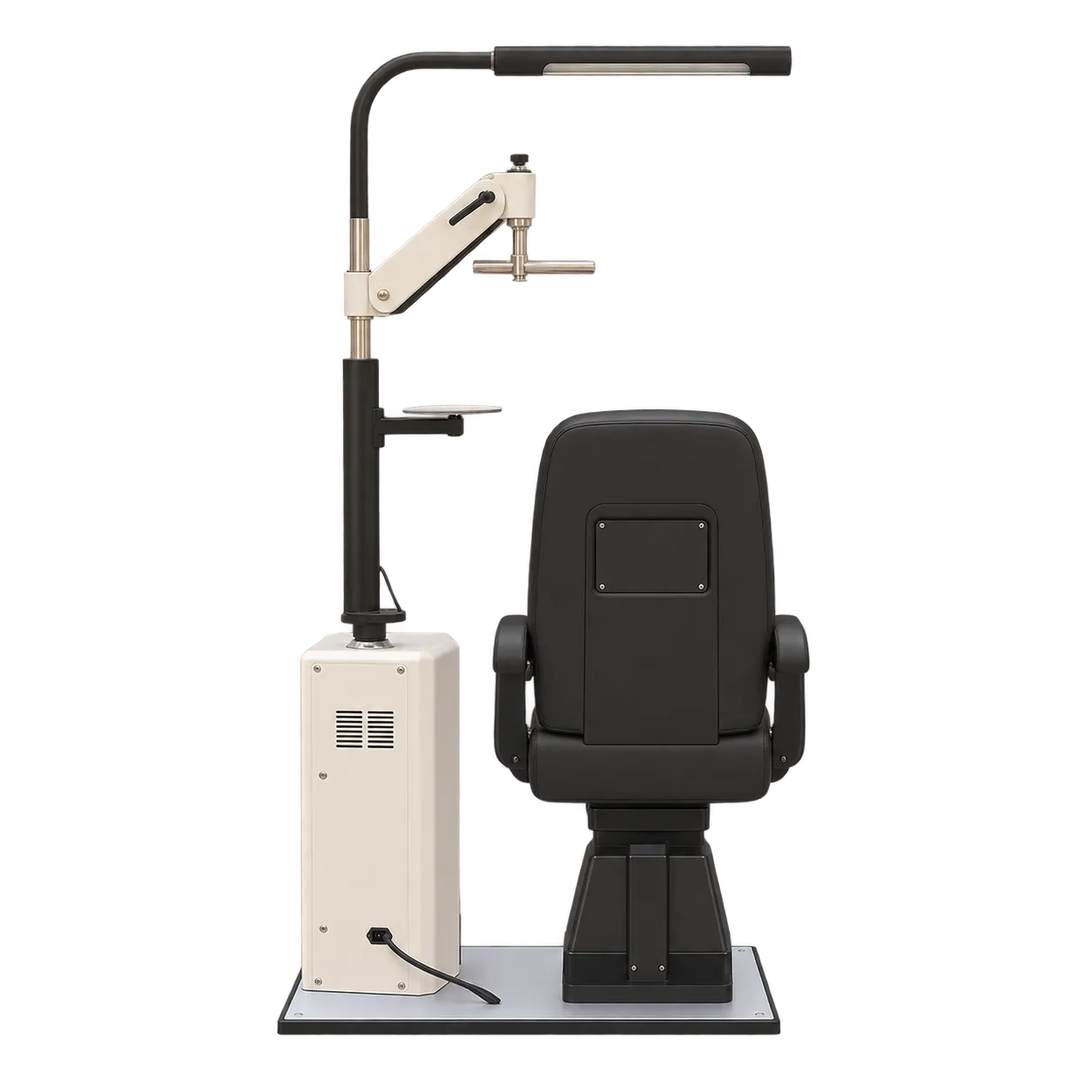
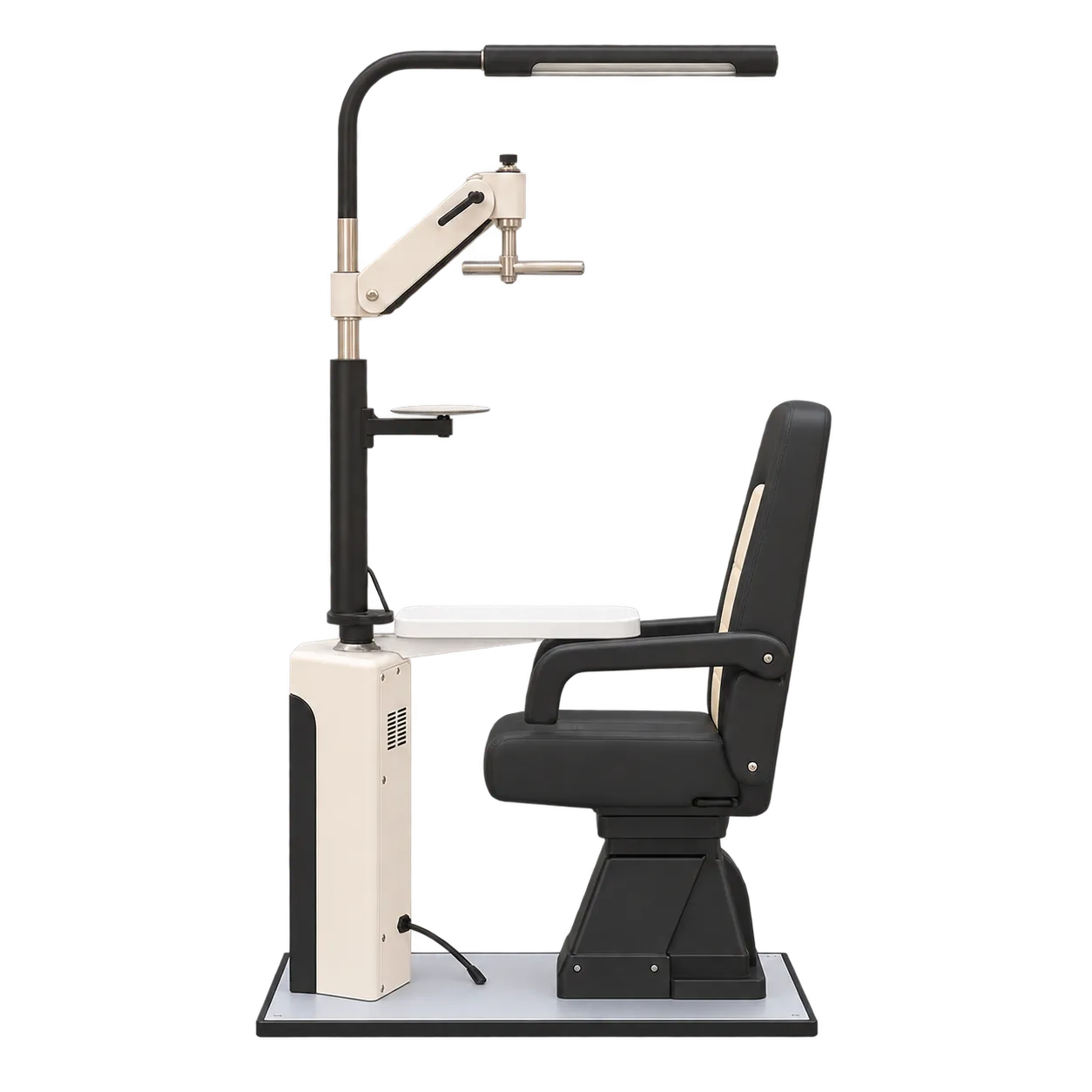
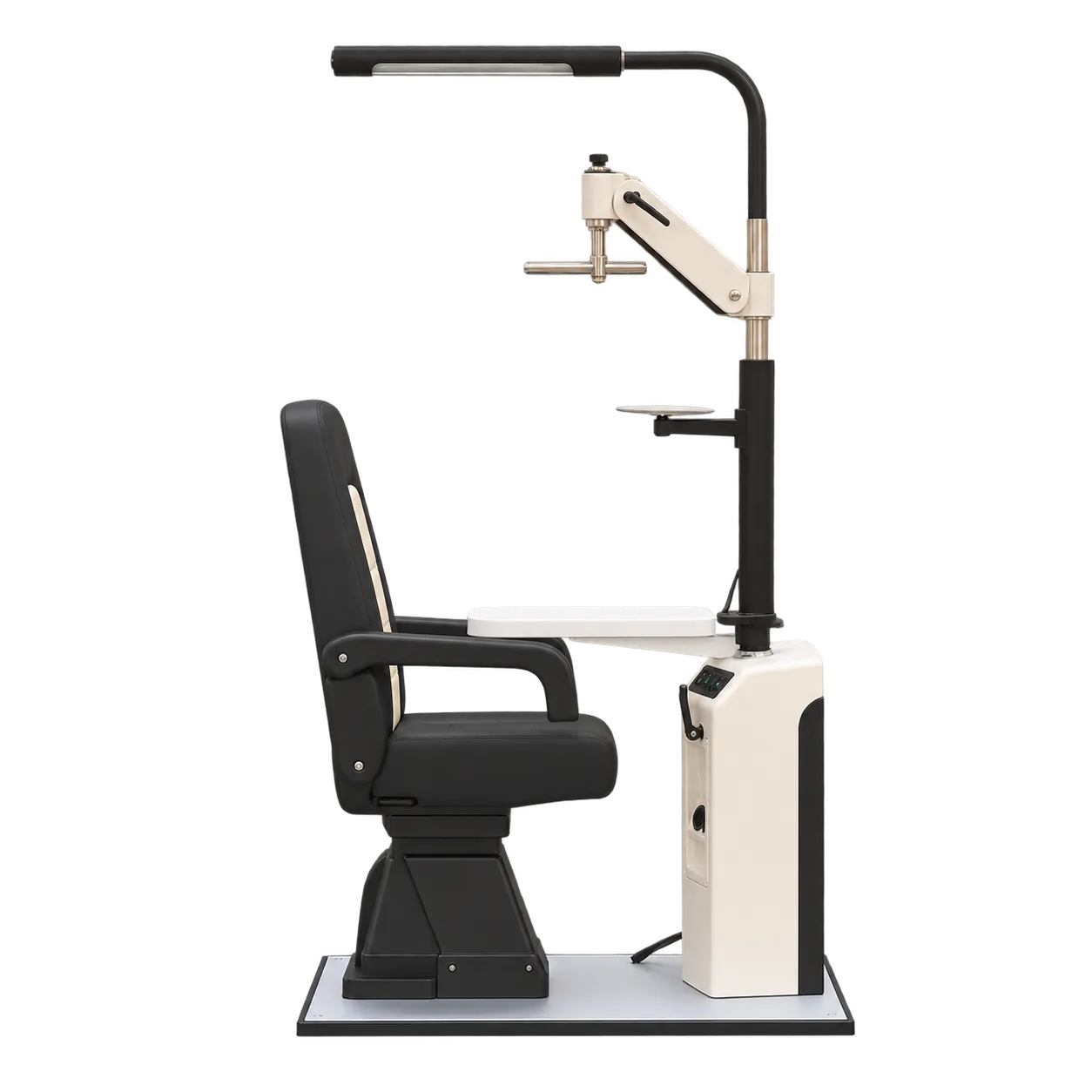
Paediatric work is the clearest application, and the reasoning is about measurement quality rather than comfort. A child seated with feet dangling cannot maintain a steady head position: they brace against the chair, shift to find purchase, and tire. Steady head position is the precondition for every measurement taken at a chin rest, so a seat that brings the feet within reach of the floor changes what can actually be recorded, not merely how the appointment feels. At 410 mm this unit reaches a considerably wider range of children than 460 mm does.
Adults of smaller stature gain for the same reason. The distinction between a low minimum and a low band matters here: a patient may transfer comfortably onto a 460 mm seat and still sit too high for instrument alignment, with the clinician compensating by raising equipment already set. Moving the whole range down 50 mm addresses the seated position as well as the entry.
Wheelchair users are served more completely than by the units above this one, since 410 mm sits below essentially every standard wheelchair seat height rather than close to it.
Narrow rooms benefit incidentally: 1200 mm wide against 1510 mm for its closest stablemate, on the same depth, at 150 kg rather than 168 kg.
Two things belong in the decision. The top of the band is 550 mm, so taller patients are better served by a stablemate reaching 600 mm — consider the caseload rather than the extreme. And four figures published on the closely related models are absent here: table slide range, chair rotation, pillow lift and backrest obliquity. Whether those features are missing from the datasheet or from the unit is unstated, and should be established in writing.