
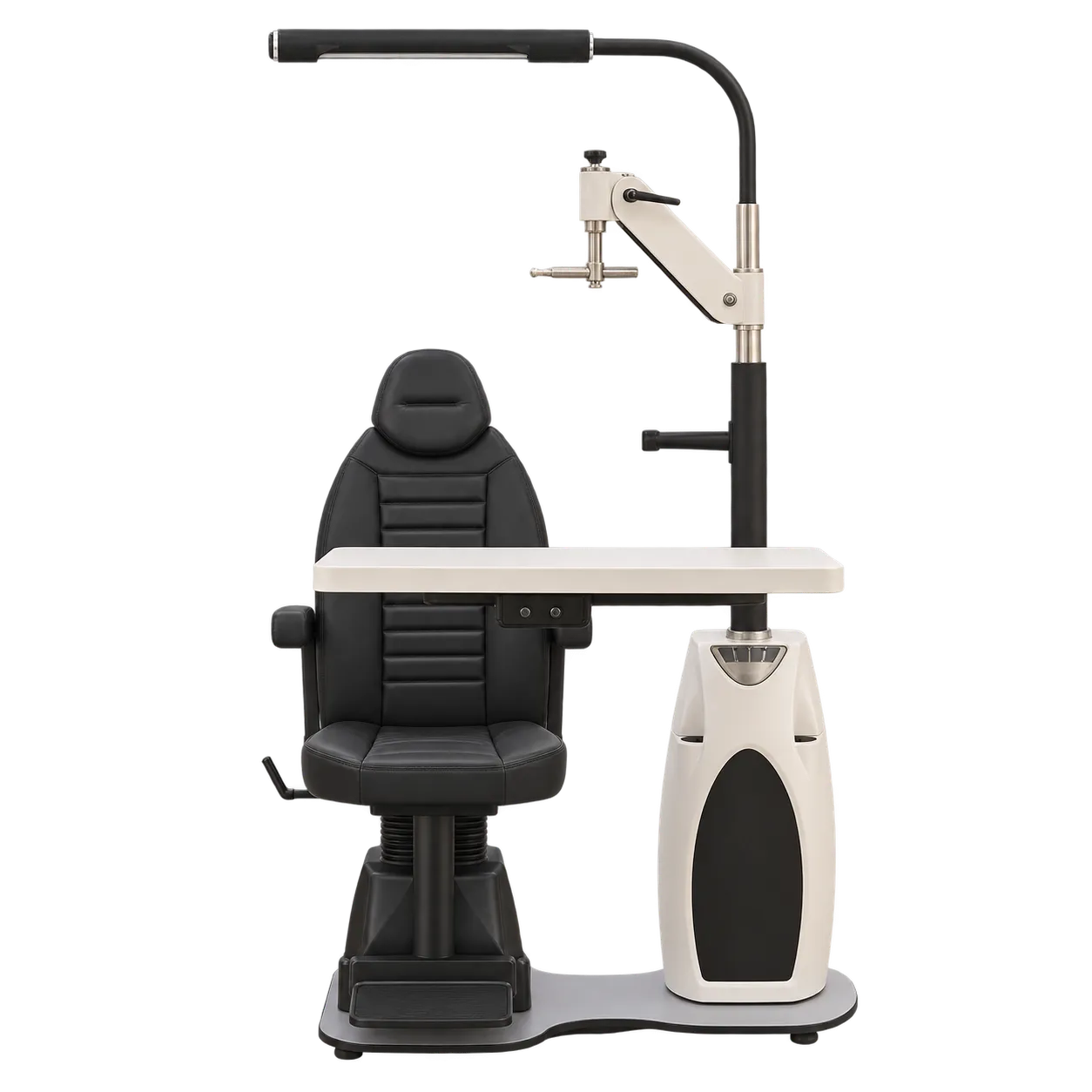
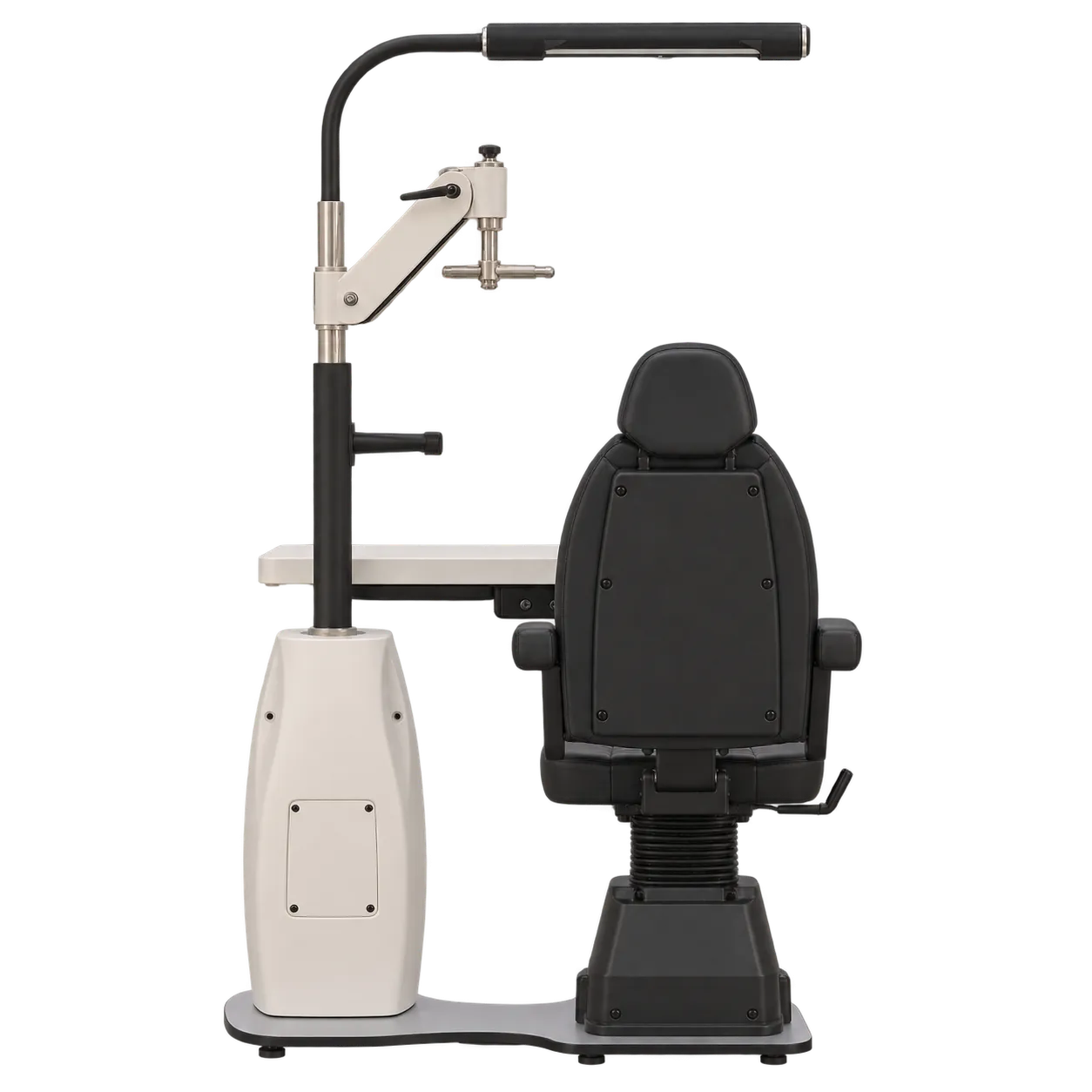
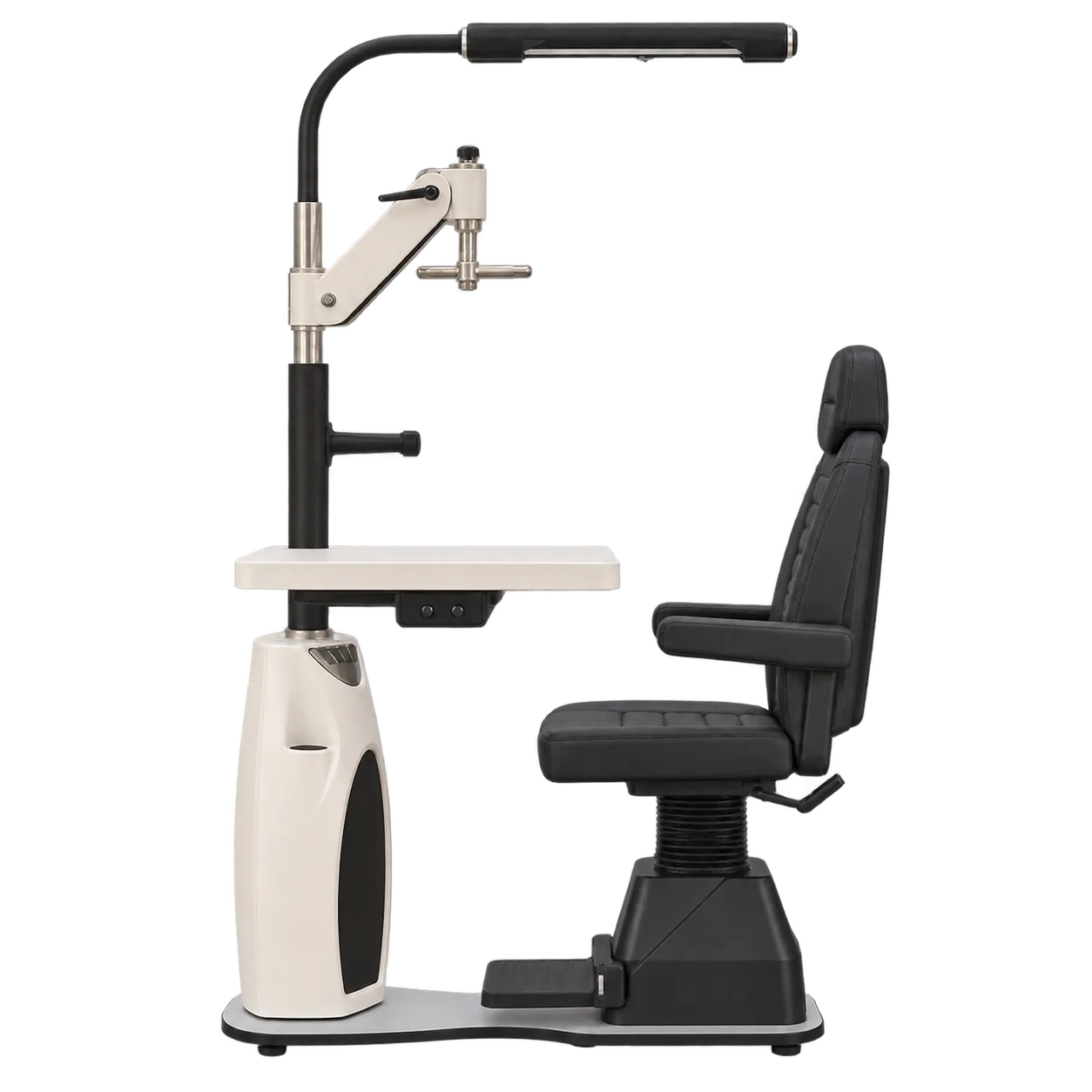
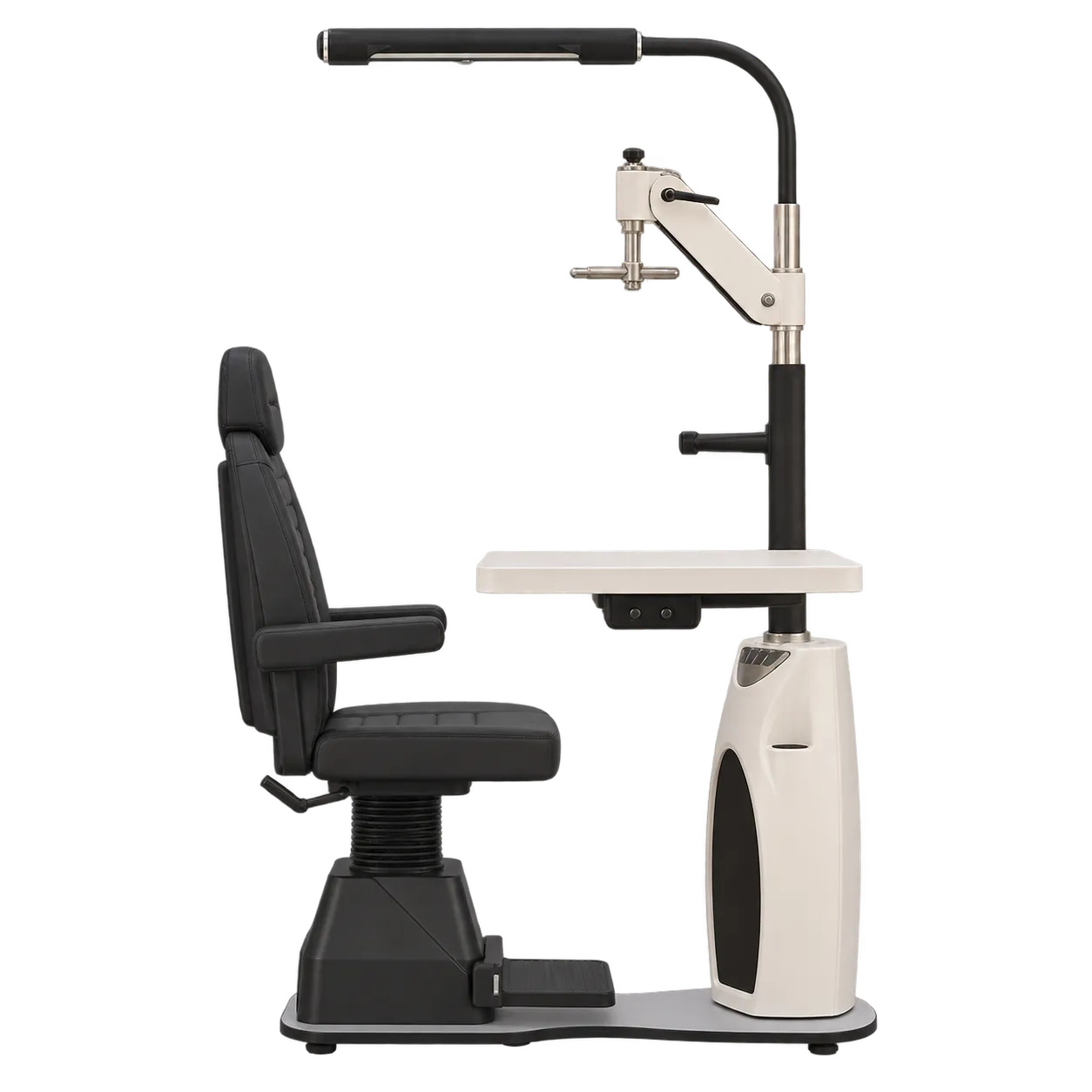
Rooms doing more than refraction benefit most, because they are the rooms where the two lighting jobs genuinely conflict. General illumination wants to be broad, even and diffuse so a clinician can move, write and read a patient's face without harsh contrast. Task illumination wants to be concentrated and directional, putting a defined pool where the work is. A single fitting asked to do both is either too soft to resolve detail or bright enough to resolve it and uncomfortable to sit beneath for a full appointment.
Procedures requiring reduced ambient light are served by the independence of the two sources. One can be switched off without losing the room entirely, which is exactly what is wanted when the general level needs dropping but the working area does not.
Continuity of service is the quieter benefit. Two installations mean a failed lamp does not stop the clinic — the other carries the session while a replacement is sourced, which on a single-lamp unit it cannot.
Practices with the width to spare should note the trade: at 1590 mm this is 400 mm broader than the single-lamp units in this family and 30 kg heavier, because a second fitting needs mounting and carrying.
Three things belong in the decision. The datasheet gives the two loads without describing where either is mounted, so the arrangement should be confirmed rather than assumed. Replacement lamps are unpublished for both fittings, and a double fitting may take two tubes rather than one — that is a more involved consumable position than a single-lamp unit. And this datasheet covers two SKUs, with the second identified separately and no documented functional difference.