
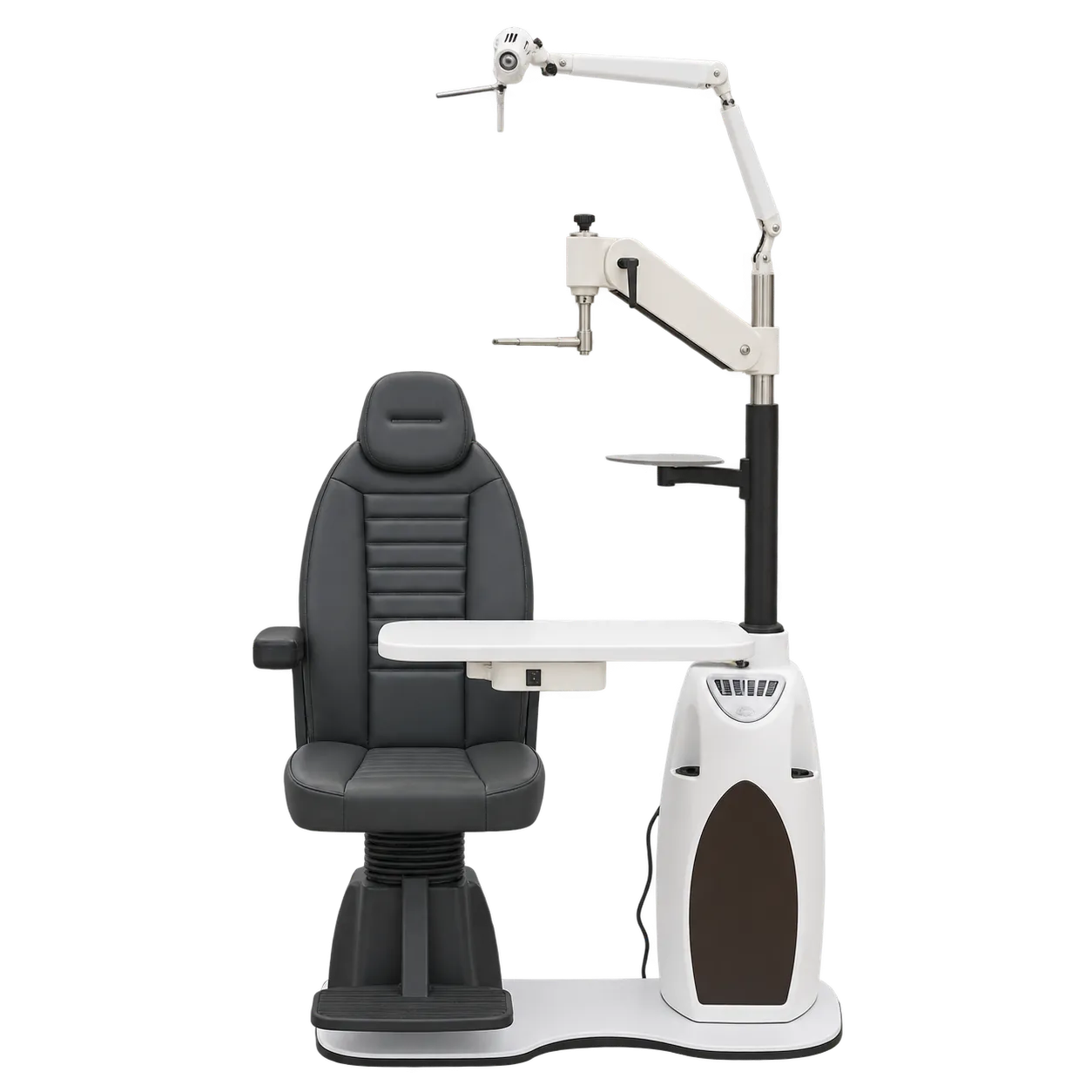
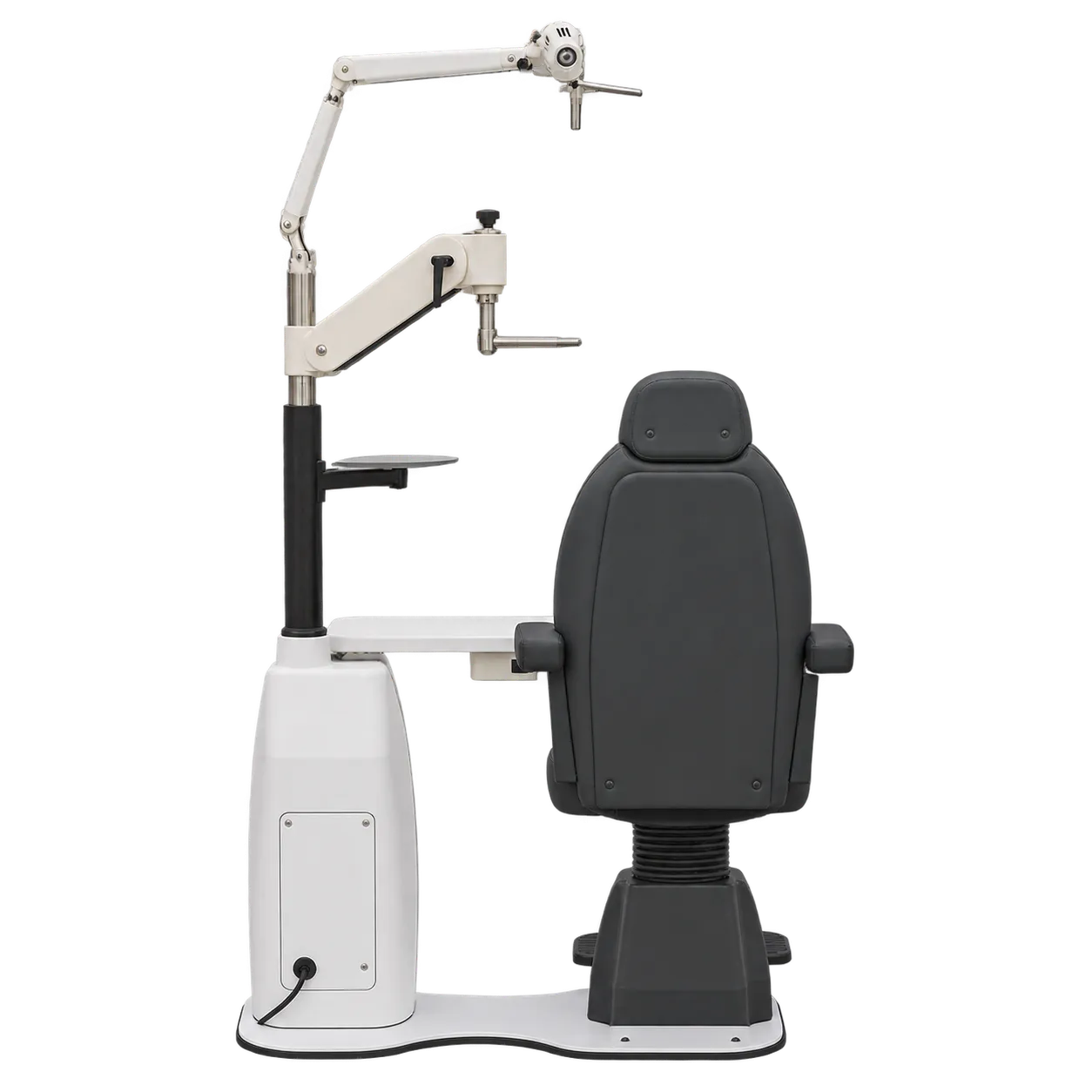
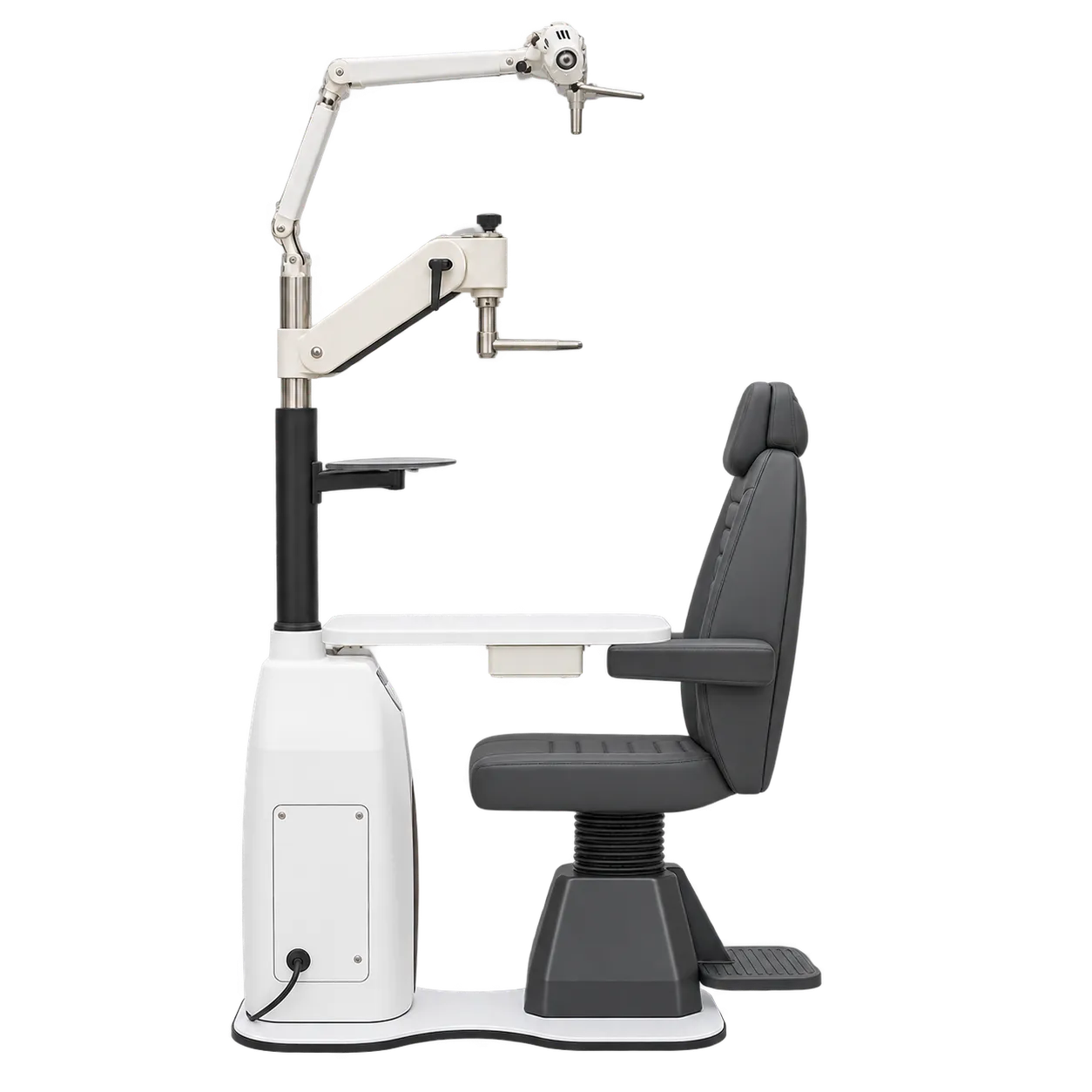
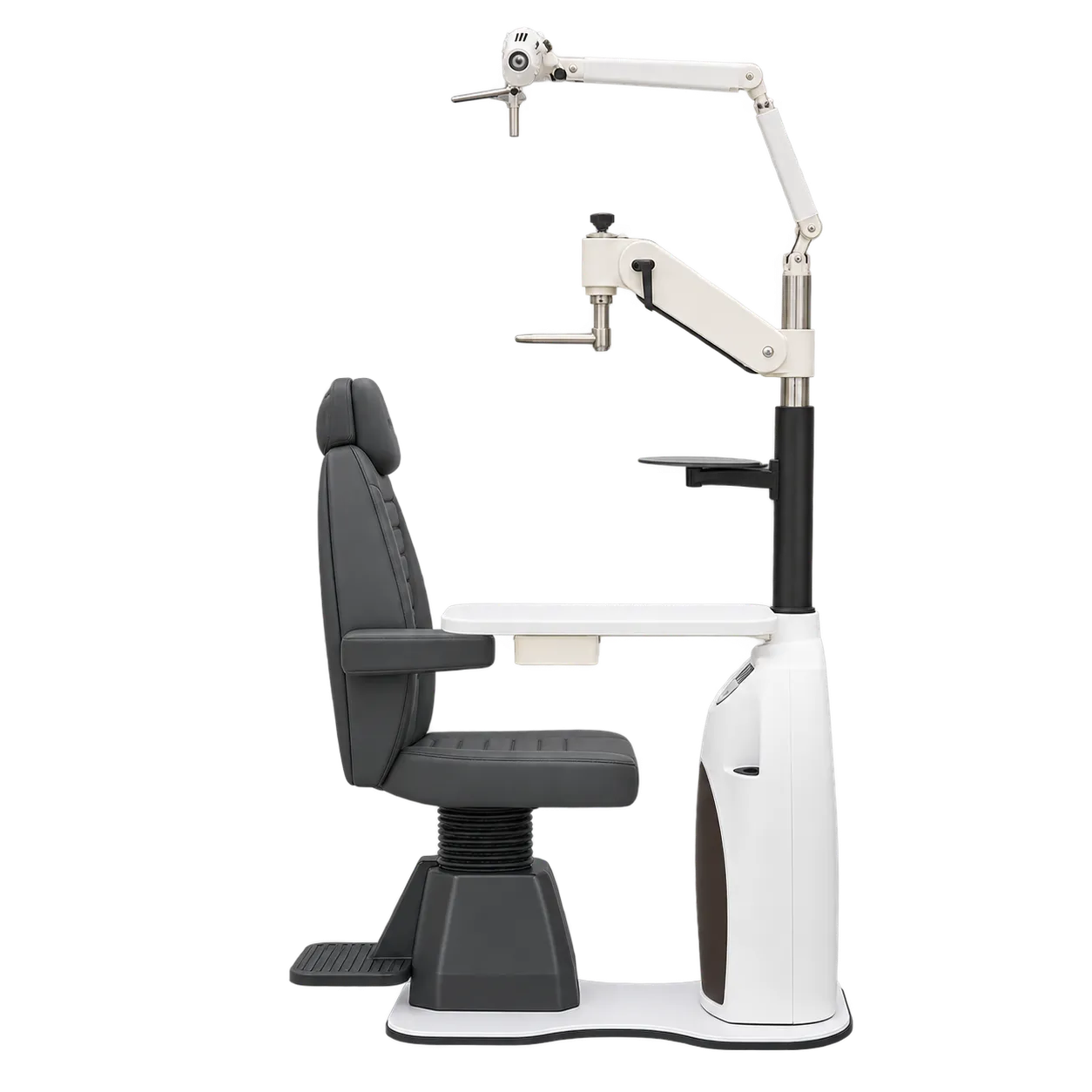
Small and internal consulting rooms benefit most, and in UK practice that describes a great many. A pale cabinet returns ambient light rather than absorbing it, and in a room with one window or none, light bounced off a large surface raises the general level and softens the contrast between lit and unlit areas. A dark cabinet in the same position takes light out of the room instead. The effect is more noticeable than a furniture catalogue would suggest, because the rooms are smaller than furniture catalogues assume.
Patient impression is the second consideration. A small space in dark finishes reads as smaller than it measures, and the impression forms before anything is said. Where the consulting room is the only part of the premises a patient sees properly, that is worth a moment's thought — particularly with anxious patients, for whom a confined-feeling room is not neutral.
The higher-output 40 W lamp compounds the effect, since a pale cabinet returns that light rather than swallowing it.
Everything else follows the family: a 450 to 590 mm chair band at 150 kg loading, a near-square 1190 × 1150 mm footprint that can be rotated in a room scheme without changing the space required, and a fully published electrical schedule.
Two things belong in the decision, and one is a genuine trade. Pale finishes show marks, scuffs and handling sooner than dark ones — a cabinet at hand height in daily use will need visible cleaning more often, and lighter upholstery the same. Where cleaning is regular and the room is small, the pale option repays itself; where handling is heavy and cleaning occasional, a darker stablemate will look better for longer. And upholstery materials are unpublished for all three SKUs, which matters doubly on a pale finish, since an unsuitable cleaning product does visible damage.