
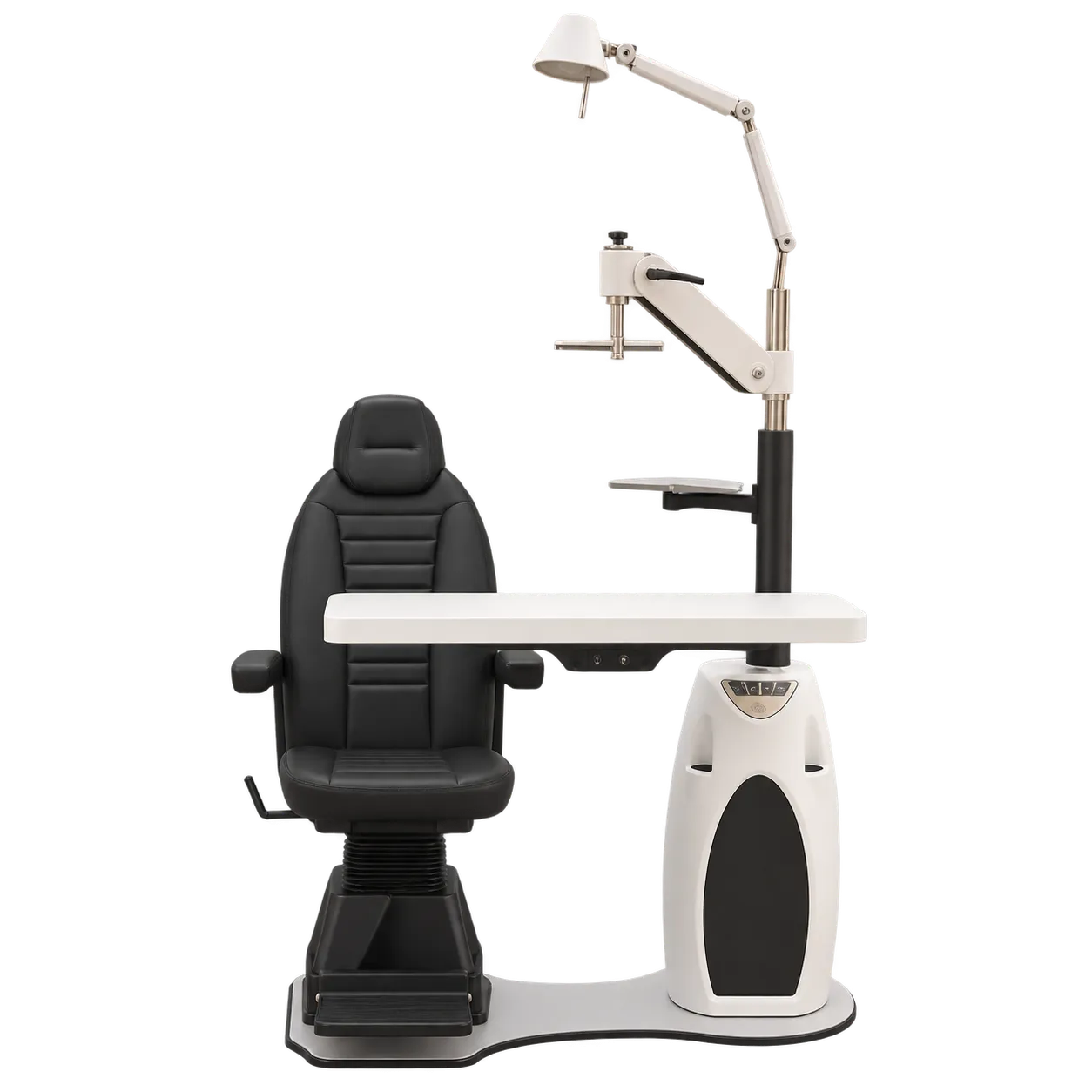
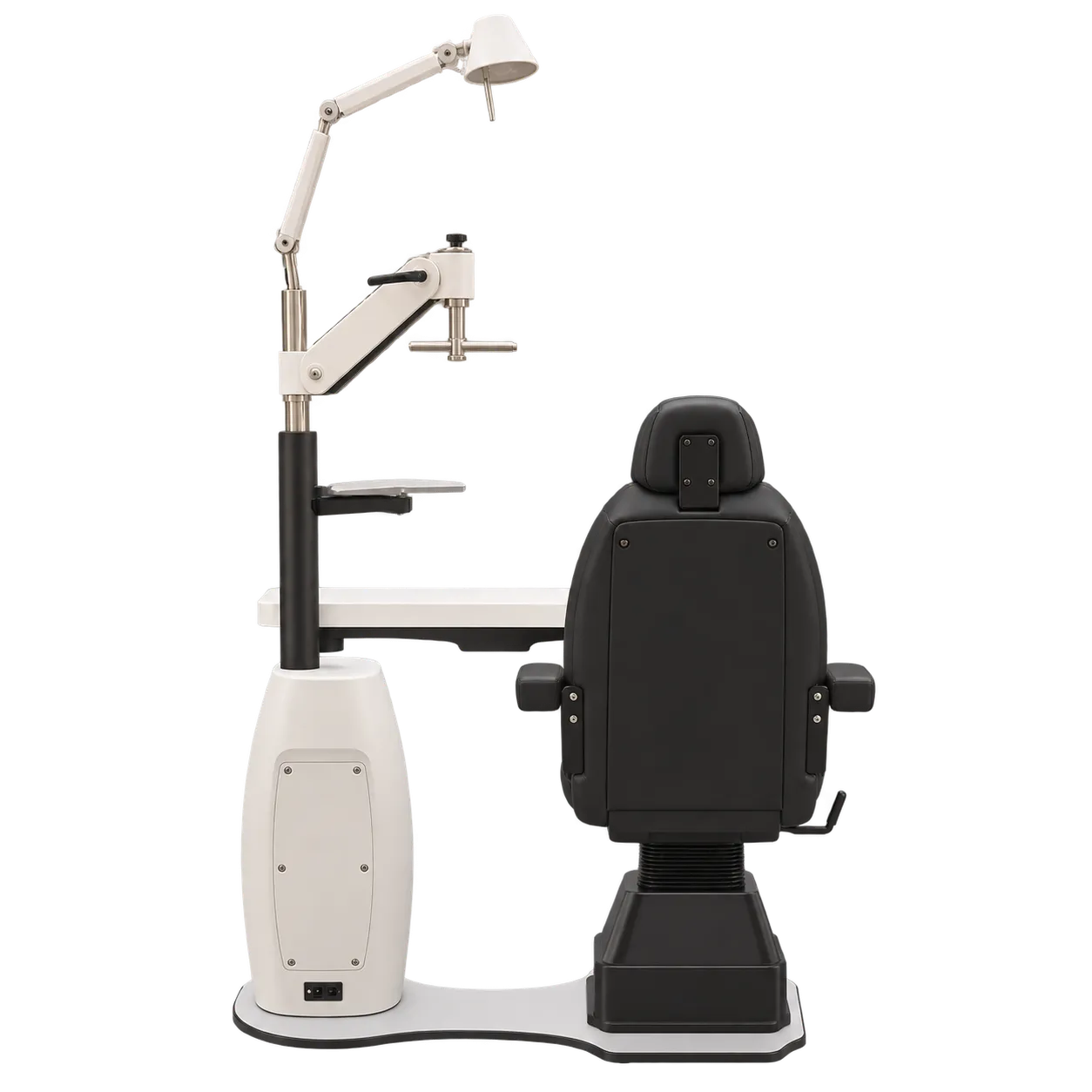
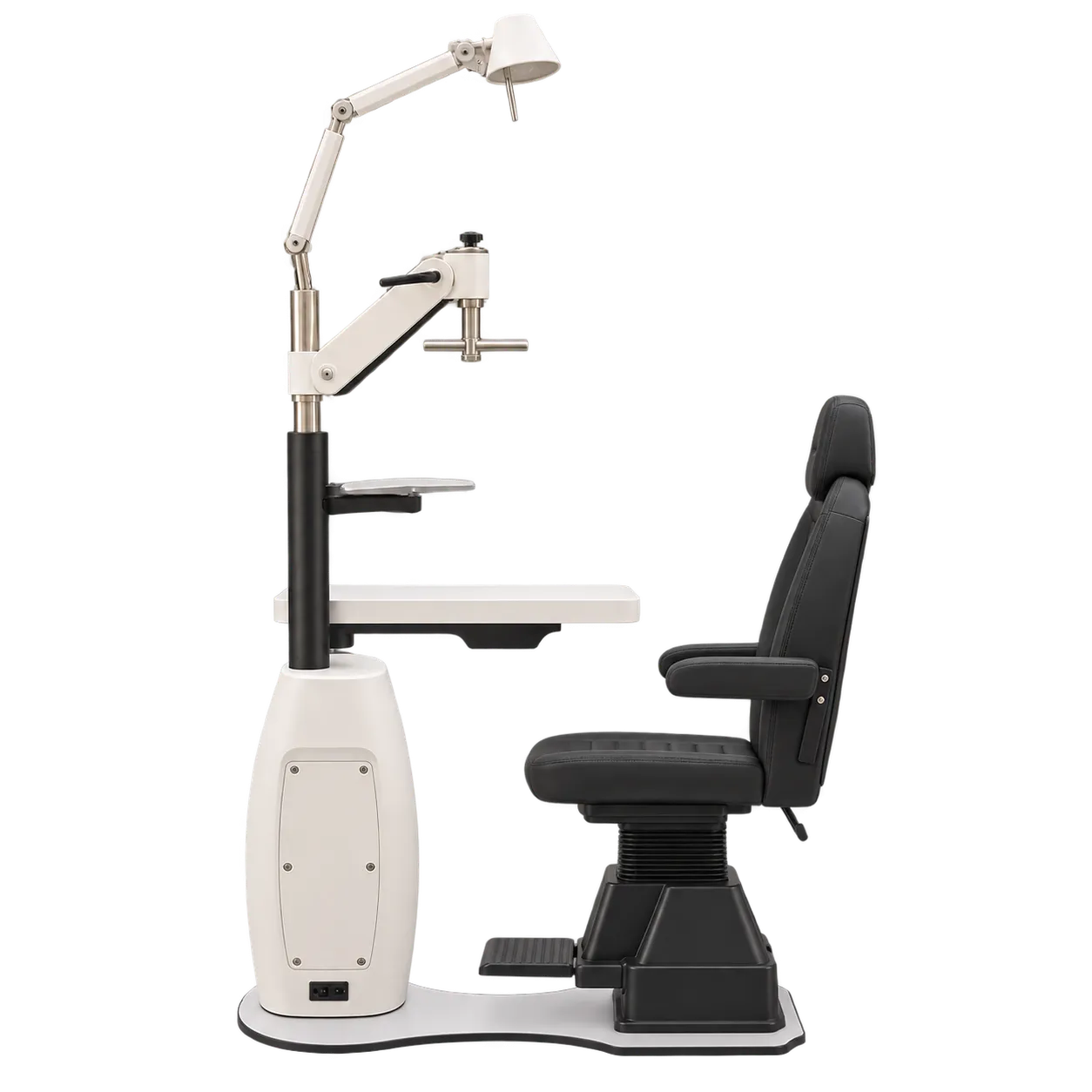
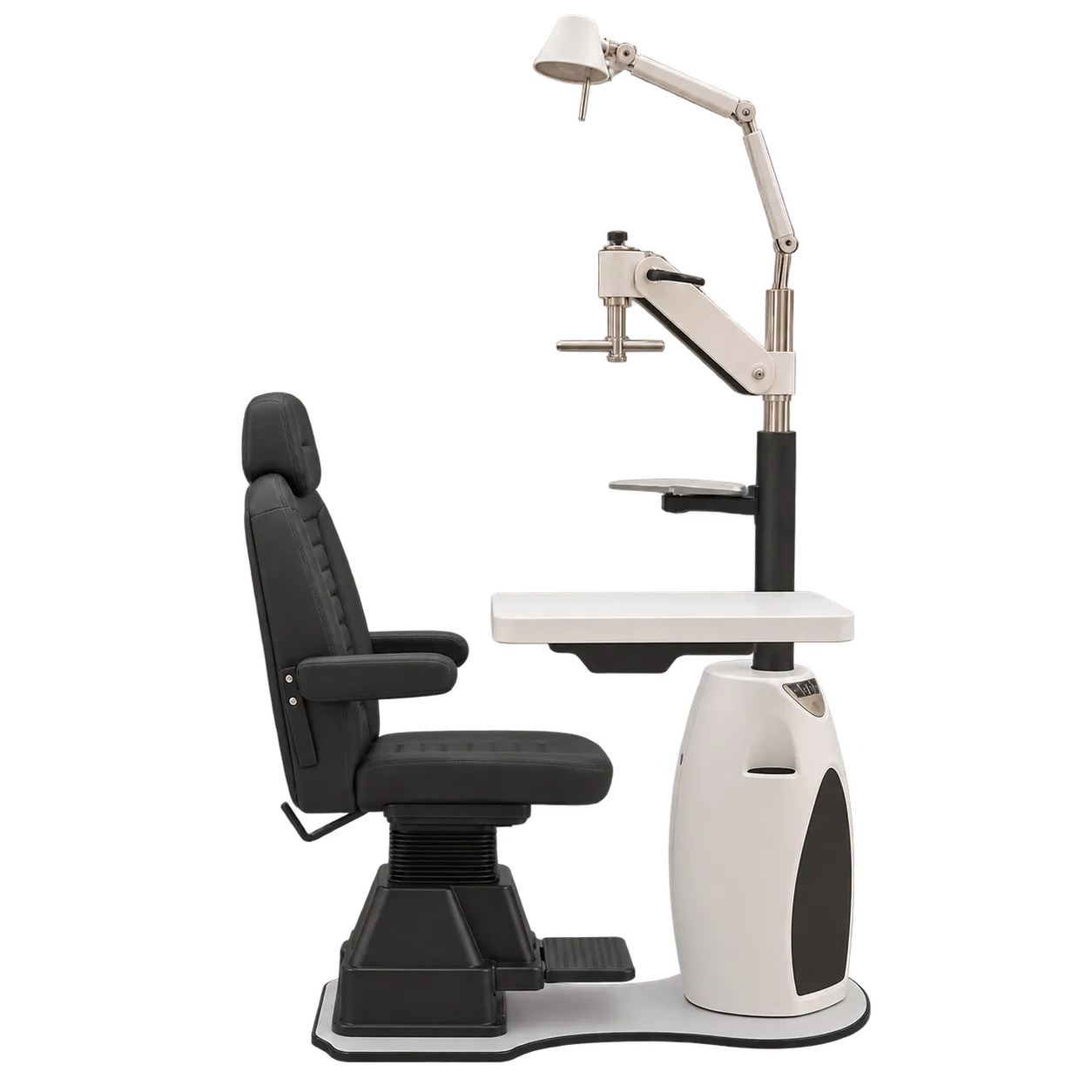
Rooms tight beside the chair benefit first, and that is the most contested floor in any consulting room. An upright standing next to the working position occupies space exactly where a patient approaches, turns and sits, and where a clinician moves past to reach the far side. A cantilevered arm reaching from behind puts its structure where nobody walks and its working end where the light is needed — so the space returned is the space that was actually short.
Patients using sticks, frames or a companion gain from the same clearance. Approach and transfer both happen in that strip, and removing a vertical member from it makes the manoeuvre simpler without anything else changing.
Refraction benefits from the sightline. A vertical positioned beside the working position sits in the patient's forward field toward the chart, and although a patient will look past it, "looking past" is precisely what a refraction is trying not to ask of anybody. The distraction is small and repeated across every acuity line, and it costs nothing to remove.
Twin lighting carries over from the shared specification: 16 W plus a double 36 W across two installations, with at least one carried on the curved arm.
Two things belong firmly in the decision. Ceiling clearance is a constraint this geometry has and the upright version does not — a curved arm sweeps a volume above the patient, so any existing pendant fitting, ceiling rose or ductwork over the chair position must be checked against it. And that swept path is not published: the unit is 1990 mm overall, but the arm's working volume above the chair is unstated and should be requested before ordering, particularly under a low soffit.