
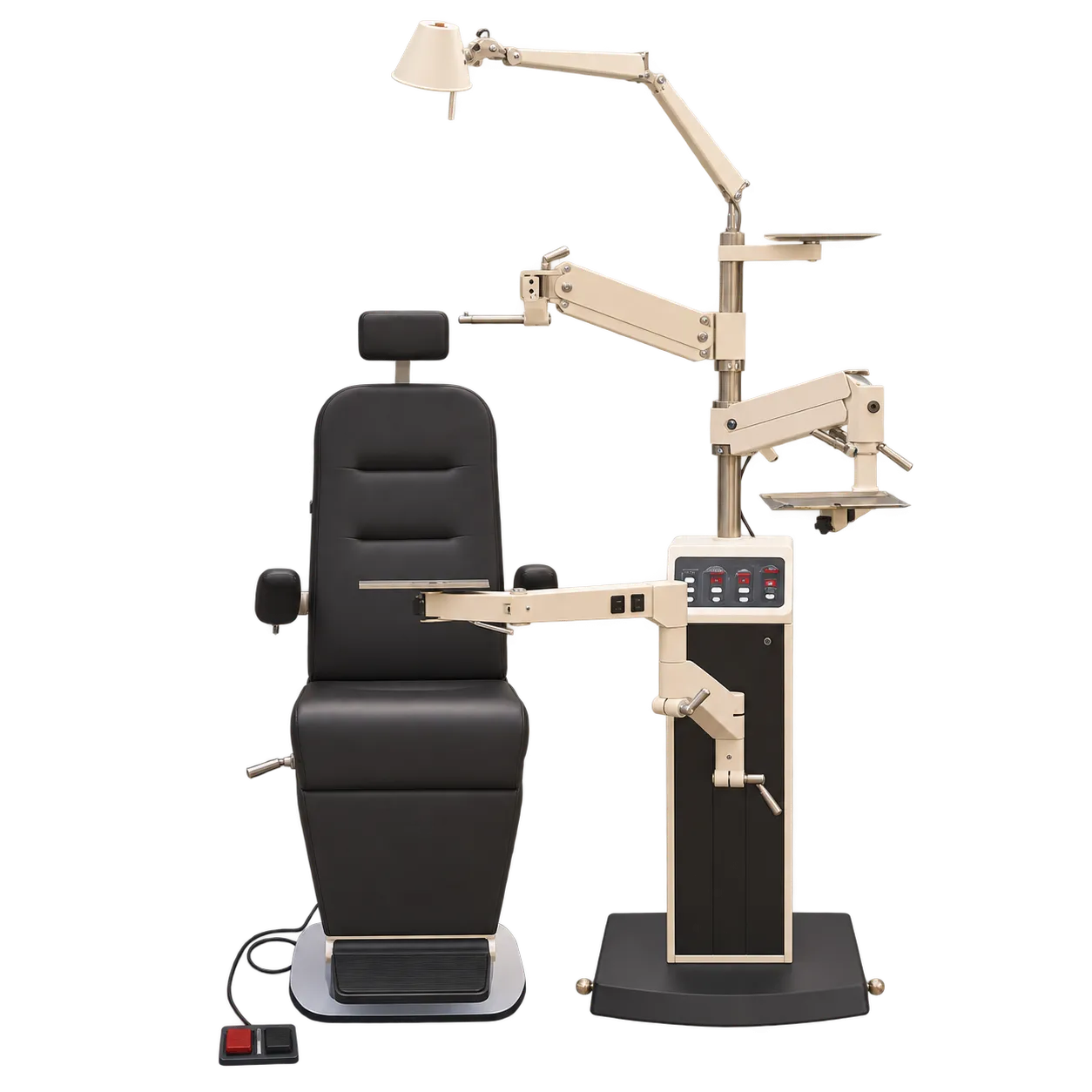
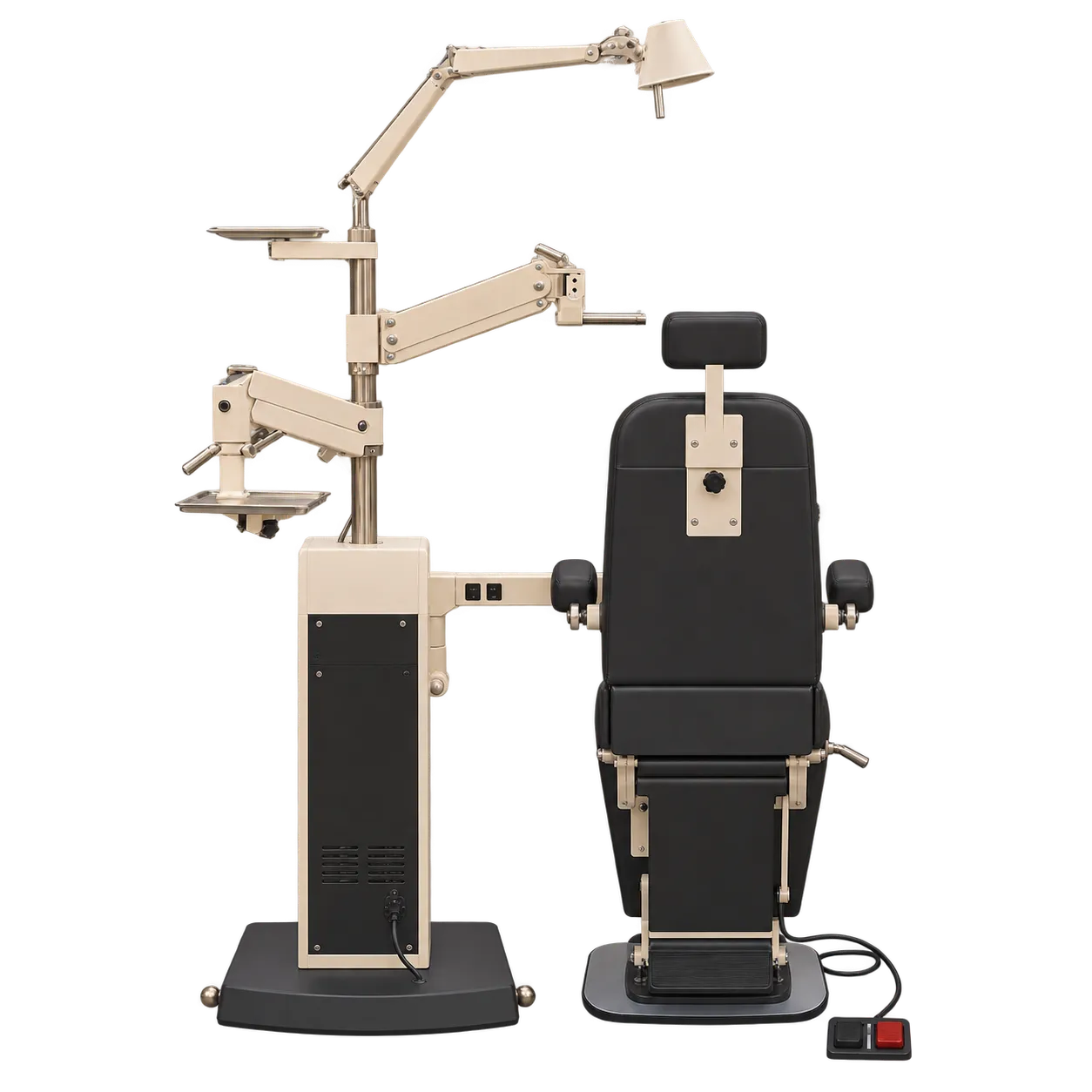
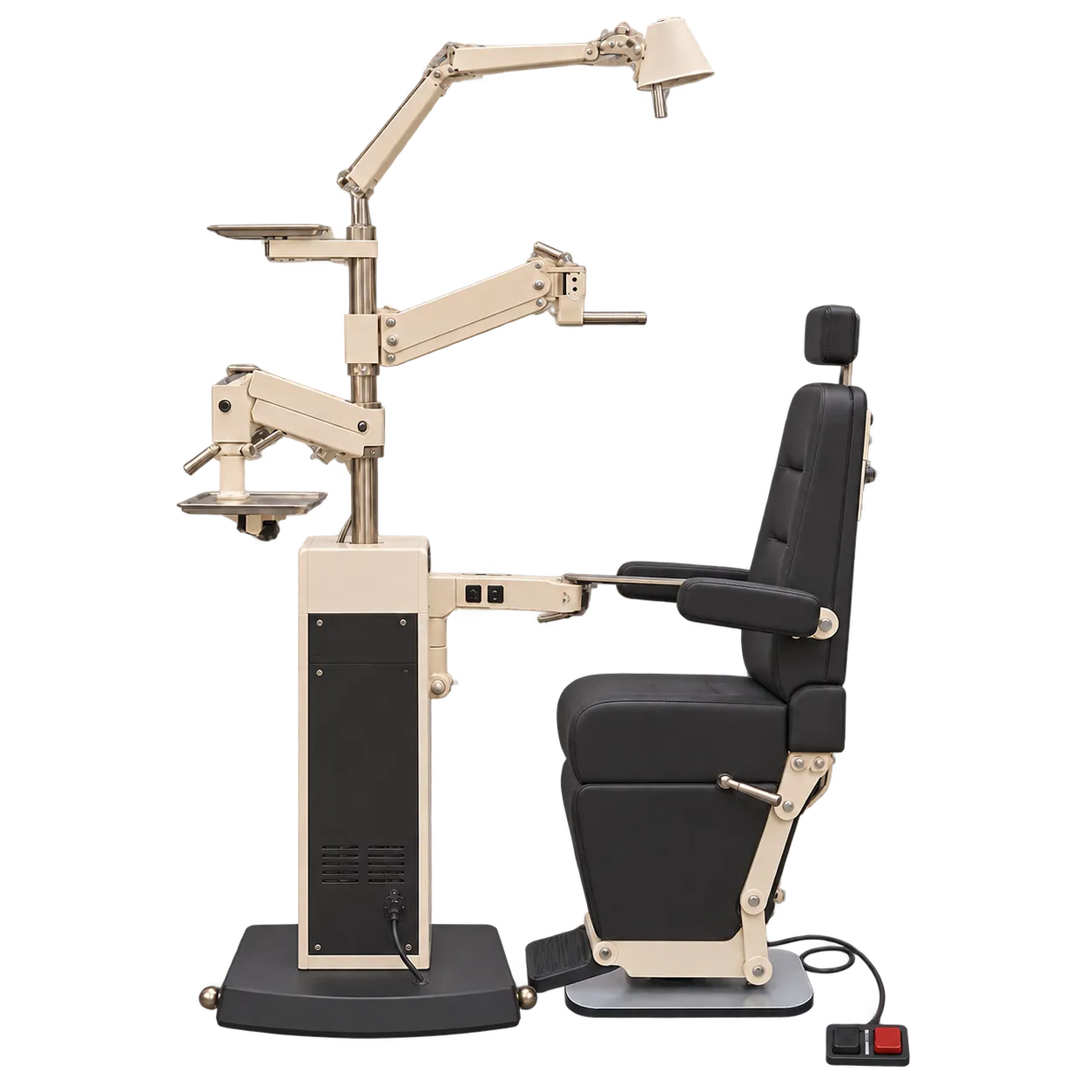
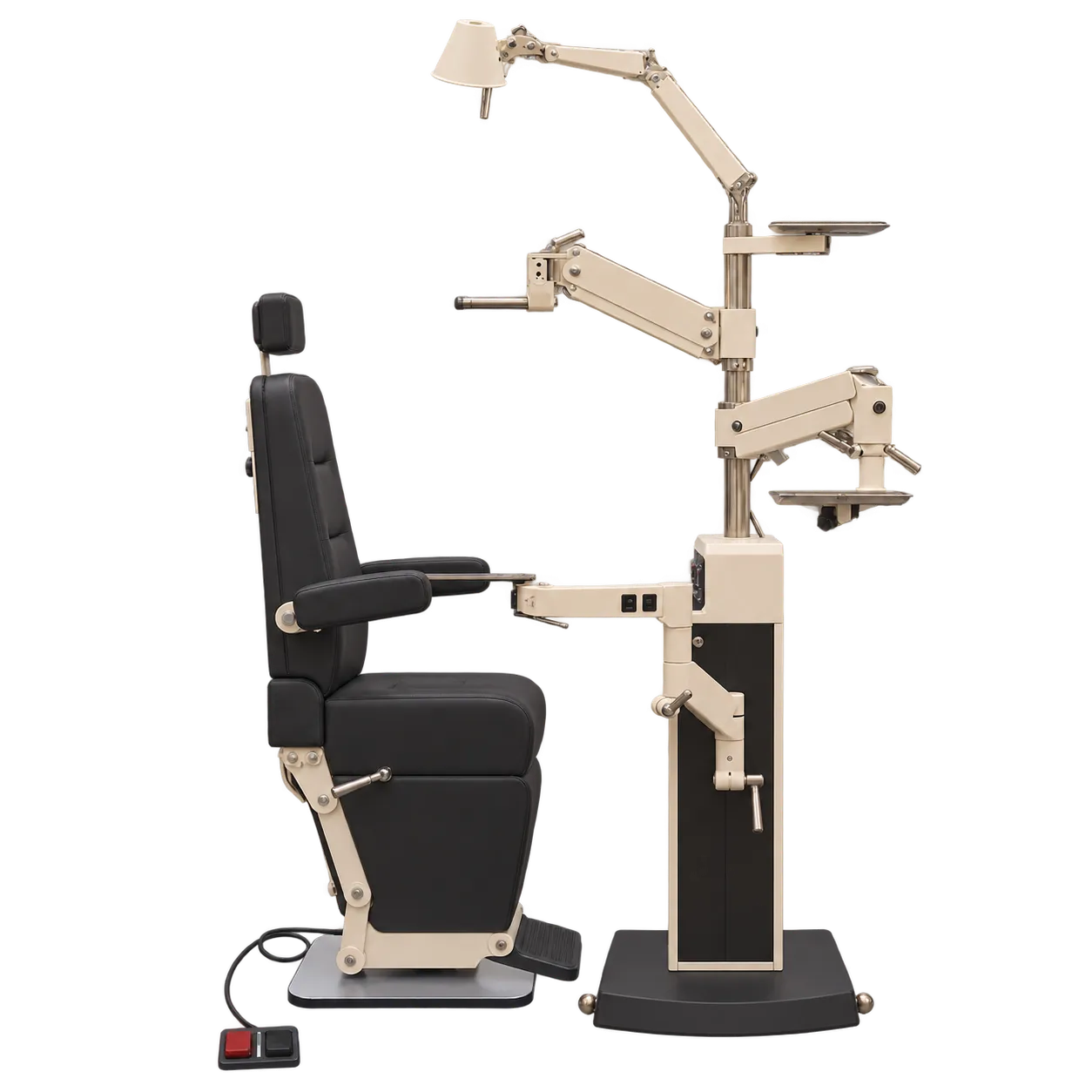
Instrument-dense positions benefit most directly, and the benefit is about cabling rather than clinical performance. Ophthalmic instruments run on a range of low voltages, and the usual setup puts a separate transformer or adaptor behind each one—occupying sockets, filling the floor beside the chair with power bricks, and leaving a cable run to manage whenever anything moves. Seven selectable taps and a charging output replace that with a single supply from the column.
Older premises gain most from the socket reduction. A consulting room in a converted building frequently has fewer outlets than a modern fit-out assumes, and adding them means containment, chasing or trunking. Powering instruments from the unit sidesteps that entirely.
Floor safety improves as a by-product. Fewer adaptors beside the chair means fewer cables in the strip where patients approach, transfer and sit.
Continuity is the quieter benefit: an instrument whose own adaptor fails can run from the unit while a replacement is sourced, rather than standing idle for a week.
The four individually specified arms suit a position carrying a phoropter, an auto keratometer, a projector and a slit lamp together — with per-arm load ratings of 30, 30, 10 and 50 kg published so an instrument can be matched to a mount before ordering rather than after.
Three things belong firmly in the decision. Instrument compatibility must be confirmed case by case — voltage alone does not establish it, since current capacity, connector type and AC-versus-DC expectation all matter. The published envelope of 1884 × 1316 × 1663 mm excludes the tabletop and lighting, so the installed footprint is larger than stated. AnAt95 kg, t,his is the heaviest unit in the catalogue by 85 kg, so flyou need to confirm oor loading and dethe livery route nefore cocommitting