
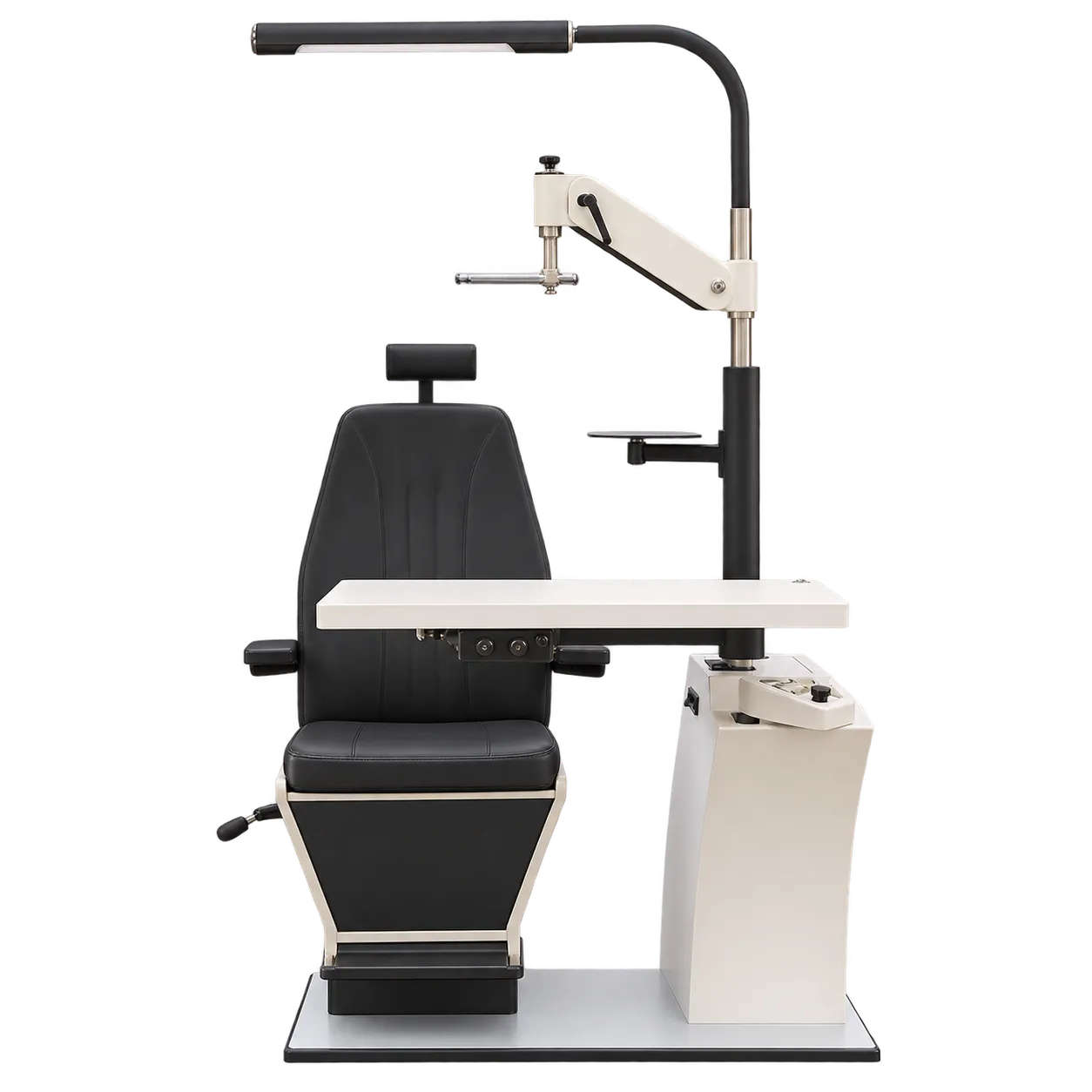

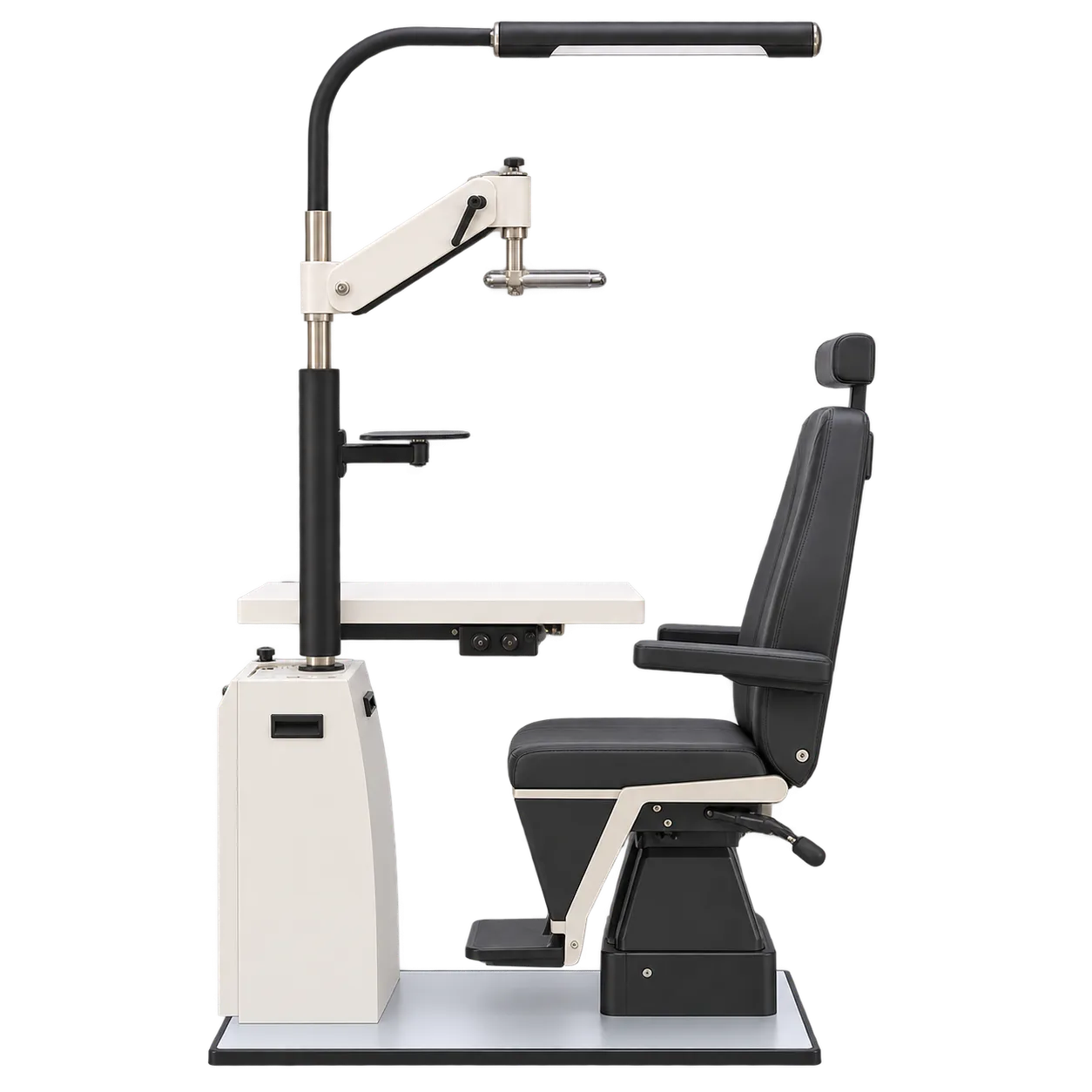
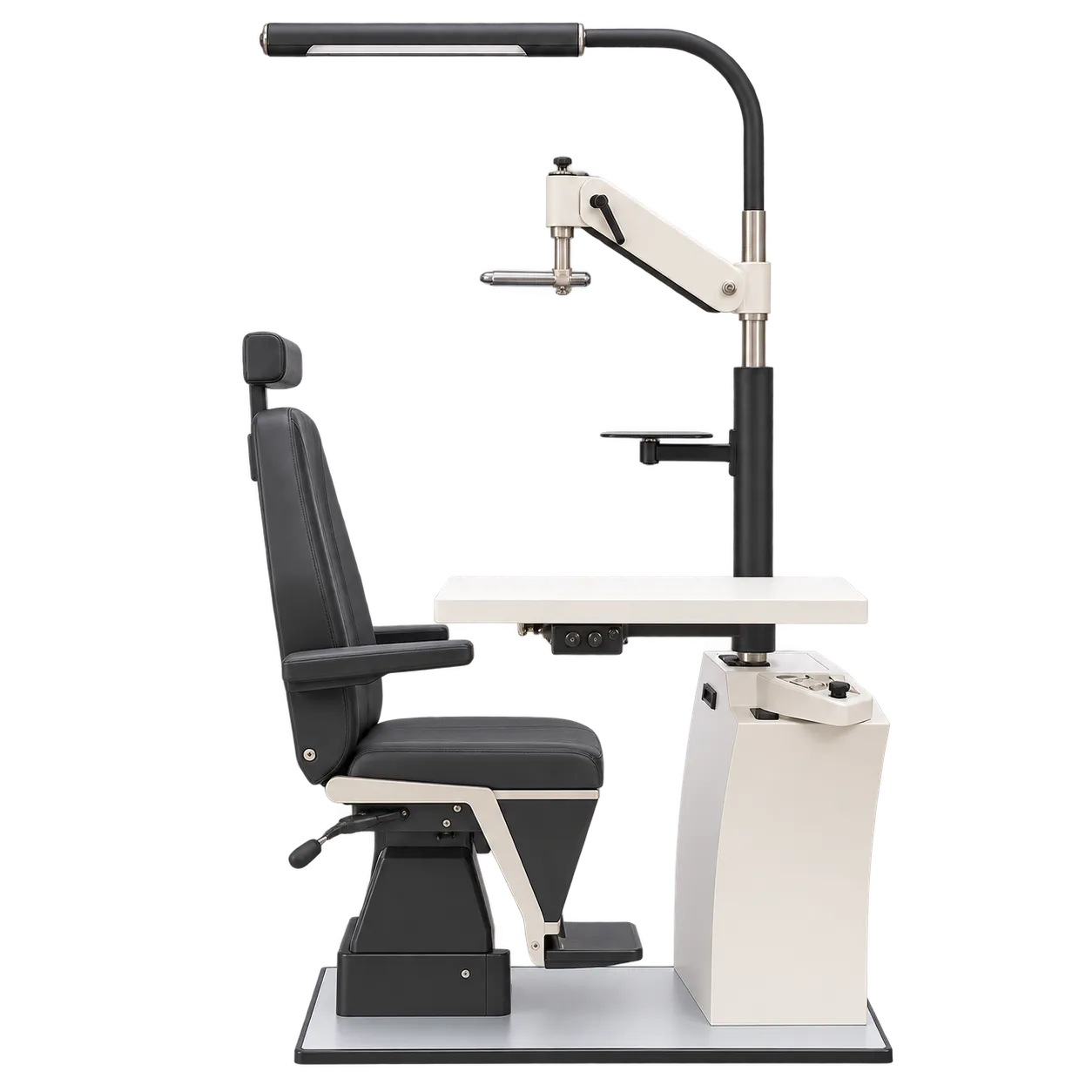
Multi-instrument rooms are where chair rotation earns its place. Where a patient must be presented to more than one device, the alternatives are walking them across — slow, and difficult for anyone with mobility restrictions — or wheeling a trolley round a seated person, which brings cables and castors near feet and disturbs the alignment of whatever is moved. Rotating the chair through 120° avoids both: the patient stays seated and supported, the equipment stays where it was set, and the reorientation takes a moment.
Patients with mobility restrictions benefit twice over, since the same unit descends to 460 mm — the lowest minimum in this range and below standard wheelchair seat height, making transfer a lateral move rather than a lift. Getting in is easier, and once in, the patient need not get up again to reach a second instrument.
Fit-outs are served by the electrical schedule, which remains unusual for this category. Input voltage, engine power, light load, no-load draw, fuse and wire ratings, a 2 kV pressure test result, S1 continuous duty and a temperature and humidity envelope are all published — enough for an electrician to specify a circuit and a compliance file to be completed without further enquiry.
Head positioning during sustained instrument work is supported by a pillow adjusting up to 150 mm, and the 90° to 135° backrest range means the upright end is genuinely upright.
Two things belong in the decision. Every published parameter here matches the closely related model in this range except a 60 mm narrower, 10 mm lower envelope — judge it on that basis. And chair loading is 150 kg, materially below the 200–250 kg of several siblings, which constrains the accessible caseload and should be weighed alongside the low seat height rather than separately from it.