
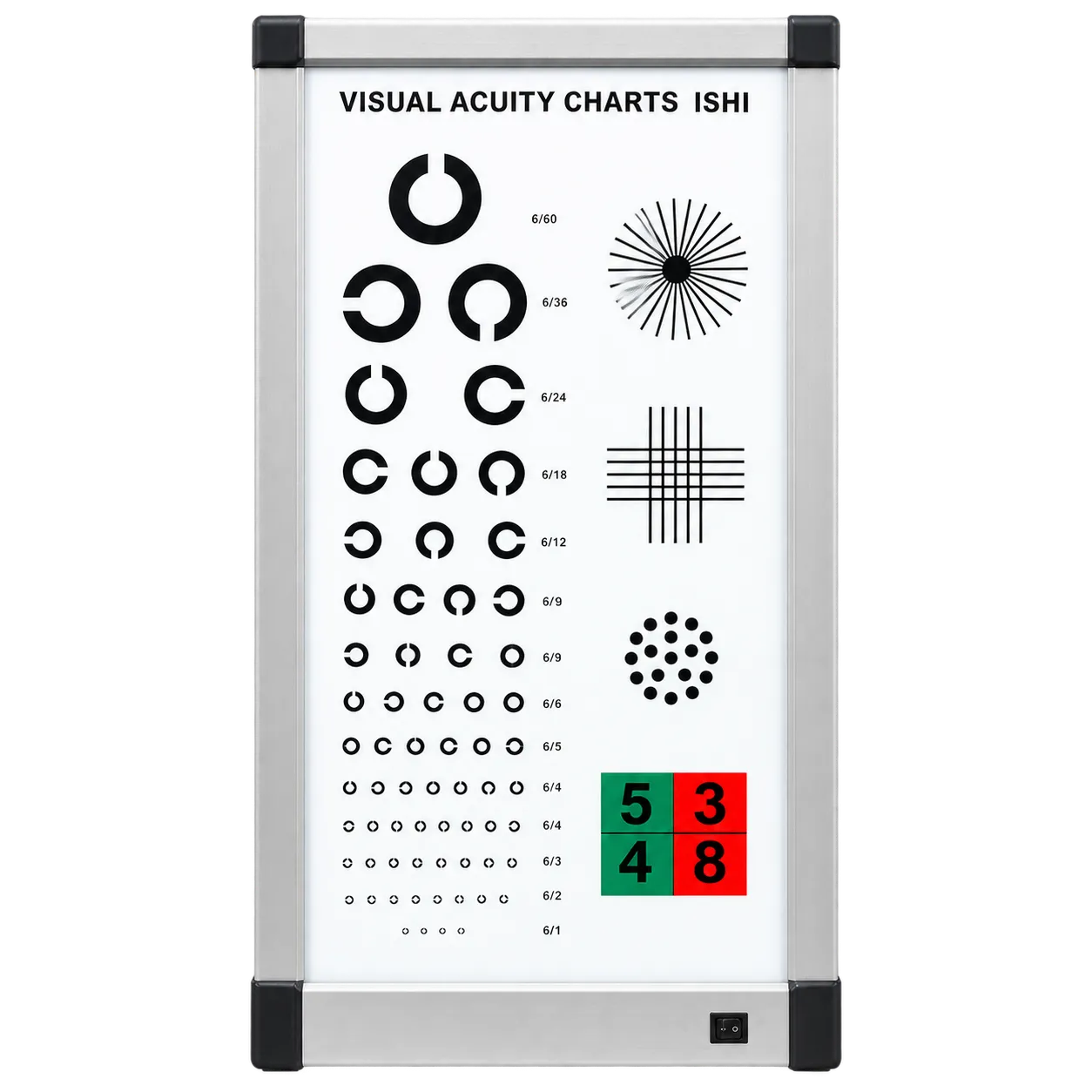
High-traffic screening positions are where the material specification earns its cost. Occupational health departments, school medical rooms, community clinics and busy practice corridors run the same chart through many patients a day, and the surface gets cleaned accordingly. UK practices tightened contact-surface protocols substantially and much of that discipline has persisted, so a wall chart in one of these positions may be wiped several times daily for years. On a soft face that accumulates as fine scratching, and fine scratching scatters light — the chart becomes progressively harder to read at exactly the acuity limits where clarity decides the result, without ever obviously failing.
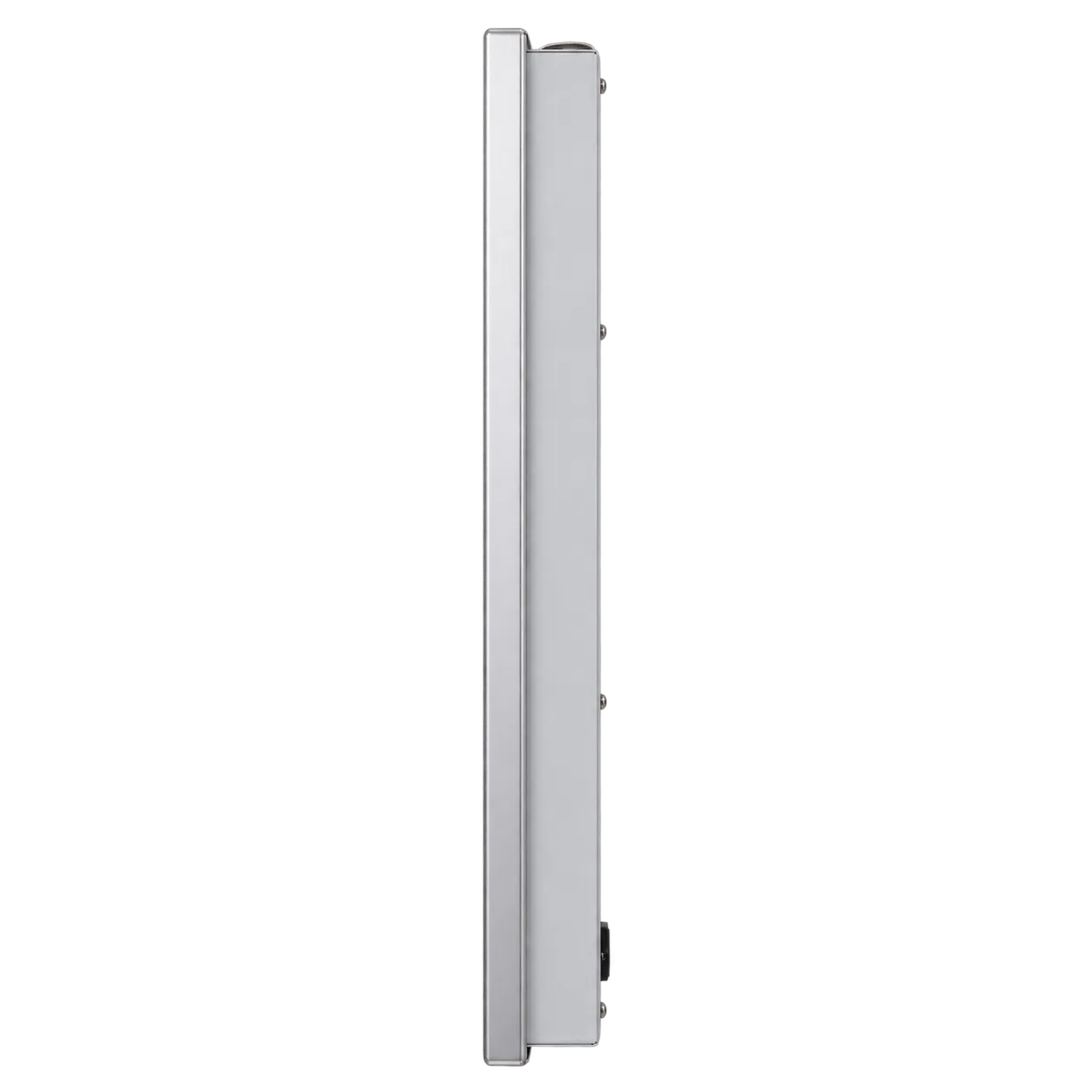
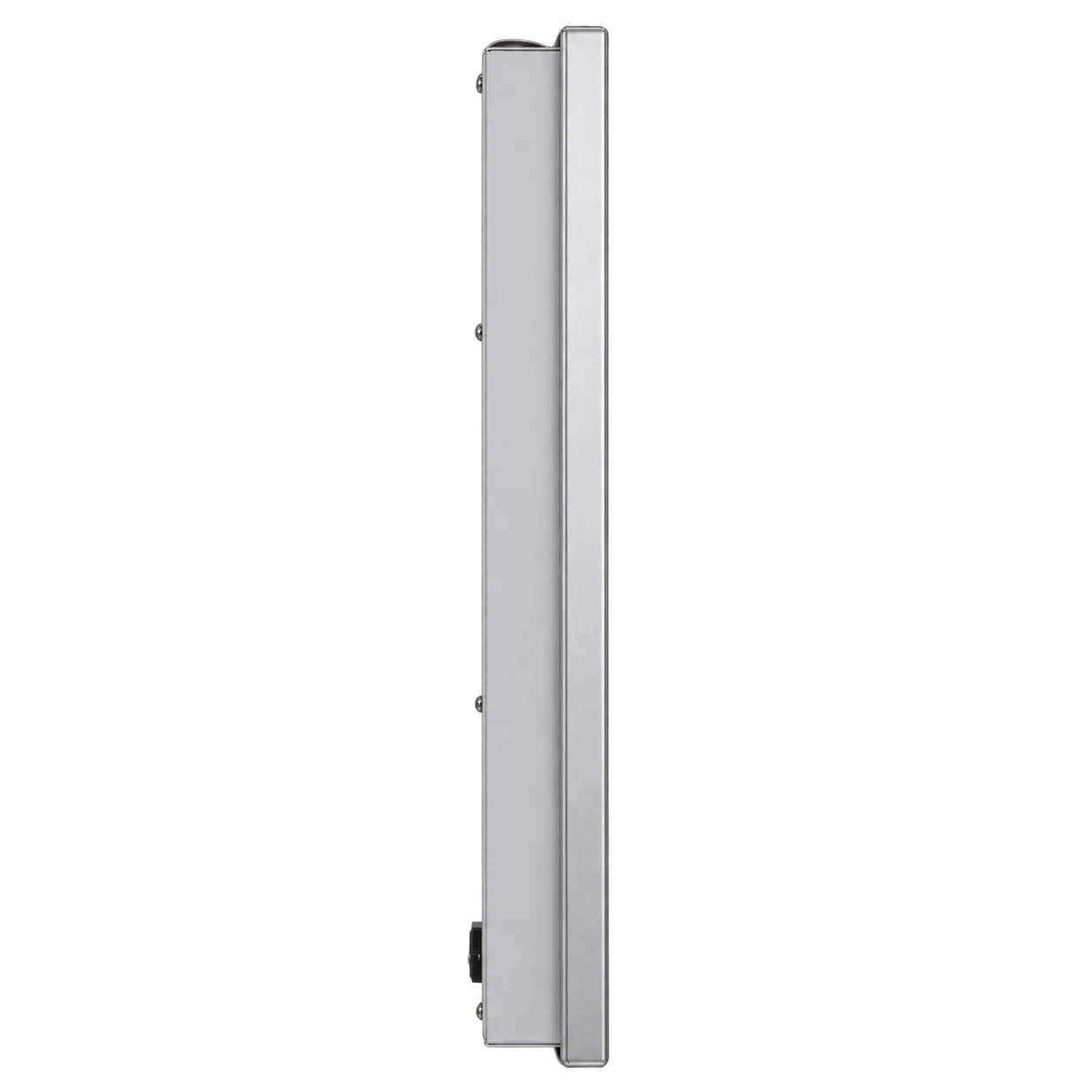
Corridor and circulation positions benefit from the 25 mm depth. Where the rest of this range projects 75 to 90 mm, a near-flush panel is meaningfully less likely to be caught by a trolley, a door or a shoulder, and less obtrusive in a narrow space. For practices fitting a screening position into a passage rather than a room, that difference is practical.
Mixed-population screening is served by the three illustrated faces. Landolt C and tumbling E measure patients who cannot name Latin letters — pre-literate children, patients educated in other scripts, those with communication difficulty — while the symbol and shape face suits paediatric work. All three carry astigmatic and grating targets alongside a red-green panel.
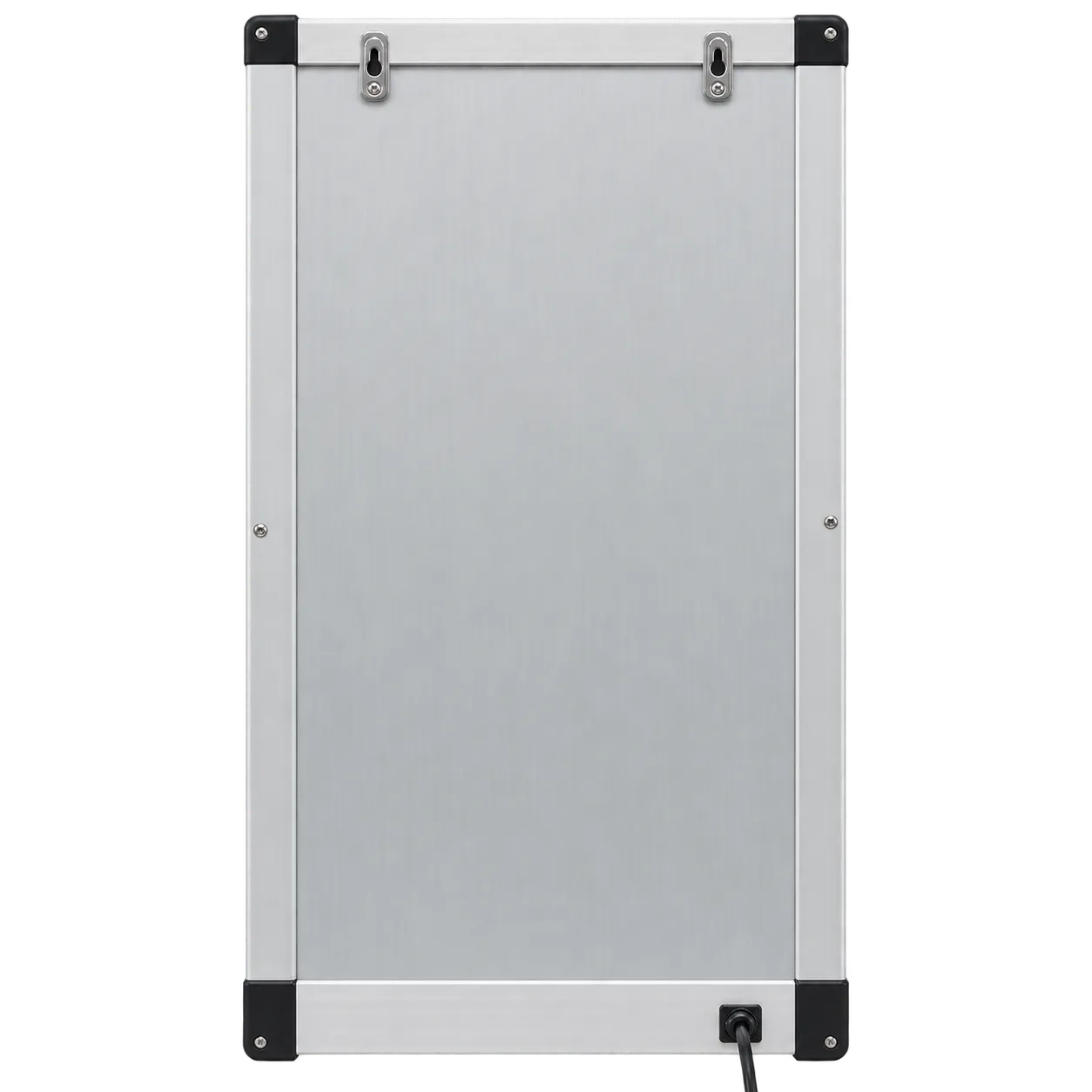
Two matters need attention before ordering, and one is unusual for this range. First, the unpublished list is longer here than for the framed charts: packing quantity, power supply, luminance, LED service life, acuity range and mounting arrangement are all absent, so allow enquiry time. Second, chemical compatibility of cleaning agents should be confirmed separately from the scratch resistance — mechanical hardness and solvent tolerance are different properties, and acrylic is more particular about the second.