
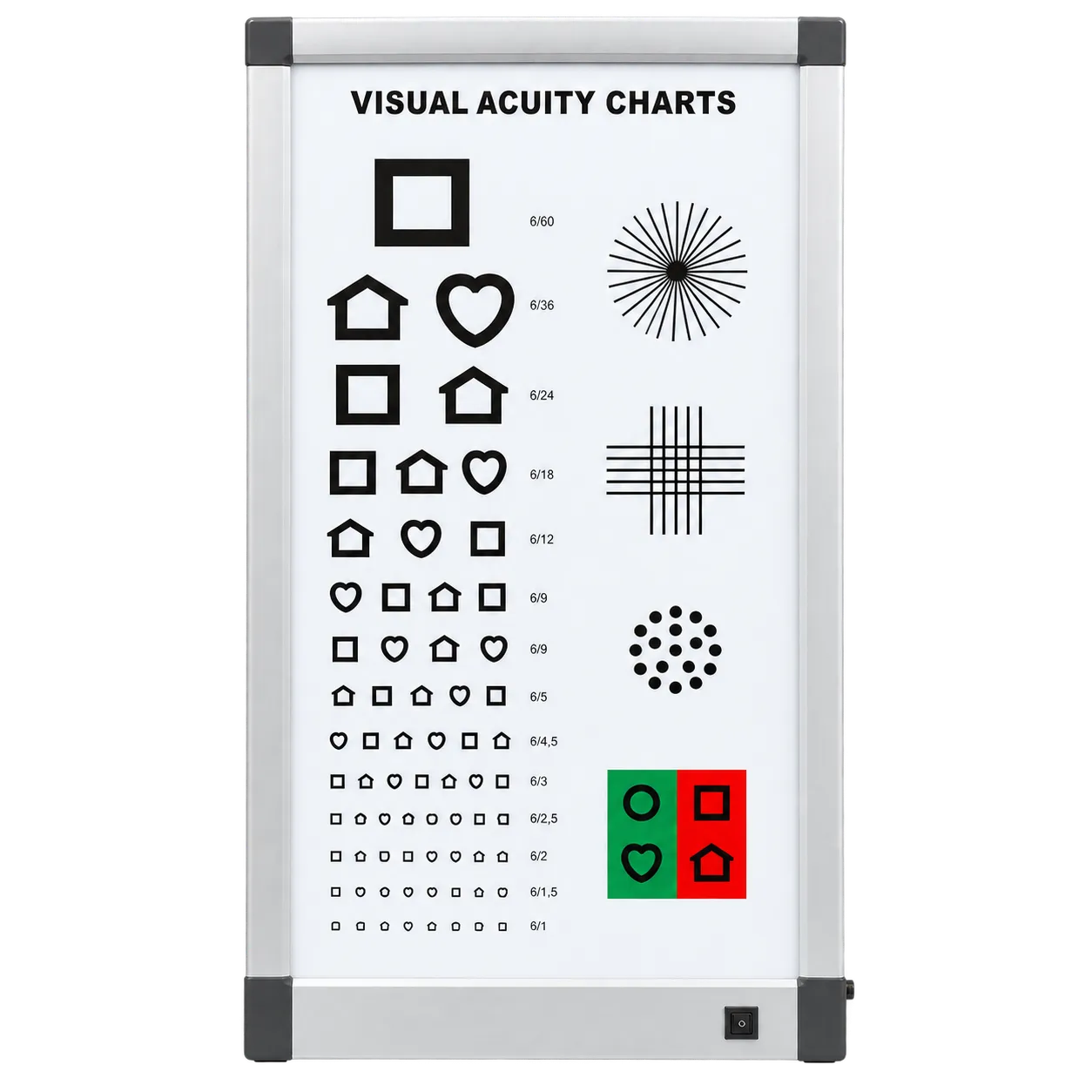
Refraction beginning without objective data is the clearest use for the radiating dial. Where no autorefractor reading is available — an instrument away for service, a domiciliary visit, a patient who cannot be measured objectively — the dial gives a starting cylinder axis from the patient's own report of which meridian appears sharpest. That is considerably better than beginning from nothing, and it also serves as a cross-check when objective and subjective results disagree in a way the clinician wants to interrogate.
Screening rooms running more than one check benefit from the consolidated face. Where acuity, an axis estimate and additional graded targets are all wanted, the alternative is separate items at different wall positions, potentially at different distances and under different room lighting. One backlit surface presents everything at the same distance under the same illumination, which makes the results comparable and the sequence quicker.
Mixed-population screening is supported by the optotype content, with the illustrated faces covering ring and directional optotypes as well as symbol charts — measuring patients who cannot name Latin letters alongside those who can.
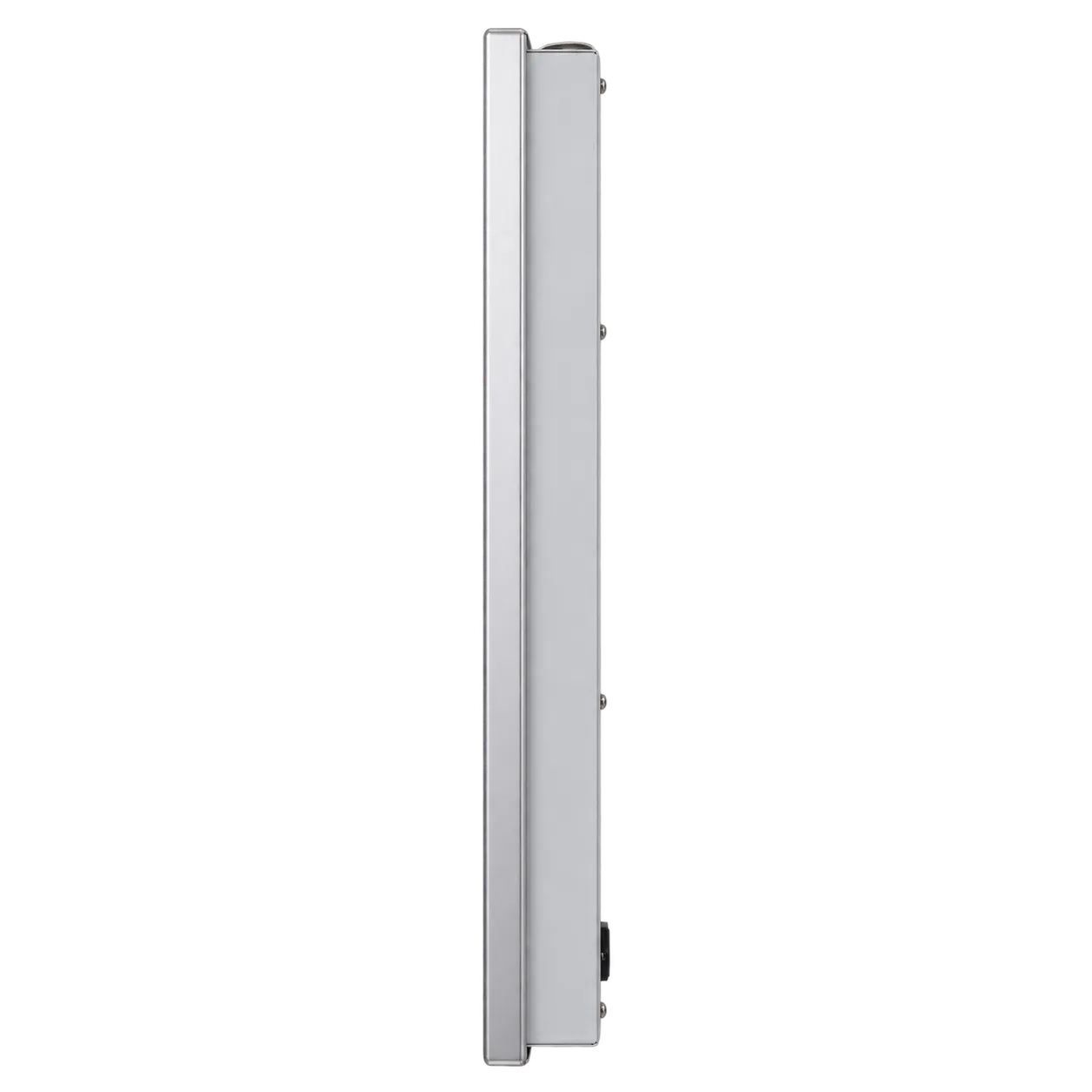
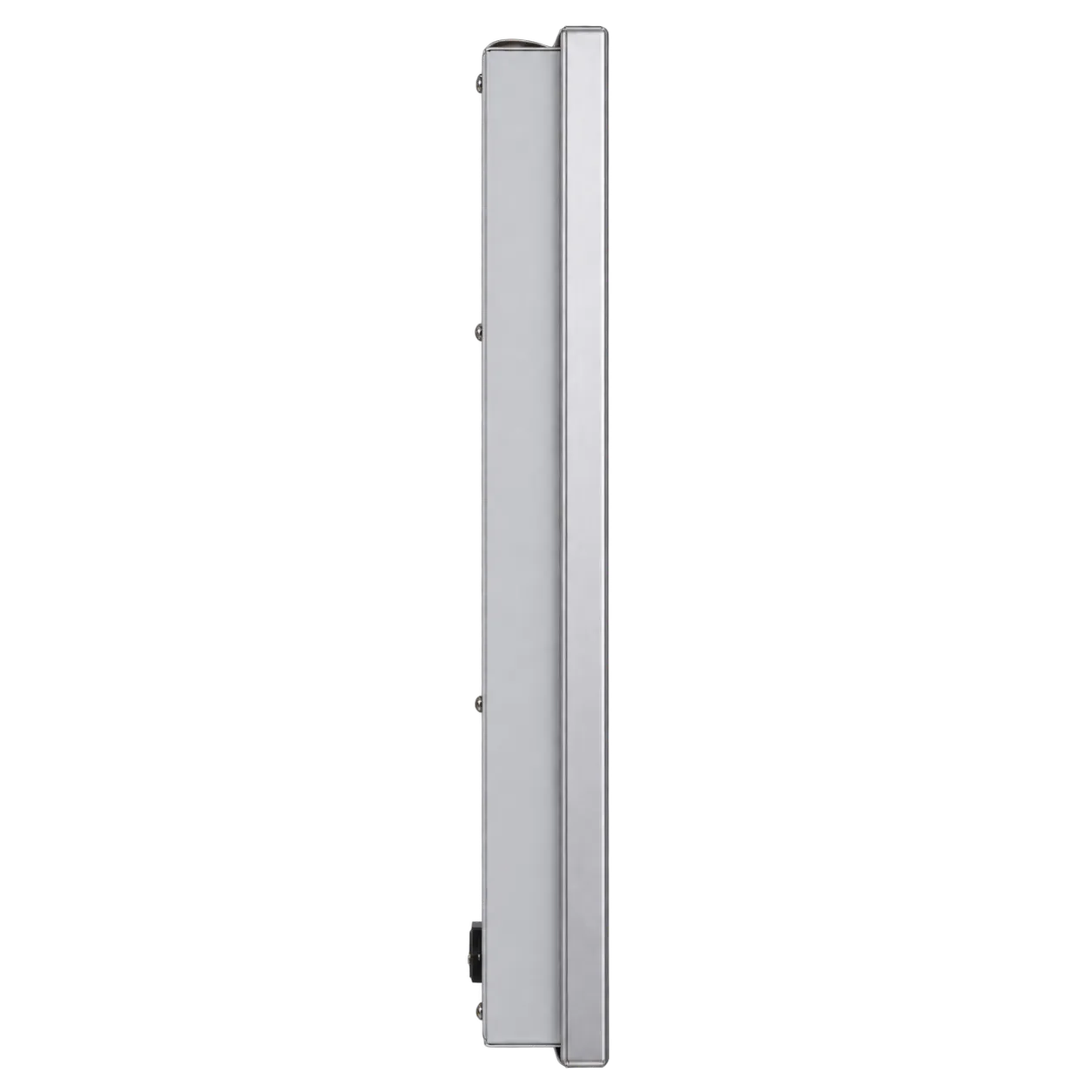
The material specification serves high-traffic positions, since the PMMA face at 92% transmittance and high surface hardness resists the fine scratching that cleaning routines inflict on softer surfaces, and the 25 mm depth suits corridors and narrow rooms.
Two things need settling before ordering, and one is unusual. The published specification block covers this model together with its sibling rather than separately, so what distinguishes them is the printed face — which is illustrated rather than tabulated, and must be confirmed in writing. And the grating targets are shown without any description of the protocol intended for them, so a practice buying this model for grating or contrast work should obtain that description first.