

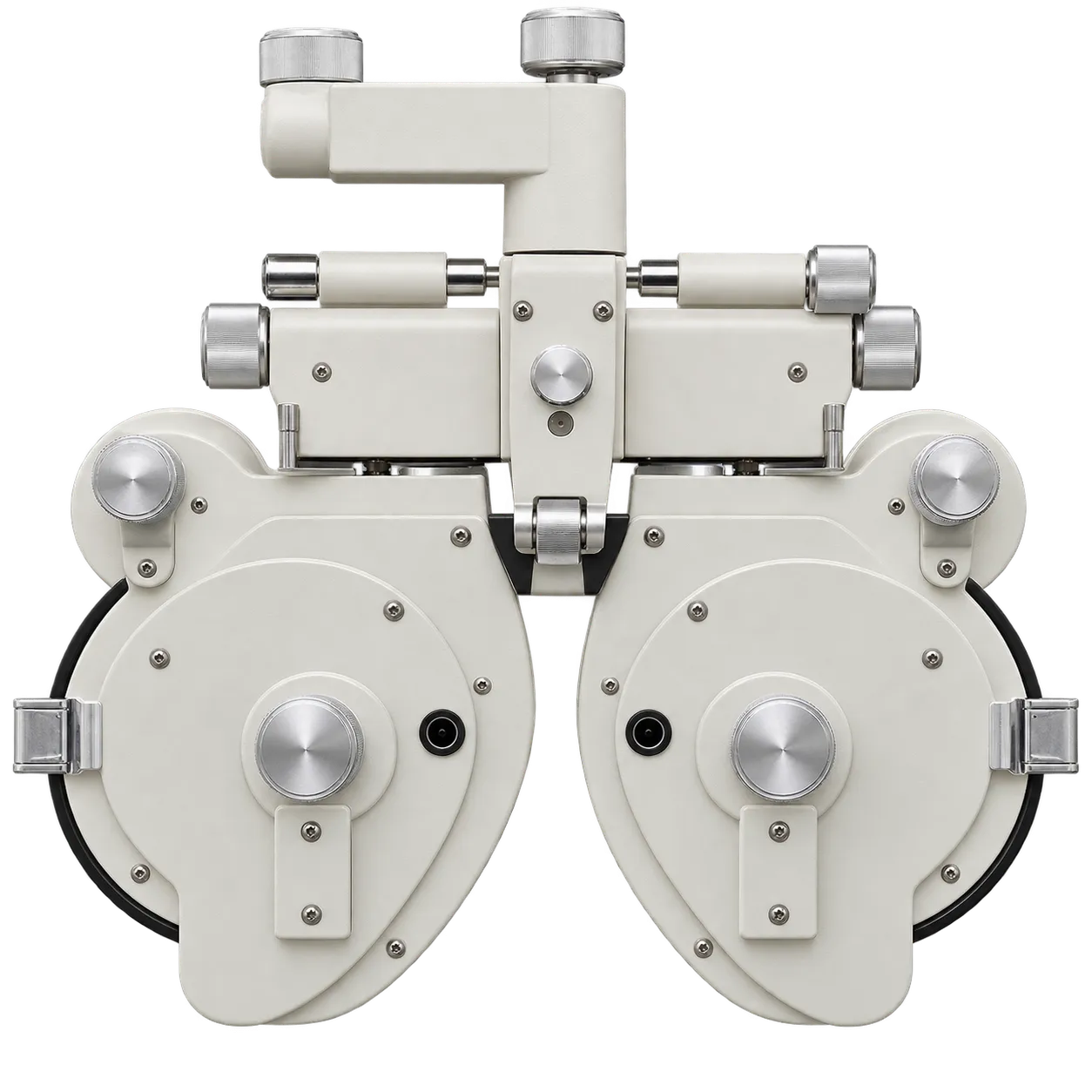
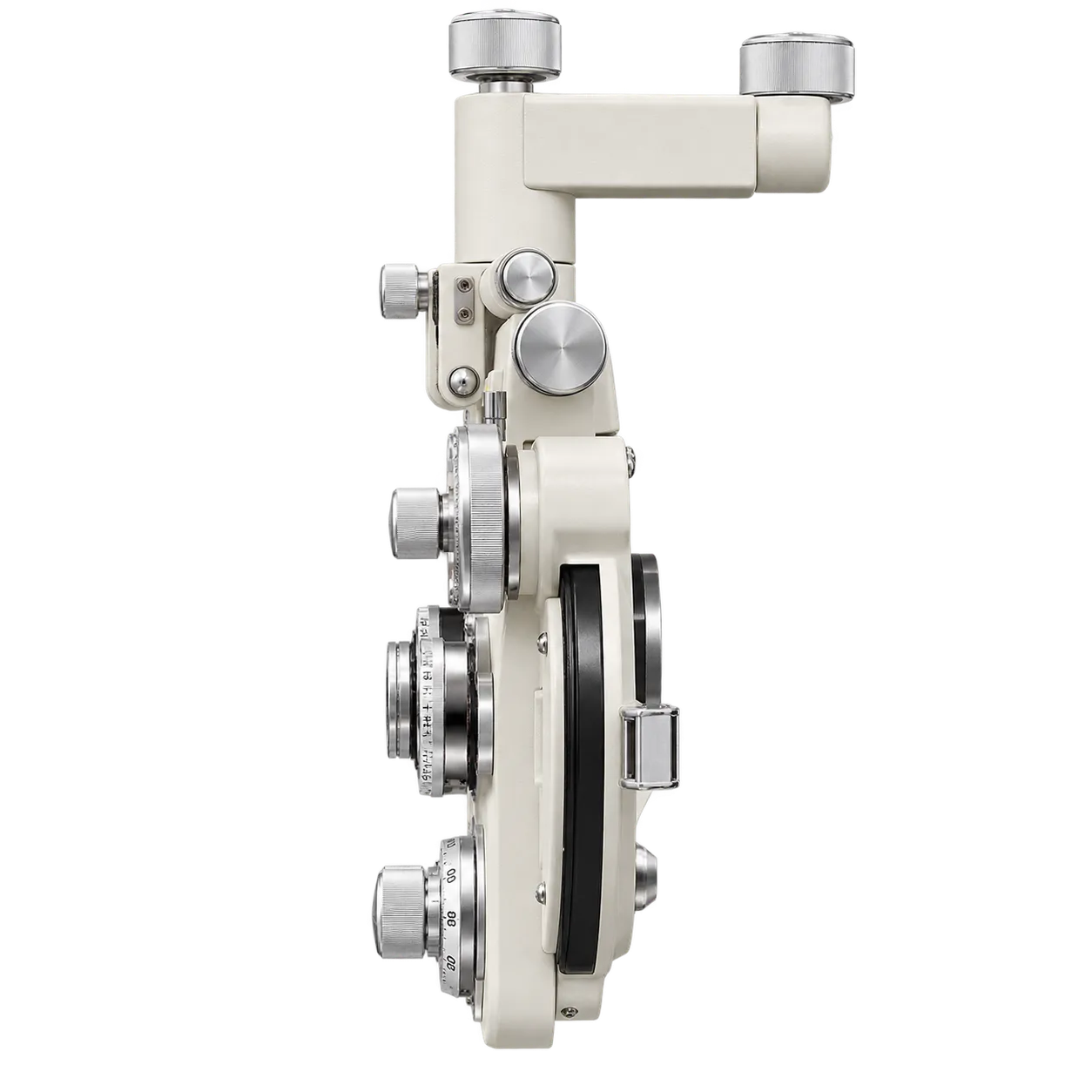
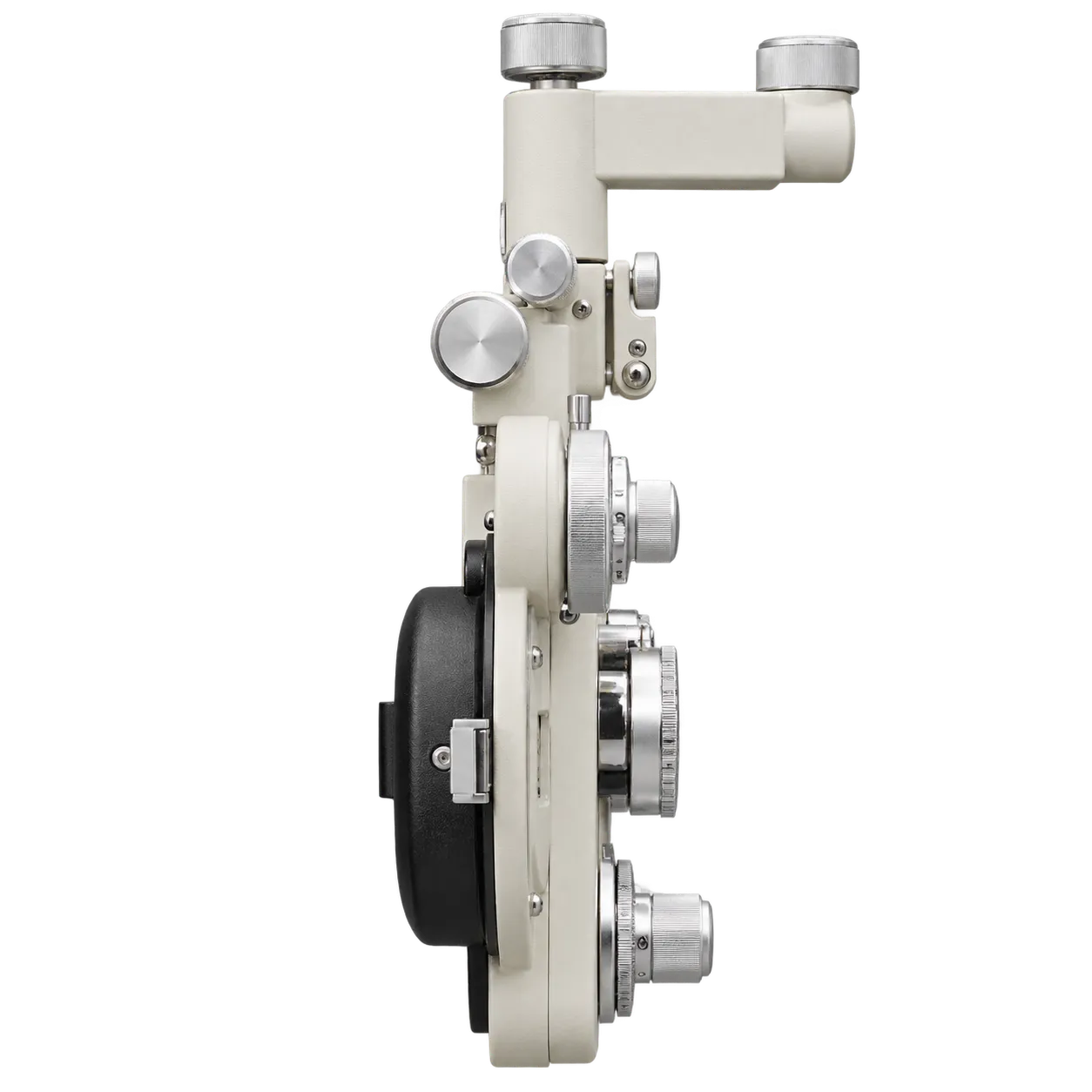
High-power refraction is where this instrument's positioning specification earns its place. Vertex distance alters effective lens power, and while the effect sits inside dispensing tolerance for ordinary prescriptions, it becomes clinically obvious above roughly ±10.00D. A graduated corneal distance device lets the clinician set a known vertex distance, record it alongside the prescription, and ensure the dispensed frame is fitted to match. Hospital eye service departments, aphakia and post-surgical refraction, and specialist contact lens practices all see the patients for whom this is not a refinement but a requirement.
The 19 mm effective field of view serves a different population. Patients who find phoropters confining — and a substantial minority do — tolerate a more open aperture considerably better, and anxious or claustrophobic patients are more likely to complete a careful subjective sequence without rushing it. Practices seeing a lot of first-time or nervous patients benefit directly.
The dual cross cylinder strengths support patients who cannot reliably discriminate a ±0.25D flip: those with reduced acuity, cataract, cognitive difficulty or simple end-of-appointment fatigue. Presenting ±0.50D gives them a comparison they can actually make, which is often the difference between a completed refinement and an abandoned one.
Routine community optometry is served by the standard specification: sphere to +16.75D and -19.00D, cylinder to -6.00D or -8.00D with the auxiliary lens, 0.12D minimum reading with the fine lens, synchronised cross cylinder refinement and rotary prism to 20Δ. Two limitations deserve honest weight. Convergence is supported for interpupillary distances of 57 mm to 80 mm, so narrow-PD patients need trial frame near testing. And the 5° astigmatic axis step is coarse relative to the rest of the specification, warranting trial frame confirmation of axis on high cylinders.