
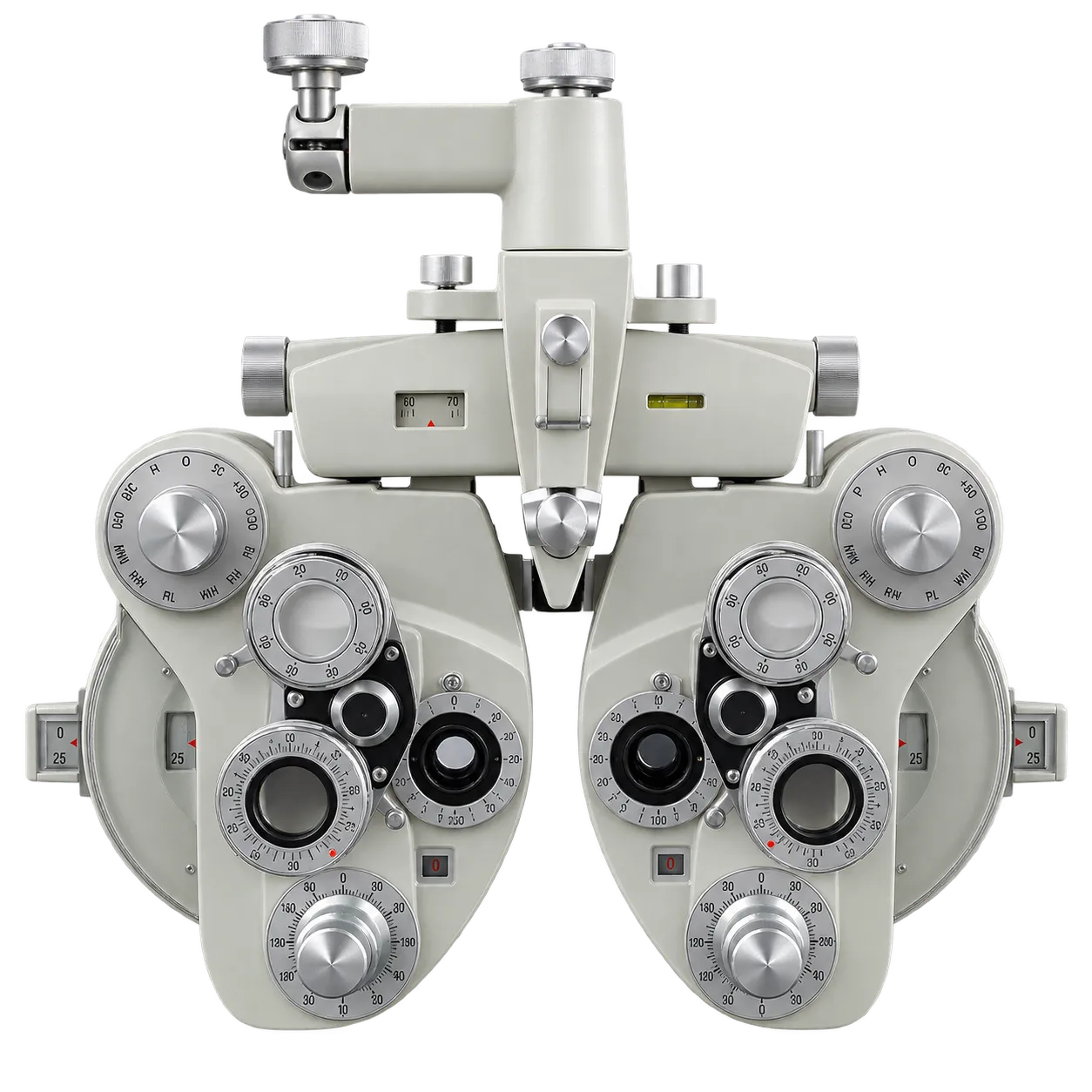
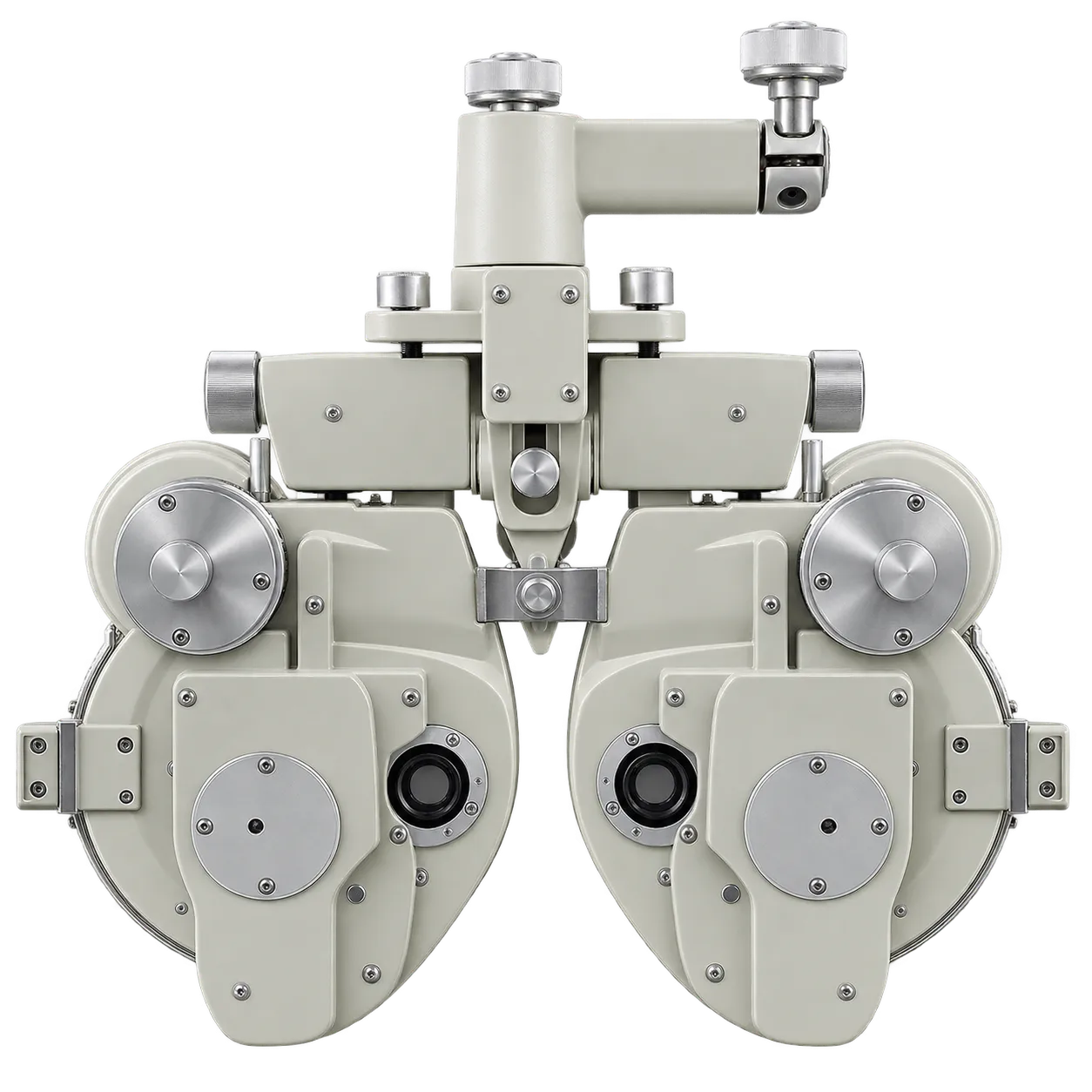
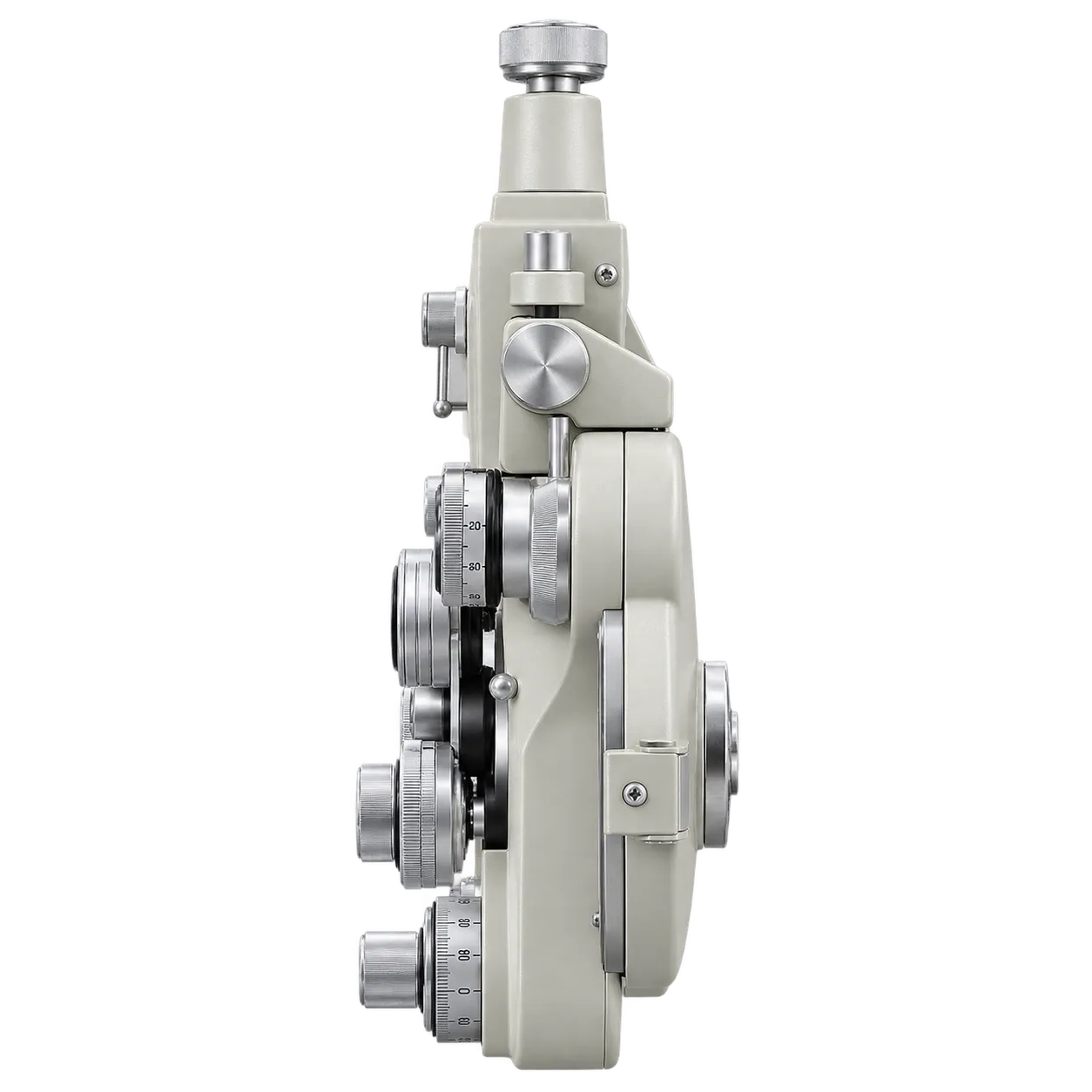
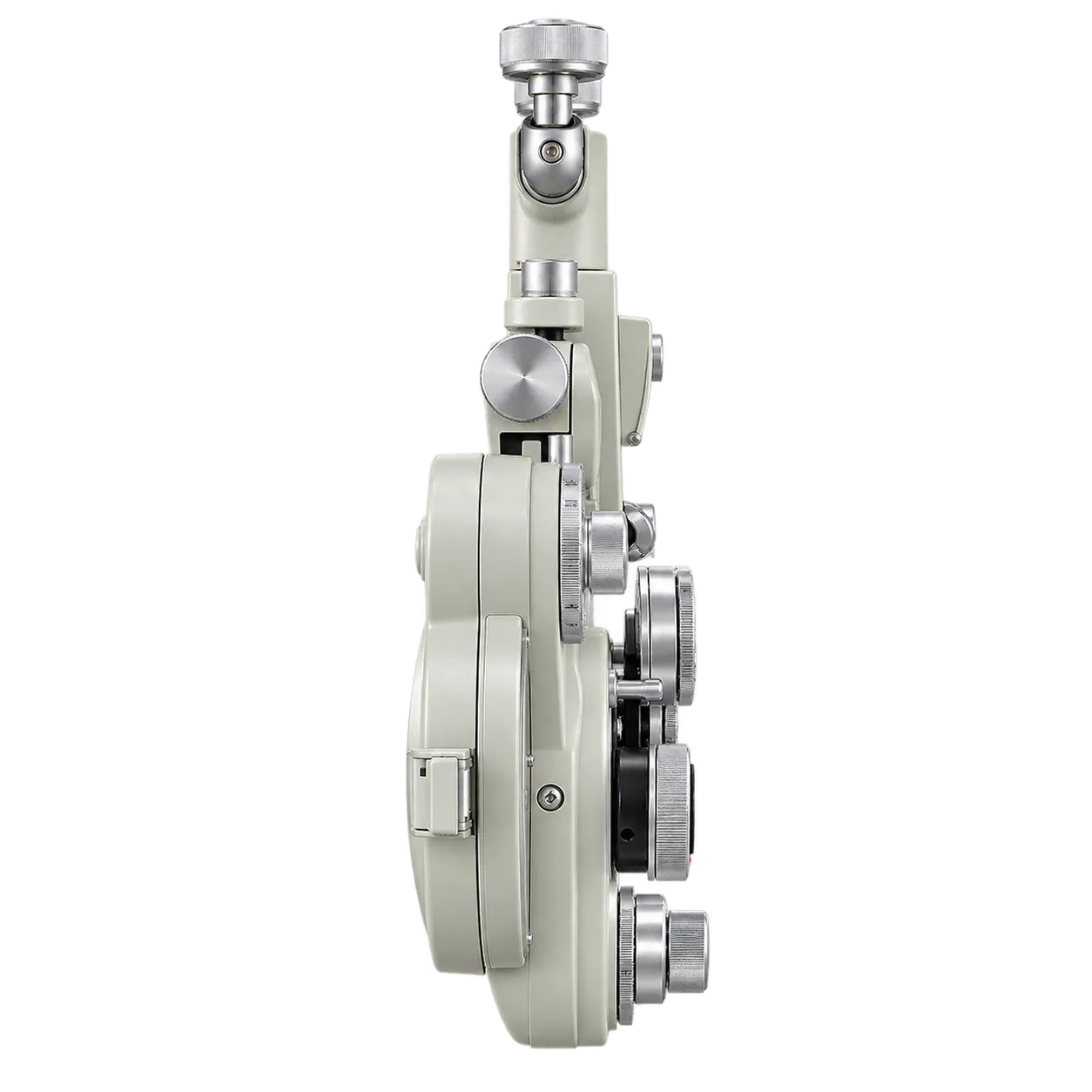
Binocular vision assessment is the natural focus for this instrument. A substantial proportion of patients presenting with headaches, eyestrain, intermittent blur or difficulty sustaining near work are experiencing a binocular problem rather than a refractive one, and a phoropter that supports phoria and vergence measurement properly is what separates finding that from missing it. The rotary prism to 20Δ in single-dioptre steps keeps the whole von Graefe sequence inside one continuous examination, without the dissociation being lost while a loose trial prism is located.
Practices building a binocular vision or orthoptic-adjacent service have a concrete technical basis here. Convergence insufficiency, decompensating heterophoria and fusional vergence deficiency are all common in the display screen equipment population, and they are frequently under-investigated in general sight testing because the examination time and equipment make it awkward. An instrument that makes the measurement straightforward changes what a practice can reasonably offer.
Hospital eye service and shared-care pathways use the same measurements for prescribed prism, and the 1Δ resolution is fine enough for the small stabilising corrections where the difference between one and two prism dioptres is perceptible to the patient.
Routine community refraction is covered by the standard specification: sphere to +16.75D and -19.00D, cylinder to -6.00D or -8.00D with the auxiliary lens, 0.12D minimum reading with the fine lens fitted, and synchronised cross cylinder refinement. Two limitations deserve honest weight, and one is specific to the binocular emphasis. The 5° astigmatic axis step warrants trial frame confirmation on high cylinders. And any phoropter needs an upright seated patient able to reach the head — which matters more than usual here, since a meaningful share of binocular vision referrals are paediatric and will require trial frame and loose prism assessment instead.