
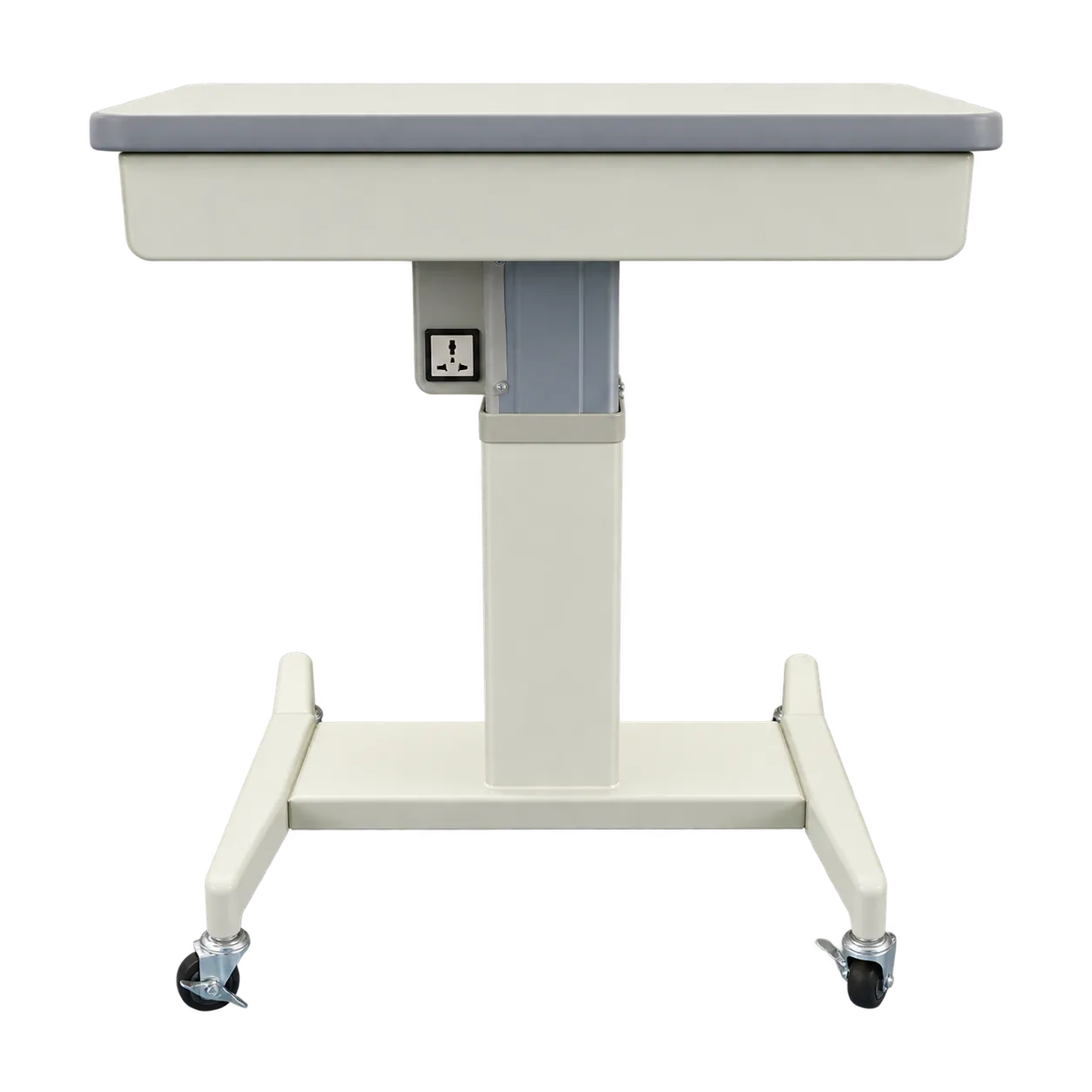
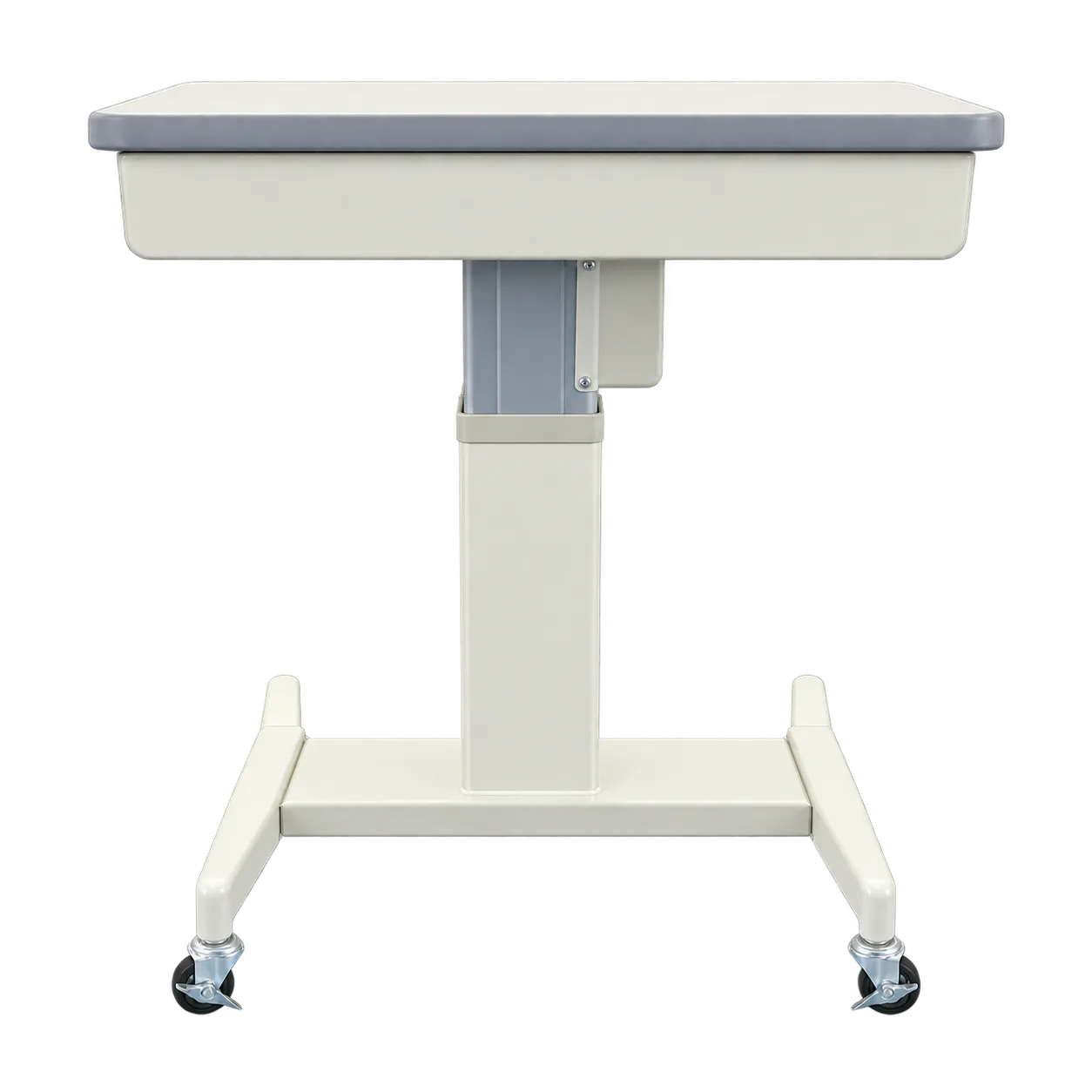
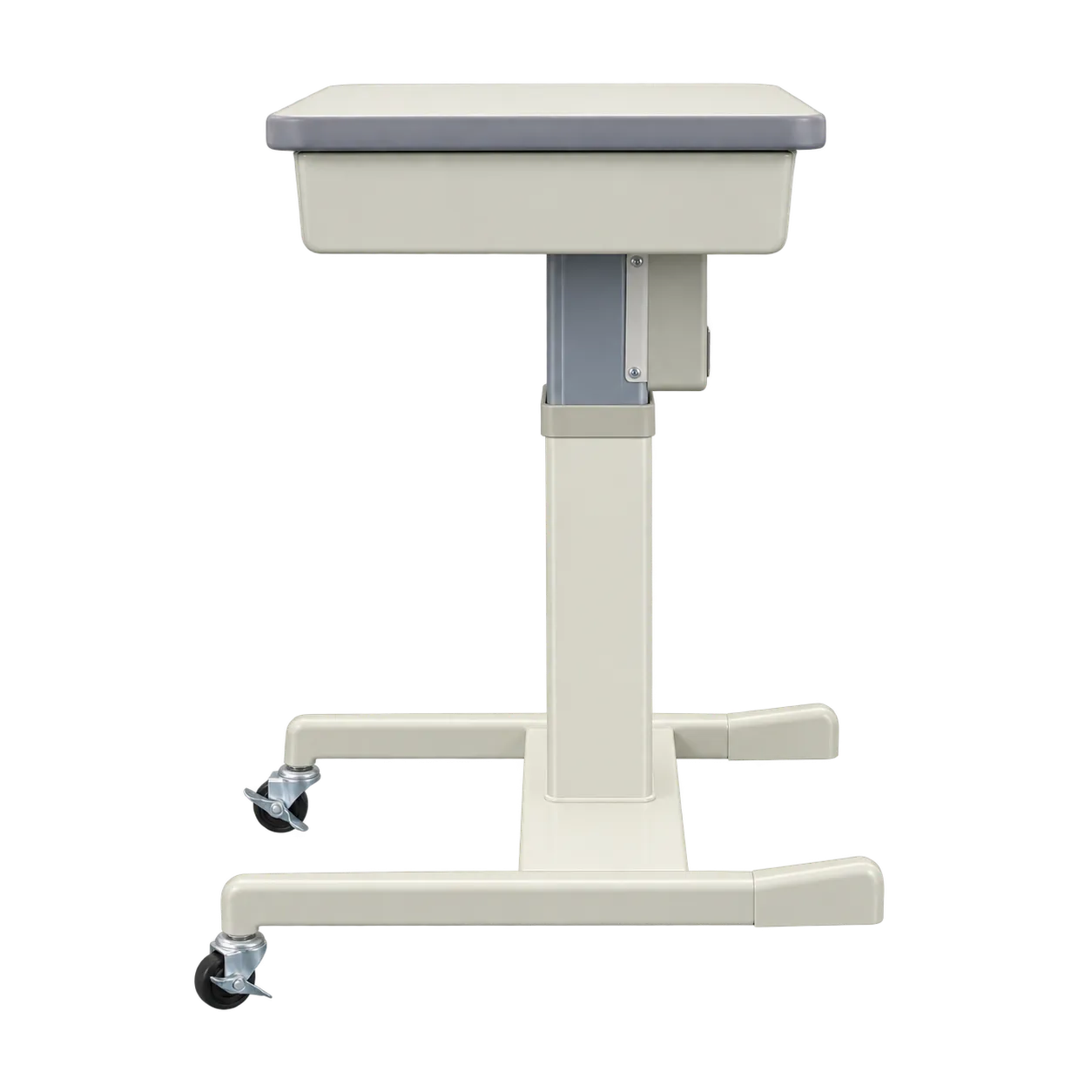
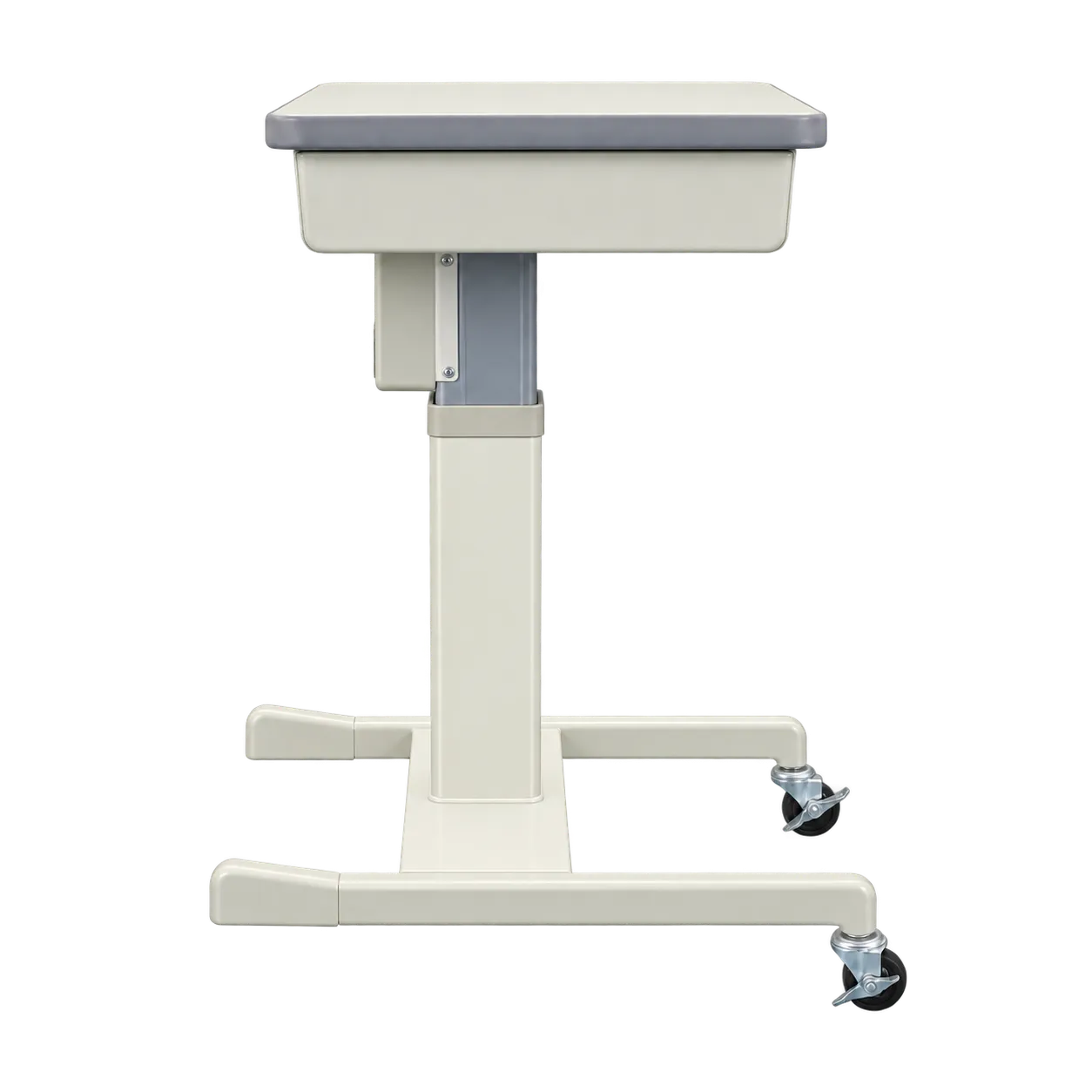
Pre-test rooms are the natural home. An autorefractor, keratometer or tonometer plugged into the table's own outlet needs only one lead to the wall, and small accessories stay in the drawer. The result is a tidier room, fewer trip hazards and an assistant who is not hunting for chinrest papers between patients.
Dispensaries suit it well. A lensmeter on the top, with frame rules, adjustment tools and job tickets in the drawer, makes a compact verification station that can roll aside when the space is needed. The shallow 420 mm top keeps it neat against a wall.
Contact lens rooms can pair a keratometer on the top with fluorescein strips, lens cases and removal tools in the drawer, supporting efficient aftercare and the thorough records the GOC expects.
Multi-room practices benefit from the castors and the column outlet together. The table can be wheeled to a new room and plugged into a single wall socket, with the instrument already connected. Lower the top and secure the instrument before moving.
Hospital eye service outpatient clinics and university optometry clinics can use it where rooms are shared and reconfigured, and where tidy cabling supports safety audits.
Slit lamp positions can use the 100 kg rating and drawer for accessories, although a lean test is worthwhile for movement-sensitive work.
Longer autorefractors should be checked against the 420 mm depth before ordering.
Wheelchair users are partly served. The drawer box, column and base limit clearance, so practices with many wheelchair users usually keep a dedicated accessible position as well.