
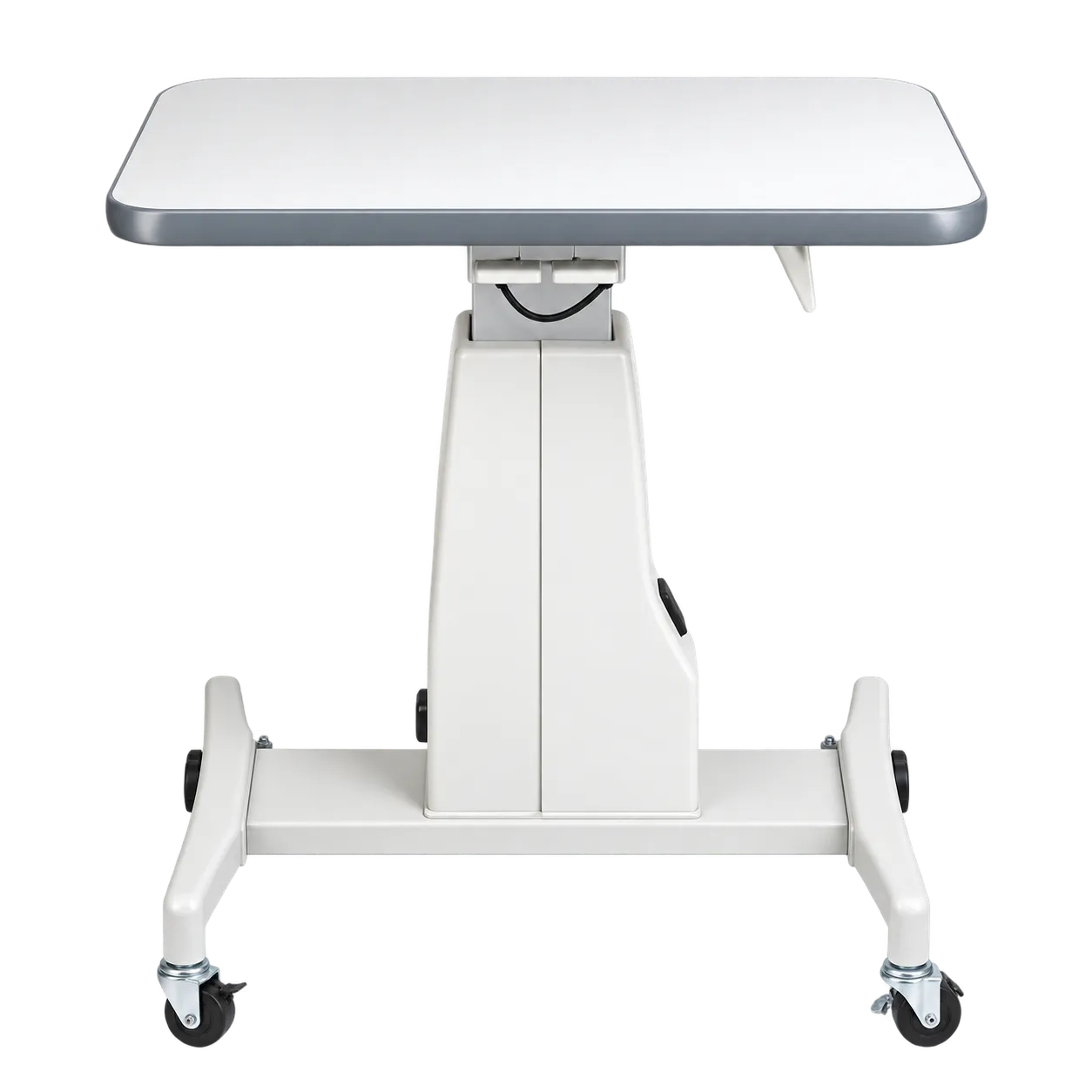
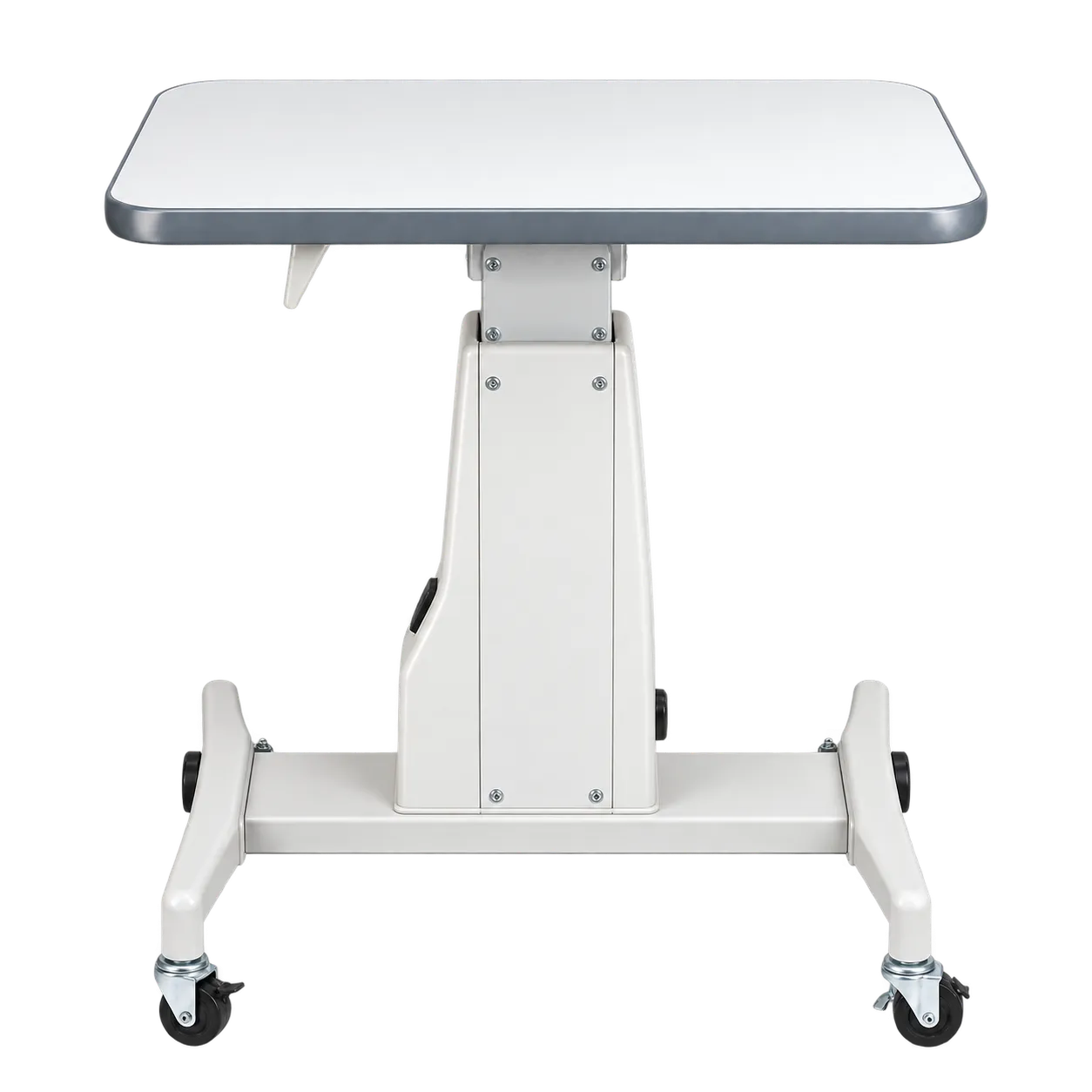
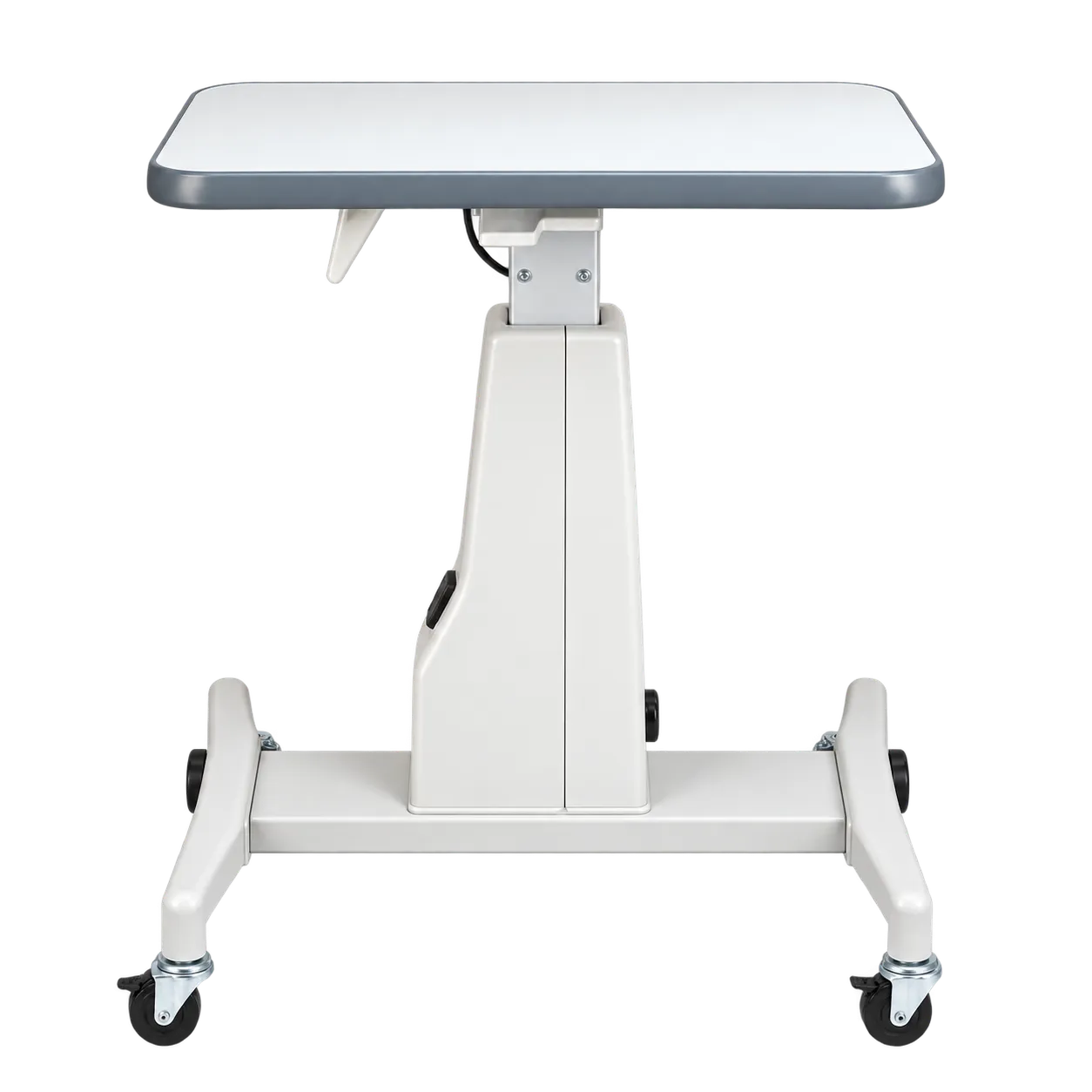
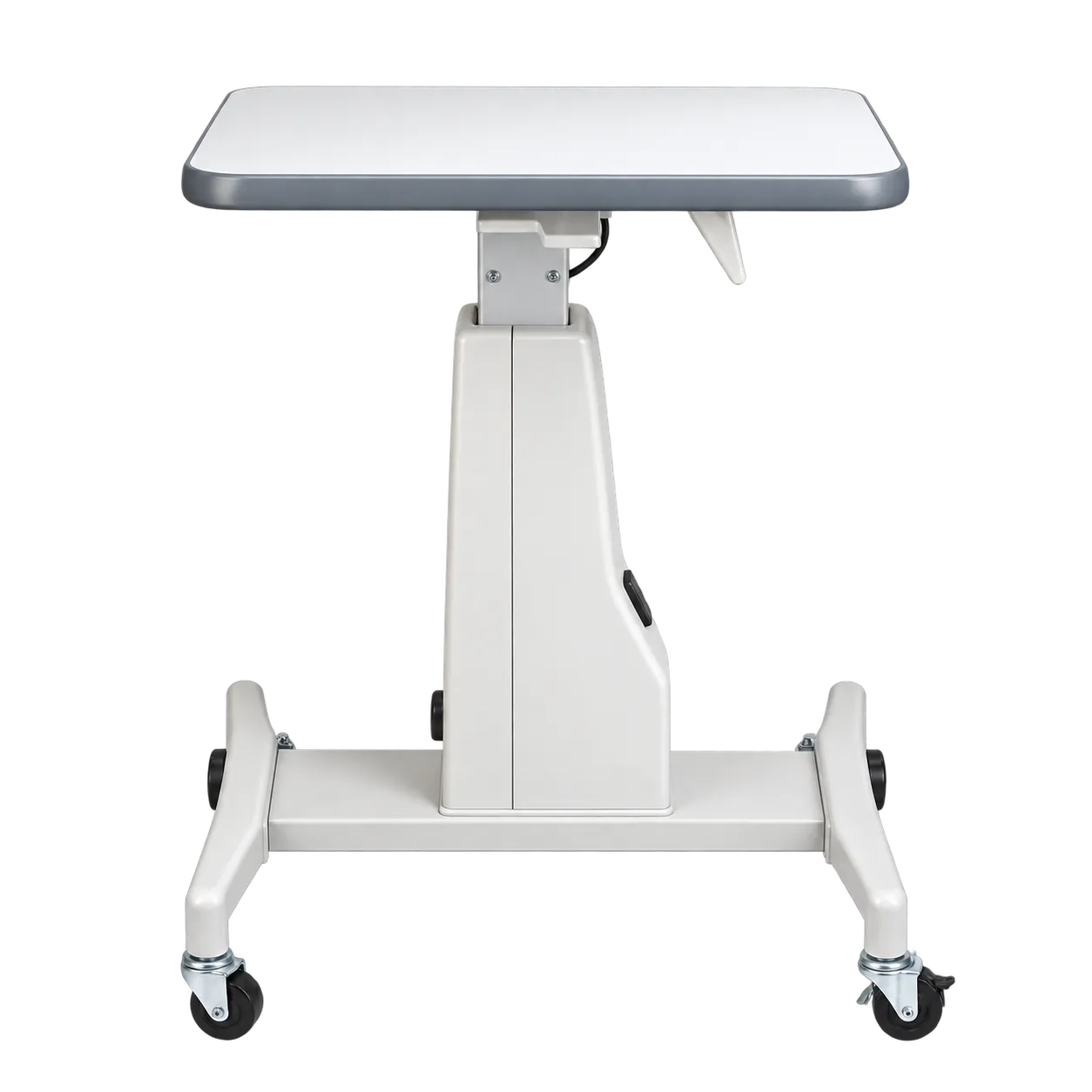
Connected pre-test positions are the natural home. Where an autorefractor or tonometer sends results to the practice record system, a keyboard has to live somewhere, and a top with margin beside the instrument keeps it off a chair or a second table. That supports the accurate, contemporaneous records the GOC expects.
Printing instruments benefit similarly. Autorefractor slips and tonometry printouts need somewhere to land, and a patient's spectacles, case or hand need a resting place while measurements are taken.
Contact lens rooms can keep fluorescein strips, lens cases and cloths on the top beside a keratometer, with consumables in the side tray.
Patient-facing rooms suit the moulded base, which looks more finished than an exposed steel frame and presents fewer edges at ankle height. Practices with strict cleaning routines should ask about access beneath the moulding.
Slit lamp positions gain from the space beside the instrument for a tonometer prism, a condensing lens or fluorescein, subject to a lean test for movement-sensitive work.
Multi-room practices can move the table at 21 kg on castors, so a well-equipped position is not fixed to one room.
Paediatric use needs the height checked first, since the 665 mm lowest setting is a little above the lowest tables available.
Wheelchair users need the approach checked, since a moulded base may project further at floor level than an open frame.