
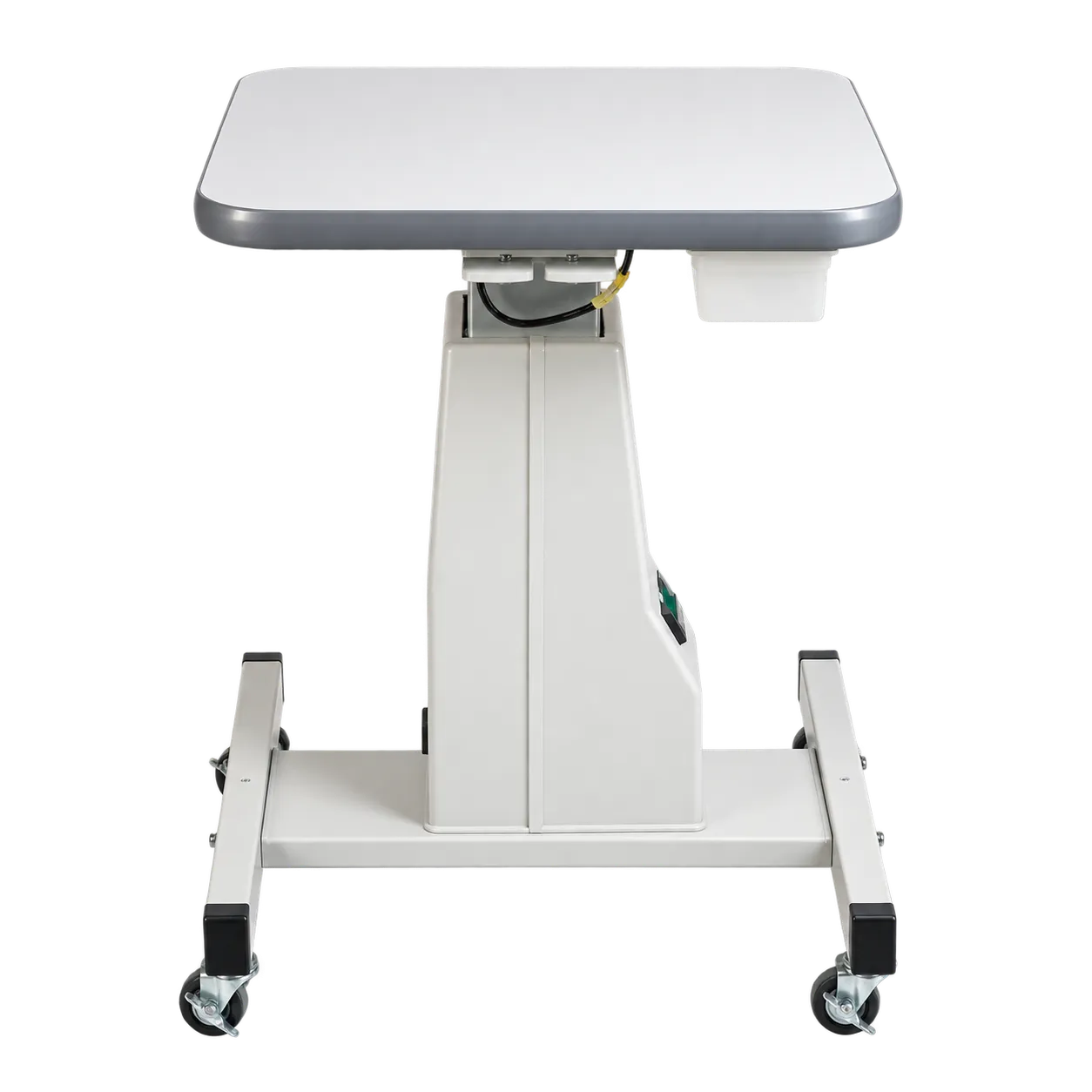
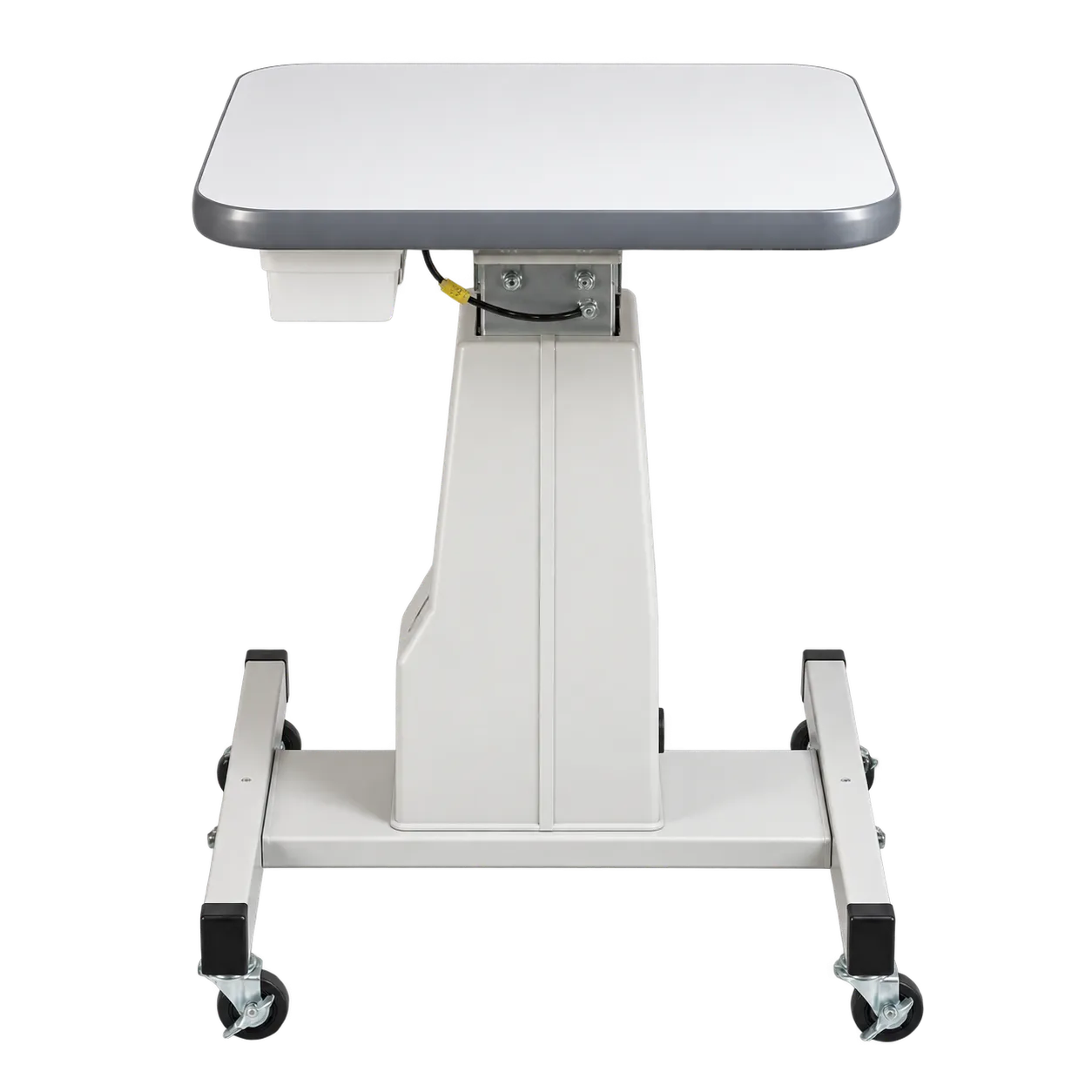
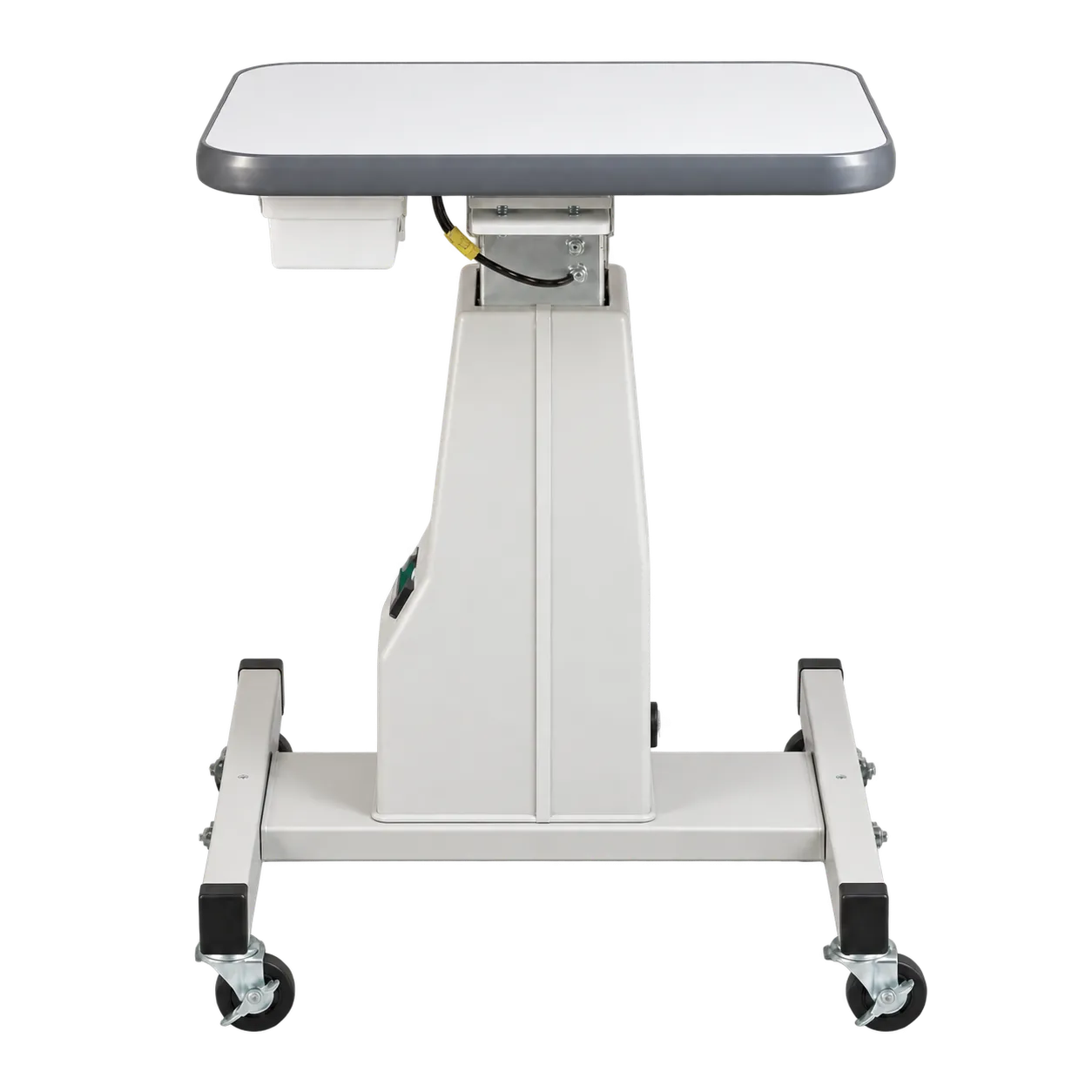
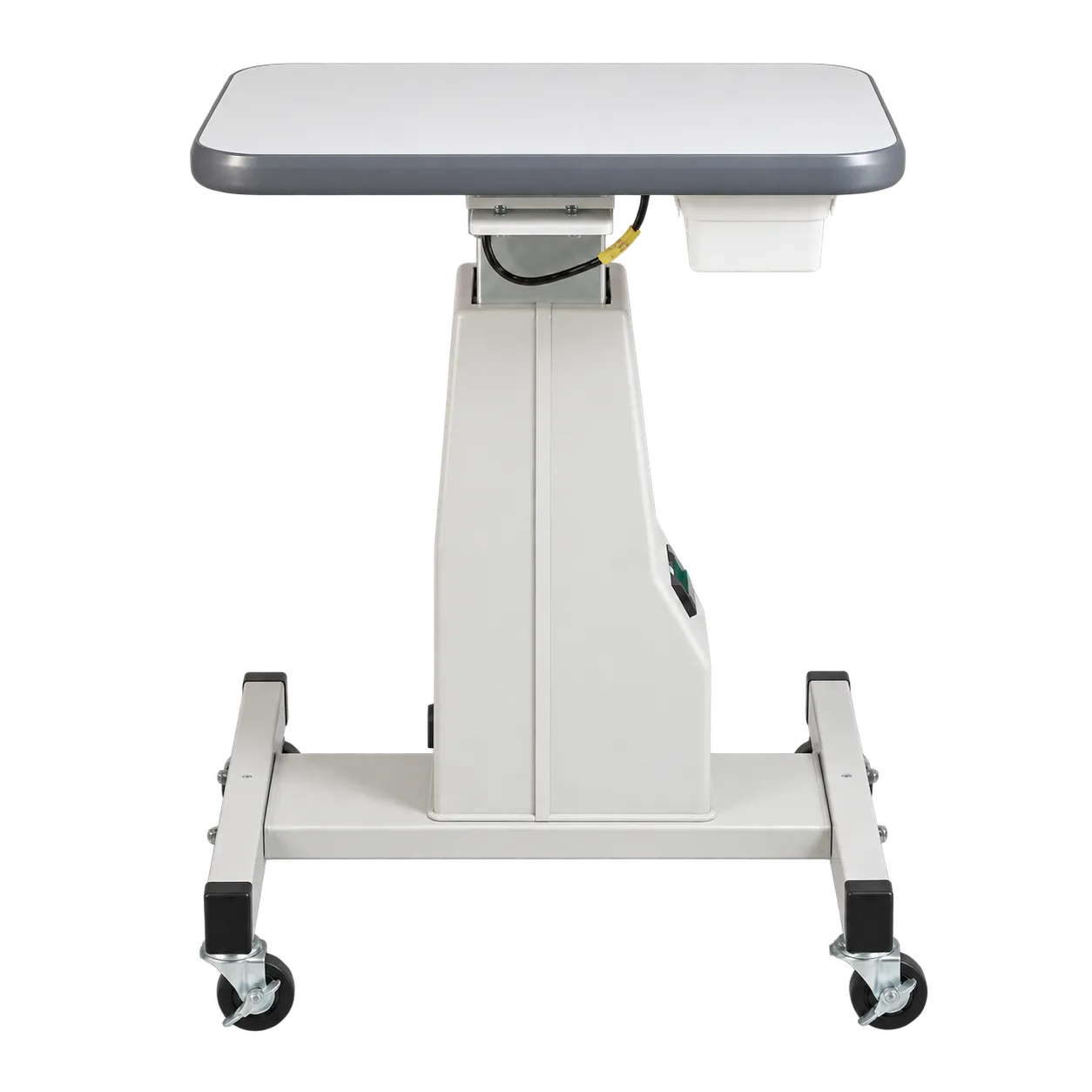
Rooms that get reconfigured are the natural home. Practices running different clinics through the same space, or moving between refraction and pre-test layouts, gain from a table that can be turned or wheeled without ending up facing the wrong way.
Shared instrument positions benefit similarly. Where one lensmeter or tonometer serves two rooms, the table can be moved and turned to suit whichever layout it arrives in.
Left- and right-handed clinicians sharing a room can each set the approach they prefer, since the top offers the same edge in every direction.
Compact pre-test positions suit the 480 × 480 mm footprint, which takes a single instrument with a little margin in any direction.
Contact lens and dispensing rooms can use it as a movable keratometer or lensmeter station, with consumables in the side tray.
Teaching clinics gain from a table that students can reposition for demonstration without a second person.
Heavier imaging work is outside its scope, since 60 kg is modest for this range and combined imaging systems belong on a higher-rated table.
Paediatric use needs the height checked, since the 665 mm lowest setting is a little above the lowest tables available.
Wheelchair users should be trialled, since turning the table may improve or worsen the approach depending on how the H-frame sits.