
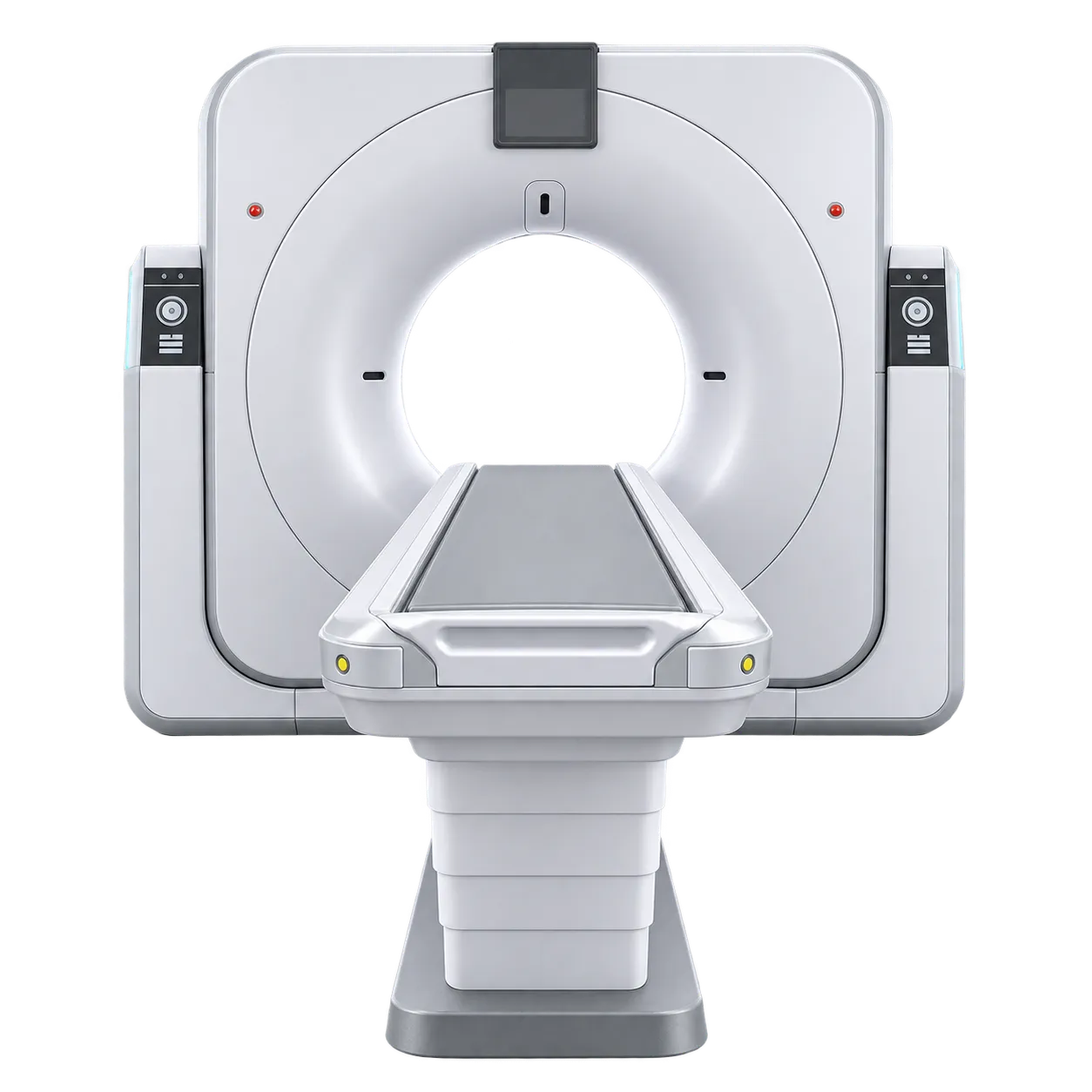
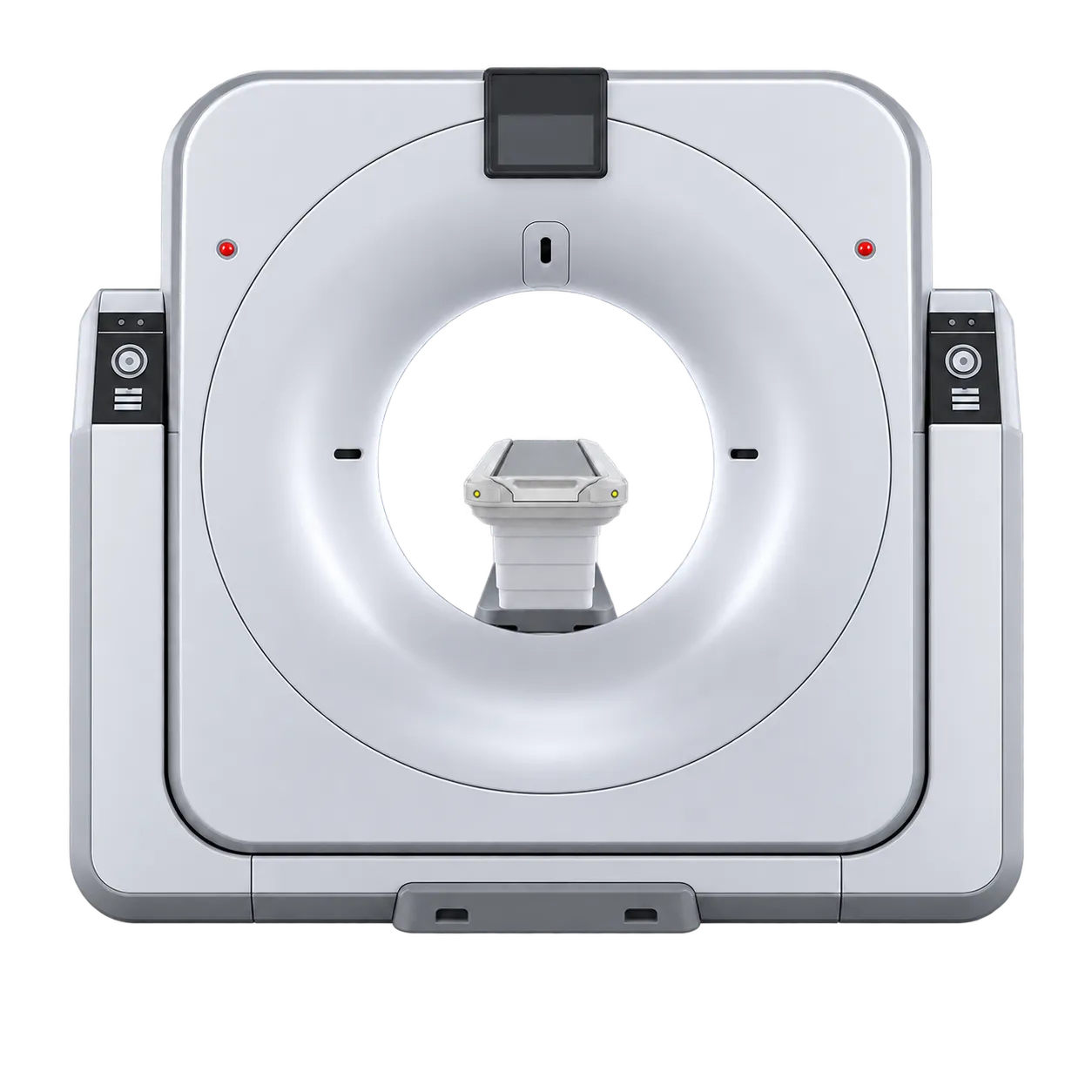
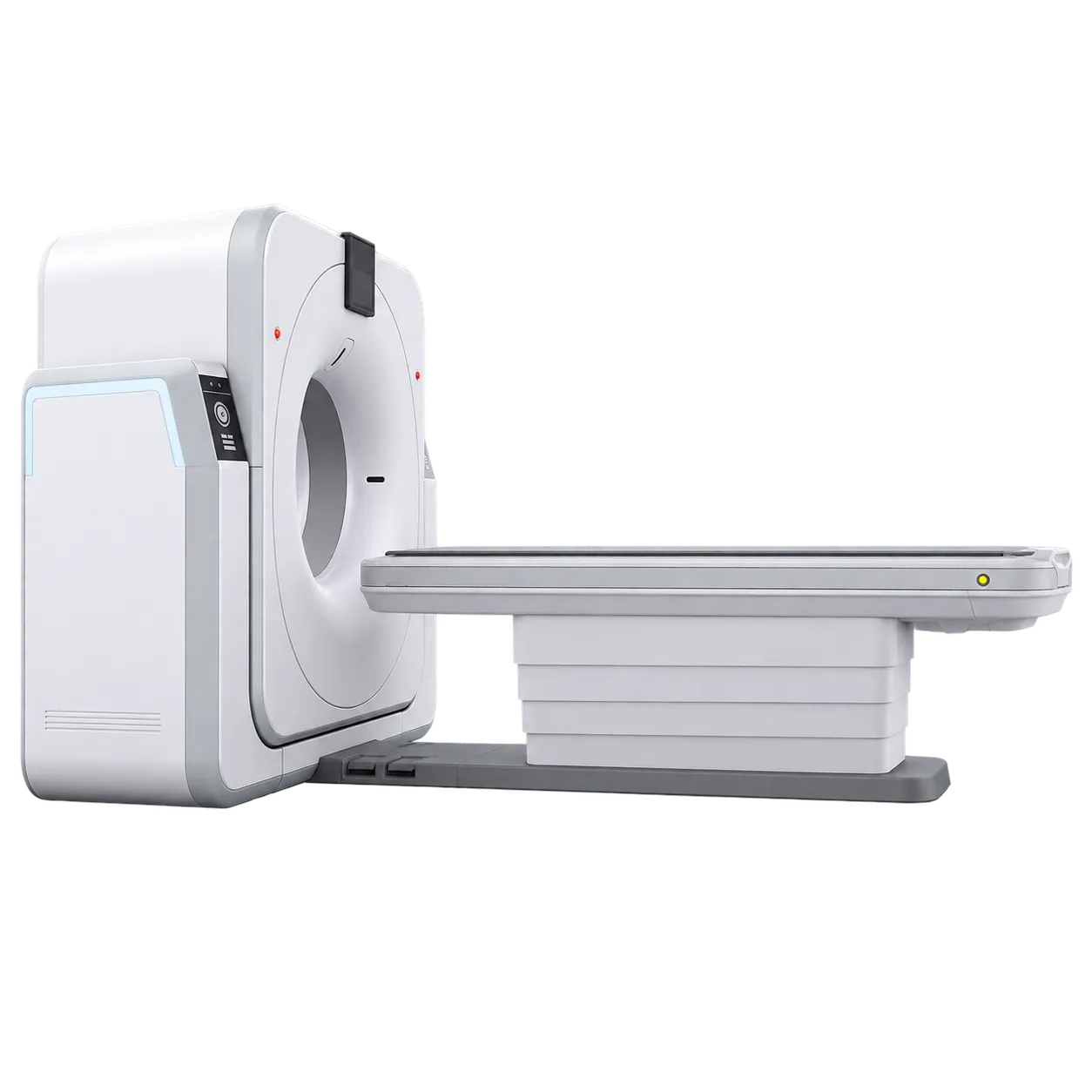

General diagnostic imaging across the head, chest, and abdomen is a primary application for this system, illustrated in Visionstar's own material with head and neck cross-sections, lung imaging, and pelvic 3D reconstruction. The 76cm bore and 50cm scan field of view are intended to accommodate a broad range of patient sizes and positioning needs within routine diagnostic work.
Joint and musculoskeletal imaging forms a second application, where Visionstar specifically positions the confirmed 0.39 second rotation speed as suited to joint examination, where motion during a longer scan can otherwise reduce image clarity. The system's flying focal spot technology and multiple available reconstruction slice thicknesses down to 0.625mm support the fine spatial detail this kind of imaging generally requires.
CT angiography is a third important application, supported by confirmed contrast agent automatic tracking and trigger technology alongside CTA-specific post-processing and a maximum CTA scan range of 1850mm. This combination is intended to help time the scan to peak contrast enhancement and then process the resulting vascular images without requiring extensive manual adjustment during the study.
Paediatric imaging represents a fourth application, supported by a confirmed dedicated child mode alongside the system's dose-reduction technologies, including intelligent mA tracking and the iDream iterative algorithm, both intended to lower radiation exposure while preserving diagnostic image quality for a younger patient population. These applications reflect Visionstar's own confirmed product capability rather than independently verified clinical outcome data, and departments should request outcome or throughput data directly from Visionstar or Medigearuk before making a purchasing decision.