
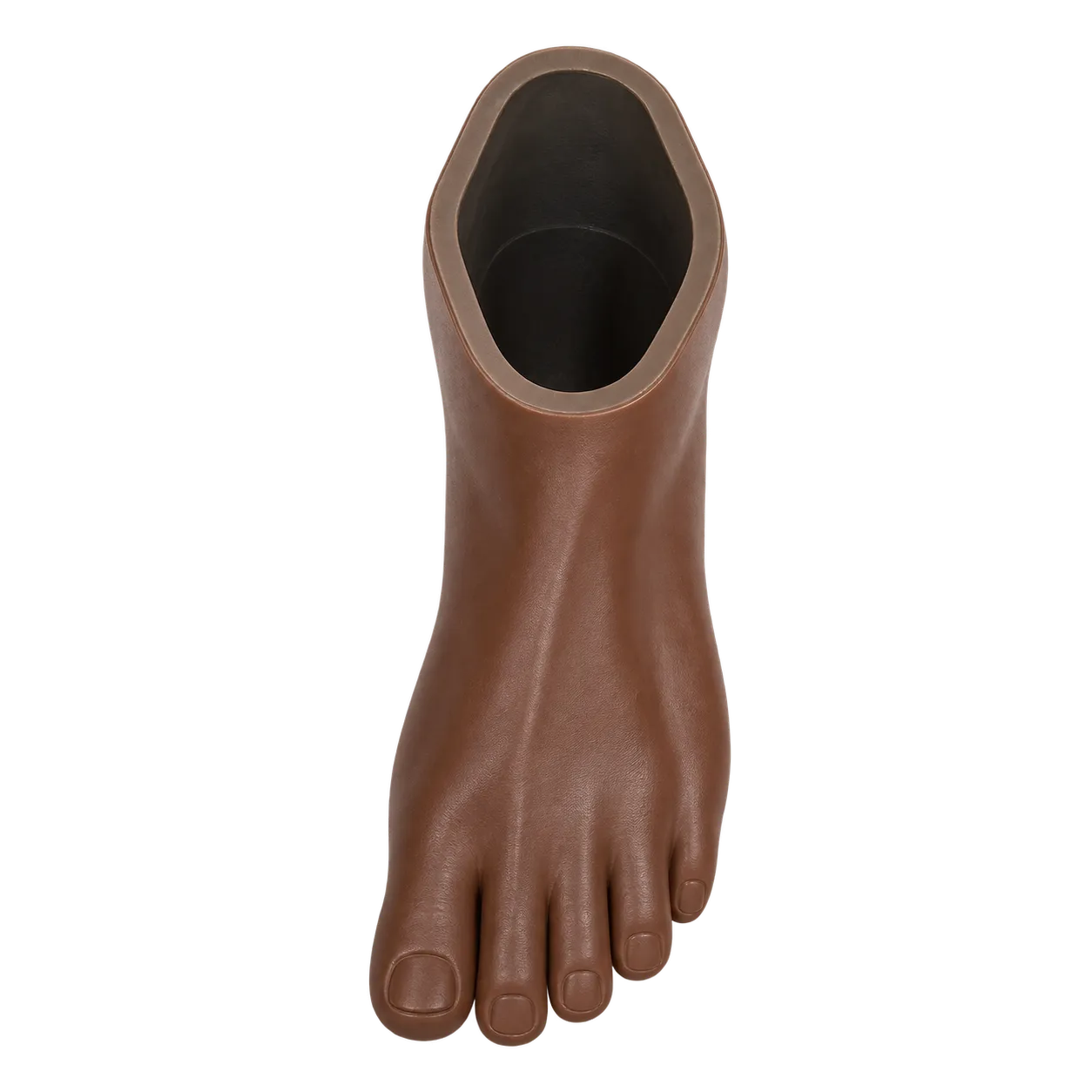
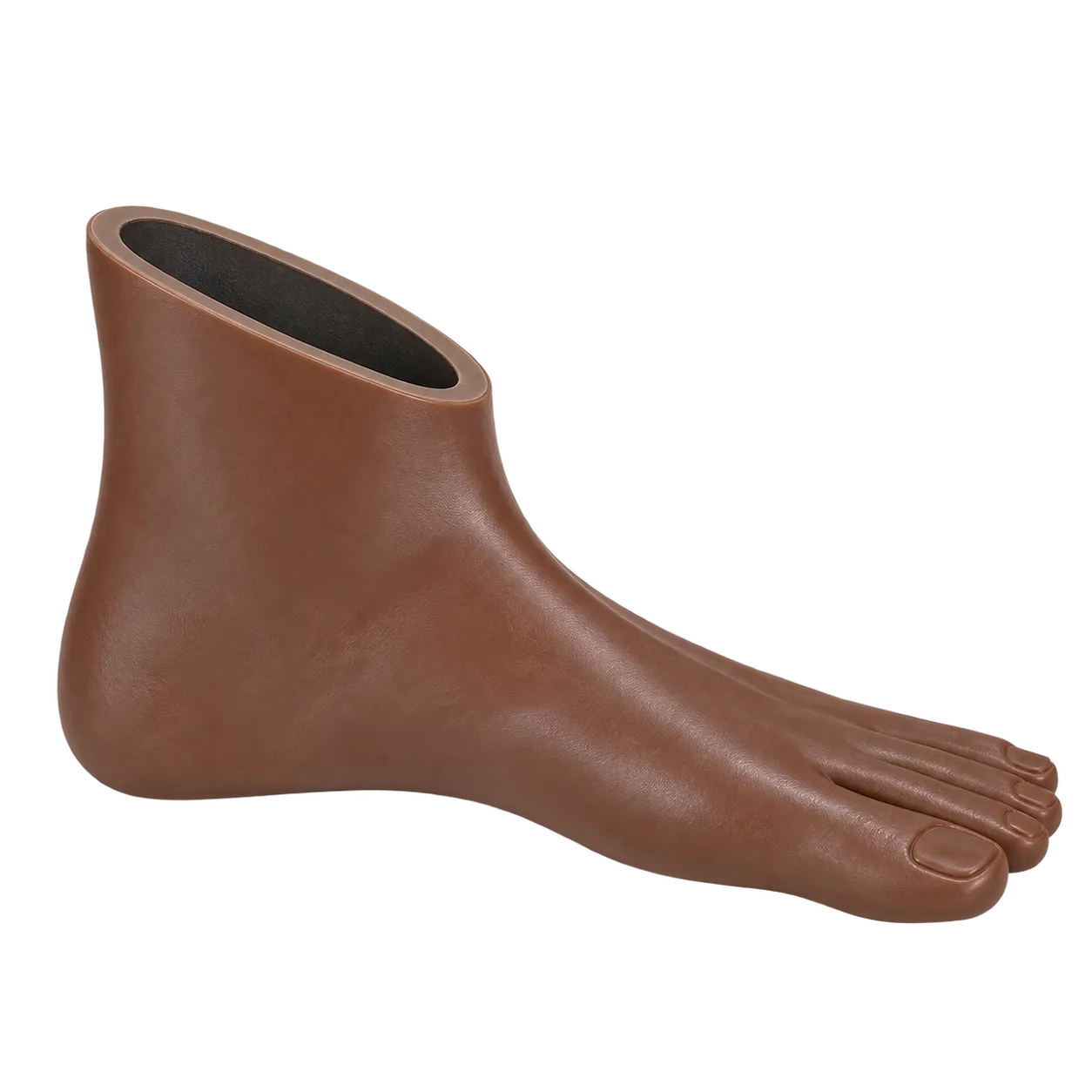
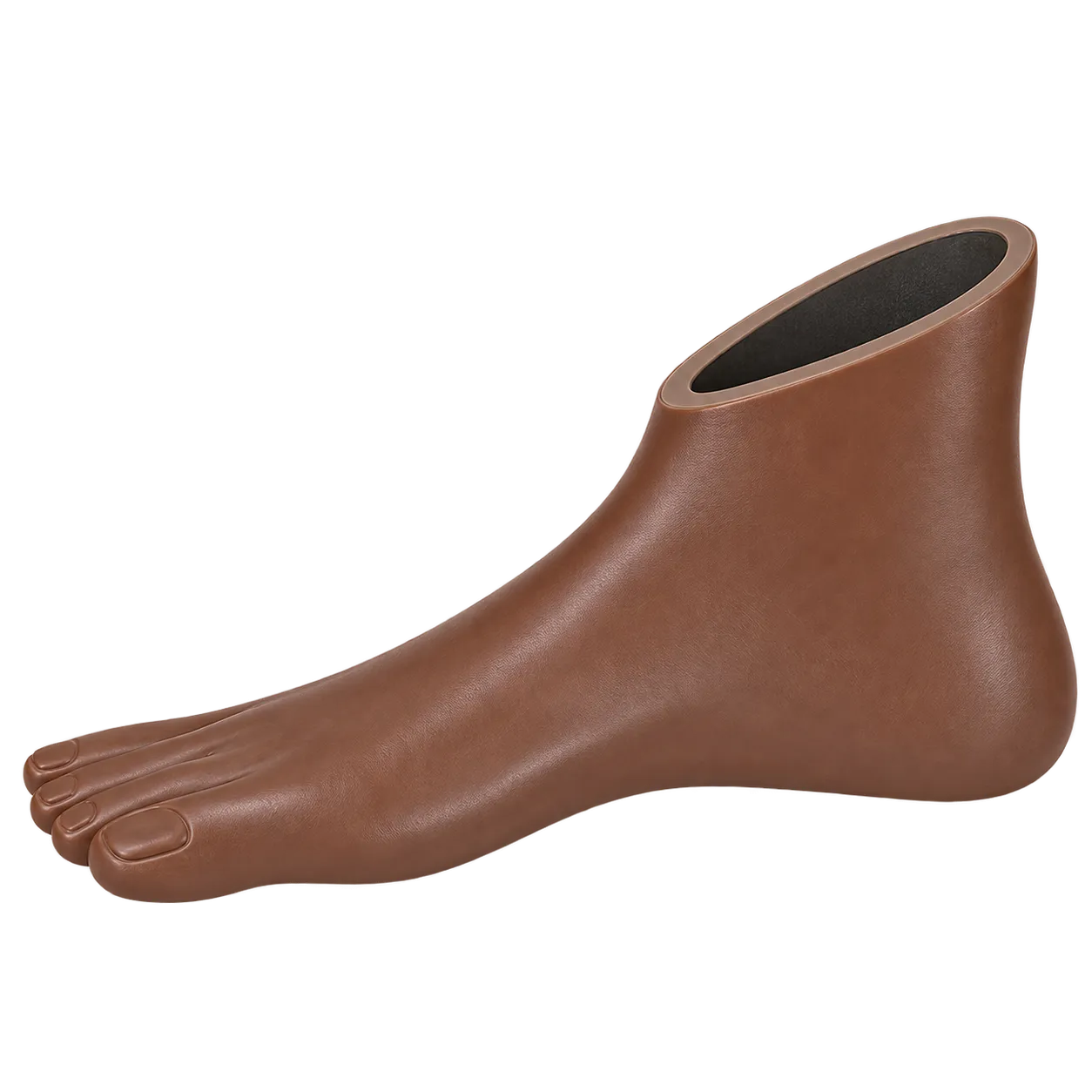
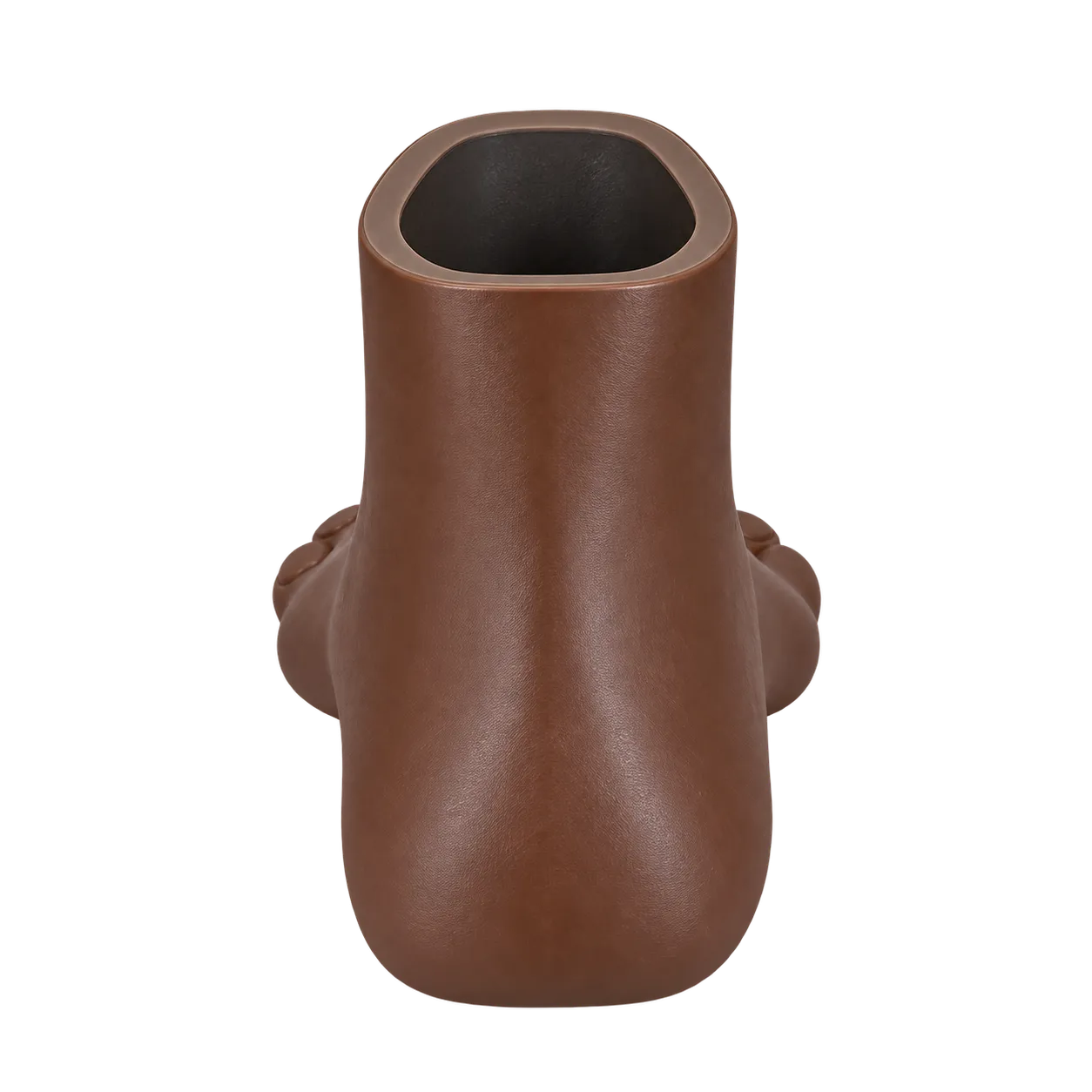
Keel-based foot assemblies rely on a shell for outline, shoe fit and protection of the working element.
Shoe fitting is determined by the shell, which sets both size and heel height for the assembly.
Alignment is affected by heel height, so a change of shell can alter the whole limb's alignment.
Users walking in wet or dirty conditions rely on the shell to keep debris away from the keel.
Keel dynamics are affected by shell stiffness, which matters most on energy storing feet.
Replacement is a routine event, since shells wear considerably faster than the keels they cover.
Clinics holding stock benefit from shells matched to the keels and sizes they routinely fit.