
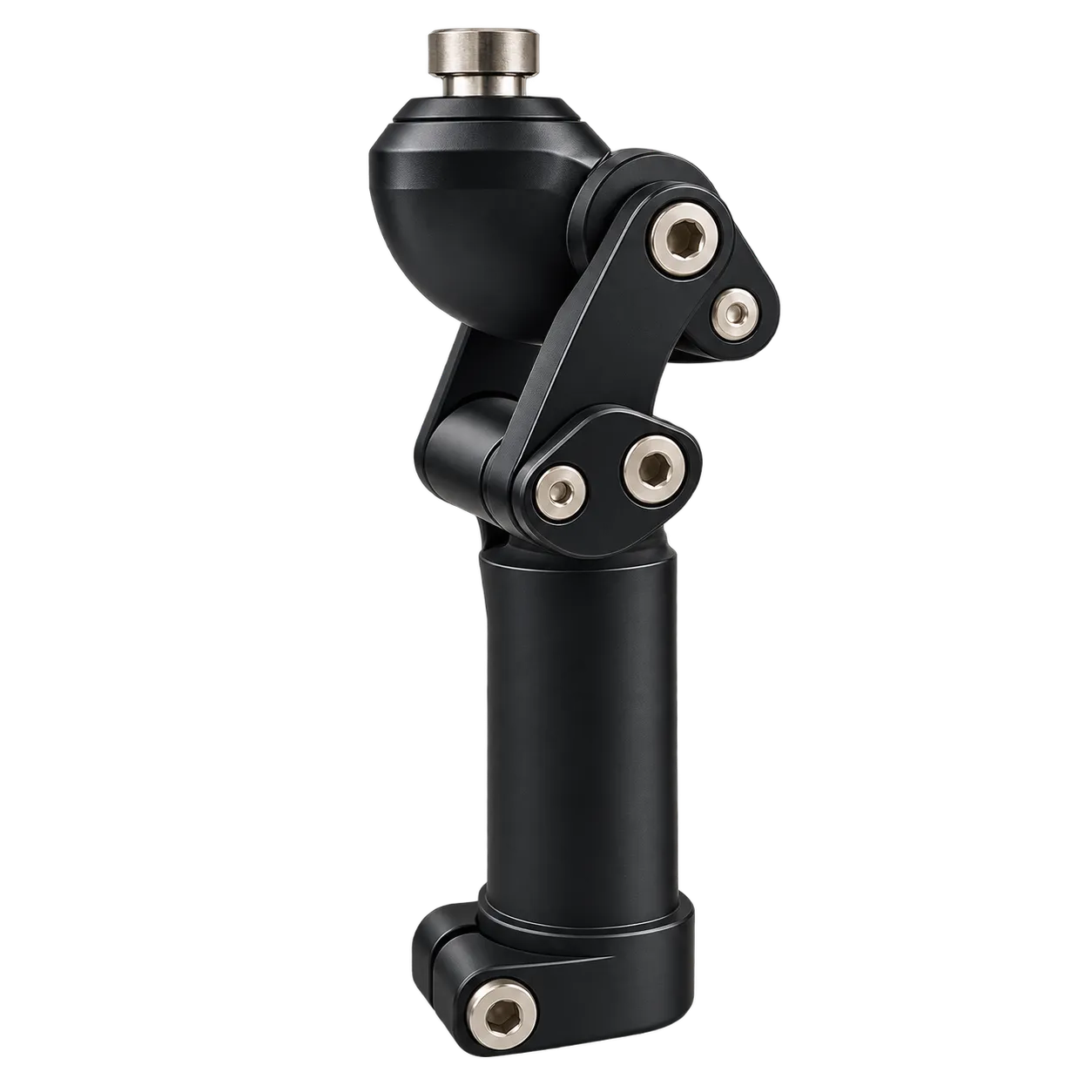
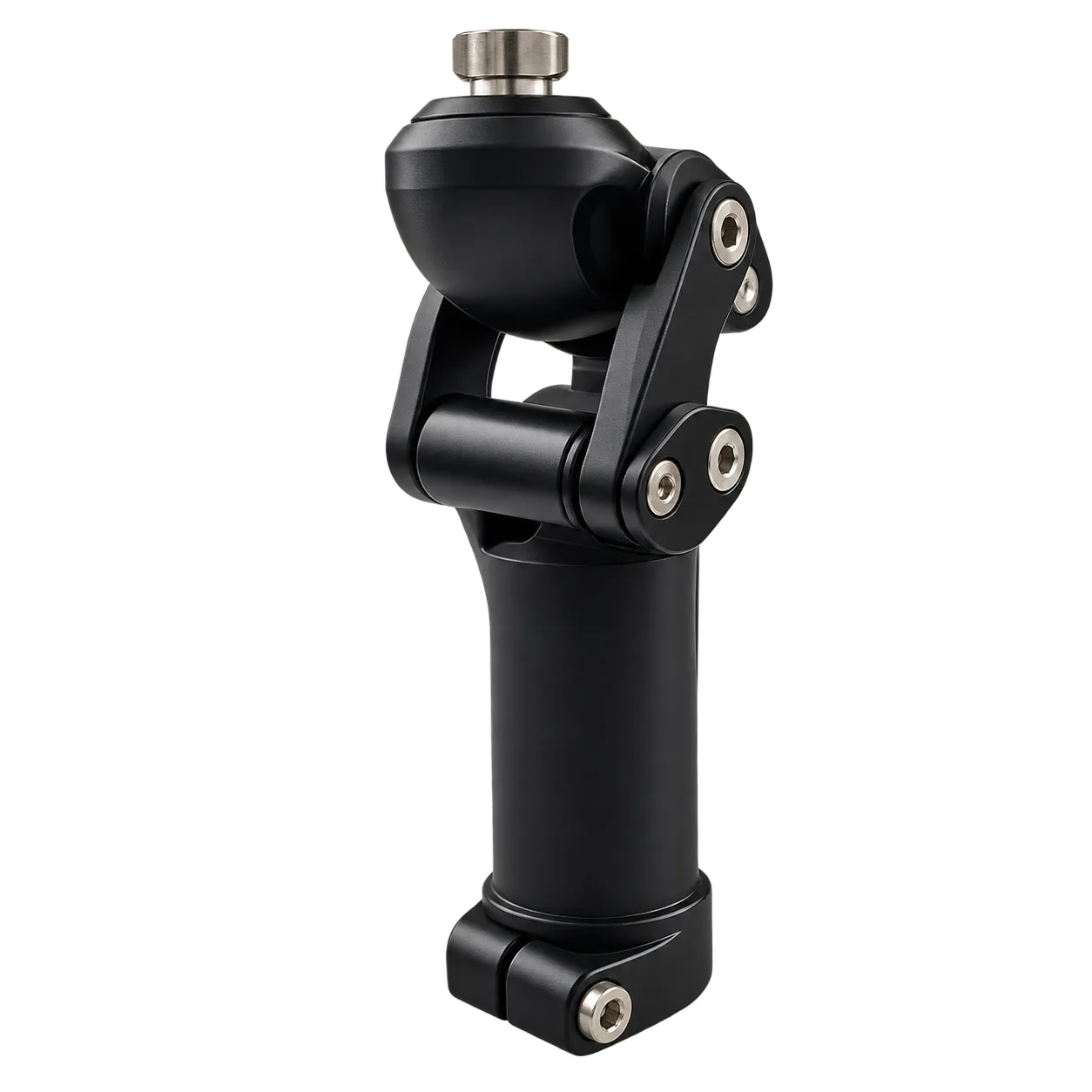
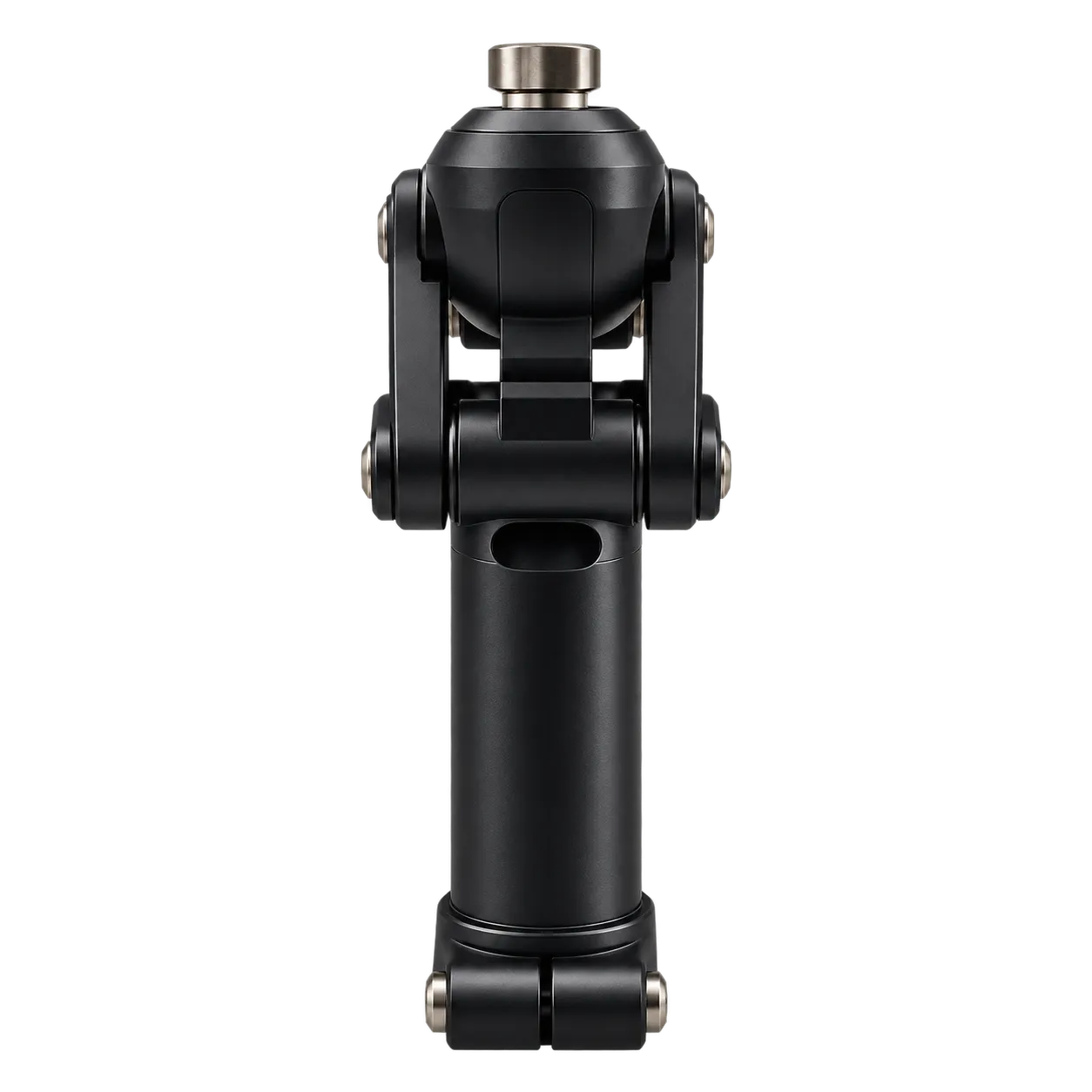
The 3F25P belongs in transfemoral and knee-disarticulation limbs for users whose day mixes walking speeds: a slow circuit of a supermarket, a quicker stretch to make a train, then a steady pace home. Its case rests on pairing stance security from the linkage with swing that answers cadence from the cylinder.
The mechanics behind each half are well described. A 1983 analysis of four-bar knees showed that stance is stable when the instantaneous centre of rotation lies behind the trochanter-to-ankle line, and that the linkage shortens as it flexes, improving toe clearance. For swing, clinical references note that air or fluid forced through a restriction resists harder the faster the knee bends, so one unit can serve several speeds.
The evidence on outcomes cuts both ways. A 2005 crossover trial of 10 transfemoral users compared fixed-setting pneumatic swing control with microprocessor-adjusted swing control. Oxygen cost was similar at 1.25 m/s (0.24 and 0.22 ml/kg/m), but at 0.69 m/s it reached 0.33 ml/kg/m with the fixed setting and 0.30 with the adjusted one (p=0.01). A 2021 study of 5 users found that raising swing flexion damping improved timing symmetry yet reduced minimum toe clearance. Both describe knee types, and the cylinder settings for this model come from its instructions.
Prosthetic centres, independent practices and limb-fitting charities can consider it for users at a moderate or higher functional level within the 100 kg planning figure. In England, NHS services source prosthetic knees through a mandated NHS Supply Chain framework, and equivalent public procurement elsewhere asks for the same documented supply. The conformity documentation those procurement routes require is issued by the manufacturer and shared by the enquiry team.