
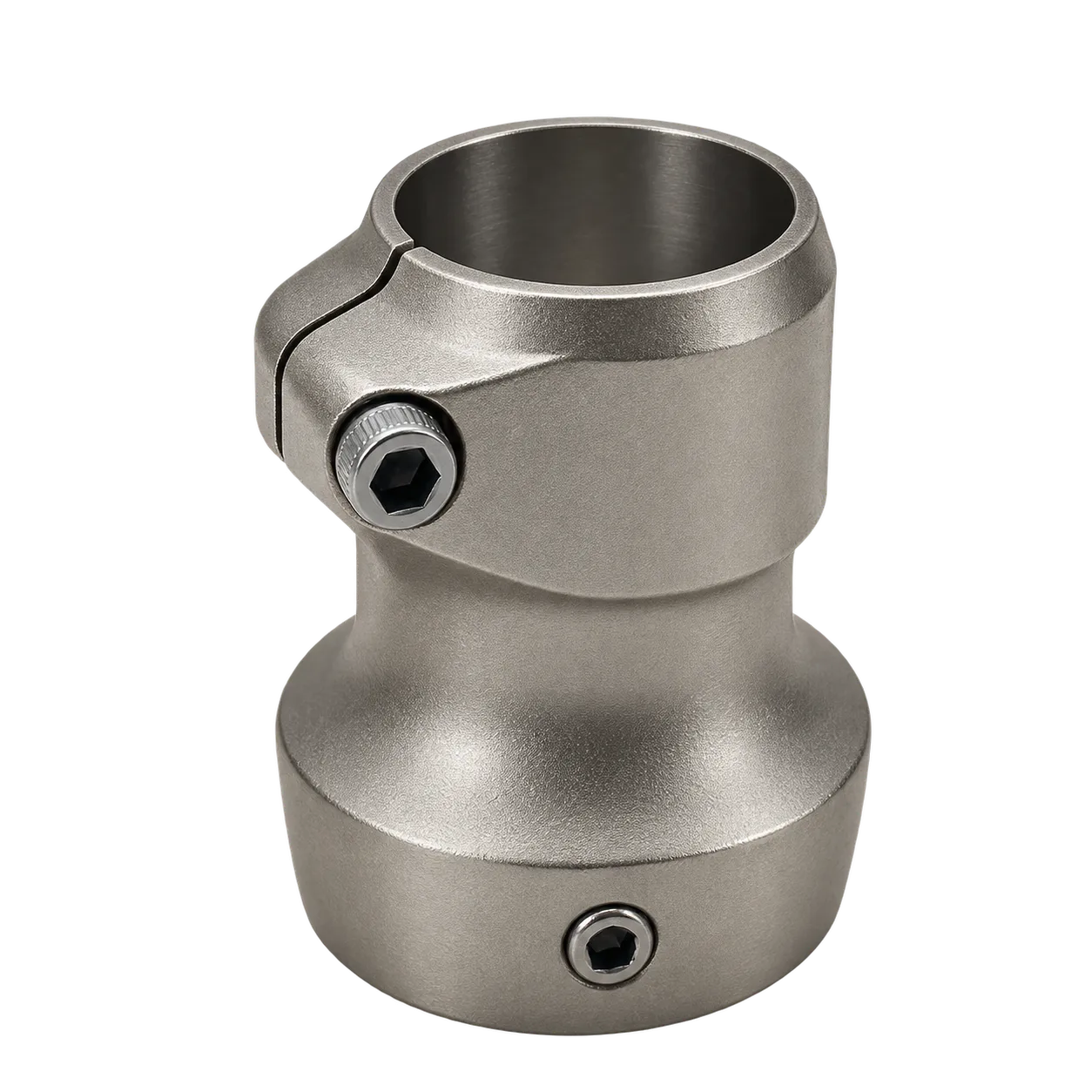
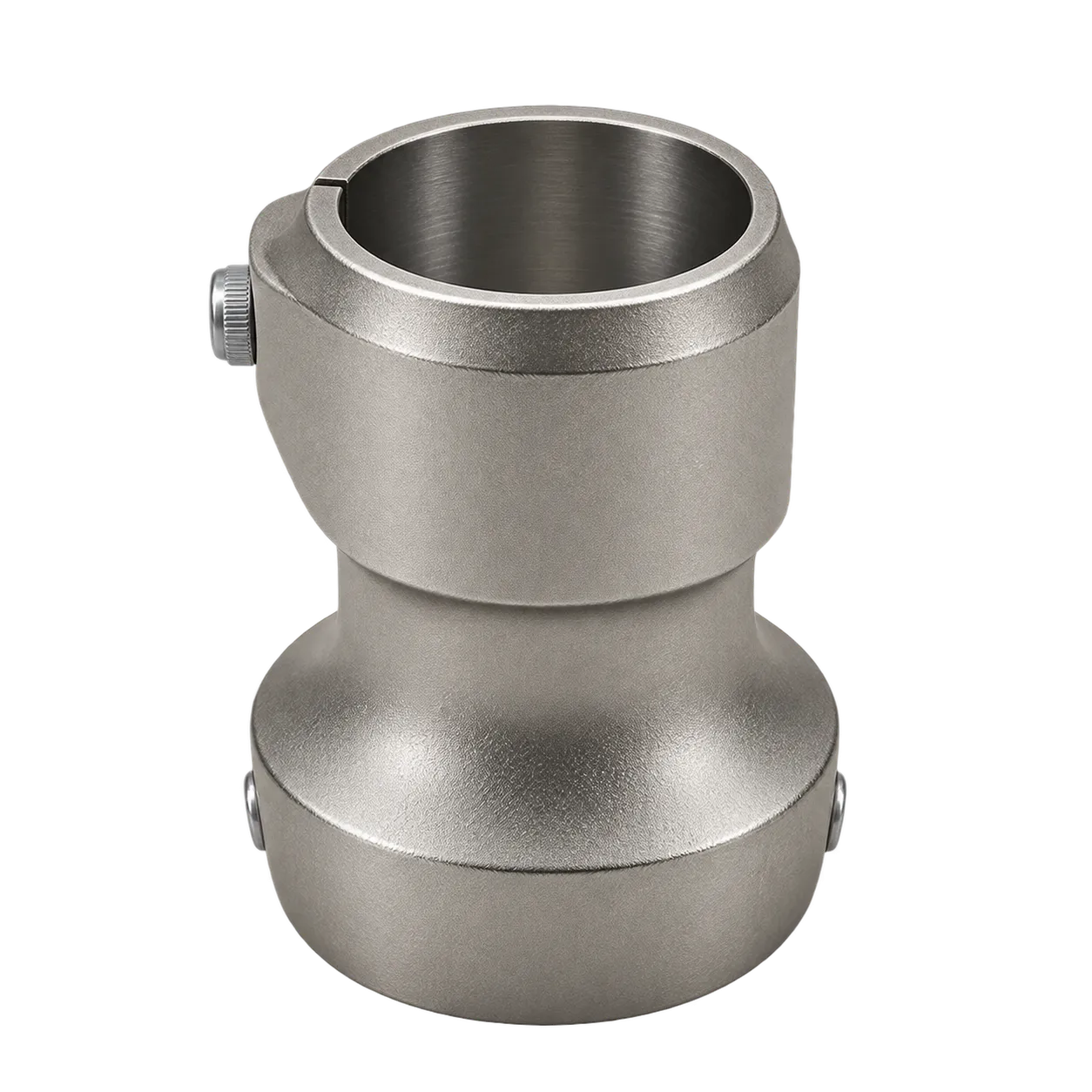
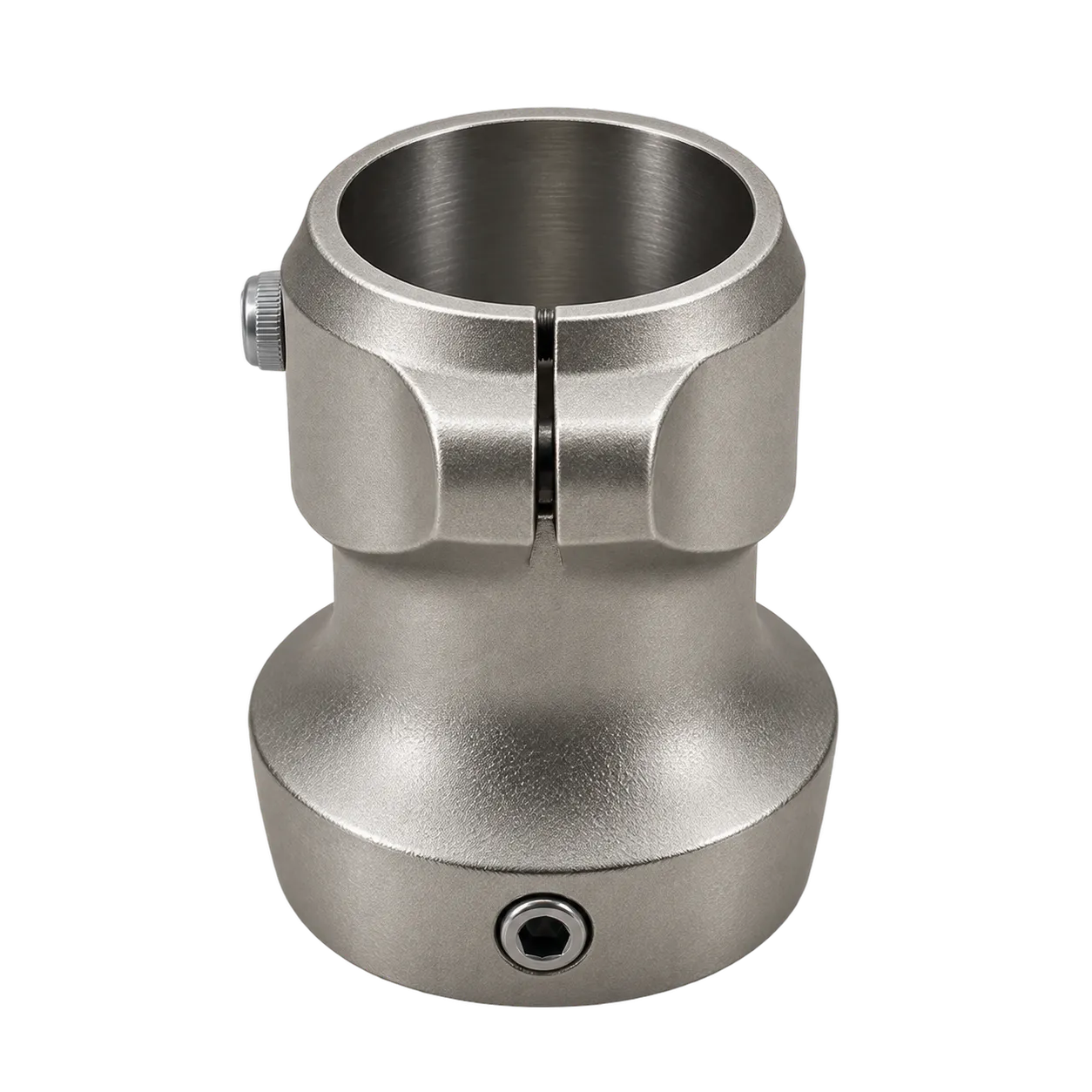
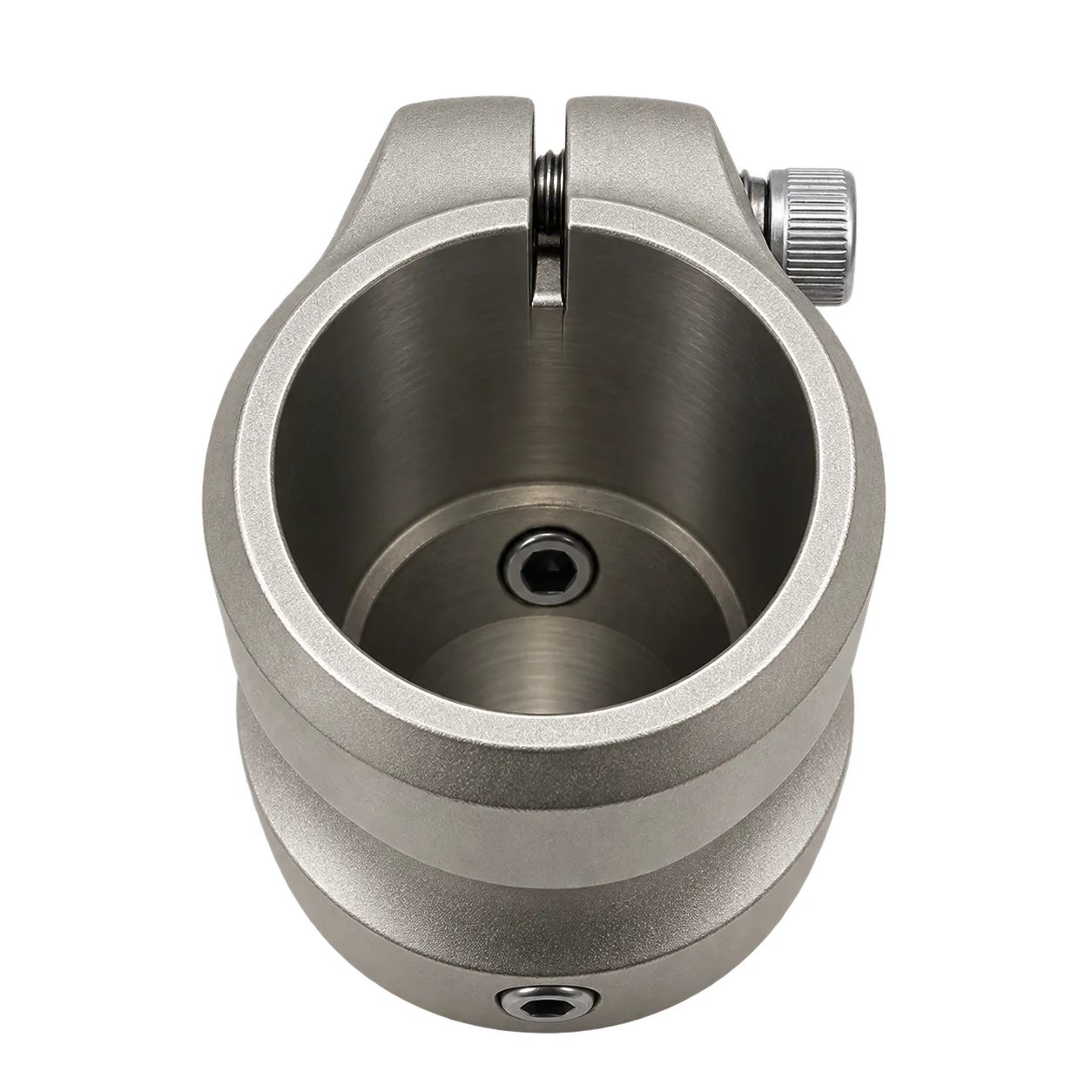
Long residual limb transtibial fittings are where build height is most constrained below the socket.
Knee disarticulation fittings leave the least space of all, since the socket extends to the level the anatomical knee occupied.
Short transfemoral residual limbs leave ample space, where a taller fitting can take up length instead of a longer pylon.
Component substitution for lower-profile alternatives is the response where the total exceeds the space available.
Limb length is established at this fitting through pylon insertion depth.
Toe-out and toe-in are set by rotating the pylon before the screws are tightened.
Clinics holding stock benefit from clamps in more than one height and bore, since neither is adjustable after purchase.