
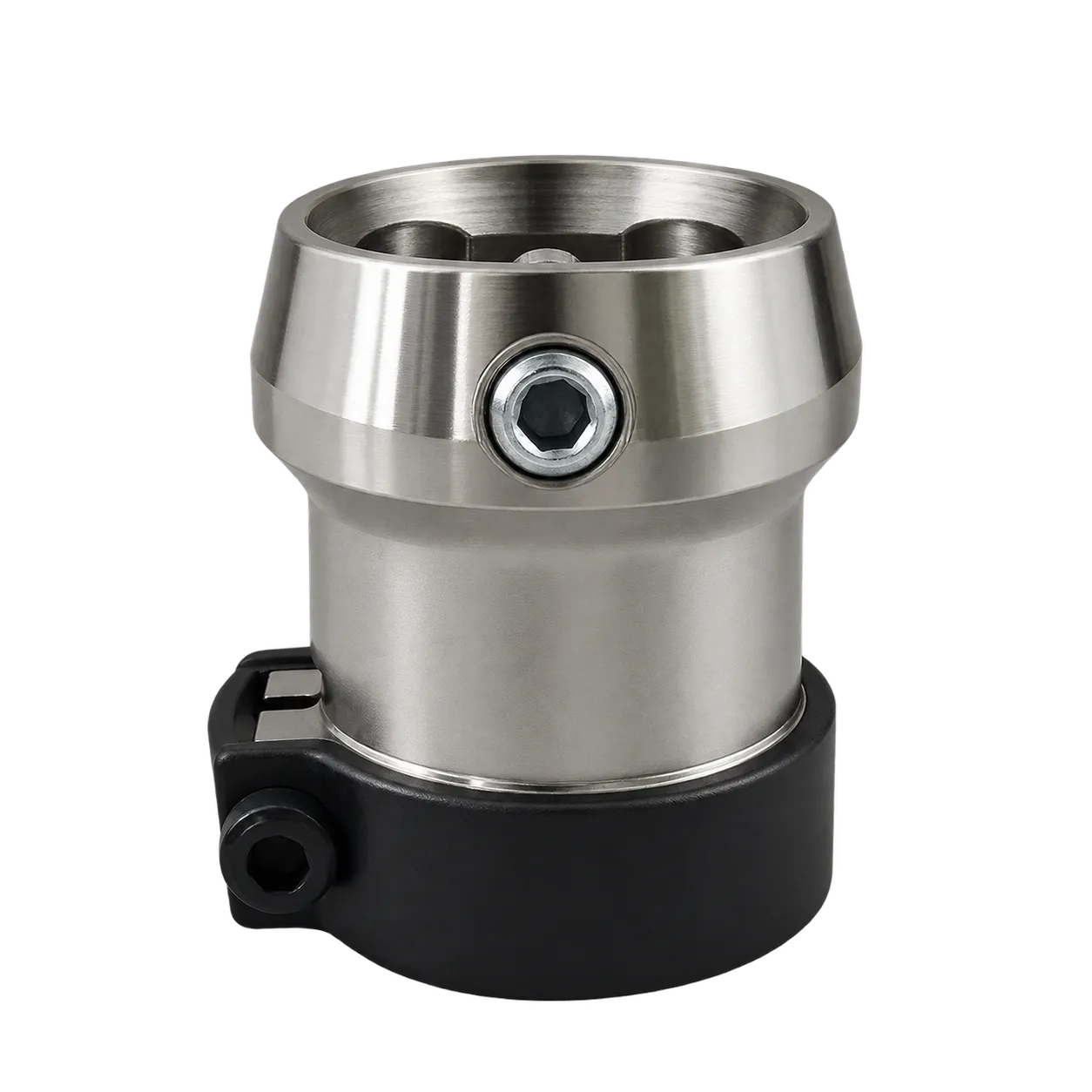
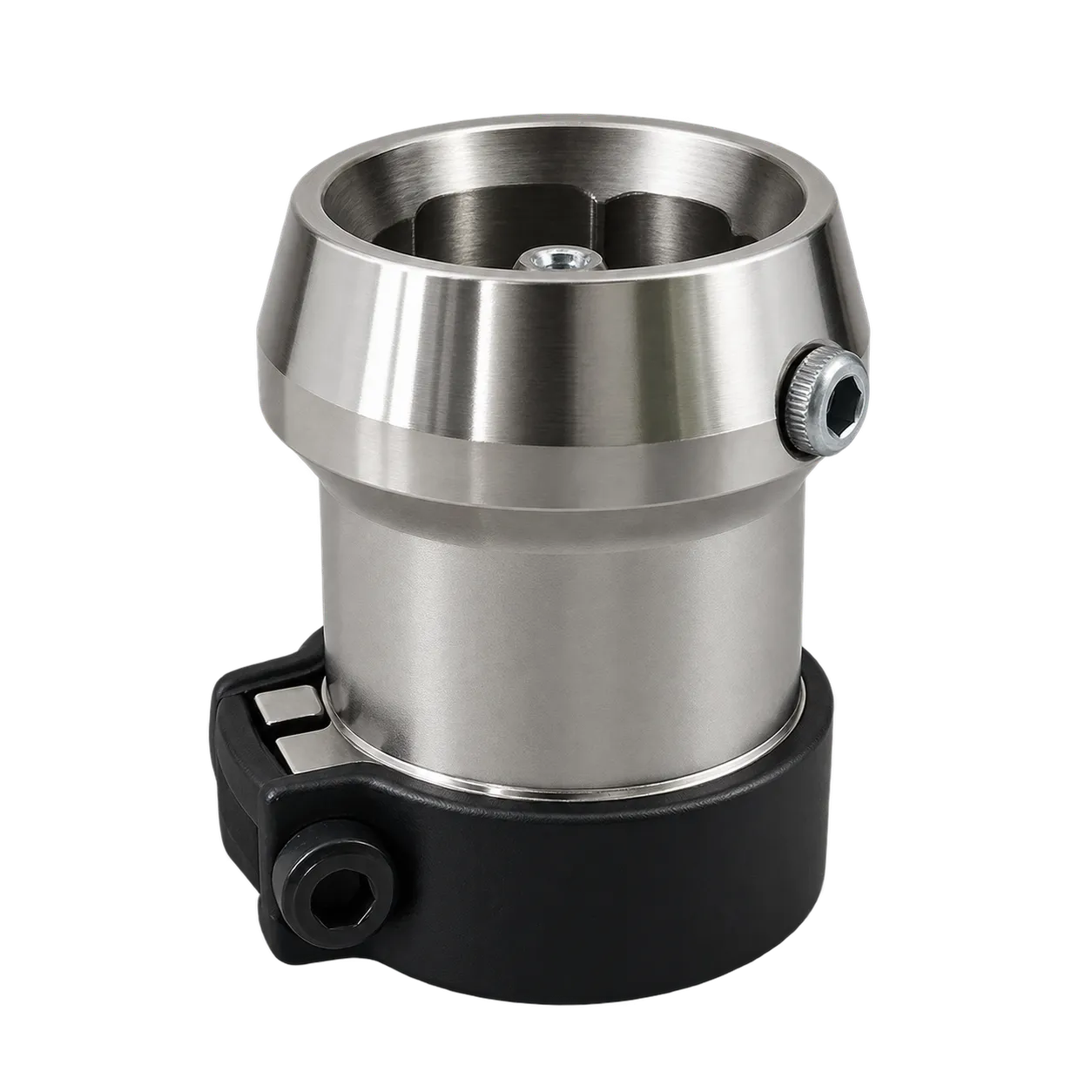
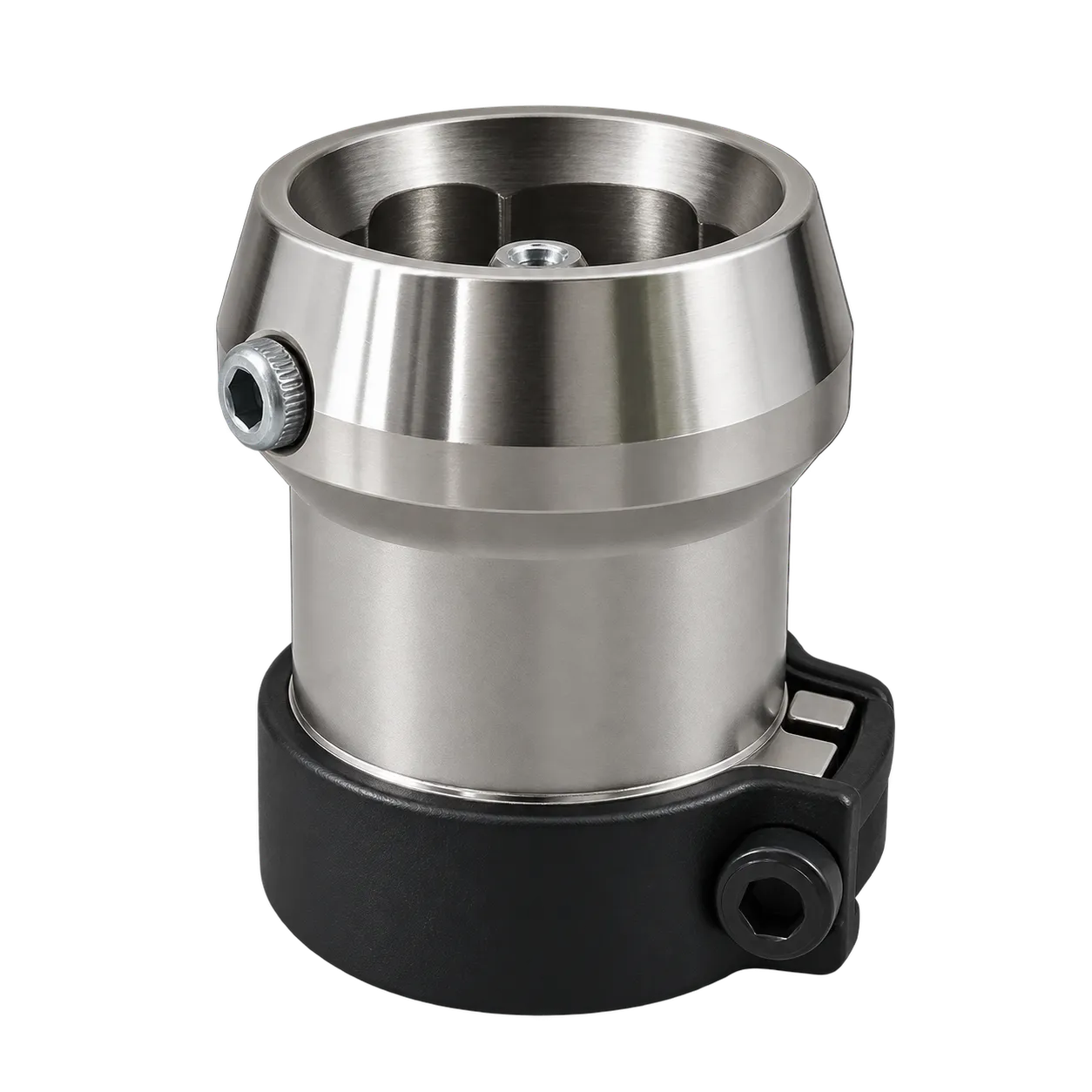
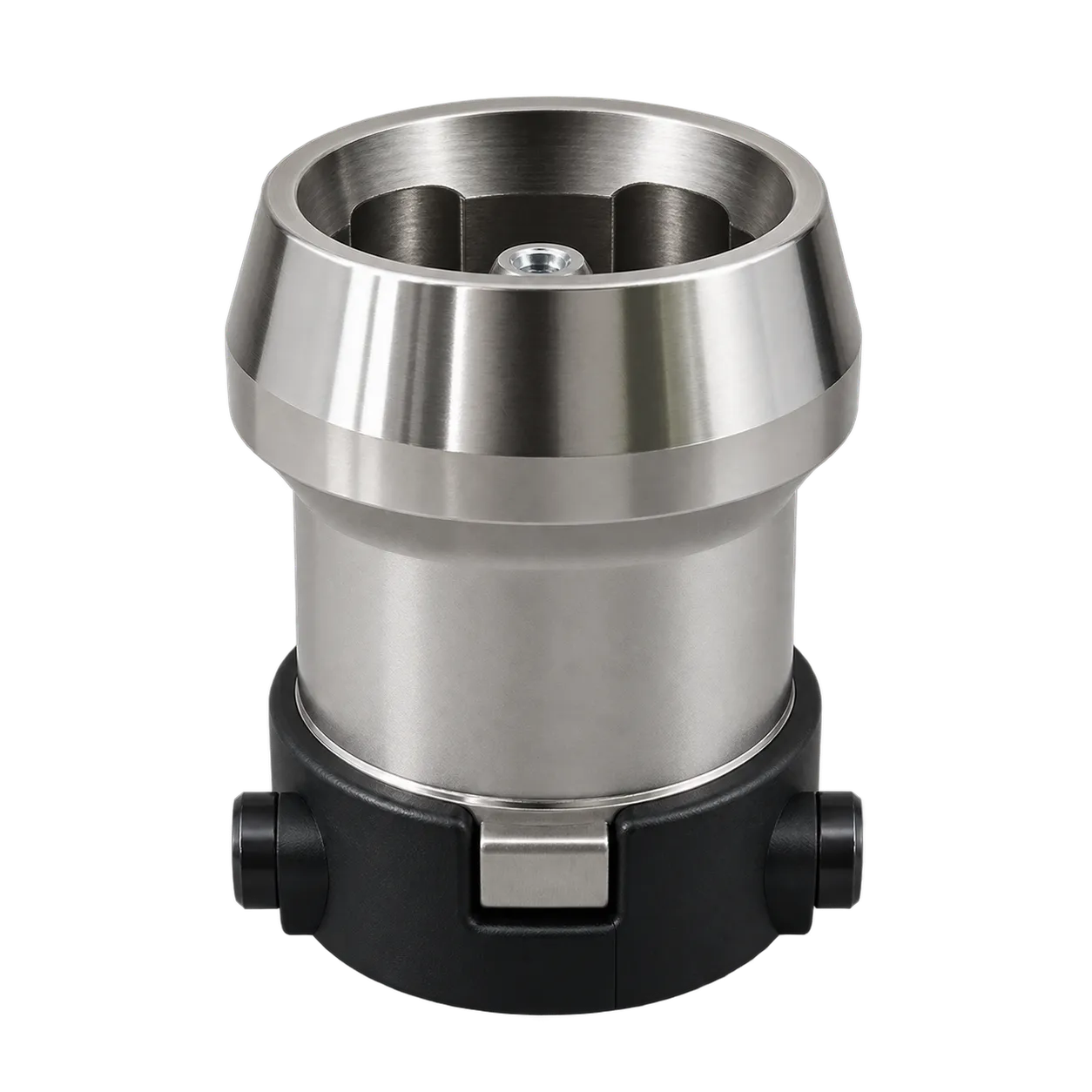
Heavier users are served by a material that supports higher clamping force at the pylon joint.
Higher activity levels place greater cyclic load on the clamp, which bears on material selection.
Limbs used in wet or dirty conditions benefit from the corrosion behaviour of stainless at a low fitting.
Limb length is established at this fitting through pylon insertion depth.
Toe-out and toe-in are set by rotating the pylon before the screws are tightened.
Alignment revisited during rehabilitation depends on a clamped joint that can be loosened and reset.
Clinics holding stock need clamps in both materials and both bore diameters, since neither is interchangeable after order.