
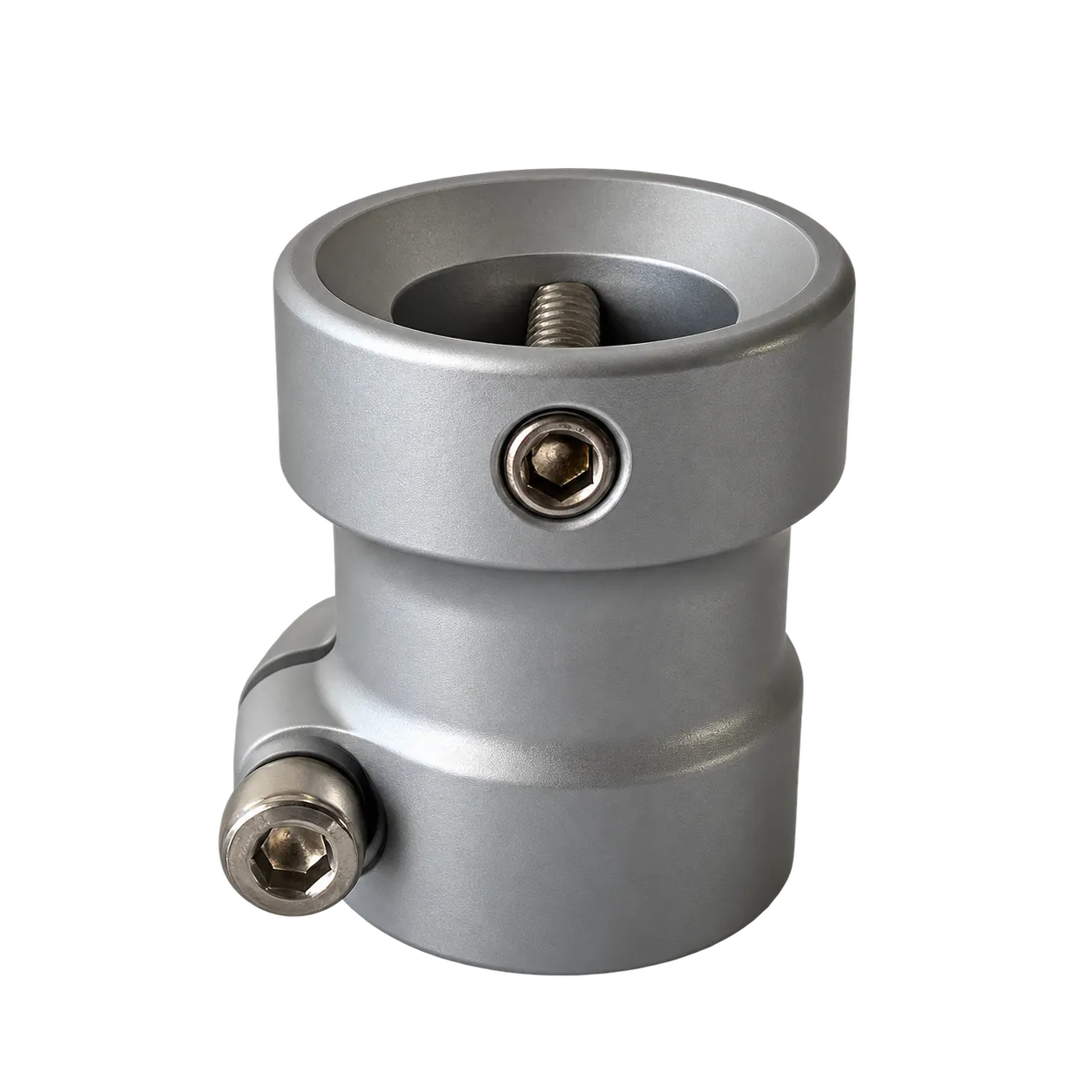
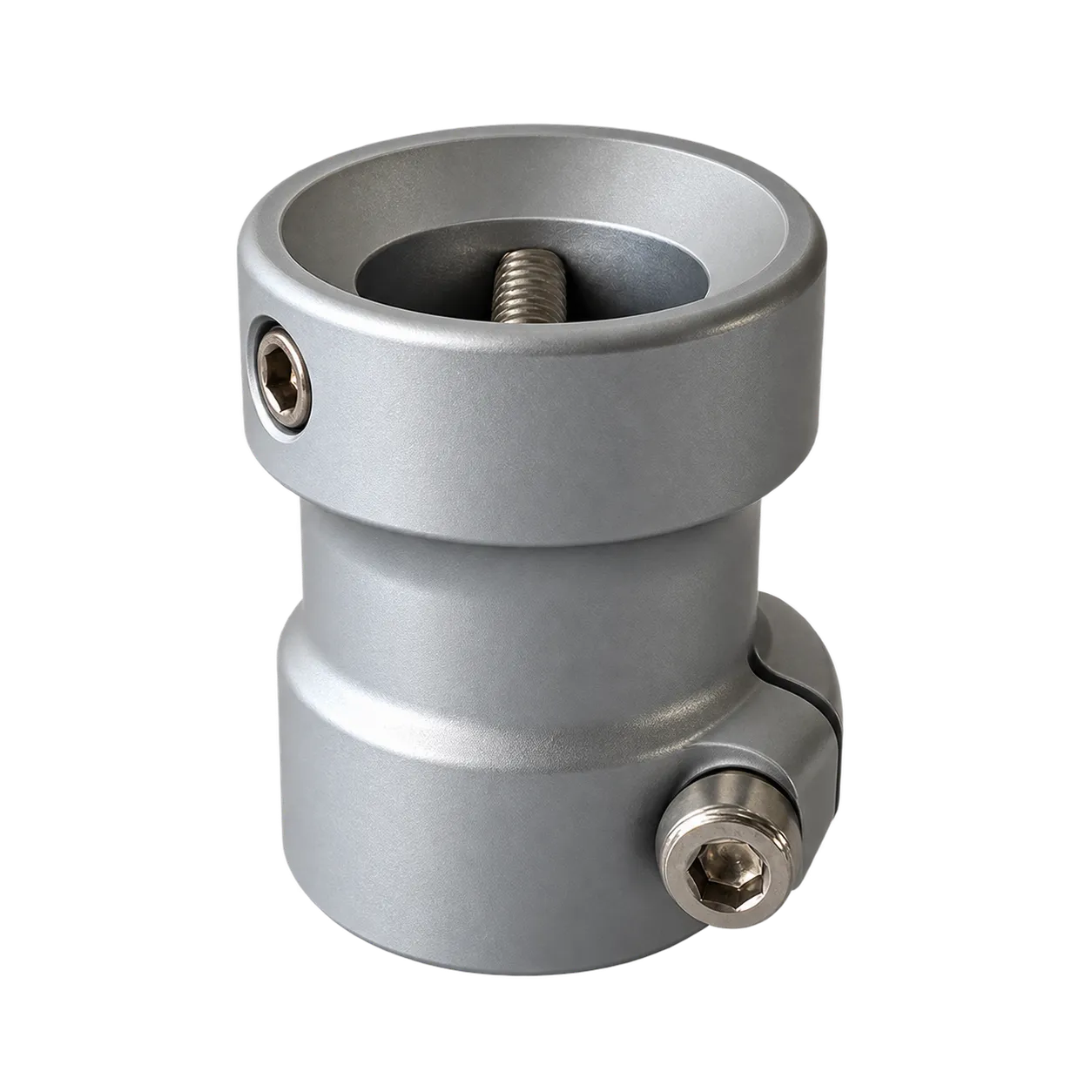
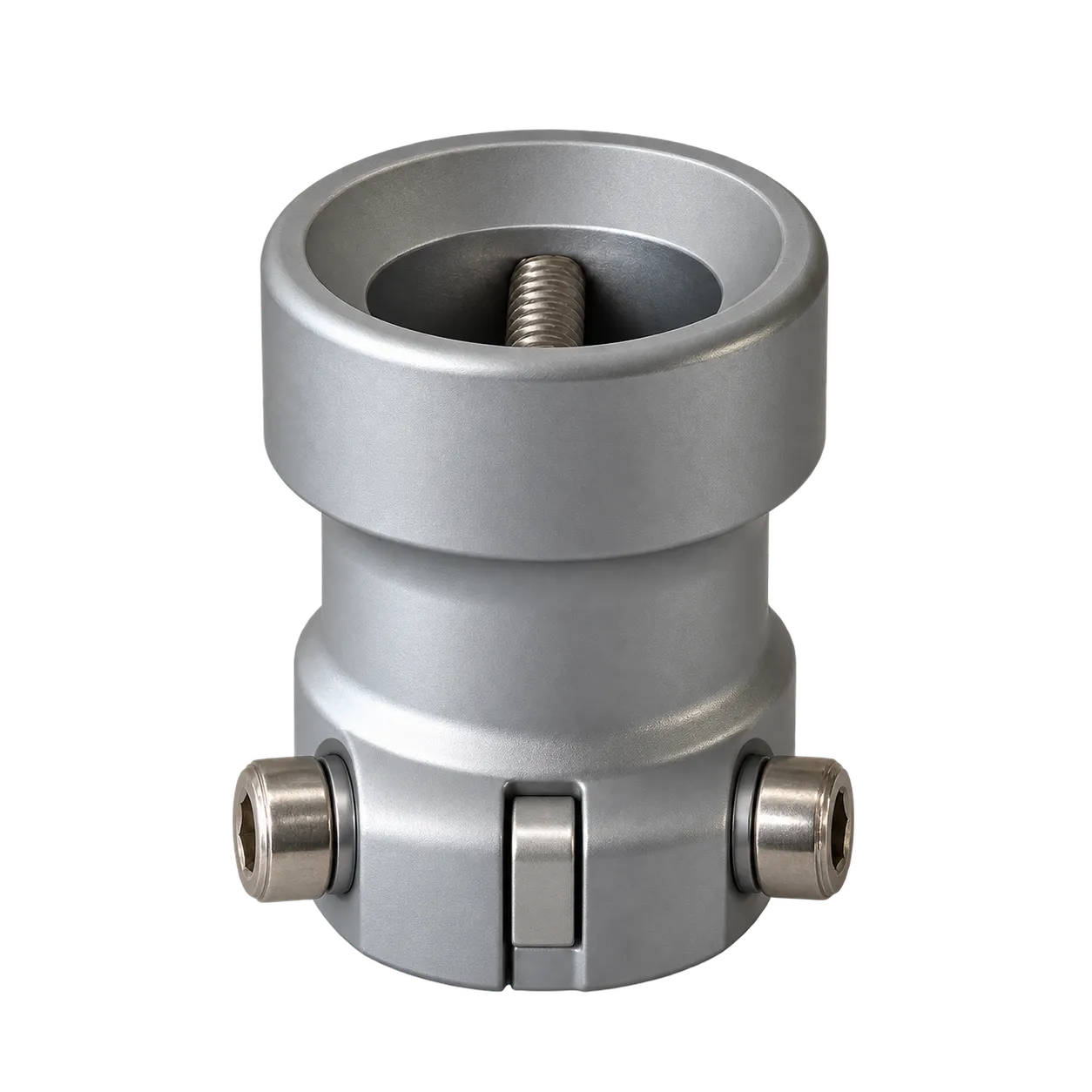
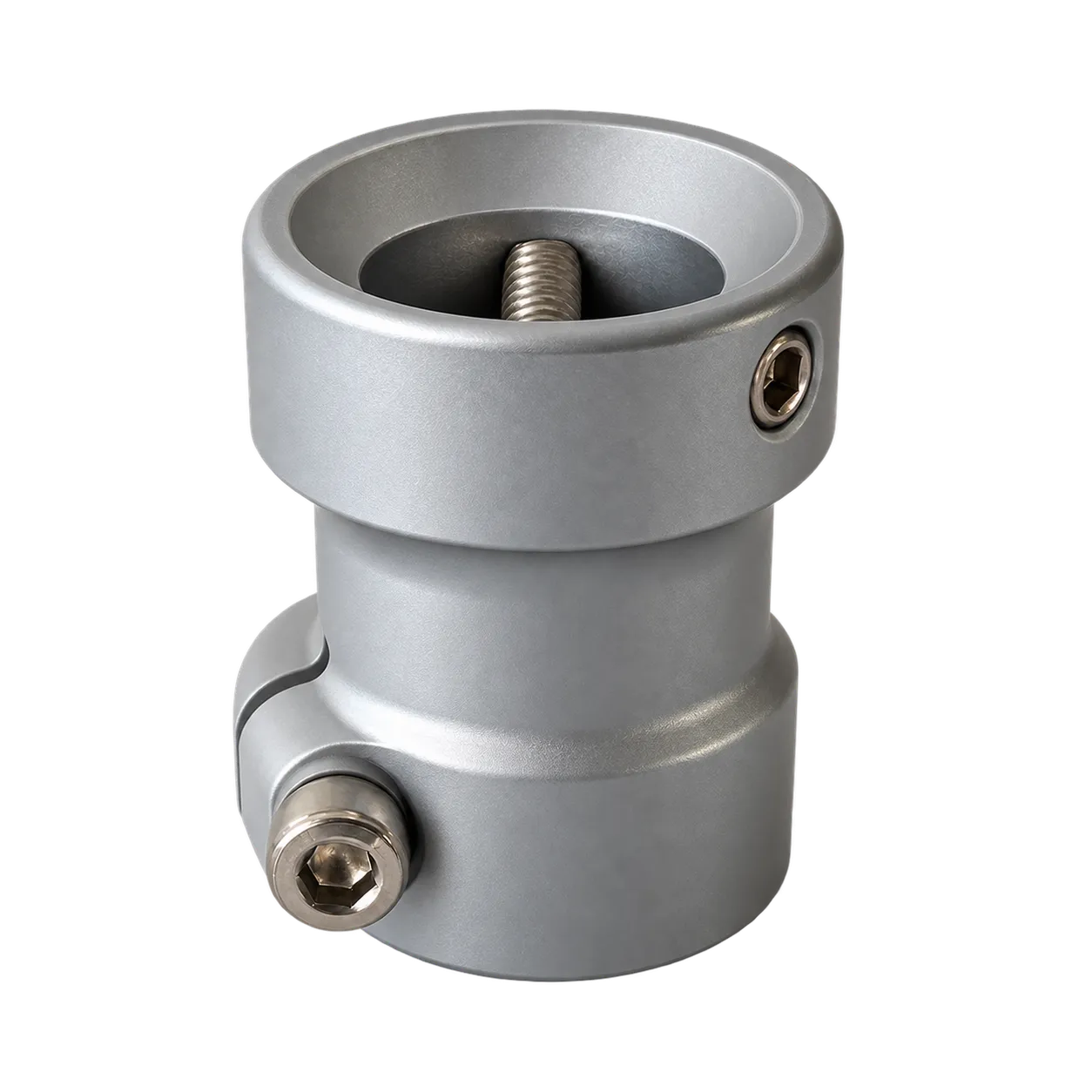
Long residual limb transtibial fittings benefit most, since build height beneath the socket is limited.
Knee disarticulation fittings leave the least room of all, where consolidating two fittings into one can decide whether a build assembles.
Angular alignment in the sagittal and coronal planes is established at the receiver end of this fitting.
Limb length and toe-out are established at the clamped end through insertion depth and rotation.
Builds seeking fewer joints benefit from consolidation, since each joint is a place requiring inspection over time.
Weight-sensitive builds are served by aluminium, which keeps the mass of a combined fitting down.
Clinics holding stock need the bore diameter matched to the pylons they routinely fit, since it is not stated in the reference.