


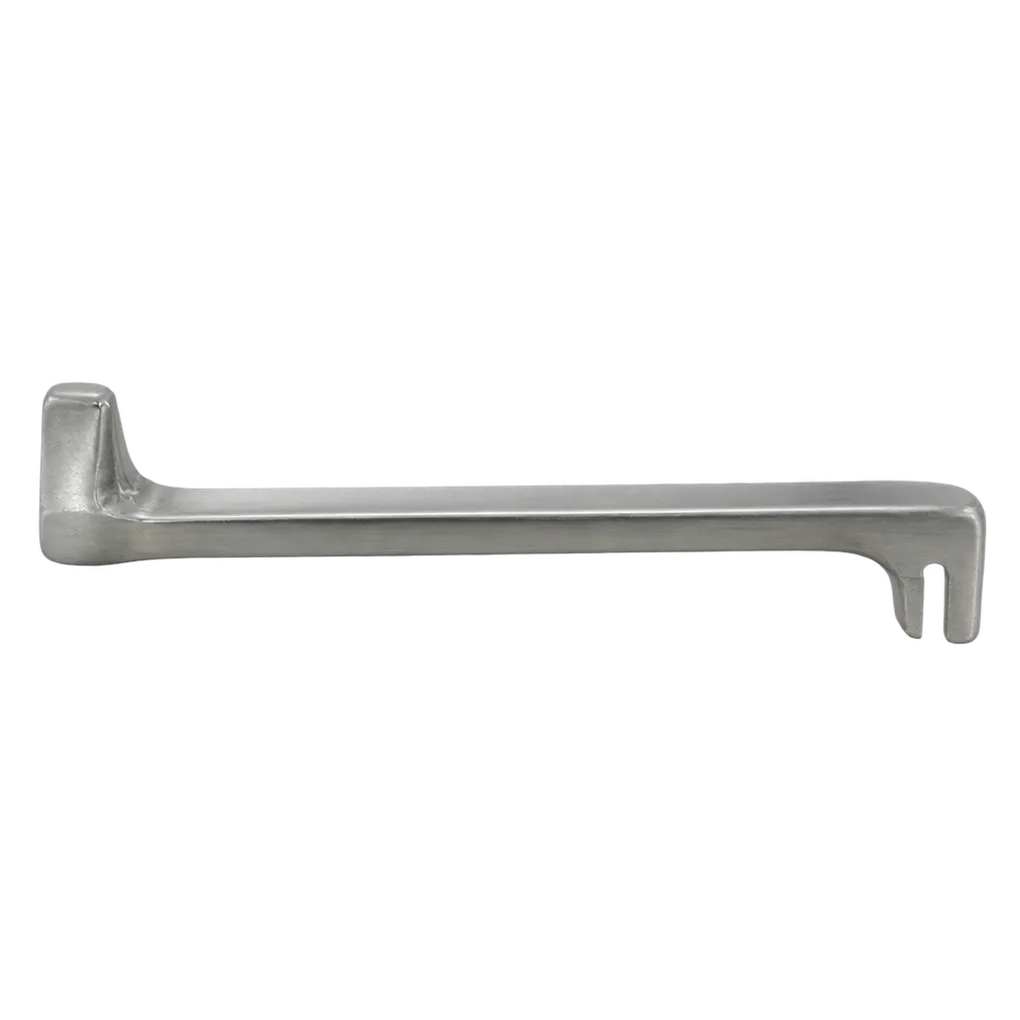

The DTBI-2 belongs in orthotic workshops, hospital orthotic departments and rehabilitation centres, wherever metal uprights are bent by hand. Orthotists and technicians work the iron, while the clinical team relies on the devices that follow from each bend for every patient. Bending on site keeps measuring, shaping, finishing and fitting within one team, which follows each device from the first mark to the wearer.
In use, the technician marks the bend line and holds the work firm on the bench. The iron is set on the upright at the mark, and a steady turn makes the bend. The angle is checked against the limb, and the part is bent again until it fits for the next stage of the build.
Size is the working choice. The three sizes, 4 to 6, 7 to 9 and 8 to 10 inches, sit under one item number, so a workshop that holds all three can match an iron to the part on the bench. Because stainless steel provides a firm body, the same iron serves bend after bend across many devices before it needs replacing.
No electrical routine comes with it, because the iron is non-powered. A workshop with a steady flow of devices keeps its working sizes beside the bench and reorders by item number, leaving bench time for shaping and fitting. Each bend taken at the bench stays with the team that will fit the device, from the first mark to the final check.