
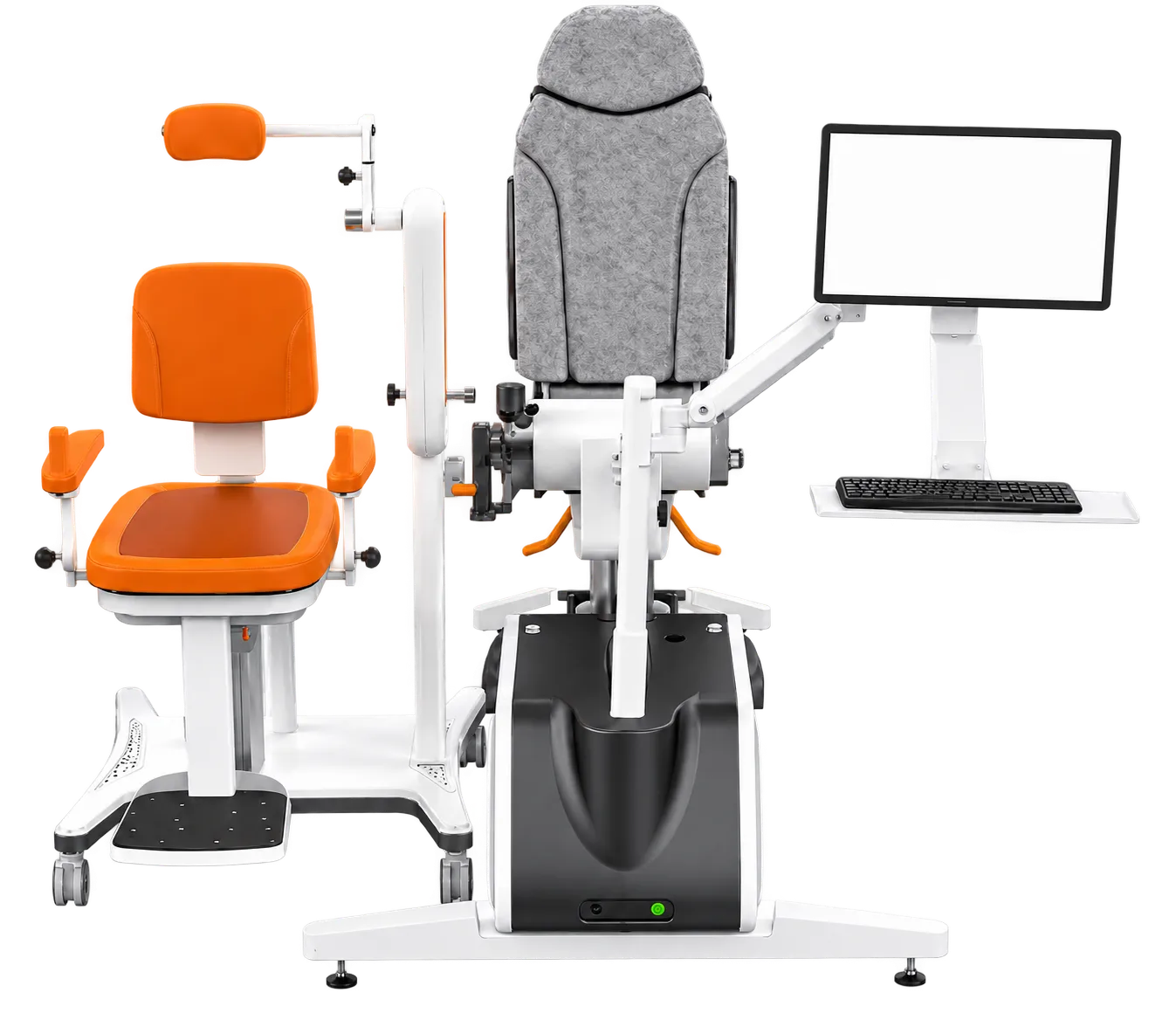
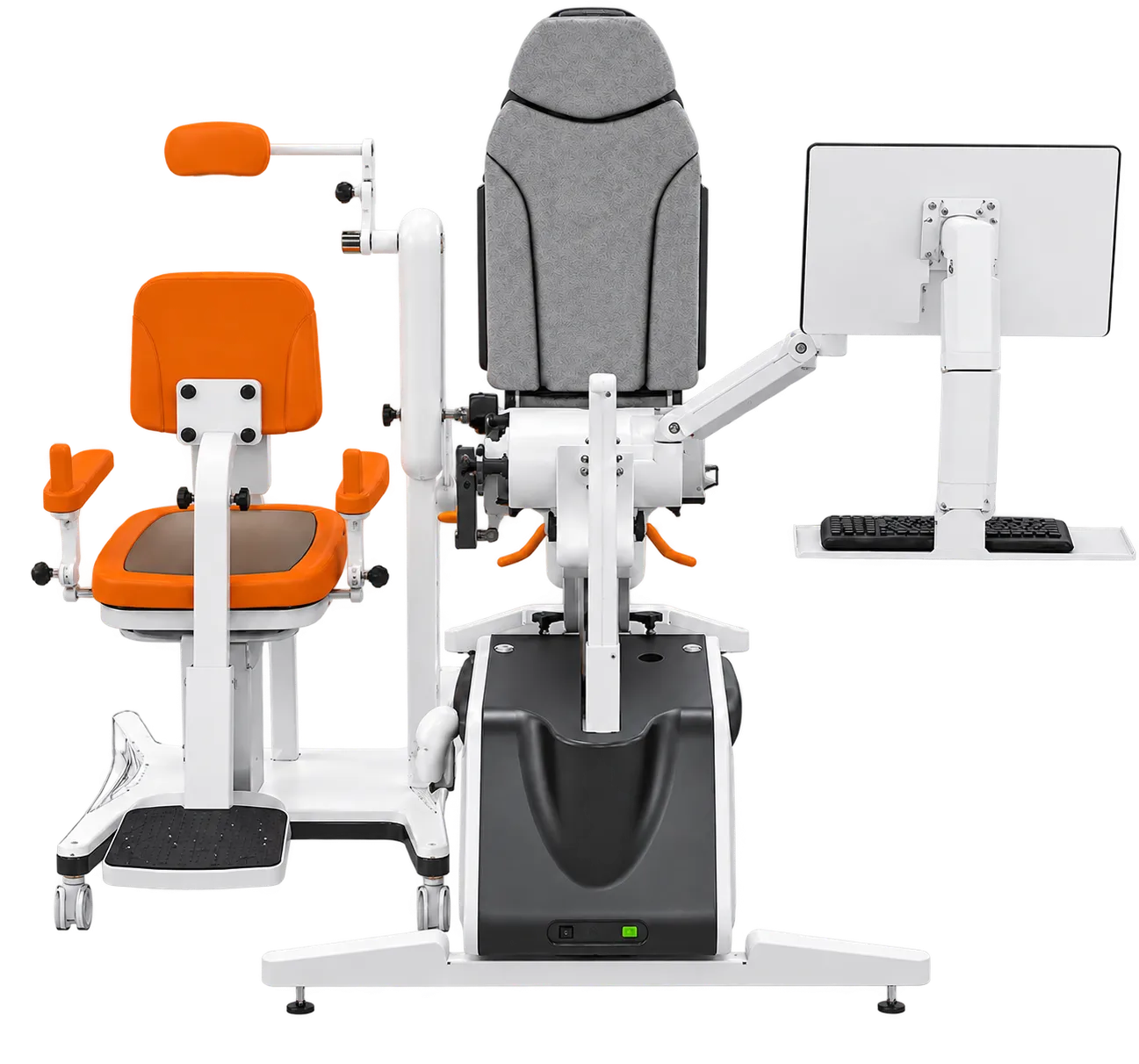
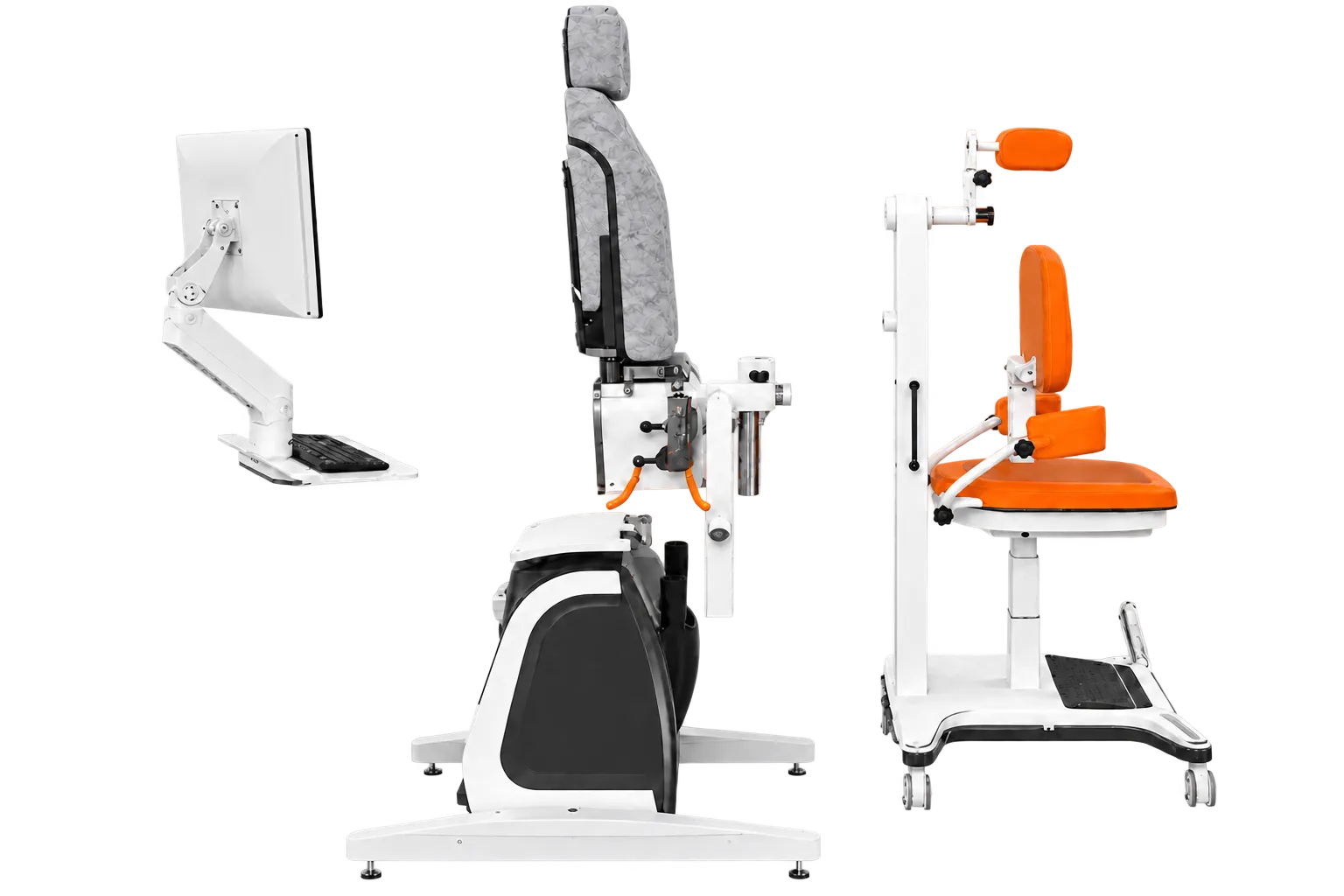
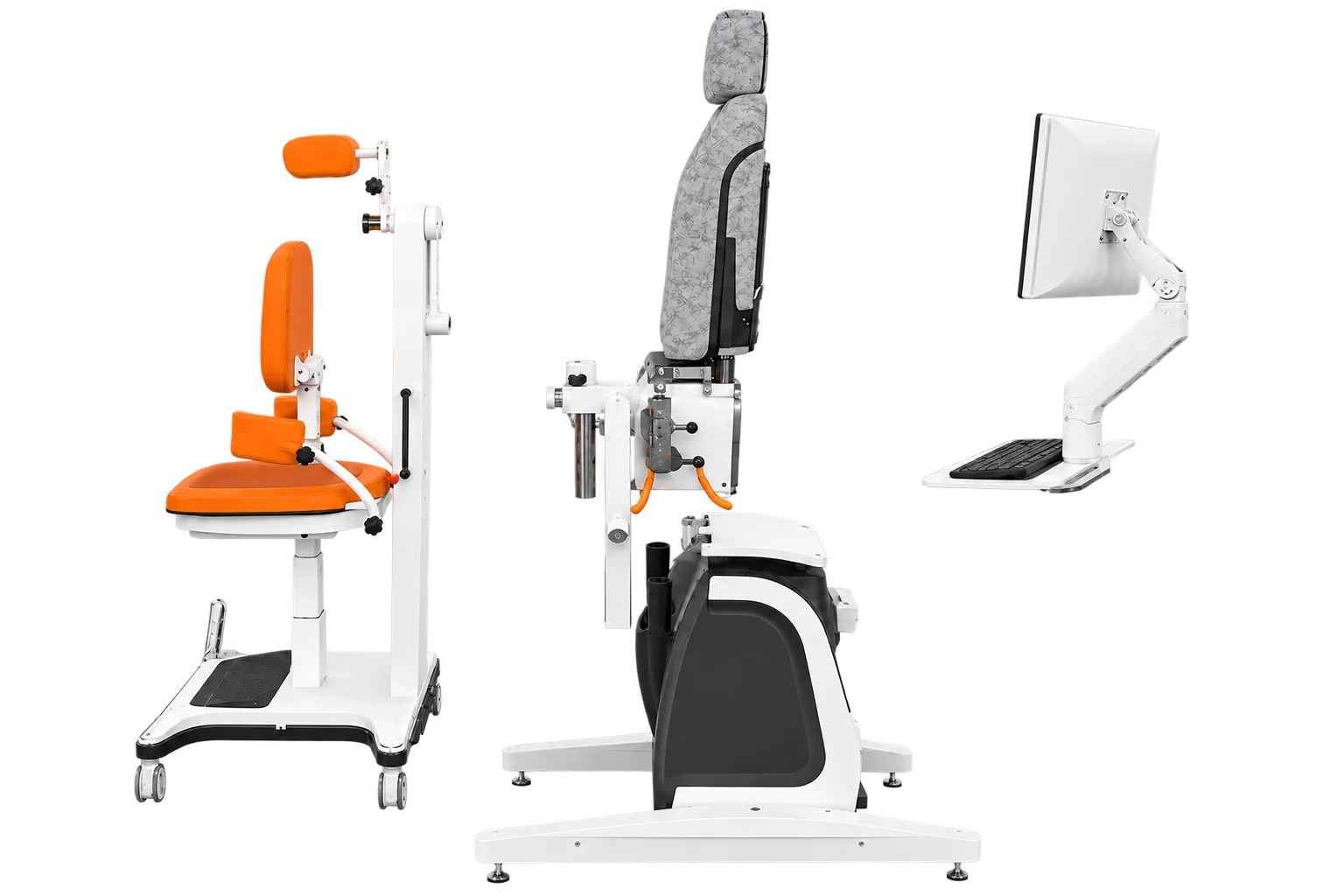
Neck pain is among the most common musculoskeletal presentations in UK practice, and a substantial proportion of it recurs or persists. Deficits in cervical flexor and extensor strength and endurance are well described in persistent neck pain populations, yet strength is rarely quantified in routine practice because the tools are uncommon outside specialist centres. The A8C addresses that gap for services already invested in isokinetic assessment.
In musculoskeletal outpatient physiotherapy and specialist spinal services, the value is measurement that survives a change of clinician: a baseline torque profile, a re-test after a block of treatment, and a defensible statement about whether strength actually changed. Physiotherapists registered with HCPC, and working to Chartered Society of Physiotherapy standards, would normally lead protocol design, with the clinical lead defining screening criteria and speed selection.
Sport and exercise medicine is an expanding application. Neck strength profiling has become established practice in rugby, combat sports, and motorsport, where cervical capacity is examined in relation to injury and head-acceleration exposure. Services working with clubs, academies, or governing-body pathways, and clinicians on the Faculty of Sport and Exercise Medicine or BASEM side of practice, use quantified neck data for screening, return-to-play decisions, and conditioning design.
Whiplash-associated disorder brings a medico-legal dimension. Objective cervical measurement is frequently sought in personal injury work, and a documented, repeatable protocol produces something more robust than a narrative account. Occupational health services assessing display-screen and sedentary workers use the same capability for baseline and post-intervention comparison. Across all of these, CQC-registered providers should record the device in their equipment inventory, maintenance and calibration schedule, and staff competency framework, and should define who is authorised to test the cervical spine.