Argon plasma coagulation (APC) is a non-contact electrosurgical method that delivers high-frequency current to tissue through a jet of ionised argon gas, coagulating the surface and stopping bleeding without the probe touching the tissue. Strictly, APC coagulates and devitalises rather than cutting sharply; where an operator wants to cut, the same electrosurgical generator provides a separate cutting waveform through conventional monopolar instruments. For a theatre or endoscopy buyer, the decision covers the generator, the argon supply, the probes and the essential safety interlocks.
The appeal of APC is controlled, even surface coagulation over an area, useful for diffuse oozing and for treating superficial lesions. The system supplies the energy and gas; clinical protocols and the operator decide the power, flow and dwell settings for each application.
How argon plasma coagulation works
A probe delivers a steady flow of argon gas past an electrode carrying high-frequency current. When the voltage is high enough,h the argon ionises into a conductive plasma, and current arcs across this plasma bridge to the nearest tissue. Because the current follows the path of least resistance, the plasma jet automatically seeks tissue that is not yet coagulated: as the surface dries and its resistance rises, the arc jumps to adjacent moist tissue. The result is a fairly uniform, self-limiting zone of coagulation a few millimetres deep, applied without contact so there is no sticking or tearing when the probe is withdrawn.
Coagulation versus cutting
It is worth being precise about the word cut. APC itself is a coagulation modality; it dries, shrinks and devitalises tissue rather than dividing it cleanly. True cutting in electrosurgery uses a continuous, lower-voltage waveform that vaporises a thin line of tissue along a contact electrode. Because most APC generators are full electrosurgical units, they also offer monopolar and bipolar cutting and blended modes for contact instruments. So a single platform can both cut with a conventional electrode and coagulate an area non-contact with argon plasma, but these are distinct functions selected by mode. The depth of the APC effect is fairly shallow and self-limiting because the drying tissue stops conducting, which is part of why it is favoured for treating thin-walled structures where deeper energy would risk perforation. Buyers should be clear about which clinical tasks a service actually needs before choosing a configuration, since a unit bought only for surface haemostasis is specified very differently from a full electrosurgical workstation.
The components of an APC system
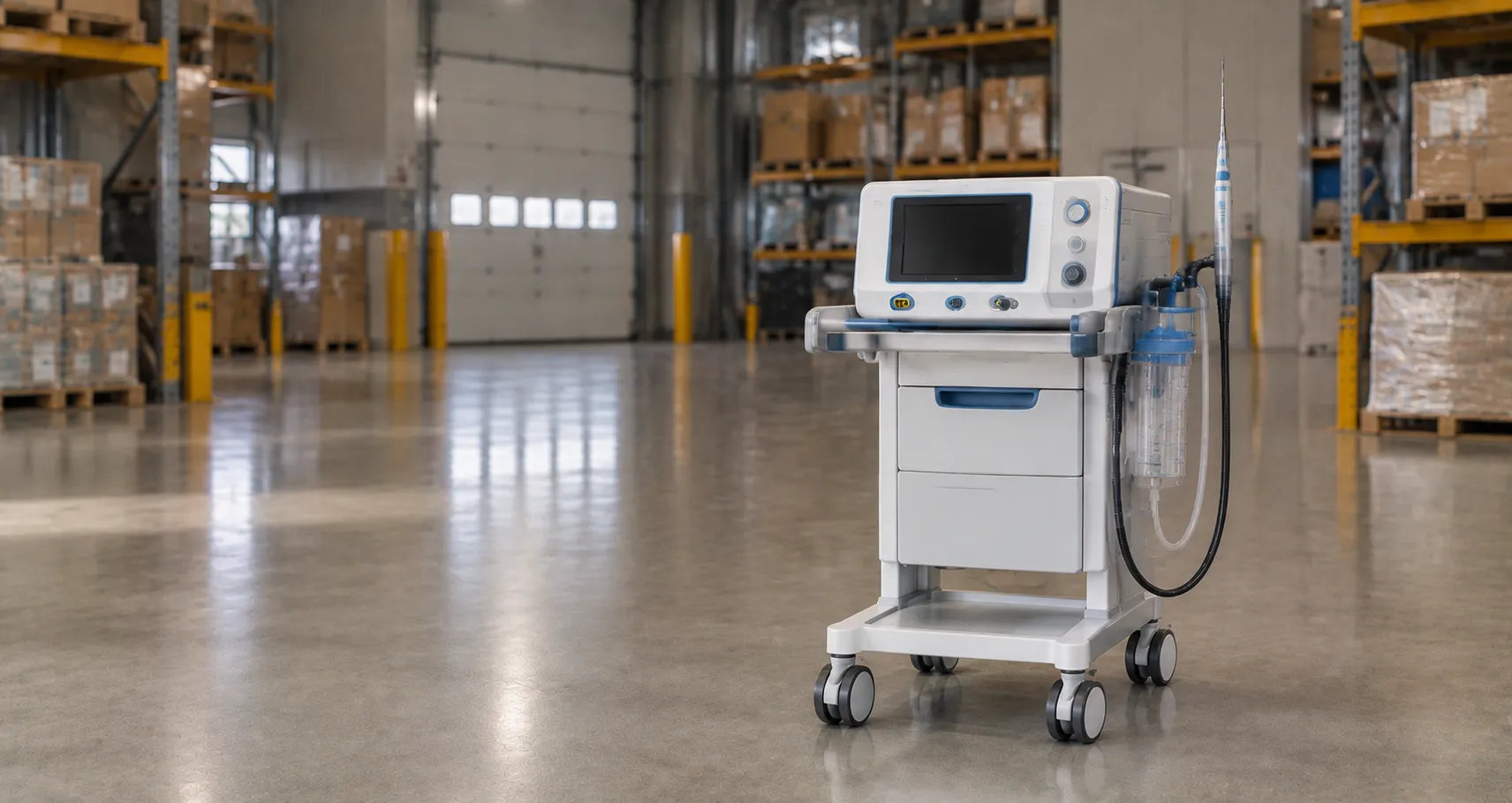
Three parts work together. The electrosurgical generator produces the high-frequency current and houses the APC module, power settings, and safety monitoring. The argon source is a cylinder or manifold feeding a regulated flow, measured in litres per minute, into the probe. The probes are flexible or rigid depending on whether the system serves flexible endoscopy or open and rigid work, and they come with axial, side-firing or circumferential tips to suit the target. A neutral (return) electrode completes the monopolar circuit for the patient. Compatibility across these parts is brand-specific, so the generator, module, probes, and connectors are usually bought as one ecosystem. In flexible endoscopy,y the probe passes down the working channel of the scope, so its diameter and length must be checked against the scopes in service, and a foot pedal or handswitch triggers activation while a separate control manages gas flow. The neutral electrode is applied to the patient exactly as for any monopolar procedure, over clean, well-perfused tissue away from bony prominences and metal implants.
Key specifications a buyer must check
Review the generator's rated output power and the range of APC modes, since some units offer pulsed or precise low-power settings for thin-walled tissue and others offer a forced high-power mode. Check argon flow range and how finely it can be set, probe compatibility and available tip geometries, and the length and diameter needed to pass your endoscopes' working channels. Confirm neutral-electrode contact-quality monitoring, gas-flow and pressure alarms, and whether the unit warns of gas embolism risk. Look at the user interface, stored settings per specialty, and integration with theatre or endoscopy stack systems and smoke evacuation.
Safety features and interlocks
Because APC injects gas under pressure, its safety design deserves close attention. Insufflation of argon into a vessel or cavity carries a gas-embolism risk, so systems purge and prime the probe and monitor flow; operators keep the probe at the correct distance and avoid pressing it against tissue. As a monopolar device, it needs a correctly applied neutral electrode with contact-quality monitoring to prevent return-electrode burns, and staff must manage the surgical plume with evacuation. Confirm the generator meets the electrosurgery-specific safety standard IEC 60601-2-2 alongside the general IEC 60601-1 requirements, and that alarms are audible and clear. Training and local protocols govern safe use, not the machine alone.
Use across specialties and settings.s
APC is used in flexible gastrointestinal endoscopy for diffuse mucosal bleeding and superficial lesions, in bronchoscopy for airway lesions, and in open and rigid surgery for surface haemostasis over solid organs and resection beds. Flexible probes serve endoscopy suites; rigid probes serve theatres. A high-throughput endoscopy service and an open-surgery theatre may need different probe libraries from the same generator family. Because the argon supply must be managed and stored safely, estates and health-and-safety input matters, and guidance on gas handling in the workplace sits with the HSE.
Standards, regulation and servicing
An APC generator is an electrically powered medical device that must hold valid UKCA or CE marking with a declaration of conformity, and the supplier must be registered to place it on the Great Britain market; verify this with the MHRA. Beyond the IEC 60601 electrosurgery requirements, the argon regulator and cylinder handling fall under gas-safety rules, so factor cylinder storage, changeover, ER, and leak checks into your plan. Generators need scheduled electrical-safety testing and output verification by biomedical engineering or the manufacturer, and probes are typically single-use or have a stated limited number of reprocessing cycles set out in the instructions for use.
Consumables and total cost of ownership
The generator is a one-off, but probes and argon gas recur. Many APC probes are single-use, and even reusable probes have a short validated life, so probe spend often dominates the running cost at volume. Add the argon itself, cylinder rental or manifold supply, neutral electrodes des,s and any smoke-evacuation filters. Model the real cost per procedure at your expected caseload, and ask suppliers about probe pricing tiers, gas contracts, generator warranty, first-service inclusion, and the availability of loan units during servicing. Because probes and generators are brand-locked, check upgrade paths before committing. The MediGear buyers team can compare APC platforms and consumable costs, or contact us for lead times.
Procurement checklist
-
Define whether you need non-contact coagulation only or a full electrosurgical unit with cutting modes.
-
Check APC power and flow ranges, including low-power settings for thin-walled tissue.
-
Confirm probe geometries, lengths,s and diameters fit your endoscopes and open fields.
-
Verify neutral-electrode contact monitoring, gas-flow alarms and embolism safeguards.
-
Confirm IEC 60601-2-2 compliance, UKCA or CE marking and MHRA registration.
-
Plan argon cylinder storage, changeover and leak checking with estates and HSE guidance.
-
Model cost per procedure across probes, gas, electrodes and filters.
-
Confirm servicing, output verification and loan-unit cover during downtime.
Conclusion
Argon plasma coagulation gives even, non-contact surface coagulation that suits diffuse bleeding and superficial lesions, while the same generator can offer conventional cutting through contact electrodes when that is what the clinical work needs. A sound purchase depends on matching probes and power to your specialties, respecting the gas-safety and neutral-electrode safeguards, and budgeting honestly for probes and argon. Comparing verified APC platforms through MediGear helps your service buy a system that coagulates reliably and stays safe in daily use.
Disclaimer
This article is for informational purposes only. It is published by MediGear (medigear.uk) for general information and procurement guidance, and is not clinical, diagnostic, treatment, technical, engineering, legal or regulatory advice, nor a product endorsement, guarantee or substitute for professional assessment. MediGear does not provide medical consultations. Buyers should consult their clinical, biomedical, estates and regulatory contacts, and the manufacturer's documentation, and independently verify all specifications, certifications, compatibility and suitability before purchase. Specifications, certifications and availability are correct at the time of publication and may change without notice. MediGear is a medical-equipment distributor and does not sell medicines or pharmaceutical products.